avatarWojciech Wieczorek

Free AI web copilot to create summaries, insights and extended knowledge, download it at here

958

Abstract

image from each hour that compressed the past decade to a 61-minute video. The contributing pictures were made at an ultraviolet wavelength of 17.1 nm, which shows the full glory of the Sun’s outermost atmospheric layer, the corona.</p><p id="d5f9">The whole video deserves watching, but I decided to point out the most amazing parts, for those who cannot afford to see it all.</p><p id="0856"><i>I strongly recommend watching them in a 0.25 slow-motion.</i></p><ol><li>At 12:24, June 5–6, 2012 — Venus transits across the upper face of the Sun, will not repeat until 2117.</li><li>At 13:51, August 31, 2012 — The most iconic eruption within this solar cycle from the lower left side of the Sun. You have to be focus to see it through the rest of the Sun’s activity. Or just watch it <a href="https://www.youtube.com/watch?v=GrnGi-q6iWc">here</a>.</li><li>36:18, May 9, 2016 — Mercury transits across the lower face of the Sun in a zigzag path.</li><li>26:3

Options

9, October 8, 2014 — The active regions on the Sun resembles a Jack-o’-lantern.</li><li>57:39, November 11, 2019 — Another transit of Mercury through the middle face of the Sun, will not happen again until 2032.</li></ol> <figure id="7782"> <div> <div> <img class="ratio" src="http://placehold.it/16x9"> <iframe class="" src="https://cdn.embedly.com/widgets/media.html?src=https%3A%2F%2Fwww.youtube.com%2Fembed%2Fl3QQQu7QLoM%3Ffeature%3Doembed&amp;display_name=YouTube&amp;url=https%3A%2F%2Fwww.youtube.com%2Fwatch%3Fv%3Dl3QQQu7QLoM&amp;image=https%3A%2F%2Fi.ytimg.com%2Fvi%2Fl3QQQu7QLoM%2Fhqdefault.jpg&amp;key=d04bfffea46d4aeda930ec88cc64b87c&amp;type=text%2Fhtml&amp;schema=youtube" allowfullscreen="" frameborder="0" height="480" width="854"> </div> </div> </figure></iframe></div></div></figure><p id="d19c" type="7">Until next time!</p></article></body>

The Last Decade of Sun Time-Lapse

The shining beauty shows all its glory.
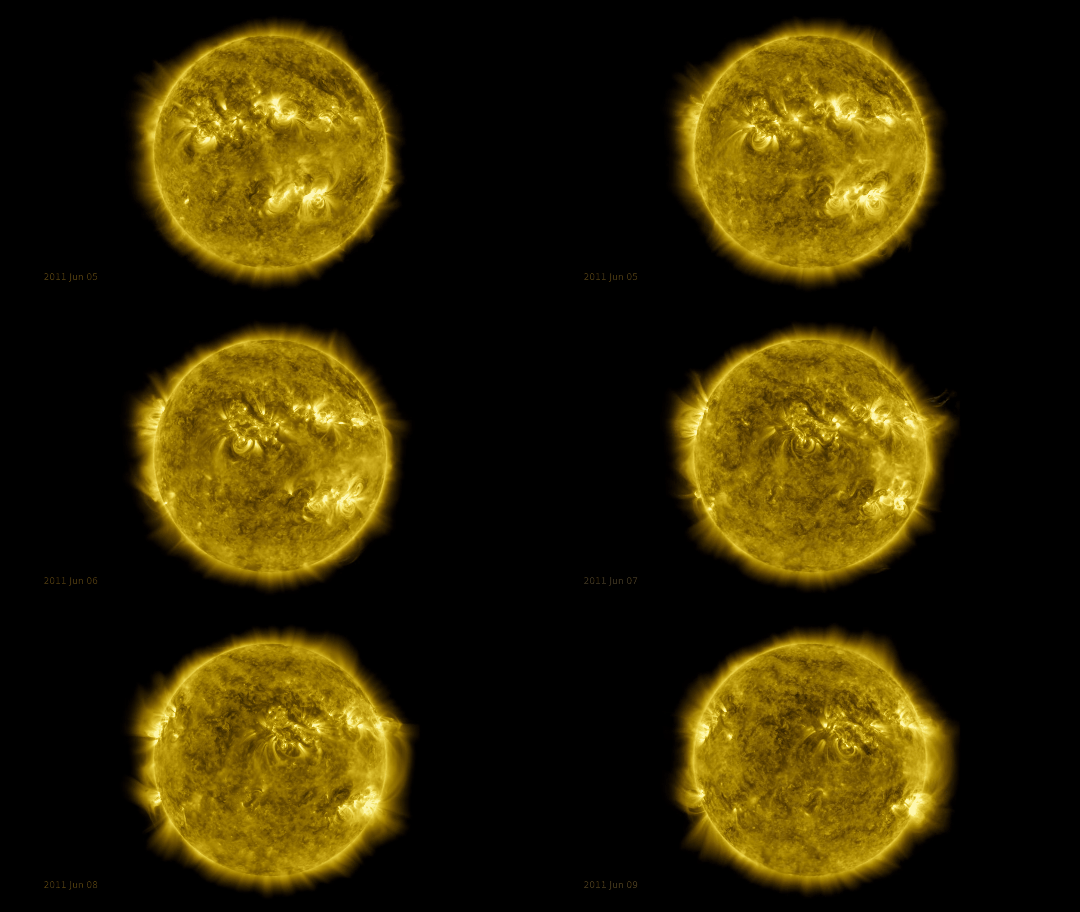
Gif from NASA Goddard’s video on YouTube.

On February 11, 2010, NASA has launched the Solar Dynamic Observatory for studying the Sun and its influences on the Solar System. From June 2, the satellite has kept an eye on our star, taking a picture every 0.75 seconds apart. By this time, taking over 425 million high-resolution images total, amassing with 20 million gigabytes of data. During the decade, it experienced one longer breakdown in 2016 due to an issue with the Atmospheric Imaging Assembly.

Compiling the time-lapse involved selecting one image from each hour that compressed the past decade to a 61-minute video. The contributing pictures were made at an ultraviolet wavelength of 17.1 nm, which shows the full glory of the Sun’s outermost atmospheric layer, the corona.

The whole video deserves watching, but I decided to point out the most amazing parts, for those who cannot afford to see it all.

I strongly recommend watching them in a 0.25 slow-motion.

  1. At 12:24, June 5–6, 2012 — Venus transits across the upper face of the Sun, will not repeat until 2117.
  2. At 13:51, August 31, 2012 — The most iconic eruption within this solar cycle from the lower left side of the Sun. You have to be focus to see it through the rest of the Sun’s activity. Or just watch it here.
  3. 36:18, May 9, 2016 — Mercury transits across the lower face of the Sun in a zigzag path.
  4. 26:39, October 8, 2014 — The active regions on the Sun resembles a Jack-o’-lantern.
  5. 57:39, November 11, 2019 — Another transit of Mercury through the middle face of the Sun, will not happen again until 2032.

Until next time!

Science
Space
Astrophysics
Research
Physics
Recommended from ReadMedium