
The Land of a Million Elephants (part 2)
Luang Prabang, Laos and the Mekong River
Luang Prang was the Imperial capital until the Pathet Lao took over in 1975.
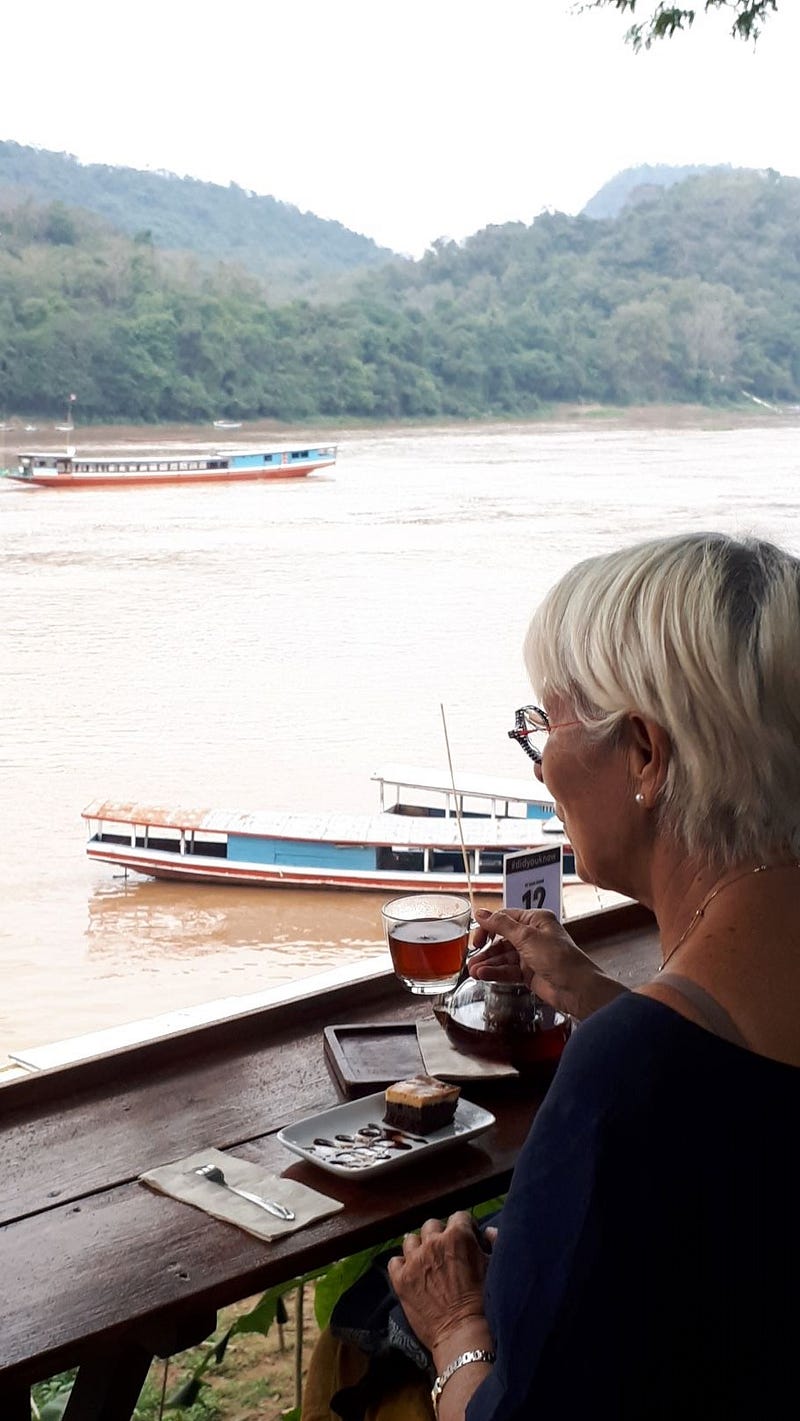
With only some 55,000 inhabitants and four main streets Luang Prabang is today a tourist magnet due to the many monasteries and history in the area. In 1995 Luang Prabang was listed as a UNESCO World Heritage site.
One of the main activities is the giving of alms to the Buddhist monks. That happens each morning at 5–6am. We got up early (very early) one morning to participate in this ceremony.
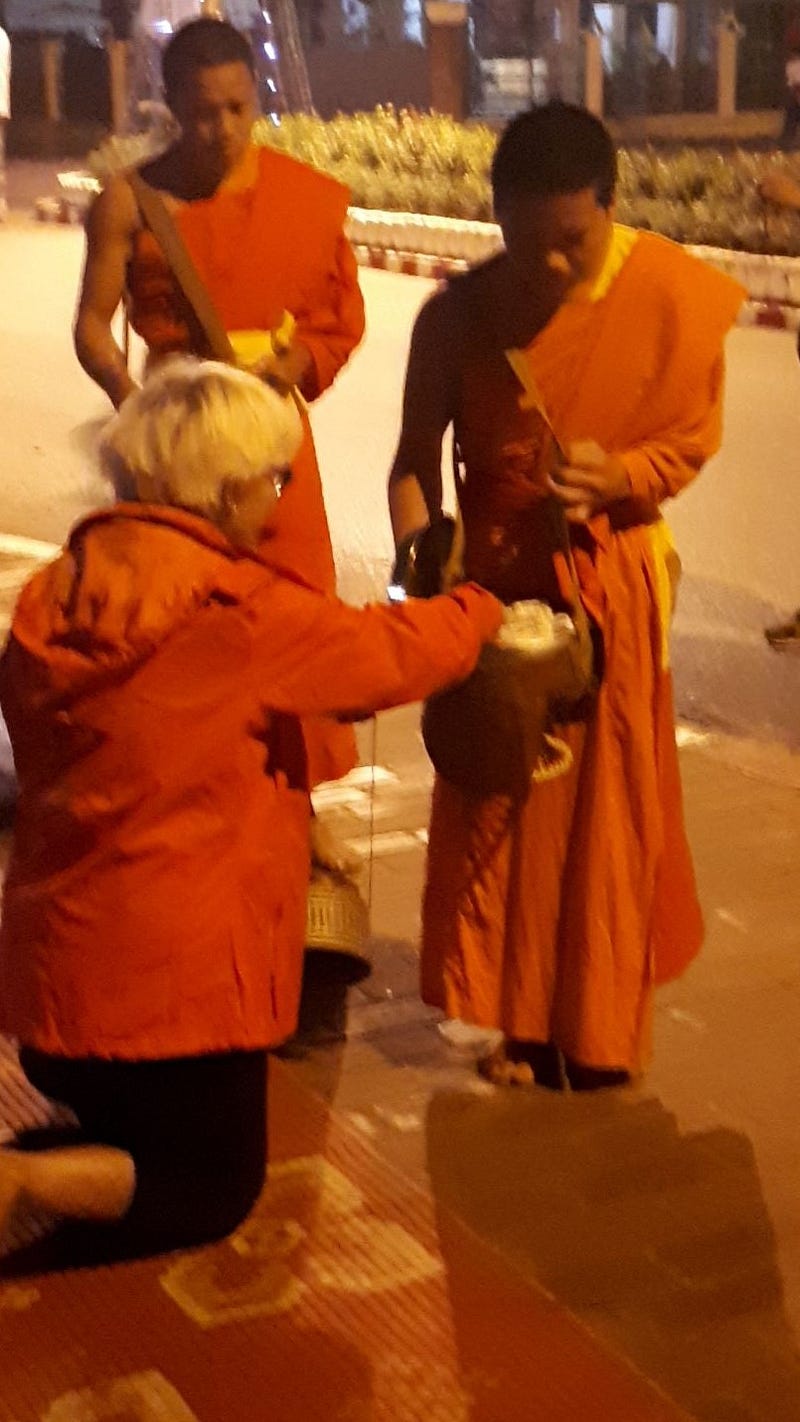
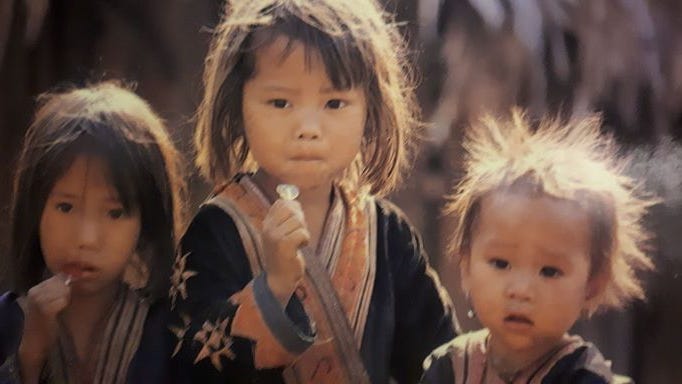
First, you buy cooked rice from a vendor then wait barefoot in the morning chill until the monks pass by your spot. As each monk passes by he pauses at your spot for rice or other foodstuff (not money). There was one person who gave candy, but as candy is forbidden to the monks, the young monk that got candy gave it to a little girl who was standing nearby. I thought to myself, “Now that’s a real sacrifice.”
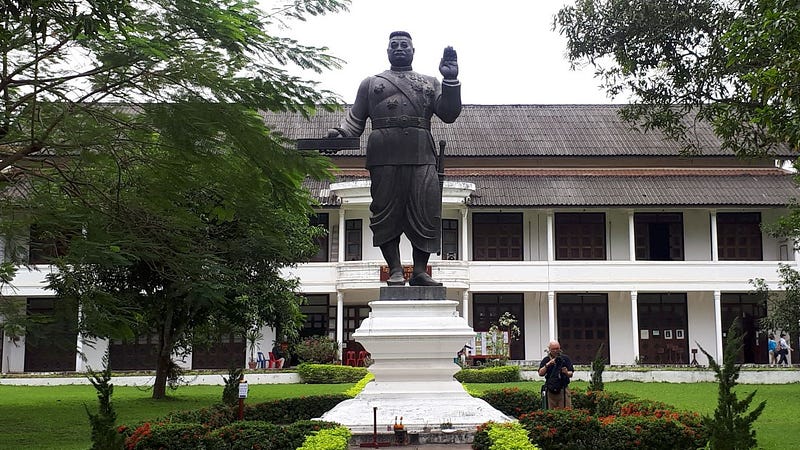
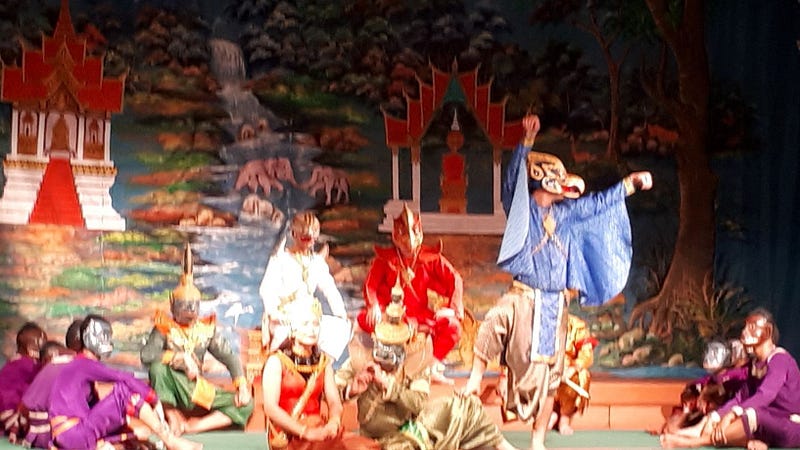
One evening we attended a folkloric play about the founding of Laos at the auditorium above. It was in Laotian, but there was a synopsis in English. The costumes and scenery were exceptional.
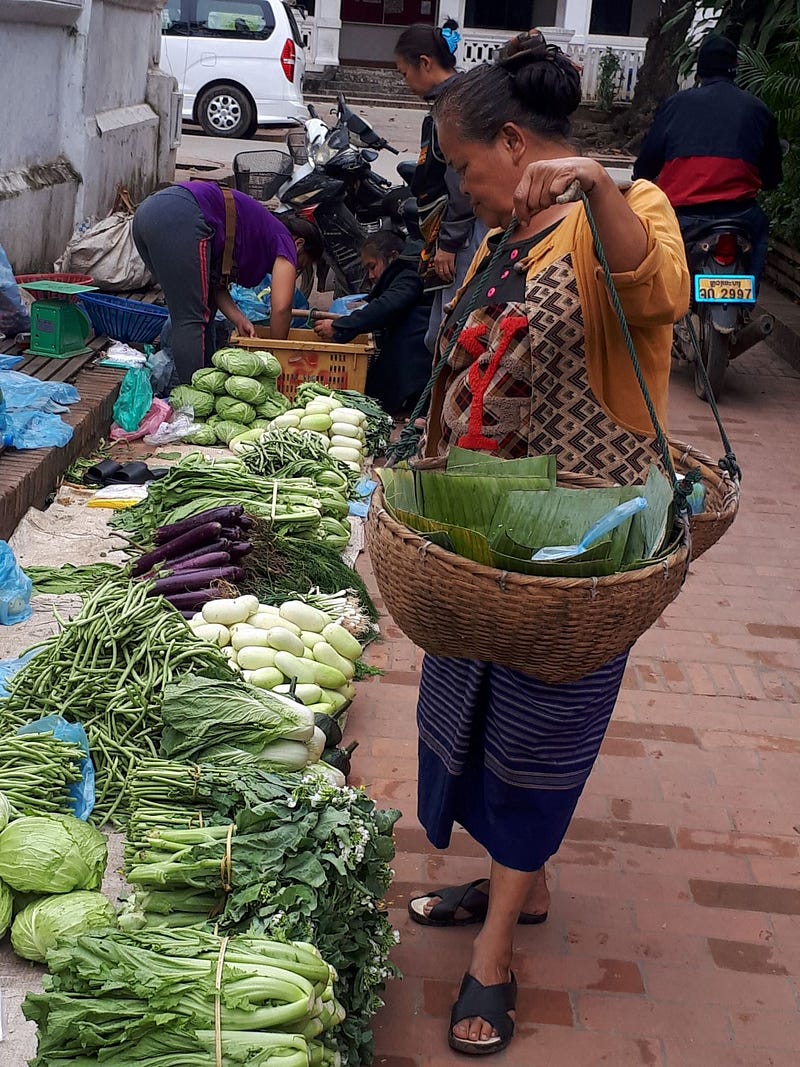
Among other things to do in Luang Prabang is a visit to the morning market where you can buy fresh vegetables and even succulent rats.
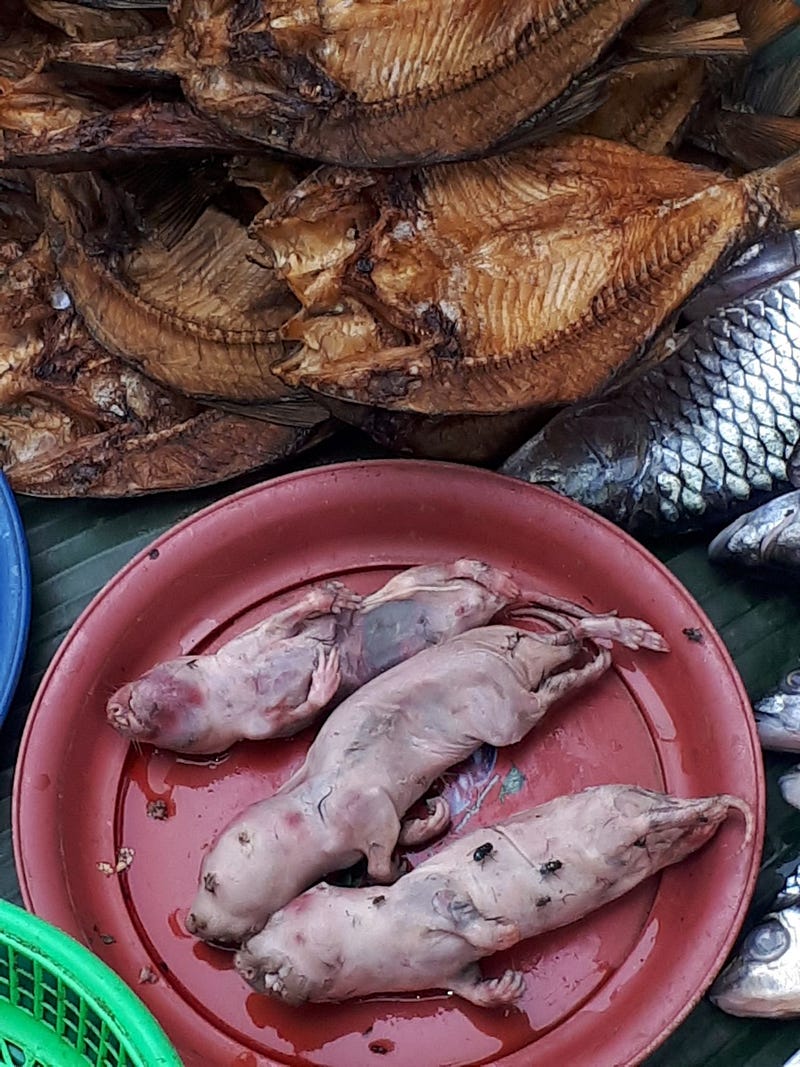
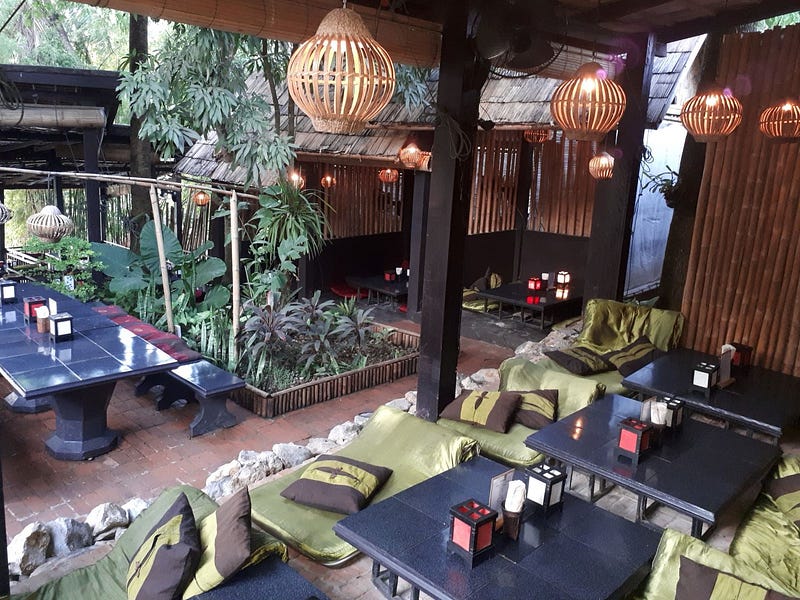
Luckily there are a number of very good restaurants in town. Our first day in Luang Prabang we crossed the Nam Khan river to a lovely restaurant where diners sit on cushions on the floor next to low tables. It was quaint and the fare was good (no rats on the menu).
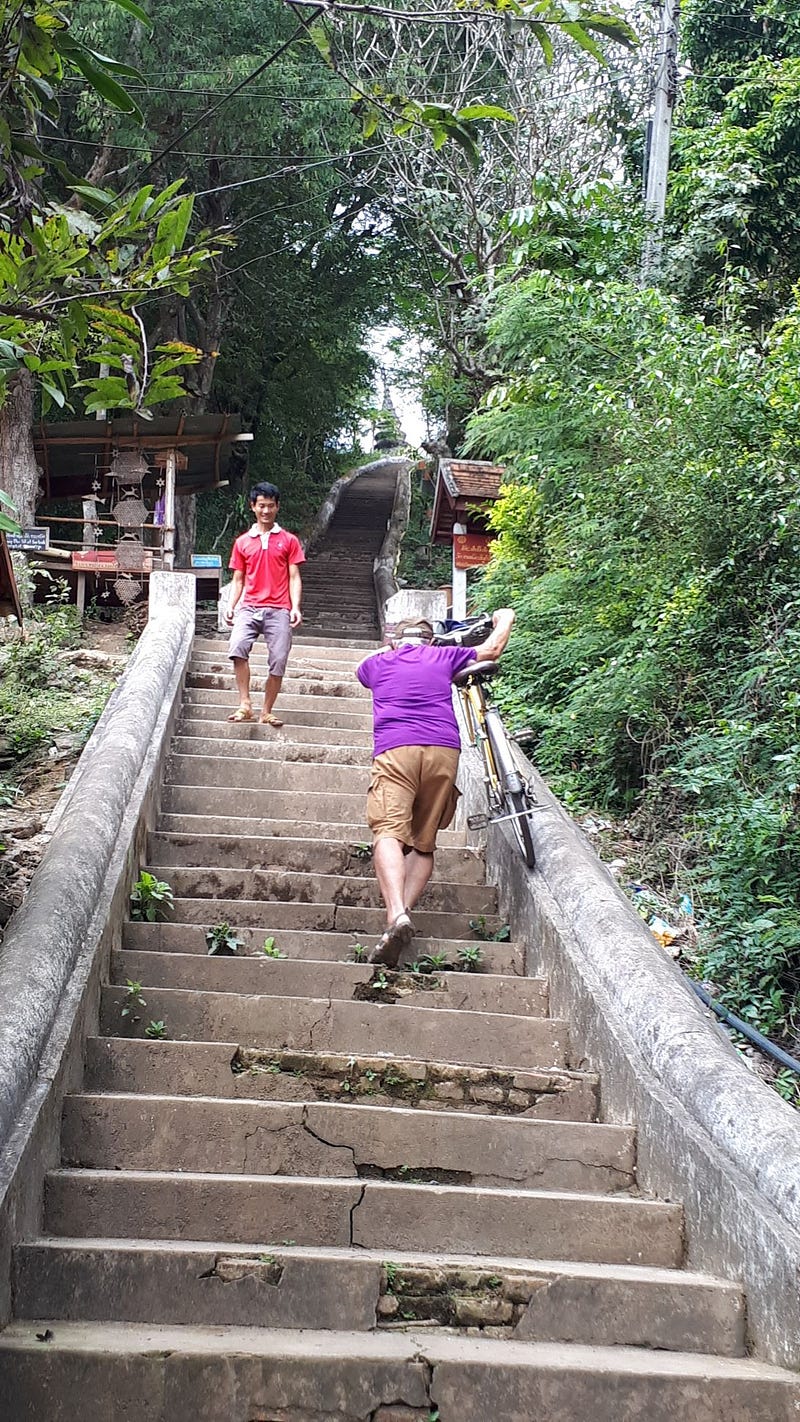
Luang Prabang sits at the confluence of the Nam Khan and the Mekong rivers. One day we decided to rent bikes and explore the other side of the Mekong. I didn’t realize that the bicycle path was quiet a ways up from where the river boat left you when you crossed the river. As a result, I had to carry the bikes up to the top of the hill. First mine, then being a gentleman, I went back down to carry Marie’s up too. We only did that trip once. Unless you count going back down which was considerably easier.
The trip to the other side was worth it though. That side is less touristy and we had a great experience.
After cycling for a while we stopped for a soda or water at a roadside place and noticed music and something going on. We asked the owner of the spot what was happening and he said, “Just people having a good time.” We decided to approach and see what it was and were invited to join the group. There was music and dancing and some people singing karaoke. We were given glasses of rice wine and Marie was invited to dance with the other women. It was great fun until it started getting rowdy and we thanked our hosts and continued on our bike ride.
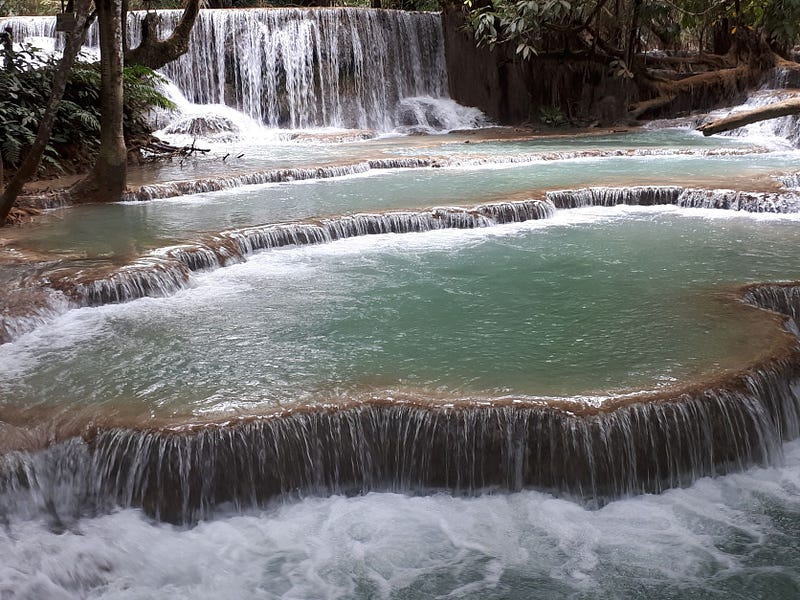
Another day we visited the Tad Thong waterfalls. This is a series of falls that cascade down a hillside, You can bathe there and there is a small restaurant where you can eat. If I had know that beforehand we would have taken our bathing suits. The falls were beautiful.
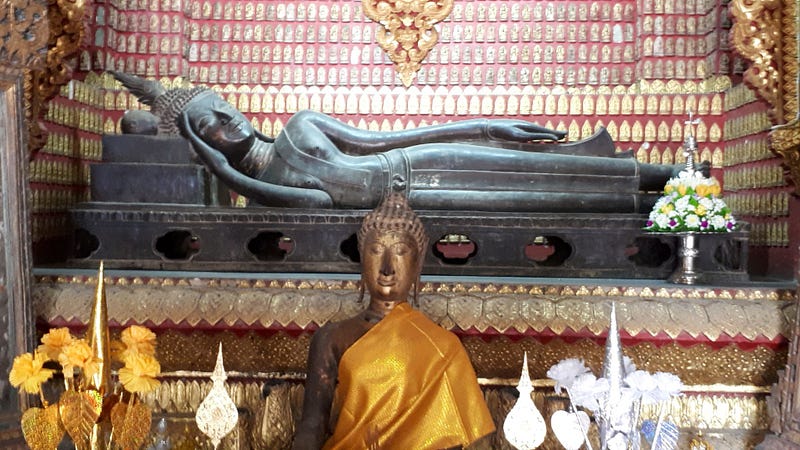
After a week in Luang Prabang and seeing temple after temple and statues of Buddha, we continued on our journey.
The plan was to go from Laos to Thailand. We decided the most fun and “slow travel” way to get to Thailand was by a Mekong river boat. There were luxury boats for tourists, but when we looked into these they were outside of our budget. There were other boats without sleeping quarters that were considerably cheaper.
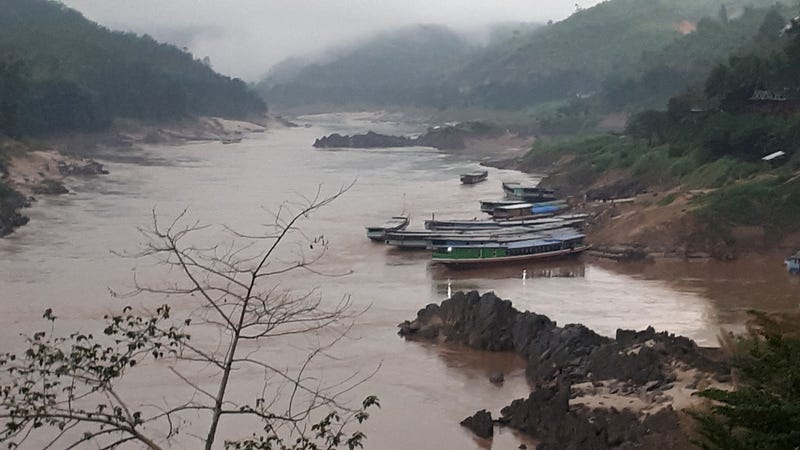
These less luxurious vessels left early in the morning and stopped for the night at a small village on the river called Pakbeng. Hotel accommodation with breakfast included was provided for ongoing passengers to Thailand. Transportation to the hotel from the dock was by taxi truck (also included).
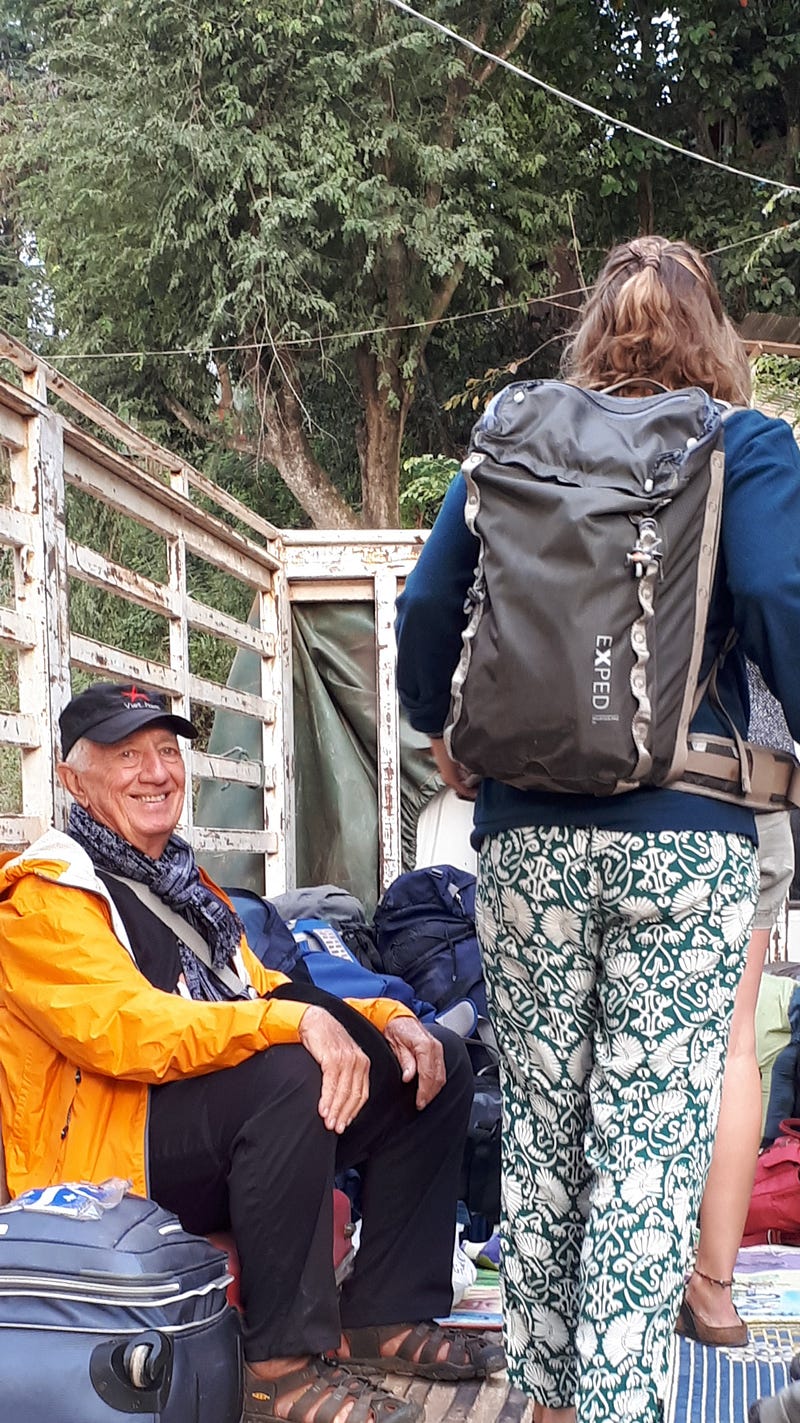
These are not tourist boats. They are the boats that the Laotian’s use to get around. The seats are recycled airplane or bus seats. There are a few tables and a kitchen and toilet in the back of the boat. your luggage is lumped together in the bow.
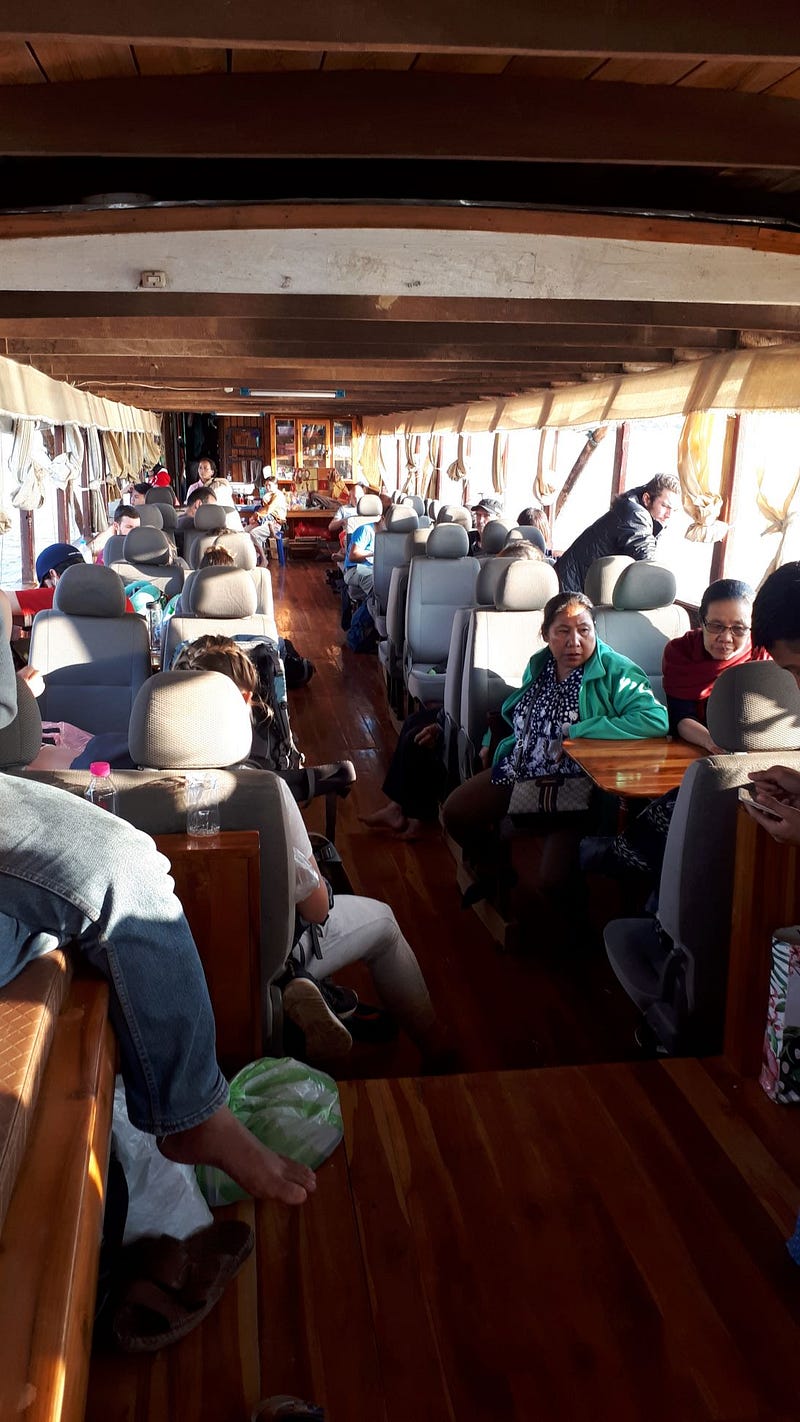
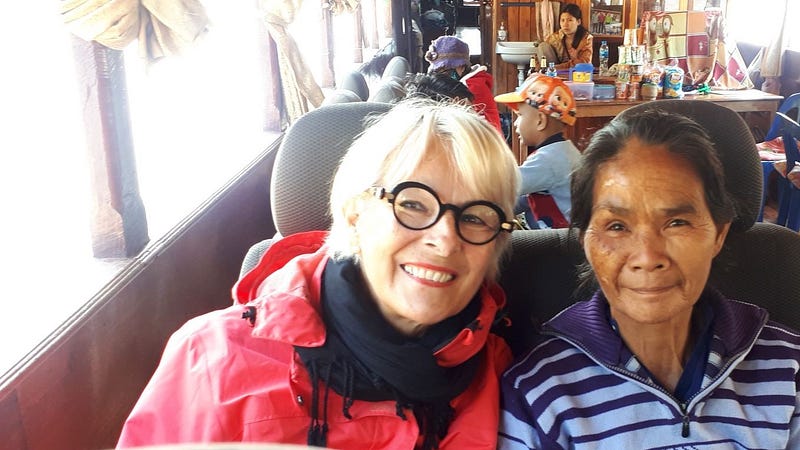
The upside of this is that you get to meet “ the real people” Marie sat with an old Laotian lady for most of an hour having a conversation that I think neither of them knew what the other said.
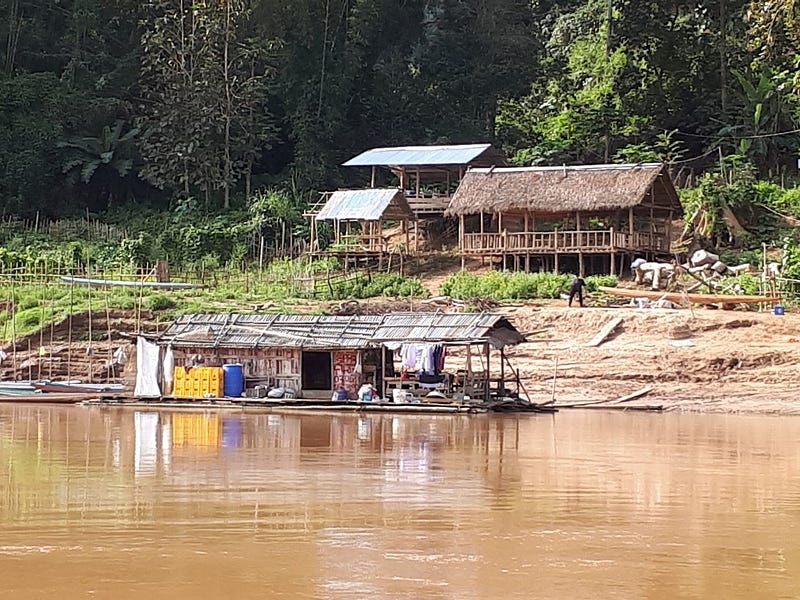
All along the way we had a taste of life in Laos. Many people live and work in houseboats on the river.
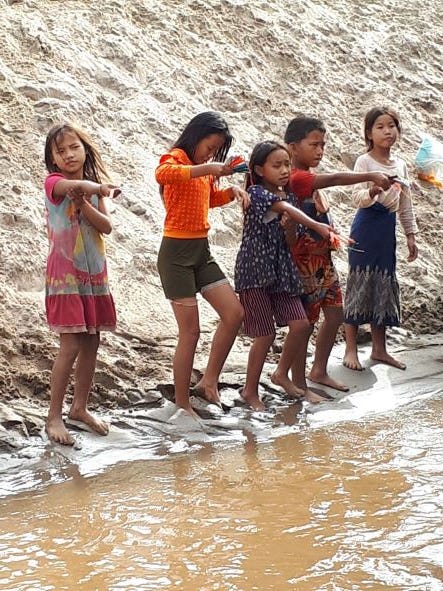
As the riverboat approaches a village, people come out to greet arriving passengers or to say goodbye to someone boarding for other parts. Young girls sell trinkets as the boat comes near to shore, and children greet their parents arriving.
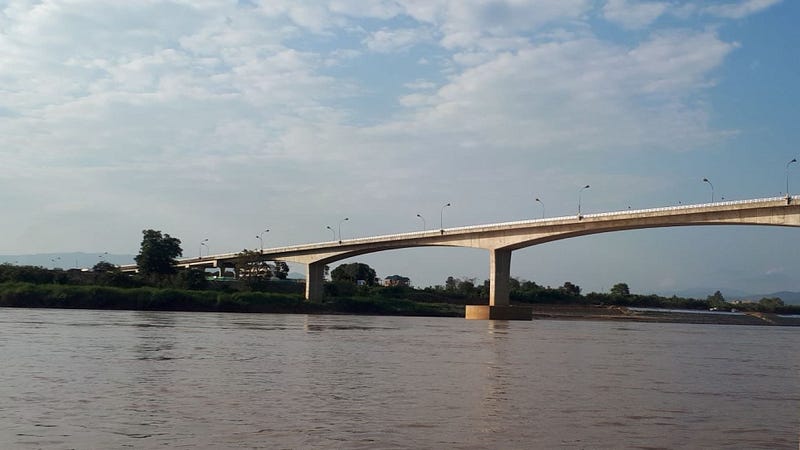
After the better part of the second day we arrived at the Laos/Thailand frontier. A bus took us across the Mekong to the Thai side where after going through Laotian emigration to get our exit visa we entered Thailand.
Al in all, the month in Laos was one of the best parts of our 5 month tour of South East Asia.
Thanks for visiting.


