The Kremlin’s Vision of the Future
How outdated thinking will change the world
This week I had a meeting at a think tank in Moscow, where I was invited to a four-hour discussion on history and politics. It was important for me to be “on the other side of the front” and to talk to the people responsible for ideologically justifying the actions of the Kremlin. This was necessary to better understand the prospects for the current confrontation between Russia and the West. I will be honest, it was not easy. Until the last moment, I have endeavored not to sever professional ties with the expert community here, but after what I have heard, I will probably have to do so.
Today I want to share my impressions and tell you what these people want and what image of the future they can offer the world.
First, the think tank people are surprisingly more afraid of Western neoliberalism than of NATO’s military capabilities. New ideas frighten them more than tanks and fighter jets. This is an outdated model of political thinking, based on an ideology deeply rooted in the Soviet past.
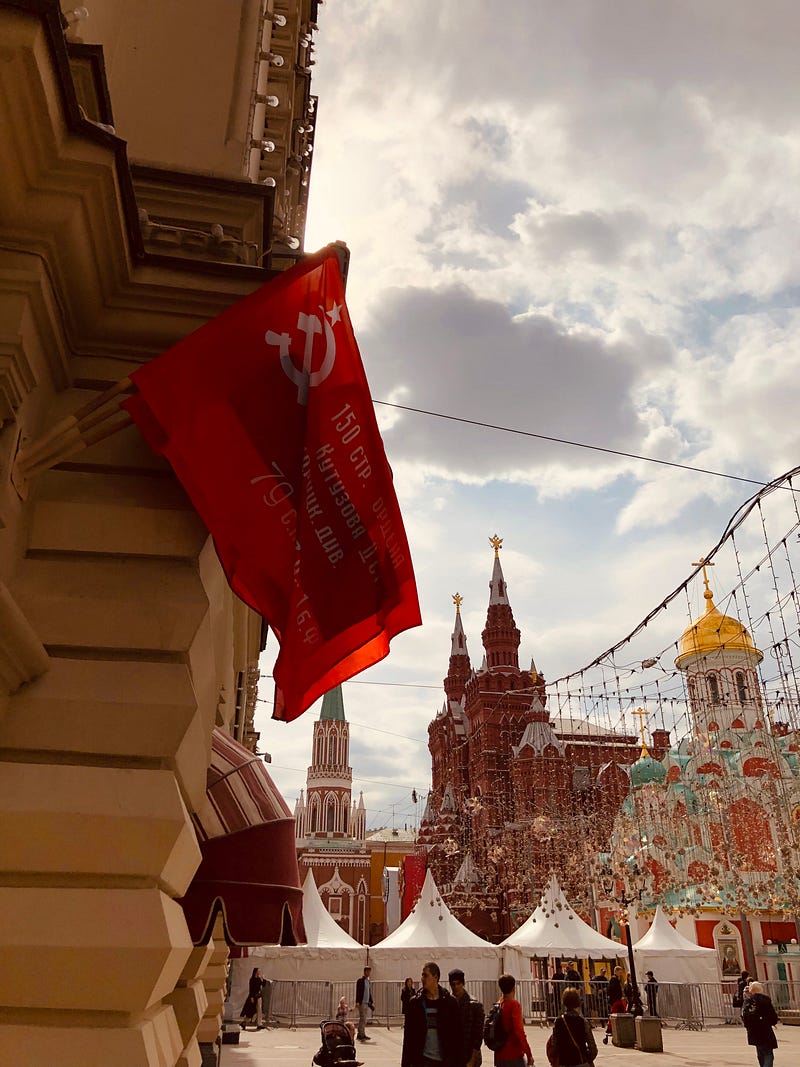
Politically and socially, the current Russian Federation is a continuation of the Soviet system. If the USSR was based on Marxism-Leninism, Putin’s Russia is based on its modern version — National Bolshevism (perverted Marxist slogans mixed with nationalism and chauvinism).
When Vladimir Putin came to power, Russia reproduced the classic social model of the mid-19th century described by Karl Marx — the flourishing of finance capitalism and a return to a caste system of society that encouraged social and economic inequality through the exploitation of wage labor. The social stratification of Russian society before Putin, in the mid-1990s, was at levels not comparable to those of today. However, at the turn of the 2000s, Russian capital adopted Marx’s theory of “300 percent profit” and put it into practice.
Marx’s views were literally applied by Putin’s oligarchy and Russia became a monetocracy, i.e. a materialistic world of money power. If in 2000 there were zero names on the Forbes list of Russian billionaires, in 2023 there are already 110. It would be hard to find a country that has experienced such fantastic growth.
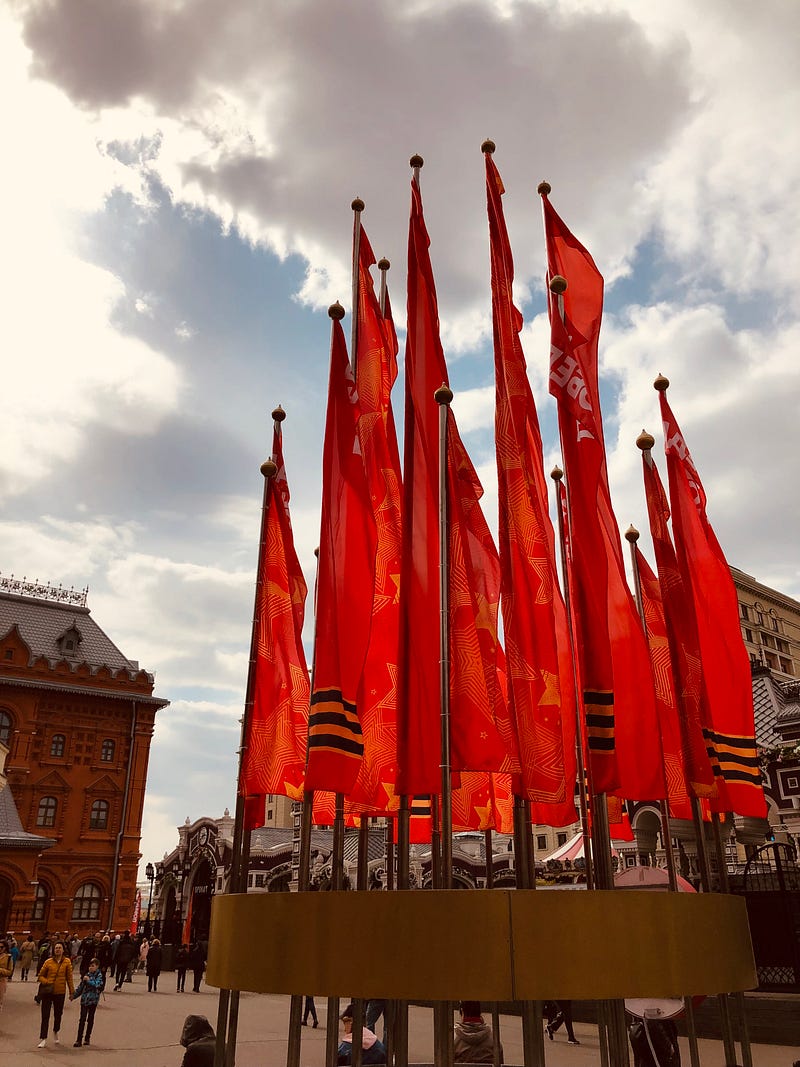
As a result, a few people were enriched, while almost everyone was marginalized. Not surprisingly, the “socialist views” of a significant part of the population in Russia, as recorded by modern sociology, also have their own specifics. “Nostalgia for Soviet times” is one of the ideological pillars of the current regime. Of course, official propaganda has sought to encourage public approval of the Soviet legacy in every possible way. One of Putin’s first steps as president was to restore the old Soviet anthem in 2001.
However, the regime has deliberately turned the Russian population into millions of beggars and economically (and therefore politically) powerless people. The high level of employment in Russia today is paradoxically combined with a low level of income. (In the Soviet Union, unemployment did not exist either, as labor was compulsory for all, but low-paid.) This means a high degree of society’s dependence on the state, underwriting memories of the “good Soviet times” when the state was responsible for people’s well-being and ensured minimum social standards. Nostalgia for the USSR in modern Russia means a desire to escape from the harsh reality of contemporary Russian life.
Thus, the Russian system, emulating the USSR, is based on social injustice and the violation of citizens’ economic and political rights. This was not least the reason for Putin’s full-scale invasion of Ukraine in February 2022. According to former Kremlin advisor Vladislav Surkov, the internal social tensions accumulated in Russian society were decided to be exported to the territory of the neighboring state by launching a “small victorious war.”
“Social entropy is very toxic. It is not recommended to work with it in our home environment. It should be taken somewhere far away. Export it to be disposed of in foreign territories.”
In his article published three months before the invasion, Surkov argued that exporting chaos is not a new thing, and that imperial technologies are still effective today, when empires have become superpowers. He cited the annexation of Crimea in 2014 as an example, calling it an indicator of “the consolidation of society through the chaotization of a neighboring country.”
But apart from the banal desire to stay in power, the Putin regime obviously had more serious reasons for its aggression against Ukraine. It is absolutely true that the current war is not being fought over Ukrainian territories. The conflict is much broader, as the war has been unleashed against the West and against the entire modern world order. It is a war for a new image of the future, which the Kremlin wants to establish as dominant everywhere. That will guarantee the inviolability of its position for decades to come.
The Kremlin’s masters are trying to present the current conflict as the beginning of a “world revolution” against the hegemony of the West and the “golden billion,” while accusing the United States of treating the entire world as its “backyard,” where they can do whatever they want. Anti-Western slogans in this case are not just rhetoric.
Vladimir Putin undoubtedly wants to propose a new agenda that could turn Russia into the leader of an anti-Western coalition. His desired image of the future is a “multipolar world,” that is, a world divided into zones of influence of the leading autocracies. China, Russia, Iran, and North Korea would be the main players on the future political chessboard. Achieving this ambitious goal solves several problems at once:
• Destruction of globalization and the neoliberal global world order, which Russia considers the main threat to itself (they are not much afraid of NATO’s military capabilities);
• Fragmentation of the West and its disintegration. This implies the elimination of the EU supranational institutions in Brussels, the rupture of allied relations between Europe and the US. Russia will take the place of the United States in Europe and interfere in European politics as it did in the 19th and early 20th century;
• Acquiring a zone of influence (and security zone) in Europe, Central Asia and South Caucasus sufficient to provide the Kremlin with technological, economic and human resources. I suggest paying special attention to Lavrov’s ultimatum to the U.S. and NATO countries in December 2021. The minimum end goals of confrontation with the West are outlined there.
• Ensuring sustainable continuity of power in the Kremlin, keeping the current political model unchanged for decades to come.
If we analyze these features of the Kremlin’s vision of the future, we can draw some alarming conclusions. It is becoming more obvious, that the world is dealing with a radical group of politicians who have seized power in ⅙ of the landmass and in a country with nuclear potential. This radical group wants to revolutionize the global world order. The Kremlin sees the future as a divided world where spheres of influence are protected by international treaties and nuclear weapons. Each of the great powers will have its own access to trade flows, markets, technology, and natural, economic, and human resources sufficient to sustain autocracy indefinitely.