Summary
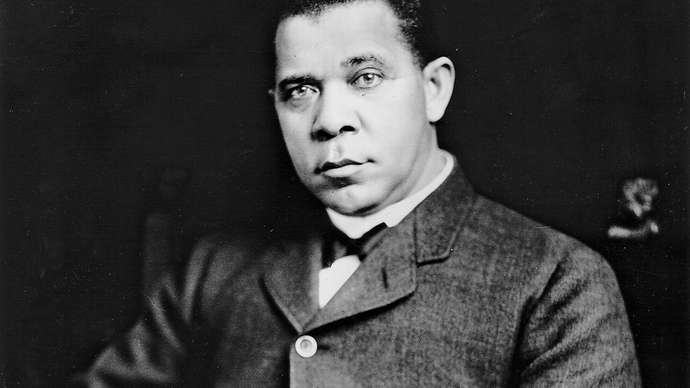
This web content presents a reflective poem that contemplates self-awareness, change, and the unknown, inspired by Booker T. Washington.
Abstract
The poem, titled "The Knows," delves into the uncertainty of life and personal growth. It opens with a contemplation of the new beginnings each day brings, acknowledging the constant presence of responsibilities. The speaker questions the possibility of rest amidst life's demands and ponders societal treatment and self-identity. The poem reflects on the dynamic nature of life, the emergence of new opportunities, and the challenge of choosing between taking control or letting events unfold. It touches on the struggle to adapt to change and the pursuit of goals, acknowledging the difficulties of life and questioning the need to succumb to pressure. The poem concludes with a call to action, emphasizing mutual aid and the importance of sharing this wisdom.
Opinions
- The speaker expresses uncertainty about the outcomes of each day and personal choices, highlighted by the recurring phrase "Who knows?"
- There is a sense of weariness from the continuous cycle of responsibilities and a desire for respite.
- The poem conveys a reflection on societal perceptions and the feeling of being treated differently, questioning whether there is something inherently wrong.
- The speaker acknowledges the power of self-determination ("I can grab the bull by the horns") while also considering a more passive approach to life's uncertainties.
- The presence of infinite closed doors suggests a sense of limitation or missed opportunities, but also the potential for new paths to open.
- The poem expresses a philosophical stance on life's challenges, suggesting that while life is tough, one need not succumb to its pressures.
- The final lines advocate for a communal approach to overcoming life's challenges, emphasizing the value of helping oneself, others, and the collective.