
The Kingdom Is Asleep: Stories & Spells
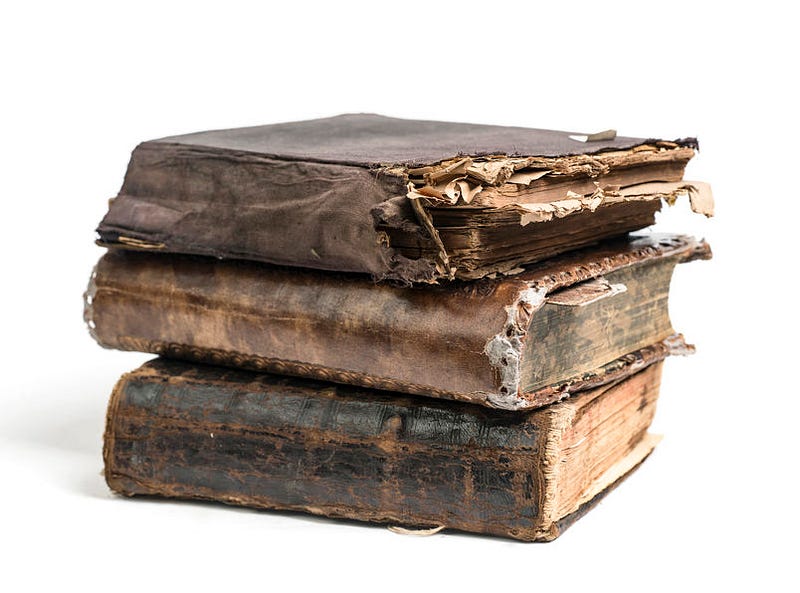
In the story of Briar Rose, we find a kingdom that has fallen asleep under a spell. The kingdom is surrounded by a briar thorn hedge that no one can seem to penetrate.
Perhaps you see it too; a world under a spell. Or many spells.
It’s good not to be naive about the number of spells we are under these days and how costly it is to break them.
But I’d like to wonder a bit about the relationship between stories and spells.
In her book The Celtic Spirit, Caitlin Matthews, Celtic scholar and author, poses the question like this:
“She tells that when Merlin is exposed to the terrible carnage of the battle of Arfderwydd he becomes mad and runs into the depths of the forest. Within the forest’s embrace, he becomes one with the trees and seasons and puts aside the terrible sights he has seen to focus upon the gifts of the wild world, becoming rusticated and “uncivilized.”
Ever pertinent and prophetic, he sees through the pretexts and pretensions of those who come to lure him back to civilization with the sure instinct of an animal.
He does not respond to anyone except his friend, the Welsh poet, Taliesin who comes to sit with him. Only then does Merlin respond, asking the odd question, “Why do we have weather?”
We see here a man deep in trauma — a sort of fracturing of the mind. A fractured mind is wide open to all manner of spells. Sometimes spells come from the outside but sometimes they are a decision we make that becomes a spell, forged in the emotional intensity of the moment. I could imagine Merlin carrying the spells of, “There is no more beauty in the world of humans” or “Humans can’t be trusted”.
And so Merlin is not only traumatized but under spells.
We will come back to them towards the end and how stories might be used to heal trauma and free people of their spells.
I’m not stuck on semantics.
I know that, for some people, ‘story’ can mean ‘lie’ or ‘untruth’ or ‘didn’t really happen’. I know that, for some people, the word spell has many beautiful and powerful connotations.
To say anything at all on this, I’ve had to find two words — story and spell — and press them into a service that I think they were built for. I hope I am right and that I’ve not asked too much of them. What I am laying out are two different ways of proceeding through life, two sets of tools that might be used: the path of stories and the road of spells. If you have different names for those two or a more nuanced understanding, and if you use or understand these words differently, bless that too.
Are spells the same as blessings, prayers, hexes, charms, conjurings and curses or incantations and enchantments of all kinds? For the sake of this piece, I am saying, ‘no’. For the sake of this piece, I am using the word ‘spell’ to mean something in particular — a sort of temporary, energetic projection and imposition of the human will on the world that binds the world and must be broken to become free of.
When I say ‘story’, I don’t mean Aesops fables — the predigested pablum with the moral handed to you so that the story itself becomes unnecessary. I mean the good stories. The folklore. The old tales.
In short, I want to make the case that stories help us see the world more clearly and become more human and spells prevent us from doing so.
It must also be said that there is more going on in this world than storytelling and spell casting. There’s more to the world than listening (or not) to stories and being put under someone’s spell (or resisting it).
The binary notion that the world divides into two opposing sides may be one of the greatest spells of our time.
So, with those provisos and a heaping portion of ‘maybe’, I offer up this wondering on some of the differences between culture and civilization to set the table properly.
Culture and Civilization
From Stephen Jenkinson, I learned the following formulation that begins with his wondering of what a tool is.
Tools are such a deeply human thing. You can find them in every human culture.
They extend the function and range of the human hand and they do it in a way that the hand can still recognize itself. But then, what of machine? Is machine just the exponential increase of tool? Or could it be that machine, while it can extend the range of the human hand (or ear, or eye or nose or mouth) does so in a way that the human body no longer recognizes itself? If so, perhaps this is because a machine’s function is not really to extend the human hand but rather to extend the human will.
By the time that machine becomes AI, we have lost all reference to the human body. We face an utterly disembodied extension of our will and imagination.
The human hand has its limits. But the human will and imagination? We’ve yet to find the limits for those.
To deepen this a step further: It seems that all deeply achieved human cultures find roots in their willingness to obey the limits granted to them by life and all civilizations, without exception, find themselves uprooted by their unwillingness to do so. The willingness to submit to limits is what creates the requisite grief and gratitudes of being a human being while seeing those same limits as the enemy of our freedoms creates grievance instead.
And so on the one hand we have: tool, hand, culture and grief.
On the other hand we have: machine, will, civilization and grievance.
This is what I remember hearing from Stephen. I hope I’ve rendered it faithfully for you here.
And, if I might be so bold, I’ll add one more to the list.
That which feeds the memory in humans to obey the limits and ways of life is ‘story’.
That which feeds the entitlement of humans to trample over every limit, boundary and ending they find, and which whispers to humans, ‘Those don’t belong. They shouldn’t be there.’ are ‘spells’.
Stories are a kind of deep reportage. Spells seem to be a kind of argument with how things are.
The truth of the world is that everything ends, everyone dies, nothing is forever and nothing is inevitable. Story gives voice to this. Spells conceal this from us.
Stories are the food of culture.
Spells might just be the synthetic drugs and processes — the antibiotics, steroids, the uppers and downers, the pasteurization and preservatives — that allow civilization to continue long past its due date.
To say it another way, spells are the undoing of culture. Stories are the undoing of civilization.
Stories and Spells
We could begin by imagining that spells are temporary and stories are forever.
Spells come and go. But story? That’s here to stay. A stone house that’s built on the plains only lasts so long. But the plains it is built upon last much longer. Story is enduring and trustworthy. Spells happen inside of story, not the other way around.
Stories tell it how it is but, like things our parents and grandparents told us as teenagers, you’ll only learn that later when their words turn out to be reliable over and over.
We might also begin with the observation that the spellbound mind is incapable of seeing life as it is — with all the deep grief and overwhelming appreciation that life entails and demands of us. The spellbound mind is full of grievance and sees the world as a stone on which to grind its axes of how things ought to be.
Spells blind us to the world as it is. And, if you are blind to the world, if you don’t understand its way, you’ll trip all over the place and struggle to make your way in it. “That stump shouldn’t have been there! What was that tree thinking? That tree was trying to trick me!” says the spellbound mind. Stories articulate the architecture of how it is. Spells conceal that. This leads to constant feelings of being let down and surprised and being caught flat footed.
The spellbound mind, feeling betrayed by a world it has never worked to understand, feels constantly stabbed in the back. Grievance galore.
Stories can lead to beautifully broken hearts. Spells only to bitterness.
Stories can carry the elixir of remorse. Spells lay the groundwork for resentment.
Stories help us see the world more clearly and so we trip less often and, even when we do, we can grudgingly see that tripping is a part of the story too that we forgot, or never heard.
Story & Memory:
The spellbound mind seems to be a fascist mind. Rigid and intolerant of that which it doesn’t understand.
The world, thankfully, seems to be itself unfailingly. It doesn’t change its ways because we don’t like it. It is consistent even in what we see as its inconsistencies.
Also thankfully for us, some of our old timers, a long, long time ago, paid attention to this all long enough and deeply enough to notice how things were. And, with the capacity for language entrusted to them, they developed a capacity to pay homage to what they saw — the beauty and the horrors of it. The world was not a blank slate for them to project their own ideas but a place to learn. The poets tried to have the mountain appear in the poems not to use the mountains as a place to project their own confusion and pain onto. The poet’s skill in not in evaluating the world but in observing the world.
Spells seems to argue with the world. Stories try to be the voice of the world not exactly responding but always remembering.
I once heard from Linda Williamson, widow of Scottish traveler and storyteller Duncan Williamson,
You’ll find in stories from indigenous people not only the affirmation of scientific discoveries, but the profound truth and beauty of our cosmos. Working among the Inuit of Greenland’s polar north a hundred years ago, ethnologist Knud Rasmussen, published these words from his informant Osarqaq, ‘Our tales are narratives of human experience, and therefore they do not always tell of beautiful things. But one cannot both embellish a tale to please the hearer and at the same time keep to the truth. The tongue should be the echo of that which must be told, and it cannot be adapted according to the moods and the tastes of man. The word of the new-born is not to be trusted, but the experiences of the ancients contain truth.’
Stephen Jenkinson echoes these words too,
“Wise people are not looking to be comforted in what you say but to recognize the world in what you say. It’s a relief that the grotesqueries are finally lucid.”
It is worth noting that the word story comes from the same root as the word ‘storage’. Story could be understood as ‘the storehouse of memory’. It is how memory is passed along.
That’s story.
Spells are a different sort of creature.
If stories help us to see the world more clearly, then spells are what stop us from seeing the world clearly.
Spells are beliefs. One possible understanding of the etymology of the word ‘belief’ is this: the ‘be’ is an Anglo Saxon, Germanic prefix could be understood to have a function of intensifying, putting one on the receiving end of. The ‘lieve’ suffix comes from the same roots as the German ‘liebe’ meaning ‘love’. And so, the first order of business of a belief is to make you fall in love with them. You are set upon by a love for the thought that has come to you. Spells seem to whisper that they will keep you safe and that you need them and so, in strange Stolkholm Syndrome fashion, we often fall in love with the spells we’ve been put under.
Spells are the religion of Scientism while the scientific method itself is a storied approach to the world. Any of the ‘isms’ could be considered fertile ground for spells and spellcasters.
In my August, 2018 interview with Stephen on Elderhood, Stephen said this. It feels relevant,
“What I was lucky enough to be in on from probably a very early age is stories, of all things, and stories are not just ‘one thing after another’. Stories have a very particular arc or you could say only stories have arc.
Arguments don’t. Diatribes don’t. They have intentions. They have sometimes diabolical strategies but there’s nothing strategic about a story. A story has a kind of arc that’s somewhat user friendly but absolutely world friendly. There’s something about the arc of a story that is as naturally occurring as snowfall or the rain that’s falling just outside the door as I’m talking to you now.
Naturally occurring doesn’t mean without consequence, by the way. It doesn’t mean benign but it certainly means that it’s in the order of things, that stories virtually seem to tell themselves although God knows they need a good teller, and they need a good hearer to appear as a story. I was exposed to the arc and the lilt of storyness or storydom, or something from a very early age.
Of this I’m fairly certain because I’ve never not heard that way. It’s in my ear, not a particular story, but storyness is in my ear and everything is available to me that way. I’ve found that people credit me with a certain capacity for memory but it’s not a factual memory.
The memory that I have is a kind of nuanced Geiger counter of ‘story movement’. That’s how I remember things, because the story suggests in almost a serpentine fashion what preceded the moment that you’re enquiring after right now, and with enough attention to that, the story begins to suggest to you something about the moment that you have not quite arrived at yet.”
And, in his Interview with the It’s Hot in Here Podcast (50 minutes in or so) Stephen said this,
“The beautiful thing about stories is… there’s no argument in them. There’s no ideology in them. Stories are an ideology free zone where you get to recognize the comings and goings of life that are apparent there regardless of how you feel about them which is a more important realization to have I think. By the same token, there are no stories in arguments which what the news is all about now. It’s all about arguments and no story. I think people are withering for lack of stories wherein their own lives become recognizable to them. I think there’s something in [stories] that can make their own people’s lives slightly more available to them than anything that they can hear in the popular media.
It could be this: spells are way humans have of arguing with the Big Story. Stories are a way we cooperate.
Spells & Power
And yet, spells are not exactly the opposite of story. Opposite suggests two equal things side by side. Spells seem to be an imposite on story; they impose on it — like the old stone house on the prairies.
Spells describe how things should have been or should be now or in the days to come and impose reality. Stories describe how they were, are and might yet be and invite memory, presence and possibility.
A child told, “You can’t sing,” or “you’re ugly” or “you’re too needy” may make a silent vow to not sing, to be prettier or to be less needy but, if it goes on long enough, that vow can become a spell. That thought imposes itself on the reality that the child can sing, is beautiful and that their needs are worthy and belong.
I can imagine Merlin running away from the battle and, at some level making the vow to never trust humans again. I can imagine that vow turning quickly into a spell.
I can imagine Taliesin finding him still in thrall to and sustained by that voice of the spell whispering to him, “Trust me. Humans are vile. Humans are murderers. Humans are evil. There’s no beauty to be found amongst them that you can trust. But you can trust me. I won’t let you down. I will keep you safe.”
And maybe, for a while, that spell kept him alive. Maybe spells can do that too.
Culturally, we are under so many spells as well. The Spell of the Universal — that what is true for us here must also be true for them over there which blinds us to the mandatory diversity of the world. The Spell of the Inevitable — that I will see you again tomorrow or even wake up tomorrow — when no such thing is promised to us. The Spell of Single Causes — that things have only one source or origin when it seems to be true that it takes at least two to create one.
My friend Dawn Dancing Otter, having read an earlier version of this essay, wrote me these words,
The first time I was awake to religious spell casting was at age 6 when our priest declared, with palpable emotional density, that ‘woman leads man to sin through her body’. The spell — my body was the devils tool to seduce men to sin — toxified and scarred every soft place within me. Ironically, it was Tantra, the sacred art of intimacy through conscious sensual meditation, that broke the spell. And in all of that willful binding of not just my mind, but how I show and receive Love, I was in a madness very like your description of Merlin. The first time I became aware of political spell casting was hearing George HW Bush give his New World Order speech. He described America as ‘a thousand points of light in a broad and peaceful sky’. This was a ‘vision’, he asserted, not a poem, or a story. And, I could see what he was spelling. Layers upon layers of control, forceful invasion of peace in the peaceful sky. We are surrounded by the dark arts. And it’s not us witches, who, like Merlin, are immediately aware of those who might civilize us. It’s the dark arts of empire.
There are hundreds of spells we swim in every day, or that swim around inside of us, clouding our capacity to see the world clearly.
Spells are paved roads. They say, “We can get you there faster, regardless of the consequences to the world that these roads have,” (and paved roads are full of nothing but consequence for the world). Stories are trails, made by foot, hoof and paw, which follow the contours of the world as it is.
Spells have their basis in power. Stories have their basis in the land.
Spells always seem to have an agenda that serves someone who wants to be in control. Stories serve life.
Stories come to us from the world and are entrusted to us. Spells seem to come from humans.
Spells seem to have a goal to have something happen regardless of the circumstances. Consequences be damned. Stories are attesting to the circumstances and the consequences, a way of saying, “Something has happened.”
Stories Make Humans:
Imagine this: story is not only a noun but a verb. If it is a verb, then what does story do? One answer might be this: it makes humans.
“… schools were not valued by the Travelling community. Instead, stories were told and retold and passed on. Stories were the education which gave you the lessons you needed to grow up to be a good person.” — Duncan Williamson, The Flight of the Golden Bird
To come at this from another direction, humans have a mind the shape of a story. That’s why we love stories so much. They are the shape and texture of our psyche. This is why listening to stories makes us better, more responsible humans. Each plant and animal requires different kinds of foods. One of the main foods our mind’s need as humans is story.
To say this all differently: The bigger the story you can see, the more human you become.
Spells seek to make humans the center of the universe because spells are an expression of the human will, and our justifications for it, but our humanity is found in our lived relationship to the rest of life not in being in the center of life or at the top or in control. It is a strange mystery, in the anthropocene, humans are now everywhere and have touched everything but have never been more lonely (or less human). Humans are not the pinnacle of anything, we are the most dependent creature.
In his book Returning to the Teachings, Rupert Ross writes:
“Basil Johnston speaks of the Ojibway hierarchy of Creation in Ojibway Heritage. It is not based on intelligence or beauty or strength or numbers. Instead, it is baed on dependencies. It places the Mother Earth (and her lifeblood, the waters) in first place, for without them there would be no plant animal or human life. The plant world stands second, for without it there would be no animal or human life. The animal world is third. Last, and clearly least important within this unique hierarchy, come humans. Nothing whatever depends of our survival. SO much seems to flow from that focus on dependencies. Because human beings are the most dependent of all, it is we who owe the greatest duty of respect and care for the other three orders. Without them, we perish. Our role is therefore not to subdue individual parts of them to meet our own short-term goals, for that may disturb the balances between them. Instead, our role is to learn how they all interact with each other so we can try our best to accommodate ourselves to their existing relationships. Any other approach, in the long run, can only disrupt the healthy equilibria that have existed for millions of years and which, obviously enough, created the conditions for our own evolution.”
Humans are new to this world. Though we deeply belong here, we are the closest thing there is to a guest in this world. We have been welcomed into something. Even in Genesis, the world was here before us. We were born into it. It was not born from us. It is not here for us.
First there was the soil.
Then animals discovered how to carry the soil within them so they could move.
Then humans came — the forgetful and foolish little brother — and seemed to need to craft another type of culture that could remind them how to be human; a kind of culture that could remind them of the Big Story.
If you can only see a small part of the story and this small story doesn’t include in it the deep and vast mysteries that you don’t know yet (or worse that little story includes the belief that you should know or, even worse, that there’s nothing else to know) you’ll likely find yourself trapped in quicksand of grievance but, if you can let in the bigger story, that is likely to melt your hardened places back into the healing cordial of grief.
Stories might be understood as a sort of a kinship building bridge between ourselves, our ancestors, the natural world and the unseen. Spells are this same function — the bridge of language — in collapse. Its bricks and timbers are used to build walls.
Stories seem to live in the ‘weld’ — that ring of land between the village and the wild where our love of the world and its love of us meets and leaves a flower on the stone to mark their encounter. Stories are that flower — the residue of their love for each other, a small sign of a much bigger story Stories somehow give voice to both and offer food to both. Spells seem to live right downtown and look out past the city walls with suspicion.
Stories deepen kinship and help humans locate themselves in the world. Spells leave us increasingly lost and confused.
Spells & Seduction:
Spells seem to bully, demand or seduce. But stories are courtesy.
A spell is a seductive woman standing on a porch luring you, with immense promises, inside a barren house and then locking the door. Ah spells. They offer you free admission but you have to pay to get out. They promise paradise but they deliver a prison and the bail is costly.
Spells are fast food, empty calories and a smooth drink that goes down way too easy. As the old Gaelic proverb goes, “The wine is sweet but the paying is dear.”
Stories offer real food, home made, grown in that garden just out there, kinship fashioned over time and earned from time in the saddle together.
Spells ask nothing of you. They seems to be offering something to you but, all the while, they are like the handsome man who come close and seems to be giving you all the love, contact, camaraderie and flattering attention you could ever want, all while he is picking your pocket and leaving you poorer than you were while you smile and wave farewell, hoping to see him soon. You won’t realize your wallet is gone until you need it and then it will be too late.
Spells’ entire art seems to be in hiding, deception and duplicity. They promise one thing but deliver another.
A story is an old one, some unassuming grandmother or grandfather, sitting on their rocking chair on the porch of their modest but ornately decorated house and offering you tea as they say, “I made it so beautiful because I knew you might be coming by.” If you sit down for tea, more of the detail emerges upclose — the carving into the wood, the timber frame construction, the wrought iron door knocker made by hand, and the beauty deepens. “There’s more inside if you’d like to come, but, if not… well the outside’s not too bad too look at is it?” You can come and go as you like. No coercion. No seduction. You never need to go inside.
Stories let you go as far as you can go but you pay as you go.
“Throughout the genre of Traveller folk tales there is a distinct lack of moralizing. Lessons are intended, but the teaching of a story can be subtle. Awareness of meanings often comes later… when you look to yourself!” — Linda Williamson, Jack and The Devil’s Purse
As Hannah Arendt put it, “Storytelling reveals meaning without committing the error of defining it.”
Spells tell you what you want to hear. Stories tell you what you need to hear.
In Lord of the Rings, Frodo says to Aragorn, “I think a servant of the Enemy would look fairer and feel fouler.” That’s often what spells are like. And stories can often seem foul and yet feel strangely comforting and settling inside us. Spells often offer us an immediate, sedating, surface easing of pain and don’t ask much of us. Stories seem to offer us a deeper comfort while asking much of us (but without imposing anything).
Prejudice is inherited without any labour. Spells are one of the main vectors of that inheritance.
Wisdom is an earned thing and stories are one of the places we can earn it. Storytellers are birds willing to sit on their eggs until they hatch.
Spells are the press releases sent out by the corporation and published, unedited by the media that is owned by the same people who own the corporation. Stories are the investigative report into everything that wasn’t included in that press release by the independent journalist.
Spells whisper to you, “You’re right.” Is there anything in the world that looks more fair and fine to us than someone confirming our take on things? Spells seem to simplify. What we call memes today could be a kind of spell that whispers, “This is all there is. There’s nothing more to know and there’s no alternative, ”(the spell at the heart of most spells). Stories shrug and say, “Maybe so. That could be true, but it reminds me of this one time…” and share some of the ‘more’ that there is to know that you didn’t even know existed and how much bigger the story is than we might ever know (or be capable of knowing) without ever making you wrong for what you said.
Spells traffic in certainty, knowing, conviction and absolutes. Story traffics in mystery, complexity, questions, revelation and wonder. Stories evoke curiosity. Spells end it.
Spells are a drug offering a quick hit of satisfaction. Stories are more often a kind of slow release medicine where the medicine might appear in stages over years.
And, in that slow release mechanism, stories shield you from the full consequence of their magic and potency by the way they carry it — stitched into the fabric of their shawl — however ornate or simple it appears at a distance. Stories tread so lightly on our psyches. They are oblique. They have depths that are hidden from the casual eye and unthoughtful approach. Maybe stories know how blundering and greedy humans can be and, out of their love for us and to protect us, they decided to protect us. It’s not that stories are hiding anything, they just don’t reveal them to everyone. It’s there to be seen, for those with the eyes to see and who are willing to engage in the prolonged courtship they, and we, deserve.
It could be something like that.
Spells traffic in seduction. Stories are the practice of courtship.
And lingering over the differences between those two — seduction and courtship — for a moment might be of use. Courtship is so faithful to time and place. Courtship seems more indigenous, based on incredible attention to the particulars of the moment and the ways of the one you are courting.
Seduction seems to traffic instead in human psychology and biology. Courtship seems to move attention to the soul. Seduction is formulas and flipping switches and courtship is building a fire by hand with a bow drill you made by hand as well. Seduction aims for the predictable. Courtship aims for the profound.
Spells Harden The Mind:
The end result of a lifetime being fed spells is a calcified mind.
A spellbound and hardened mind can no longer discover the world as it is. The world must fit into the concrete categories and boxes the mind has established for it. It can’t meet another person as who they are or be undone by them. To be undone is terrifying to the spellbound mind.
We see this with Merlin — his mind hardened and sharpened into a spear of deep suspicion that he keeps between himself and all other humans.
And so what do we become when our minds harden? We become less human as Merlin did — willingly giving up one of the strands which makes us most human — our kinship with other humans. For another person, the spell might have estranged them from nature (and many modern spells do) or from the Unseen world.
The end result of a lifetime being fed stories is a supple mind (and to be human in a deeply achieved sense is to have a supple and curious mind).
As Garrison Keillor put it, “You get old and you realize, there are no answers, just stories.”
Spells are the freezing winds of prejudice that harden things into an existing form. Stories are the crucible of wisdom the can melt the previous forms into something new, beautiful and useful for the world.
Spells are the acorn trying to be a bigger acorn. Stories are the oak inside that acorn.
Spells are the ending of imagination. Stories are the evidence of the great act of imagination that our universe testifies to.
Spells are poison carried in a secretive way. Stories are medicine carried in an old wicker basket you could see if you got close enough to peer in.
Spells have no depth just uncontrollable, wildfire consequence. Spells seem easy but quickly become unmanageable like a genetically modified organism, unrecognized by nature, blowing out on the wind far beyond the field in which it was planted.
Stories As Food:
Spells are cotton candy we eat directly. It tastes so good but leaves us starving.
Stories feed us, but indirectly. The story is not the food. The troubles we bring are not the food (no matter how much we try to eat our pain). We bring our troubles to the story and, like the good bacteria in our bellies, they metabolize those troubles into nourishment that can feed us.
Spells seem to cause us stress. Stories eat our stress.
Spells eat medicine and spit up poison. Stories eat poison and spit up medicine.
It might be something like that.
The Kingdom Is Asleep
Of course, all of this lifts up more questions. What makes us prone to being caught in the web of spells surrounding us? How do we know that we are under the influence of a spell vs. a story? Can spells hide themselves in stories? What are the particular and dominant spells of the times and places in which we find ourselves? What do spells cost us? How do we become more skilled in story? How might we become free?
The questions matter because this world doesn’t need less humans. It needs more. It needs more of us two-leggeds, deeply steeped in culture willing to learn the world as it is. With the oncomingness of ubiquitous technology in every facet of our society and every crevice of our bodies the need to preserve the indigenous of the world — the people, the languages, the cultures, the stories, the lifeways, the foods, the stories, the ceremonies and the understandings — has never been more urgent.
Spells are a form of power. But the world is not lacking powerful or power hungry humans.
“Stepping into your power is not hardest thing. The hardest thing is to step in and remain grounded, humble and generous. Much of mundane training would have us believe we are inferior. If you begin a dedicated dance with Spirit you will start to see and feel your own power. It comes in brief slices in the beginning. Like shafts of light beaming down into the shady forest. We get a glimpse of who we are and what it feels like to be powerful. If we continue our dance with dedication a glimpse becomes a knowing. Along the path come opportunities to heal. In a perfect world our awareness would grow equally as our healing grows. But that is not always the case. It is possible to be powerful and broken. And that is a challenging combination. Don’t rush to power. Rush to healing. Rush to love. Rush to generosity. And a humble power capable of transforming the world will follow.” — Naraya Preservation Council
The world is needing humans who are, in a word: awake.
May it be that we all are woken gently (but soon) from the spells we are under. Might spells be broken without breaking us or our breaking the world.
And, if spells must be cast — and perhaps sometimes they must, might it always be with the proviso, “May this or something better happen and only if it is in the highest good for all involved”. May we only cast spells of which we would be happy recipients. May whatever spells we cast be temporary shelters that give back to the Earth when we must move on and not leave too big a scar when we go. May it be that stories are told of the spells that must be cast — and all their consequences — so that even those spells are woven back in to the bigger tapestry of it all.
How do we become free of the spells we are under?
Caitlin Matthews gives us a one possibility in this story of Merlin and Taliesin. Merlin, traumatized and untrusting asks the odd question, “Why do we have weather?” There he is, a man whose horrors have, no doubt, been soothed by his time in the wild.
“How can the soul or the world be re-enchanted once it is lost the enchantment? Only by returning to the story of the soul and retelling it up to the point of fracture; only by placing our story within the context of the greater song… “Why do we have weather?” — This seemingly trivial query is all that Taliesin needs to help his friend. He begins to recite the creation of the world. At the end of Taliesin’s recital, Merlin is restored as the sacred context of his story is given back to him.”
Merlin is reminded that there is a place for humans in this world and a reason why we are here. He is reminded that there is a sacred beauty in the world and that humans are a part of it. Perhaps he came to see that he was needed in restoring his fellow humans to this sacred role.
I don’t know.
But I do know this.
I wish for us all to hear good and true stories that restore our sacred context and carry them on to the next generations. Might we become the storehouse of memories long forgotten. Might our minds, once again, become the supple, deer skin tents filled with diverse voices and heated by that small fire in the center that can protect us from the cold nights and strong winds without buckling. Might we once again learn to see the world in a storied way.
As Dawn Dancing Otter put it, “May we be the antidote, the undoing. We are told so often to be affirmative… so as to feed that which is already in motion, the arrows already in flight. May our words, our movements, our spells be like strong crosswinds.”
Might we become humans worthy of the name.
Might stories be told by those to come about our ragged attempts to do so.
Ah. I suppose I should also speak to Briar Rose and how the kingdom was woken up from their hundred years of spellbound slumber but… that is another story for another time.