
GAMING CULTURE
The Kindest Gaming Community
How Destiny actively fosters kindness and cooperation by design
2010. All I played was Call of Duty: Modern Warfare 2 on my PlayStation 3. My friends and I were spending endless hours playing online together. It was fun, competitive, and we had some major laughs and unbelievable kill streaks. Eventually we moved onto Borderlands, having watched enough YouTube videos to reel us in.
Borderlands was also a solid experience, and we were hooked. We’d search for loot like madmen, in an effort to attain the best weapons in the game (for the record, Borderlands had a fantastic amount of guns and loot). The rush we felt every time a new unique piece of loot dropped was one of a kind. But we did miss the competitive aspect — as the multiplayer only offered a four player cooperative mode. We were itching for the carnage of an online PvP mode. Later games that did feature the PvP we wanted — like Activision’s Call of Duty: Black Ops — went some way to scratching the itch. But it lacked the unique, one-of-a-kind weapons. You can’t have it all, I guess.
But then Destiny came along. Bungie’s first major post-Halo franchise debuted in September 2014. We were excited leading up to the launch, partly because Bungie really had the credentials when it came to great first-person shooters — especially building great competitive multiplayer modes. Six years have passed, and I’m still playing Destiny. Why? In large part it’s due to the awesome, one-of-a-kind community.
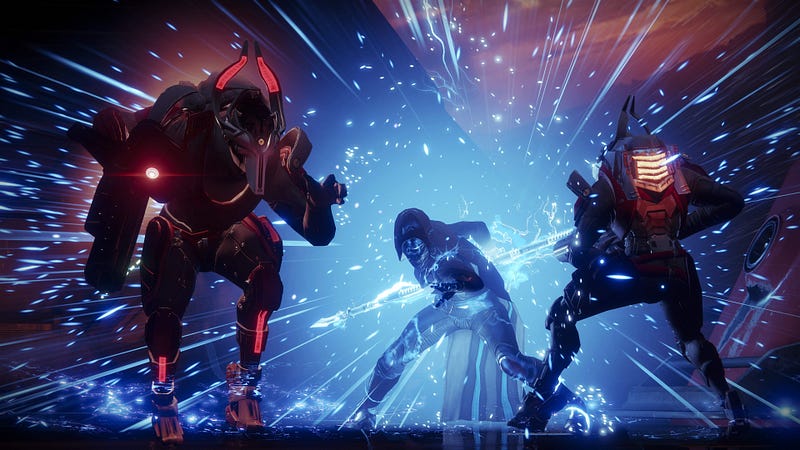
My Destiny journey began with two friends. We’d finished the main story and were in the end game (where the madness really begins). It was time for loot, loot, and more loot! But we faced a problem. To play the game’s ultimate challenge — the Vault of Glass raid — we needed a fireteam of six. There were only three of us. At first, we became frustrated and thought about dumping the game entirely. Bungie didn’t offer an in-game solution to find raid groups of six. But players were ingenious — they were keen to find a solution, and utilized web pages and Facebook groups to find each other.
You could also just message random groups in the Tower (the in-game social space for players to meet and show off their loot and gear). That’s where my friend group started. We randomly messaged a player in the Tower (who had raid gear) to ask if he and his clan could help us finish the Vault of Glass. Much to my surprise, he said yes, and three or four hours later I had my first Vault of Glass completion.
This wasn’t some random act of kindness. The “players help players” mentality is still apparent in the Destiny community. And it makes this community genuinely unique, and something astonishing to be part of.
Believe it or not, but I still play Destiny with the same group that helped me in my first raid five years ago. That random “help you help a player out?” question led directly to a friendship that lasted for several years. We even met multiple times in real life — the group is incredible.
Believe it or not, I still play Destiny with the group that helped me in my first raid five years ago. A random “can you help a player out?” question developed a friendship that lasted for years to come. We even met multiple times in real life, and the group is incredible.
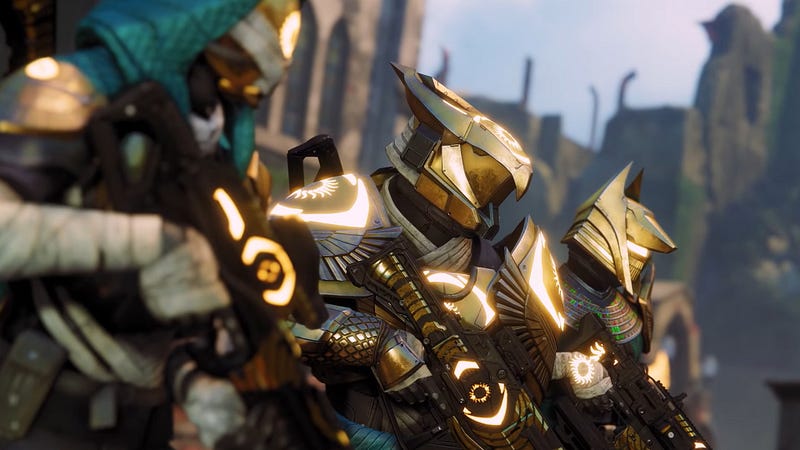
A few short months into the life of Destiny, we began to hear rumours that a new multiplayer mode was around the corner: The Trials of Osiris. In this 3v3 mode, players need to win nine consecutive matches without a loss to reach the Lighthouse and get unique loot. We were looking forward to playing this mode, and when it became available, we quickly realised we were absolute noobs. It was devastating, actually. The other players had obviously-superior skills. We had no chance. We kept trying, but to no avail. Eventually, a message popped up on my PlayStation from one of the players who had just kicked our butts. I was waiting for some kind of toxically-triumphant message. But this was different. This guy said, and I quote: “Let me finish this round with my friends, then I’ll help you out. Add me.”
He was a 12-year-old Italian kid. Friendly, skilled, and with a great deal of game knowledge, he gave us incredible support. In only our second attempt with him on our fireteam, we arrived at the Lighthouse. We became better in Trials and, in return, we paid it forward by helping other players to reach the Lighthouse for their first time.
Destiny is perhaps a genuinely unique online gaming experience in terms of the remarkably supportive community that has sprung up around it. For the most part, advanced players don’t look down on the less-skilled around them: instead, they see opportunities to mentor others and to shepherd them through the experience. Countless genuine friendships have been forged in Destiny’s fires.
From a game design standpoint, this requirement to manually recruit additional players for raids has arguably led to an environment where players are incentivised to seek each other out and to help each other progress. Bungie themselves strongly encouraged this behaviour, and played a leading role in developing a cooperative culture.
Here’s an example.
In November 2014, Brittany Levasseur posted a story on Reddit. It was about her husband Eric. He had undergone multiple brain surgeries, which made every day activities challenging for him. When Destiny was released, Eric eagerly wanted to play the game. Doctors had suggested that playing video games might offer therapeutic benefits, especially in relation to his brain damage and impaired memory. According to Brittany, Eric began to show improvement in his speech; he’d talk about his in-game activities.
Shortly after this post went up, Deej — the Community Manager for Bungie — contacted Brittany and Eric, telling them that a special gift was waiting for Eric in the game. The gift was an exotic weapon called The Fate of All Fools. It had only been rumoured to be released later that year for the entire playerbase. However, the weapon was never released to all players. It is, therefore, Eric’s personal weapon. It is therefore one of the rarest items in any video game ever made.
Bungie’s act of kindness inspired the entire community. The story resonated deeply with all Destiny players. It clearly demonstrated that Bungie was paying close attention to the community outside the game itself.
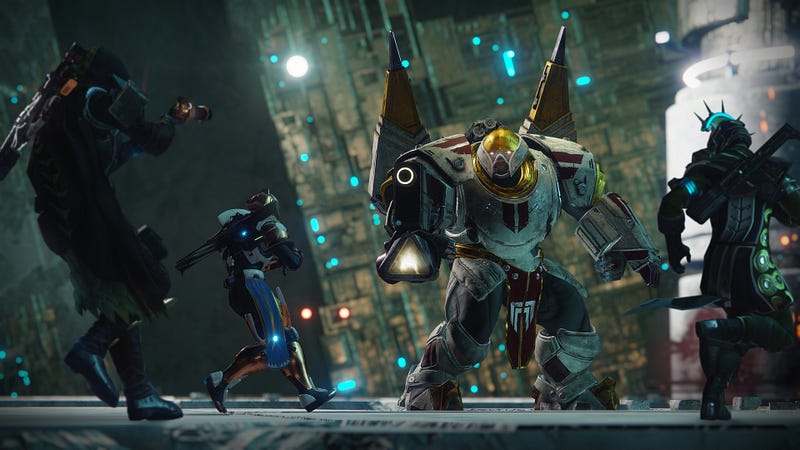
It’s important to tell this story now if only to act as a reminder that not all gaming communities — and not all gamers — are riddle with toxicity. We rightfully hear about violence, abuse, and toxicity all the time; these are certainly pressing issues. But we rarely hear about the genuinely constructive communities out there that are friendly, supportive, and generally positive. Destiny’s community is perhaps the leading example of this.
ABOUT THE AUTHOR
Walid Al Otaibi -WAO- works at an engineering company in Germany as a Project Manager. He manages mainly sustainable energy projects.
He comes from a multicultural background and is located in Germany since 2003. He is writing about Arab Culture, Multiculturalism, Finance, and Trending topics.