
The Kids Are Not OK
Depression rates among adolescents keep rising, especially in girls. Schools can help identify the problem and provide resources.

This article is part of a Wise & Well Special Report: The United States of Depression.
As I was arriving for my EMT shift one morning in 2009, a call came from one of the freshman dorms. The patient’s roommate had called and explained that the night before she took two Tylenol PM but this morning was not acting like herself. We rushed her to the hospital and then she was flown to a larger center. She died later that day from a likely overdose. It was her 18th birthday. Later we found out that she had a history of depression and suicide attempts.
As much as I had hoped this was a rare occurrence, the burden of depression among the nation’s youth has been worsening ever since. Among 12 to 17-year-olds from 2013–2019, 36.7% had persistent feelings of sadness or hopelessness and 18.8% considered suicide. Every year from 2016 to 2019, an estimated 4.4 million youths (about 6% of the population under 18) were diagnosed with depression, according to the CDC.
The numbers were staggering before the pandemic and are still worsening as a result of it. But the fight against depression begins with identifying its existence.
Detecting depression in kids
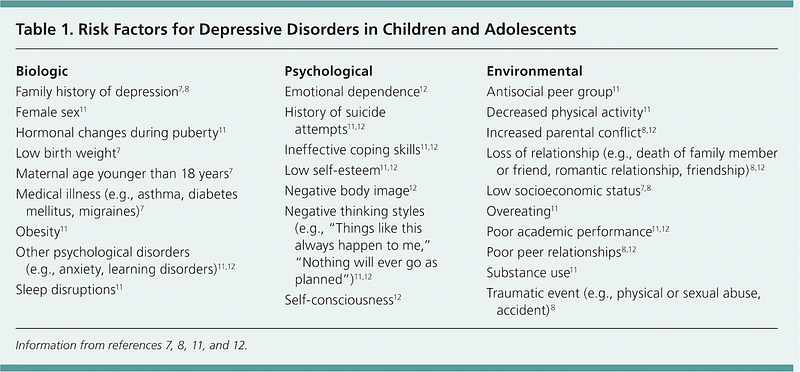
Depression is a mood disorder that can include feelings of sadness, loss of interest in activities, and a disruption in the activities of daily living like sleep and eating. These feelings were exacerbated due to social isolation that occurred in the pandemic. Daily routine disruptions, uncertainty and the fear of family members getting ill all contributed to depression rates going up during the lockdowns in the early pandemic. But as the chart below shows, depression is a complex disease, and there are many risk factors that often combine to lead to depression, rather than any single cause.
We must first be able to identify it by screening which typically occurs in a physician’s office or within school systems. Validated screening tools, meaning they have been tested for accuracy, like the PHQ-9 are used commonly, but there are numerous variations. The United States Preventive Task Force (USPSTF) recommends screening pediatric and adolescent patients at every yearly well visit. Regardless of the total score, pediatricians will pay close attention to question №9, as it directly asks about suicidality and homicidality.
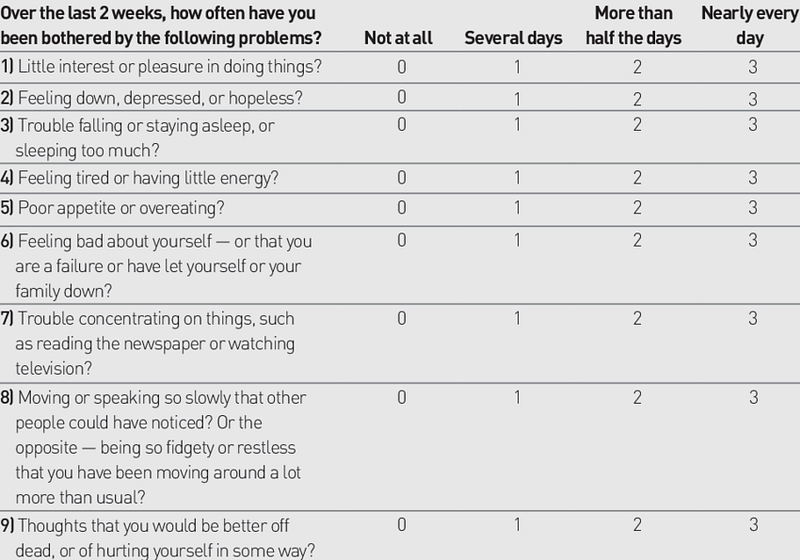
Answers to the PHQ9 can help dictate the next steps and the overall score can determine the severity of depression. Scores above 10 are 88% accurate in predicting major depressive disorder.
The PHQ9 has been validated for 12–17 year olds but there is no currently reliable screening tool for kids under that age. Therefore, it is much harder to get statistics from younger age groups and numbers are likely artificially low.
We do know that children 5–11 were seen in the ER 24% more from 2019 to October 2020 for mental health-related reasons. Since this period included the start of the pandemic, it points to the effect it had on kids early on.
Girls are more affected
COVID lockdowns and aftereffects worsened depression in children. We know this because overall ER visits went down for those under age 17 during the pandemic, but the number of pediatric patients seeking care for self-harm, drug poisoning, and psychosocial concerns increased.
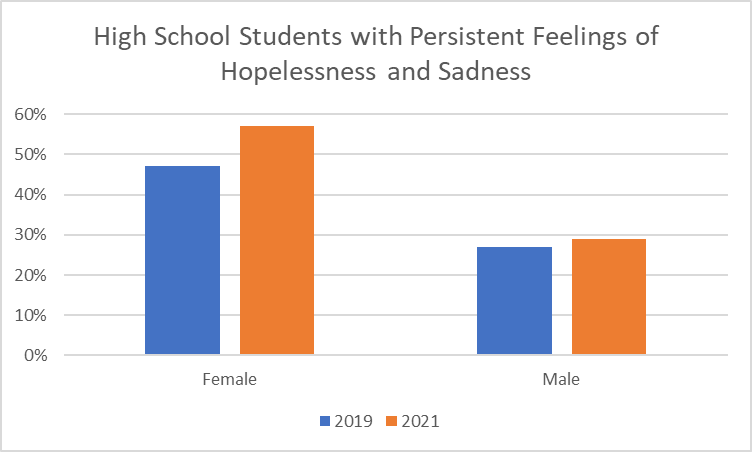
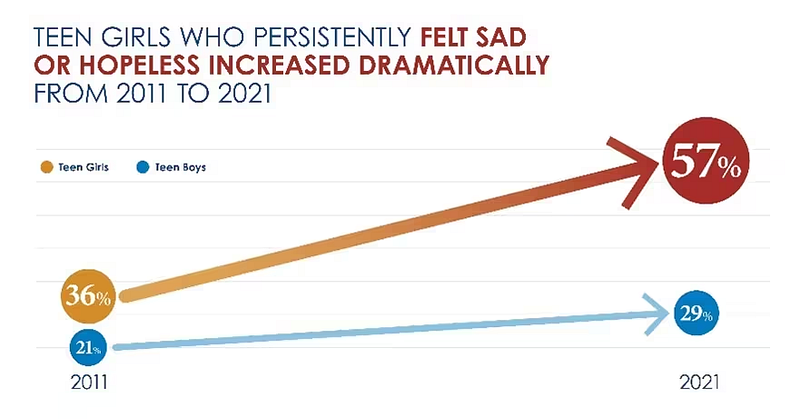
Increased depression was more common in girls for a few reasons: lower baseline self-esteem, a higher likelihood of experiencing interpersonal violence, and exposure to gender inequity. The percentage of high school females who reported being forced into a sexual act rose from 11% in 2019 to 14% in 2021, which was the first such rise in a decade. Girls were affected more than boys:
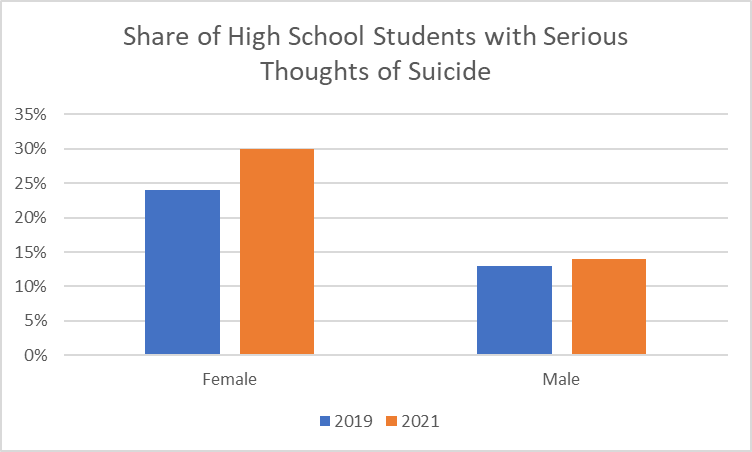
Consistent with the chart above, thoughts of suicide increased notably among girls as well.
Exposure to social media, which can have a lot to do with body image and comparison to peers, increased during the pandemic but females were more likely than males to report increased usage (71% vs. 57%). Other studies have shown a direct correlation between social media exposure and depression, of which the effect is greater in females. Social isolation was another contributing factor and one that affected females more, maybe accounting for the increased use of social media compared to males.
The CDC released data in February of 2023 showing that nearly three in five US teen girls felt persistently sad or hopeless in 2021 — double that of boys, representing a nearly 60% increase and the highest level reported over the past decade.
The same report also found 52% of LGBQ+ students had recently experienced poor mental health and 22% attempted suicide in the past year.
Solutions should start in the schools
There are numerous approaches to treating depression, and each approach is tailored based on severity, age, medical history, and the ability to access care. But detecting depression through screening is a universal process. This is especially important because one major reason for untreated depression is the failure to identify or diagnose depressive symptoms.
As early detection is paramount to diagnosis and treatment, the pandemic temporarily took away one of our biggest weapons: the schools.
Once a depression diagnosis is suspected, the next step is establishing access to someone who can help. This means connecting to a behavioral specialist like a child psychologist or, in some cases, a psychiatrist for medication options. But barriers to access are plentiful and the average wait for a child psychiatrist is 43 days.
Schools are often the primary location for receiving psychological services, with 80% of children relying on school-based mental health services. Given this fact, the schools are the places where resources need to be used to target vulnerable youth. Schools can provide access to all age groups and overcome barriers of time and access that arise when seeing a health professional. Besides, teachers observe students more than a physician can and, when given the right tools to screen, are able to more frequently identify high risk students.
School-based interventions are best because of their general approach. Programs are usually made for all students rather than just high-risk ones. Universal screening was particularly effective at detecting depression in adolescents who are traditionally underdiagnosed, such as those in racial or ethnic minority groups and those living in a rural setting. Also, nobody gets singled out.
The approach is similar to that of a pediatrician’s office where they screen for depression every year with a PHQ9. This may be seen as a negative as those students who need the most help would not get individualized attention, but each school system does it differently based on resources and prior experiences. Studies are limited on what type of program works best but some approaches are looking favorable.
Teaching mindfulness shows promise
Meditation and breathing techniques have been shown to help students in dealing with negative emotions. One school in Baltimore got rid of detention. At Robert W. Coleman Elementary School in Baltimore, kids are instead referred to the Mindful Moment Room, where they practice deep-breathing exercises, meditate and talk. Kids in the school also started and ended the day with breathing exercises.
“We realized high school kids didn’t want to move and be singled out by their peers, so this way no one will know if they’re practicing or not,” said Ali Smith, co-founder of the Holistic Life Foundation program.
In that same program, high school students can self-refer and be trained as ambassadors who coach their peers through the practice. Not only does this make connections between peers stronger, but it identifies those who want to help spread those techniques that helped them. Kids within the same school are more likely to relate to each other than a clinician in an office telling them what to do. As we talked about above, this decreases social isolation which we know has a huge effect on the risk of developing depression. A study on school mindfulness programs observed a decrease in depressive symptoms and significant improvements in optimism and perspective-taking at post-intervention.
We need these types of creative solutions, and schools are the perfect places to start with larger, nationwide interventions. As parents, grandparents and clinicians, it is paramount that we do more to prevent the unnecessary burden of depressive disease on our nation’s youth.
This article is part of a Wise & Well Special Report: The United States of Depression. If you or a loved one is depressed, it’s vital to talk about it. Because depression increases the risk of suicide, consider calling the confidential National Suicide Prevention Lifeline at 1–800–273-TALK (8255) for English, 1–888–628–9454 for Spanish, or call or text 988. Global support in 44 languages is available from Befrienders Worldwide.


