
Film
The Kids Are Growing up Too Fast
But who is to blame? A look into Netflix’s Cuties and the age of social media
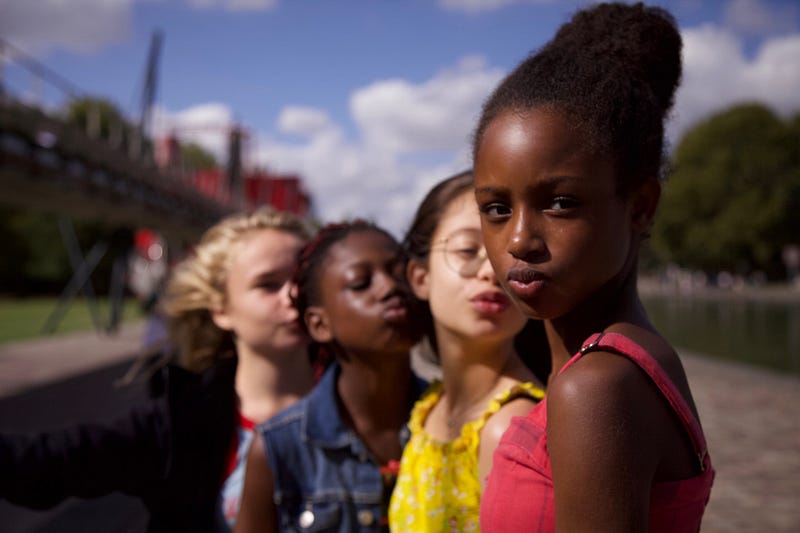
When Netflix released the trailer for Cuties, I was against watching it. Simply because it seemed too much to have these girls dancing provocatively but I realised the context of the film was completely taken out. At first watch, it seemed to be about a Muslim girl leaving her religion behind to find “freedom” with a group of dancers who wears crop-tops, shorts, had coloured highlights and dancing provocatively.
Once it premiered, the outrage came soon of the hypersexualisation of children and the way the story was told. When I sat down and finally decided to watch it, I realised what Cuties was all about. It was basically about me, and our society in general.
It goes without saying that the marketing for this film was done in poor taste. It received so much backlash even before the premiere, portraying conflicting messages on what the true meaning of the film is.
To add, the film does take hypersexualisation to a whole new level, these are little girls after all. Do I think the message could be conveyed more subtly? Maybe, yes. There were parts of the film I couldn’t even watch, I had to forward to the end of the scene. It was uncomfortable, but I understood the motif. It’s the story of a generation and the rush to grow up.
The film introduces us to Amy, 11 years old, and her family who just moved from Senegal. We learnt quickly that her father, who was still in Senegal, had found a new bride and was preparing to bring her to Paris to live with his family. In her heartbreak listening to her mother cry, she still had to take care of her brothers. She takes them grocery shopping, cleans the house, and make sure they’re fed, all while her mother is working and trying to cope.
She then finds Angelica and her dance crew, who she was enamoured with. With their influence, even though seemingly light, Amy began to wear crop tops and skirts and even stole her uncle’s phone to have online access to Youtube and Instagram where she found herself immersed in a new world.
Amy has to navigate two different worlds — one with her family, where she is also a carer and learning to be a woman. Another with her friends who even though they’re just children, looking up to older dancers and aspiring to be like them and soon follows suit. We see her struggling between her Senagalese roots whenever she sees her dress that’s meant to be worn at her father’s wedding versus her outfits that she puts on to meet her friends. In both these scenarios, there’s no time for her to be a child.
That in itself isn’t new to me, growing up I knew many girls who did that. They would hide clothes and makeup, and when they leave the house they would change. That’s what happens when you land in a different world, the idea of conformity and normalcy is everything to a child’s life especially when your background is one where they do not understand. The belief is that you have tho wholly be one thing or the other, there’s no in-between and she perfectly exemplified that.
But even as individuals these girls were suffering. Angelica fighting for the love and admiration of her parents, Yasmine, another dance member, fighting bulimia. In believing this is the only world that they know, they began to explore it together. Learning how to twerk, mimicking their choreography to those they watch to film and post it up for others to view. Amy and Angelica even watched a choreographed video and a dancer had lifted her crop top so flash her bare breasts, “It’s got a lot of views” Amy responded.
In a world where we live for online gratification, Amy begins to dress for the attention of others, absorbing the admiration her classmates gave her when she dressed up to school. She became obsessively aware that her body brought her attention if needed, even as far as to manipulate other people’s reaction to her. When the side effects came with her classmate smacking her bum, she stabs him in his hand with a pencil.
Children unable to analyse situations, they react with emotion. When they have trouble verbalising what’s troubling them, they cry or scream. Amy’s actions become increasingly exaggerated because she didn’t know how to react and made spur of the moment decisions. When the dance competition came at the end of the film, which landed on the same day as her father’s wedding, it became another moment of choice. During their dance sequence, she noticed the crowd started to boo them, mothers covering the eyes of their children, and it came as a moment of clarity for her.
She hears her mother’s voice singing to her and she runs home in tears. All the weight she carried came rushing through and her mother gives her the choice to show up for her father or not, at the same time accepting her as she was. The film ends with her jumping rope outside in the streets with other kids, no phones, just fun as she should be. She leaves her dance outfit and her dress that was meant to be worn at her father’s wedding, finding liberation within herself as a child — at the same time finding a balance between her family and her Western culture.
In film school, I learnt that exaggeration is sometimes needed to send a loud message that others are afraid to hear or ignore. To me, this is what the film is doing, shouting out to the skies about children’s inability to just be children and how social media aids that. Minority, immigrant kids especially have a harder time adapting to the world around them. Most of which have huge responsibilities on their shoulders and with the use of social media they could get lost.
The moments of discomfort is just another reminder that these girls are portraying real-life situations. Apps like TikTok featuring younger girls who are displaying themselves whether it’s through skits or dancing for gratification. Similar to Instagram, accounts of girls whose age is unidentifiable and being sexualised on a daily basis. But who could blame them? Children are visual learners, they replicate what is given to them.
Now with apps like OnlyFans gaining popularity, more girls as young as High School are starting to participate for money. It’s become a “life-goal” to get rich off OnlyFans just by posting pictures of themselves provocatively.
The public’s outrage in regards to the hypersexuality is understandable, however, it’s also misplaced. Maïmouna Doucouré, director of Cuties, was brave in her approach to the film. She, also a daughter of Senegalese parents, wanted to explore the idea of global sexualisation of girls in the way she knows.
In today’s world, we are so quick to regurgitate information and make judgements without understanding, I did it too when I watched the trailer. It was only when I read Doucouré’s interview with ZORA that I decided to watch it properly, and I didn’t find rage, anger or annoyance. Instead, it was empathy and sadness. The influence of social media affects the way that we are more than we realise, and to navigate puberty with social media at our fingertips is scary.
It might be uncomfortable to watch, but maybe that discomfort stems from the truth that you already know — that these girls aren’t acting in a film. It’s happening in real life.


