
The Key to Popularity = People Like Happy People
Popularity is when people like you, and people like happy people.
I. Paint What’s in Your Head
On my bedroom wall hangs Da Vinci’s Vitruvian Man. Just beneath the portrait reads the caption: “Paint what’s in your head and what you’re familiar with.”
So far as writing is nothing but thinking on paper, whenever I set my hand to paint a word-portrait, never once does the subject involve Bitcoin.
Never once does the subject offer parenting tips or, say, marriage advice. After all, because I’m a childless, unmarried man, I’m not qualified to serve as the author from which the authority on such issues springs.
With that being said, when the matter concerns popularity . . . ahem: from the elementary playgrounds to writing online, over the years I’ve become familiar with “Miss Popularity.”
In short, as did Da Vinci paint a portrait of Lisa del Giocondo, I’ll now try a hand at painting a brief word-portrait of Miss Popularity, without her makeup.
Back in college, I played basketball — pardon — I rode the bench as if I were some cowboy and the sideline seat my horse. Anyhow, being a benchwarmer didn’t kill my spirit. No, no. Instead, I embraced the role of a witty jokester — someone who kept teammates and coaches loose during heated moments.
Because every experience is a teacher from the University of Life, my time spent as the unofficial “cheerleader” taught me this: when you’re enthusiastic about the success of others, those “others” naturally flock to you.
During the games, I routinely channeled my inner-Hulk Hogan with hand to ear gestures, pumping up the crowd. For special occasions, such as homecoming or senior night, I was the guy fist-pumping the air along with flinging free t-shirts into the crowd.
My point?
Chew on this: aside from the star player (‘Will the Thrill’), I was the most popular player on the basketball team, despite having a scoring average that was roughly the same as the fans in attendance. Why?
Popularity is when people like you, and people like happy people!
Bingo!
II. Chef Oprah’s ‘Popularity Sauce’
I recall the popular comedian Ricky Smiley (*wink) once asking Steve Harvey to name the most popular celeb. Without blinking, Harvey said: “Oh, that’s easy — Oprah!”
Because success leaves clues, I merely followed the trail left in the wake of a handful of Oprah’s interviews. After all, the word interview breaks down to “enter” + “view.”
Interview after interview, I gobbled up the vitamins for thought served by Chef Oprah, as she revealed the special ingredient she uses in her “popularity sauce.” And here’s what I came away with.
As Piers Morgan sat across from her, I sensed that he too wanted to know the key ingredient which Chef Oprah uses. And so, Morgan went for it.
“Ahem, I know you hate this phrase,” said Morgan, “but what is your brand?”
Oprah flashed a smile. Seconds later she revealed her recipe. “I’m the love brand!”
Bingo!
Oprah’s the most popular actor on the world’s stage because she packages her brand as the buy one get one free combo of happiness and love. As for why this star duo serves as the very legs on which popularity stands, chew on this:
If smiling is what happiness looks like, love must be what happiness feels like.
In short, so far as popularity goes, perhaps the Beatles — the most popular band in history — decades ago gave us the sauce for popularity: “All you need is love.”
III. Why Projecting Happiness Fuels Popularity
Parked just outside of the subway terminal nearest to my apartment is a fruit stand. Given that I’m a vegetarian and somewhat frugal, let’s just say “Mr. Fruit Man” and I address each other on a first-name basis.
One morning on my way to the train, I stopped by my favorite fruit stand. “How ya doin’, Brother Karim?” I said.
“Ohh, I can’t complain . . . who would listen?” he fired back.
“I can’t complain . . . who would listen?” replayed in my third ear. I stopped dead in my tracks. “Now that was deep,” I said under my breath.
Perhaps those who make a show of complaining would be well served to read Dale Carnegie’s self-help classic. And if by chance such habitual complainers were to read the book, it’ll abruptly become apparent why Carnegie serves the reader the following all-important first principle:
“Don’t criticize, condemn, or complain.”
If I may, ahem, briefly don my philosopher’s hat. …
Here lies some insight into human nature. What makes most people appear cold or hard-hearted is this: we all have enough of our own troubles to bear. And so, why would anyone willingly want to add more doom and gloom to an already loaded cart?
Did not Plato teach us to “be kind, for everyone you meet is fighting a hard battle”?
I recall someone once commenting about a piece of mine. The commenter said something to the effect of my work felt a bit too “Pollyannaish.” To which I replied, “Point well taken.”
Admittedly I’m what you would call an “eternal optimist.” I’m the kinda guy who, while it's pouring down raining outside, mentions the rainbow is just around the corner.
Whereas the pessimist sees problems disguised as each opportunity, the optimist sees opportunities disguised as each problem. People love being around optimists. Optimists are popular! Perhaps this explains why Einstein once said:
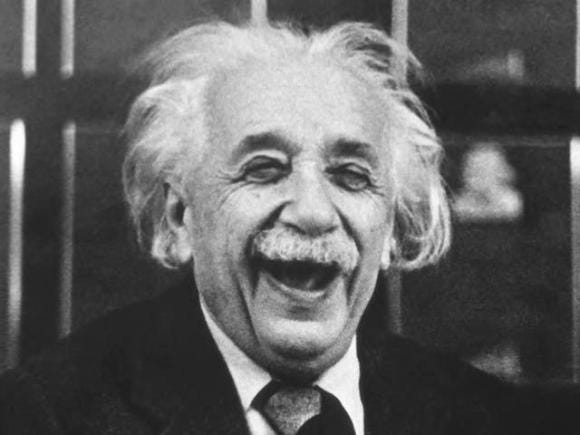
“I’d rather be an optimist and a fool than a pessimist and right.”
Optimism is the sun and happiness is the sunlight. And so, for those seemingly being followed around by a dark cloud, my sunny attitude helps to brighten their cloudy day. Notice what’s being suggested here. …
When happiness is stripped to the core, optimism remains; when optimism is sliced away, there lies faith. Bingo!
Without faith, nothing is possible; with it — nothing is impossible! Hence the formula for popularity ultimately boils down to the following equation:
Faith → Optimism → Happiness = Popularity
In short, perhaps the greatest compliment anyone has ever paid me is when my buddy Larry once said, “Bro, people like being around you because you make us all feel ten feet tall.”
IV. The Takeaway

“Winning is a habit. Unfortunately, so is losing.” — Vince Lombardi
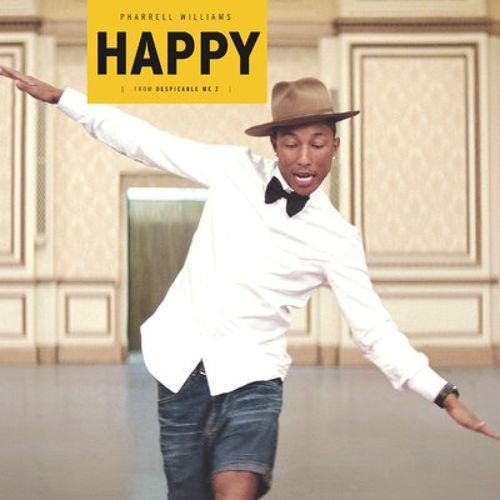
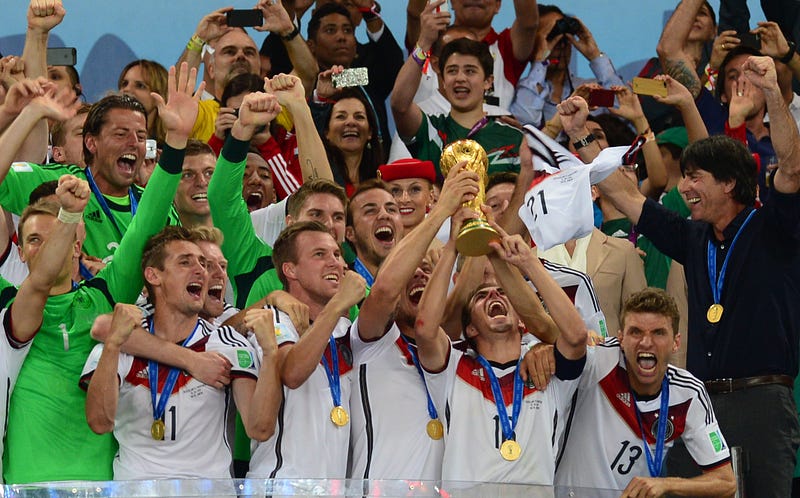
Whether it’s the Super Bowl winner Tom Brady smiling from ear to ear while being flocked by adoring fans or Pharrell Williams cheesin’ for the camera while winning his Grammy for the song appropriately titled “Happy,” is not the DNA of all such popularity the same?
Popularity is when people like you, and people like happy people! Perhaps “there is something in this more than natural,” whispers Shakespeare from the grave, “if philosophy could find it out.”
As for philosophy, Plato was adamant that the key to developing a well-rounded person called for exposing them to athletics during youth. The reason being, sports often serve to teach priceless life lessons. Take for instance the following.
Ever notice how the winners of the game are always happy, high-fiving and celebrating? (Note: the word “celeb” stems from celebration.)
On the other hand, ever notice how the “losers” of the game are sad, slumped-shouldered and pessimistic?
For the above reason, quite naturally, to someone in the audience watching from afar, shall they not naturally feel drawn to the happy winners? Or as that old expression goes:
Laugh, and the world laughs with you; Weep, and you weep alone.
Did not Aristotle teach us ages ago that “happiness is the meaning and the purpose of life, the whole aim and end of human existence”?
If the sole purpose of life is to feel happy, then, does it not stand to reason — we naturally gravitate towards the happy winners in life?
And so, because popularity is ultimately a numbers game, the more people are drawn to you — the more popular you become. Or to put it another way: she who makes others enjoy life, enjoys life, too.
Bingo!
The more I live, the more I’ve come to suspect there are two kinds of people in the world:
When life hands lemons to one kind of person, they make lemonade; to another, they usually make lemons when life hands them lemonade.
In short, popularity is when people like you — and people like happy people.
Chat With Adrian Drew Over a Coffee
Adrian’s offering free 25-minute consultations to all interested in kickstarting their writing career. Click here to find out more.