
The Joy of a Daily Radio Segment That Forces You to Use Your Brain Instead of the Internet
Or how using the internet as your second brain is screwing your cognitive skills
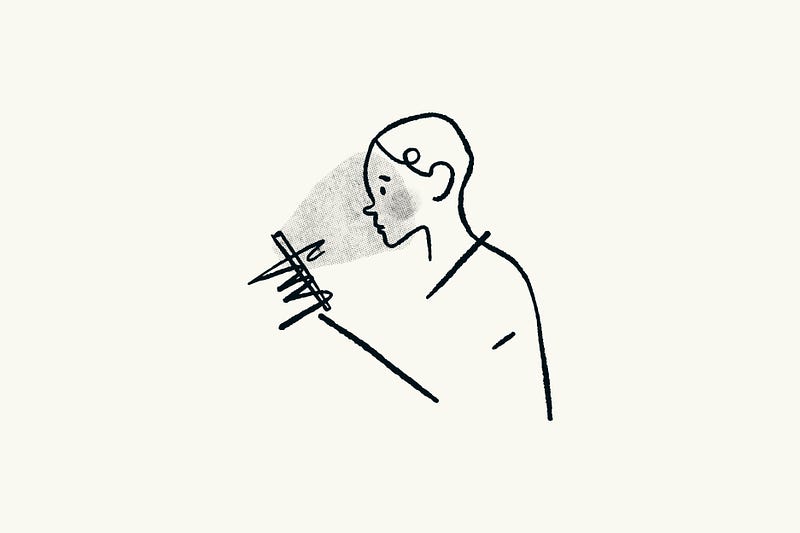
There are not many places where the internet hasn’t infiltrated our lives but our hard-wired memories are one of them.
The internet has nothing on what your brain dredges up if it hears or smells something from your past. Suddenly you’re back in 1997 remembering every word the boy you crushed on said when he rejected you during Savage Garden’s Truly Madly Deeply at the school disco.
I still can’t listen to that song.
Anything that forces you to use your brain rather than relying on Google is a good thing. This is why at 1 pm every weekday, my husband and I listen to a BBC 6 music radio segment that makes you do exactly this.
It’s called Craig Charles’ Time Machine. DJ Craig gives some clues and plays three songs from a single year which you have to guess without resorting to Google.
It’s as simple a game as you can get, yet it’s an absolute joy because it forces you to use parts of your brain the internet tells you that you don’t need anymore.
The deep memory part.
The Atlantic once wrote that Google is making us stupid and it may have a point.
This is why for 10 minutes a day, I force my brain to work for me. I swear, I can hear it grinding into gear, firing up neurons like it used to before Google took over my knowledge bank.
And it feels really, really good.
Google is screwing with our brains
The Google Effect theory says that because we have all the information of the world readily available to us online, we no longer have to retain the information for ourselves.
After all, who needs to memorise anything if a quick online search does the heavy lifting for you?
Google is seriously screwing with our cognitive functions. It’s well documented how an over-reliance on the internet shortens your attention spans and ability to fully absorb words and meaning. As that Atlantic article puts it:
Once I was a scuba diver in the sea of words. Now I zip along the surface like a guy on a Jet Ski.
Even more concerning is what technology philosopher Albert Borgmann claims happens when you “surrender your substance to hyperintelligence”:
Plugged into the network of communications and computers, they seem to enjoy omniscience and omnipotence; severed from their network, they turn out to be insubstantial and disoriented. they no longer command the world as persons in their own right. Their conversation is without depth and wit; their attention is roving and vacuous; their sense of place is uncertain and fickle.
Which is why this radio segment is so important. It takes you out of hyperintelligence and into the furthest back passages of your brain, digging up memories you might not know you still had.
I’m sure this song was big when my family moved house, that was 1998.
Didn’t we dance to this at our wedding? Must be 2009.
I remember my brother playing this on repeat the year I was in Mr. Smith’s class which must have been 1994.
There is something wholly unsatisfying about relying on Google for everything. I miss those arguments we all used to have about the year something happened or if so-and-so is dead or not.
There’s no fun in someone whipping their phone out to check. What a way to kill a spirited conversation.
Which is why this radio segment is such a joy.
It’s also a great reminder about the way we used to experience music — with intention. Not dictated by a certain multi-billion dollar company…
Spotify is screwing with the way we experience music
If the Time Machine features any year between 1994 (when I was 10) and 2007, I can tell you where I was and who I was with when I first heard the songs.
It gets much hazier after that.
It’s no coincidence that 2007 was the year I upped my internet usage. That was the year I joined Facebook and Twitter. It’s when I bought an iPod. It’s when I installed wireless internet in my house.
And it’s when my music memories start to blur into one.
You could argue that in 2007 I was well out of my formative years — the ones you remember so well — but I’m not so sure. I think it’s when the internet started to do a number on us and our cognitive development.
It’s also around the time that platforms like Spotify, Last.fm, and other now-defunct streaming services entered the mainstream.
At the risk of sounding like an old fuddy-duddy, it’s well-documented how these services changed the way we listen to music.
We flit. We rely on algorithms to choose music for us. Granted, we discover new songs like never before but we probably don’t know what those songs are called or who recorded them.
We have more choices than ever but choice overload is real.
Like the Guardian recently reported, [With streaming] there’s endless accessibility, but you’re not really listening to anything.
We have become passive receivers of music dictated to us by algorithmic tastemakers which I — and I suspect many others — have discovered makes it harder to form strong cognitive connections with songs.
Music is one of the strongest known memory triggers, even stronger than smell. Alzheimer patients may not recognise their partners anymore but can recall lyrics word for word.
Music is that important. It’s not something we should leave in the hands of a multi-billion dollar company far more interested in getting us to stream binaural beats for 8 hours a day than they are in us actually experiencing music.
If anything from my Spotify playlists was featured on the Time Machine, I’d be screwed and that is a travesty. I don’t want music to blend into the background of my life, I want it to make me feel something. To conjure up memories.
To do what it’s designed to do.
There is a joy in not relying on the internet for everything. It’s why games like Wordle are so popular — you can’t just Google the answer, you have to use your noggin.
Which is why I love the Time Machine so much. For 10 minutes a day, my husband and I debate. We good-naturedly argue about what year we think it could be. We share our reasons. I learn more about him and he about me.
We engage our brains, our mouths, and often our terrible singing voices. It doesn’t matter if we’re right or wrong — most debates like this don’t. Which is why it’s always so annoying when someone smugly Googles a fact to shoot you down.
It’s a surprisingly amazing feeling to not rely on the internet for everything. To debate for the sake of debating. To enjoy being in the moment.
To enjoy remembering where you were when you first heard a song (so long as it’s not Truly Madly Deeply).
Now if you’ll excuse me, it’s 12.55 pm. I need to turn on the radio. I’ll be back in 10.
Listen up, Medium readers, I’ve launched a remote wine consulting service called SommAnywhere. Tell me what you like to drink and where you live, and I’ll send you a list of the best places local-to-you and online stores and what you should buy from each of them. You’ll also get my little black book of wineries. Book the service here.