
The Journey of Self-Discovery and Being Ready to Commit

In 2014, when I was moving from France to Holland, in a Flixbus from Paris to Amsterdam I sat next to a beautiful American- African woman who was reading a book on relationships. I didn’t want to it sneak peek as much as I did but it had something I was not expecting to read synthesized so well about how our brain works. The 3 things that were mentioned in the book of the famous Steve Harvey — Act Like a Lady, Think like a man, were the absolute essence of what we all want to know before we’re ready to commit:
- Who we are
- What we do
- How much do we value
These 3 things define every human being regardless of gender, race or sexual orientation. We’re all looking to find these things about ourselves before we can dive into a life long commitment.
When you’re trying to find your way in life, commitment seems like a purchase you’re not ready to make with borrowed money. I remember the first time I asked myself if I am truly ready to commit. It was when I was 18 years old, on my birthday when the guy I had a relationship with for 3 years was finally back with me after some months of a break when I was chasing the wrong things in the wrong places. I remember him bringing me the present I always wanted, a teddy from Me2You. We previously bought keychains with that teddy. I had it on my keychain for 15 years almost. He was my first love after all. But I was not ready to commit then and there.
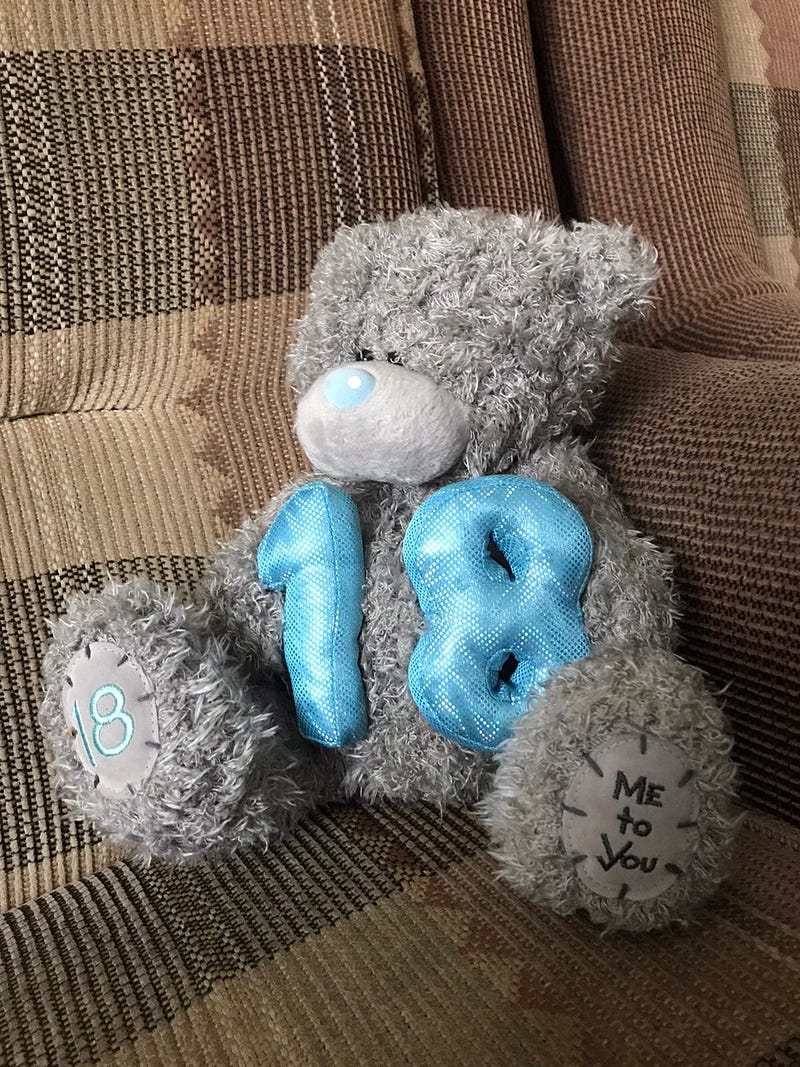
My mom reminded me the other day when she found my old teddy in a closet that I was so in love with this teddy and the guy who gave it to me. The relationship ended over the summer. I met someone new in the next months and started a new relationship that lasted over 4 years. Yet, commitment never came. So when I read those 3 things in the book, I started asking myself what were those things for me. And why I was never really ready to commit.
At the age of 30, this question becomes even so more important as everyone around me starts settling down.
How can commitment be about those 3 things? Isn’t it just a decision?
Turns out it isn’t. At 18 I knew I wanted to explore my intellectual horizons and to maybe go and live abroad and try as many things as possible in my career. I had a role model in my grandfather who was very successful in his career so I wanted to be just like him when I would be older. I wanted to travel the world, run a company, live abroad.. and so I did! All that! I traveled a bit, had a startup and a consulting company, I work as a freelance for over 7 years, and I moved abroad almost 6 years ago. But am I ready to commit now?
Not yet!
Going back to the questions, each of them is much more complex than we like to think. The more we acquire self-awareness, the more we know that the stories we tell about ourselves and those 3 questions are incomplete and only represent a temporary situation. But how do we still make it work and leverage everything at its own time and pace? Does it mean we are never ready to commit if we never reach a “destination” with the answers to those questions? Well.. truth is that we might never be ready to commit if we don’t decide to “jump” head first.
Let’s see why.
1. How we are
By far this is the most complex question of all. Most people who are above 21 years old already have a pretty good sense of who they are because biologically their brain is “ready” and fully developed in all areas. But, do they know where they come from? Do they know their own limiting beliefs, their reference system and how they are hardwired and why they are hardwired like that? Most don’t. Most will take much longer journeys and with some detours before they start tapping into those questions in depth.
If I would try to answer that now, I would know now. But, in all honesty, I think I “only” know it since I turned 30, which was a few months ago. My history of getting to know myself more deeply started almost 8 years ago, but every new detail added to the big puzzle had the chance to change my entire perspective of things. It finally feels like this stage was completed after carefully crafting my family tree and personal timeline with all the details to allow awareness over my development holistically.
Once your pieces are together you are fully aware of why you choose certain partners, what’s the motivation and the expected outcome from your choices. The level of decisions you make is more meta than before when a micro compatibility like “we both like techno music” would have got you on a second date with a person. Now, these small things matter less while the meta-level of compatibility is the first that will indicate why you choose a partner. Of course, small things still matter. Of course, having micro compatibility is just as sexy and attractive as it was before, but it’s not your decision making priority anymore!
For example, I recently discovered I never had a relationship with a university graduate. If you think of my age, I would have technically had at least 7 years to date someone the same age as me who would have finished both bachelors and masters like me. Yet, I always downplayed myself to dating someone who didn’t finish their degree. I never saw that as a problem until I saw the other side of dating someone who has done that. It does change the standards! It comes from knowing better who you are and why you are more compatible with someone equal to you. This brings me to the next point.
2. What you do
Our craft, or what we do with our energy is part of what we’ve built by learning about ourselves from our experiences. What we do is partly our personality and how we respond to situations and partly what we decide to invest our energy in. This behavior we’ve shaped and worked on is our business card. It isn’t just a job title though. Don’t get me wrong, I understand people who say that their work is their passion and that represents the best, but our energy goes beyond our financial means. We might earn a lot from our job and only invest a bit of energy into building our family and relationships with others which will say more about us than a successful career. It’s what we do that impacts how people see us and perceive us which brings me to the last point.
3. How much do we value
Our self worth comes into play here. We take a lot of energy when we are praised for what we do and we start building value for what we do from that. Going back to the practical nature described in the book of Steve Harvey, he looks at how a man feels more of a man when he makes more money and his value is increased when evaluated by a woman. Well, in all honesty, as much as I would like to agree with that, I don’t! And that’s why I even changed and adapted his 3rd point to something more profound than this shallow way of looking at things. I completely understand the “hero effect” that most men feel they need to have to conquer a woman because it is part of our primary brain and since the beginning of times when men were hunters, the ones who came back from the wild were the ones bringing food so they were heroes. But that need is slightly fading in modern times and is not a currency anymore for what both genders look for when they want to know what’s their value.
The value we have comes from the way we perceive ourselves in relationship with others. Do we feel loved, appreciated, cared for? Are we indispensable for someone? Then the value might be a bit wrongly distributed because we might be loved and appreciated by a codependent who will see our value just through the lenses of who they are and what they can use from us. The true appreciation of value comes from within. When we know we’ve reached the point in which regardless what changes in how we do what we do about who we are will not change what we think about ourselves. To put it bluntly, if you rely on superficial anchors to define yourself for the first 2 points, your 3 points will crumble if your system is challenged. When these points become independent from one another, then you’ve truly reached a point where you are resilient and self-sufficient and self-actualized to the point that you will always get back on your feet alone if situations change in your life and you need to change directions. Your self worth as the other 2 points can grow independently and change separately or together and yet you will stay committed to your partner without blaming them for your insecurities.
Commitment comes whenever your inner work is done right and you can create a secure healthy relationship with someone equal to you. It’s a decision as well as it is a natural phase of your development because you will want to align your systems on a coherent path in a holistic way.
However, we might want to be mindful if we have reached this level, that our partners if we are currently in a relationship, might not be there. Asking them to think of these questions for themselves might be a good way to help them but pushing them into figuring that out faster might not be the best way. I think that commitment starts with a commitment to ourselves to stay on our path first before we take anybody else to share this journey with us. If we think we can help our partners discover those things for themselves, we should at least have the mindfulness perspective when we do it. We are not there to force but to guide. If the guiding fails, it means we should accept that and move on. I wrote another important piece on closure and moving on from relationships that don’t work anymore. There’s a thin boundary there to be taken into consideration when we coach someone we love.
I hope we all stay committed to ourselves first before asking anyone else to be committed to us!