
The Job of the Future Is Content Creation
And soon enough, it might be the only one left.
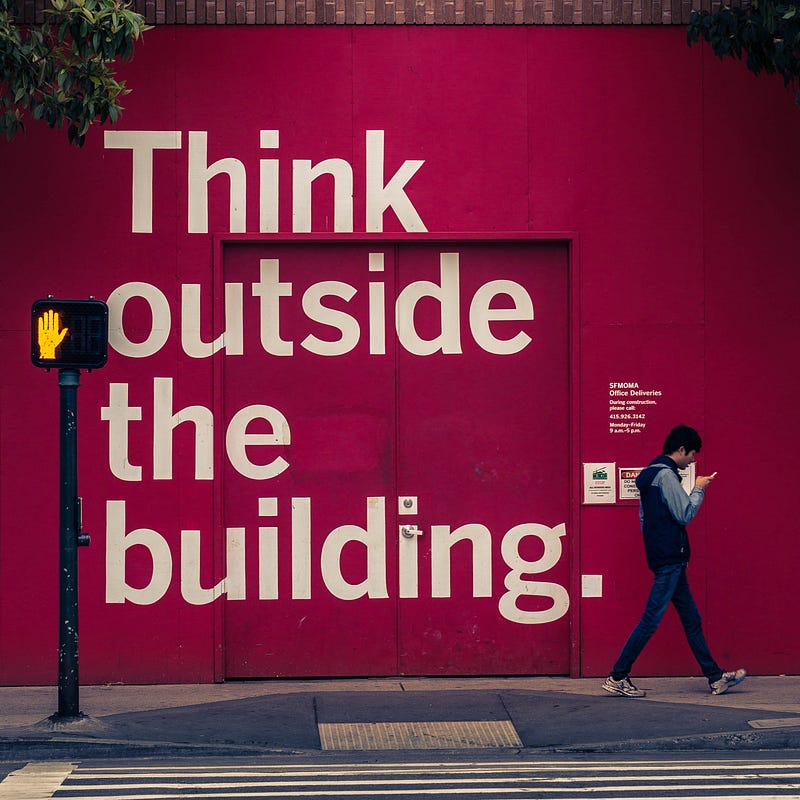
My father is 43 years old. He became an entrepreneur when he was 22. There wasn’t such thing as entrepreneurship at that time. People didn’t attend ‘entrepreneurship programs’ or plan to become one.
Today, entrepreneurship is put on a pedestal. They are the rock stars, the rappers, the basketball players of this century.
Kids drop out of college (like Bill Gates) to start a company (like Steve Jobs), to make an ‘exit’ (like Peter Thiel), and launch rockets into space (like Elon Musk) and try to avoid being like WeWork.
But all of that is changing. Entrepreneurship is about to take a step back.
The job of the ‘content creator’ will take its place.
Imagine this. A prestigious university, but not too fancy. Something like Columbia (not Harvard). A freshman and their career counselor are having a chat.
COUNSELOR: «So, we’re here to consider your options. What do you have in mind?»
STUDENT: «Uh, I don’t know. I like Kim Kardashian.»
COUNSELOR: «Great! So you are you into media?»
STUDENT: «Uh, no. I guess, uh. I just like creating content. I want to be someone like Tim Ferriss.»
COUNSELOR: «Oh, so you want to be a journalist!»
STUDENT: «Uh, no. I don’t know. I like Joe Rogan too. And Casey Neistat.»
COUNSELOR: «But what’s your profession?
STUDENT: «Uh, I guess, content creator?»
*the counselor looks at her list with 15 professions and shakes her head*
COUNSELOR: «There’s no such thing as a content creator. That’s not a profession.»
STUDENT: «Yeah, but what about Shane Parrish and writers on Substack and Medium bloggers? What about YouTube vloggers who make money from Patreon?»
COUNSELOR: «I don’t know what you are…well, OK. I think journalism is a much better option. It’s a real profession.»
STUDENT: «But I don’t want to be a journalist.»
COUNSELOR: «Don’t worry. You’ll figure it out. You’re just too young.»
The Passion Economy
The example above is ridiculous, but it proves a point. What we think of as a profession or a career is quickly changing.
We’re living in something Adam Davidson and Li Jin call the Passion Economy. In this economy, non-producers meet with non-consumers and exchange goods. Virtual goods. Content.
Before the Passion Economy, your only option as a teacher was to work at a school or your local university. Now you have Udemy. Or OutSchool. Or Podia.
Just twenty years ago, if you needed to get an MBA, you had to save $200,000 or ask your company (McKinsey) to pay for it.
Now you have bloggers like Pat Flynn (of SmartPassiveIncome) teaching people business and finance through courses ranging from free to $1,000. Or bestselling writers like Seth Godin, who set up their own MBA.
Education became more accessible than ever before. Cheaper. Up-to-date. And more practical.
But the revolution is not just happening with education. I am a content creator and working as Head of Content for a startup. If I was born twenty years earlier, I wouldn’t have had a job. Nobody would have hired me. I wouldn’t have been able to reach people with my ideas.
I am not a journalist per se, although there is a lot of journalistic work. And I am not a writer per se, although mainly what I do these days is writing.
Today, even if you don’t have an audience, you can come to platforms like Medium or YouTube and build an audience from scratch. You can then monetize that audience in the ‘1000 true fans’ fashion through tools like Substack and Podia.
You can now be a YouTuber. Or an IGTV streamer. Or a Medium writer. Or a Substack writer. Or a self-published author, publishing a new book every month.
All of these are real professions. You don’t need prior experience, go to NYU or spend thousands of dollars on writing seminars (unless that’s what you want!) to do them.
And as I work with creatives, I see more people become realize this.
The Passion Economy created a whole new sector of jobs, allowing people to monetize their thoughts, skills, and ideas.
Entrepreneurship vs. Content Creation
You could say that content creators are just creative entrepreneurs. But it’s a whole other profession with a different set of rules.
Entrepreneurs make a living building a business. The bottom line is their main KPI. Their product is their company, their brand, and they seek to provide value to their target customer.
Content creators make a living creating content. Engagement is their main KPI. Their product is their media platform (e.g., a blog), and they seek to serve their target audience.
When you’re a content creator, you are an entrepreneur in the sense that you work for yourself, and create something out of nothing. There are also now many entrepreneurs who are content creators as well. These two professions go great together, as one feeds the other. If you have an engaged audience, you can transform some of that into customers, and vice versa.
But content creators are first and foremost, communicators. Their job is creating content for a living. And just as there are different entrepreneurs, working in different industries, — there are different content creators, working in different mediums (video, text, audio, visual).
The two professions — entrepreneurship and content creation — are coming together. Back in the twentieth century, you had to choose: follow the money or follow your passion. Today, business, art, and profit are linked. They came together in a sense that only content creators — people who create for a living — can understand.
If you told someone thirty years ago that you wanted to become an entrepreneur, people would have laughed in your face. As in, «entre-what?!» It just wasn’t a thing.
The same thing is happening with content creators — it’s a profession, which many experienced writers on this platform have already figured out. But it’s going to takes some time before you can put «Medium Writer» on your resume and not get funny looks.
Ask almost any modern kid who they want to become. They’ll say, ‘blogger’ or ‘influencer’. Content creation is becoming a true profession — and soon enough, you’ll see colleges create ‘digital content creation’ courses (if not already!).
My parents’ generation heroes were movie stars, athletes, and rock stars. My generation grew up consuming more content than all the previous generations combined.
Our heroes are the ones we saw on the screen — the bloggers, vloggers, podcasters, writers — it’s only natural that we want to be just like them.
But as Hans Moravec wrote:
“In time, almost all humans may work to amuse other humans, while robots run competitive primary industries, like food production and manufacturing.”
The speed at which ‘traditional’ professions (lawyers, bankers, accountants) are becoming redundant — thanks to entrepreneurs — is fascinating.
Content creation might become the only future profession.


