WOMEN’S HISTORY MONTH
The Jewish Ballerina Who Used Her Final Breaths to Fight Hate
Why we should remember the oft-forgotten strong women from history.
Never mistake the origins of World War II for anything other than Adolph Hitler’s drive to produce a master race.
When you strip away all that happened — the violence, destruction, and the endless cruelty, you’ll find only malice and xenophobia. By leveraging people’s insecurities, economic woes, and political chaos, Hitler consolidated massive resources and a newly industrialized nation to fuel his twisted vision.
Nobody suffered as the Jewish people did during this time. And it was one defiant ballerina who demonstrated immeasurable courage in the face of certain death.
Her incomparable talent and beauty
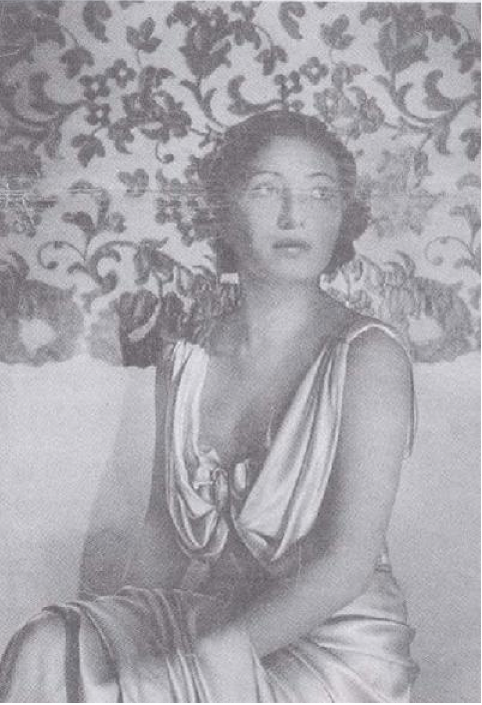
Franceska Mann was a young and promising dancer in Warsaw in the early 1930s. She was considered one of the best dancers of her generation in Poland, and known for her elegant beauty and grace as she flew through the air, creating curving lines with her body. Her slippers glided across the floor seemingly unaffected by gravity. She floated across the stage, delighting the huge audiences who gathered to see her perform alongside an orchestral ensemble. All in the area knew of her and her troop.
As anti-Semitism increased, Jews rushed to escape the country. And because they’d forbidden from traveling, they had to find alternative means of securing escape.
In the Nazis’ infinite capacity for malevolence, they began what was called the “Hotel Polski Affair”. It was a trap designed to attract jews who wanted to flee to South America. It was a sickening project, where they lured innocent people in and trapped them like bugs.
The scheme was simple. Nazis posed as agents and took the refugee’s money, and then gave them passports. Then, they guided the Jewish prisoners to a train that would ostensibly take them to an airport to flee to safety.
Tragically, the Jews would realize this train was headed for Auschwitz — only when it was too late. Sadly, Franceska Mann and a group of others, including her fellow dancers, fell for this trap. They thought they’d be transported to Switzerland where they’d be exchanged for German prisoners of war.
As you likely know, the Nazis used a cattle-like approach for these exterminations. Many people didn’t know what was happening until the final moments. This was by design to keep order and stop people from revolting, which still occasionally happened. Rumors and whispers spread quickly and easily throughout the camp.
The final moments in infamy
A Holocaust survivor, David Wisnau witnessed what happened next, and later wrote about it in: Eyewitness Auschwitz: Three Years in the Gas Chambers.
He’d been a Jewish prisoner, but secured a safe job by singing songs in German to the soldiers and making them laugh. In turn, he was tasked with folding clothes near the chambers and saw the events unfold.
When Franceska Mann and the other passengers arrived, they were told they were being transferred to another station. But before they did, they needed to be “cleaned”. Mann already knew what this meant. She’d danced in clubs in front of German officers and heard the gossip of what was going on at Auschwitz and other camps.
Just moments before this happened, a drunk off-duty guard, Josef Schillinger, sauntered into the changing room with his friends, either to harass the women or sadistically enjoy watching them being put into the gas chambers. He was known as one of the most brutal and heartless guards in all of Auschwitz.
He’d taken notice of Franceska, who was famously attractive, with a sculpted figure from dancing, which was now partially revealed. She saw him gazing lustfully at her and standing nearby, and began undressing in a way to catch his eyes, intentionally gazing at him in an alluring way. He impulsively came over to try and pull her bra down, and as he did, she reached down and grabbed his gun. She quickly lifted it and shot him through the gut twice, killing him. She also shot another soldier in the leg during this skirmish.
The other women in the room attempted to lock it from the inside, but other soldiers came running in after hearing the commotion, and shot the remaining women dead before they could be put into the chambers. And perhaps this is the final small justice that these women achieve through Mann, that they could die on their own terms, fighting.
It’s worth remembering that many other strong women had their stories erased during the holocaust. In the final months, great efforts were undertaken to erase documentation, records, and the stories of those who were killed.
Today, Mann’s story lives on as one of the most celebrated acts of Jewish resistance at Auschwitz.
Her story grew its own legend, and morphed into perhaps a taller tale, that involved more fighting and soldiers being wounded than was actually the case. But it was confirmed in multiple accounts, that she was the one who lured Schillinger in, and shot him.
Josef Schillinger was later named in a report by the UN War Crimes investigation, and tied to many atrocious acts, and named as one of the most violent men in the history of the holocaust, and in their report confirmed his killing by a “young woman”. It was all revealed during the trial of one of his compatriots, Adolf Eichman, who was convicted and later hanged for his crimes.

It gives some solace knowing that accountability was given to these men, and that perhaps even if Mann hadn’t shot Schillinger, he’d have met the same fate as Eichmann.
Yet it’s still hard to grasp how The Holocaust could have happened, as the magnitude of human suffering seemingly knew no bounds, and was a result of such systematic violence.
The US considered bombing Auschwitz at one point but thought it wouldn’t have been effective in stopping the killing and torture. But they also didn’t grasp just how terrible the situation was. And perhaps the second tragedy, was of how many of these prison guards walked away free, or lived second lives abroad and free of accountability.
We will each reach our final moments some day and likely know the end is nigh. I reckon it was vividly clear to many of these survivors.
I’d like to think that in my final moments, I would go down fighting, that I’d have the strength to avoid cowering to my fate. I also hope I’d be willing to say no as a soldier to such barbaric assignments. It’s all speculation until you are up against the promise of certain death.
What should never be forgotten is that a strong ballerina decided to go down fighting and take a Nazi with her. Hers was a noble and courageous last-ditch effort that is worth remembering. Rest in peace, Franceska.