UPDATE — The Japanese Plan to Poison The World
Here’s The Alternative Mt Fuji Solution to Stop the Insane Idea
NEWS UPDATE — Wrecked Fukushima Nuclear Plant One Step Closer to Releasing Radioactive Water Into Pacific — 21 Dec 2021
It is the audacity of arrogance. Japan has unilaterally announced that it plans to release more than a million tonnes of radioactive wastewater from its now-defunct Fukushima nuclear power plant, beginning in 2 years and expects to take at least 40 years.
Many can remember the 2011 earthquake and tsunami which devastated more than 800 km of coastline, leaving nearly 16,000 dead, almost 3,000 missing, and 500,000 homeless in March 2011. The Fukushima Daiichi nuclear plant, operated by the Tokyo Electric Power Company (TEPCO), was badly hit and sustained explosions and meltdowns that released an inordinate amount of radioactivity into the atmosphere. Put in perspective, the radioactivity release was only about 10% of that released by the Chernobyl nuclear plant disaster in the Northern City of Pripyat, Ukraine, in April 1986. The Japanese ordered the evacuation of everyone within 20 km of the Fukushima plant. Eventually, more than 160,000 left, including many from outside the 20 km zone.
Since the accident, TEPCO has been using a complex chain of filters called the Advanced Liquid Processing System (ALPS) to capture some 62 types of radionuclides (radioactive particles) except tritium. However, more dangerous isotopes than tritium with longer radioactive lifetimes, eg ruthenium, cobalt, strontium, and plutonium, sometimes also slip through the ALPS process, which TEPCO only acknowledged in 2018. These additional nuclides are now confirmed present in 71% of its radioactive wastewater tanks at Fukushima.
True, nuclear plants all over the world have regularly released waste water containing trace amount of tritium in to the environment under IAEA (International Atomic Energy Agency) prescribed controlled conditions. ALPS is generally otherwise effective. For example, ALPS took care of some 9,000 tons of contaminated water resulted from the accident at the United States’ (USA) Three Mile Island Nuclear Generating Station in March 1979. During a February 2020 visit to Fukushima, the IAEA considered its “disposal options as technically feasible and in line with international practice.”
The concurrence by the IAEA and the USA with the Japanese decision defies reality and does not make rational sense.
There are about 440 nuclear reactors in operation in some 30 countries around the world. About 400,000 tonnes of radioactive waste from used fuel has been discharged from reactors worldwide, with about one-third having been reprocessed. According to a 2018 IAEA Report, the current total global inventory of solid radioactive waste is approximately 13 million tons, of which 10.5 million tons (82% of the total) has been disposed of permanently and a further 2.3 million tons (18%) is in storage awaiting final disposal. More than 98% of the solid radioactive waste is classified as being very low- or low-level waste in volume terms, with most of the remainder being intermediate level waste. In terms of total radioactivity, the situation is fully reversed, with approximately 98% of the radioactivity being associated with intermediate and high-level waste.
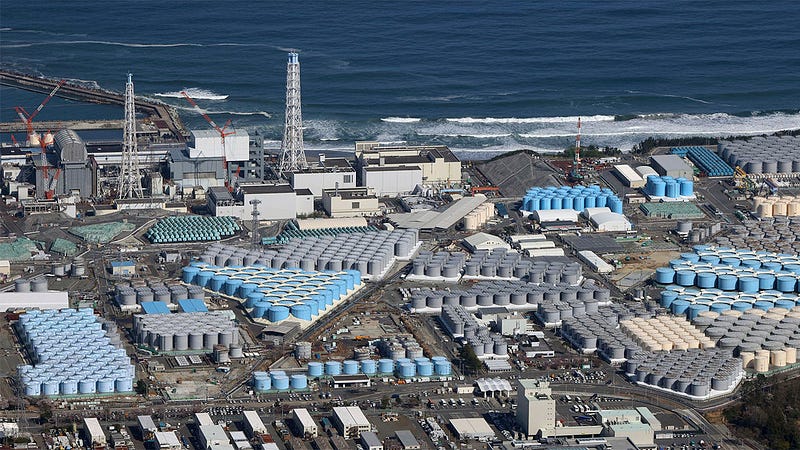
The Fukushima tanks now hold about 1.3 million tonnes of radioactive water, enough for about 500 Olympic-sized swimming pools. This is equivalent to 300% of solid radioactive waste produced by all the nuclear reactors in the world.
Over the years, the Fukushima plant has only managed to barely contain the damaged reactors and wells so as to draw groundwater away before it reaches the reactors. It failed however to stop the buildup of contaminated water. TEPCO has been battling leaks, spills, malfunctioning equipment and safety breaches which hinder her effectiveness. These have prevented the filtering of all dangerous materials out of the water which accounts for their 71% presence cumulatively to this day.
There is no scientific basis for IAEA or the USA to believe that TEPCO would be able to clean up the radioactive wastewater sufficiently over the next 2 years for discharge into the Pacific Ocean.
Japanese Prime Minister claimed to have promised during his Cabinet meeting that Japan would “do our utmost to keep the water far above safety standards” before “releasing the treated water into The sea”. Realistically, this is a promise neither he nor any Japanese leader can ever deliver.
The IAEA and the USA repeatedly pointed to other nuclear plants who have disposed of wastewater with minimal impact. They are unable however to point to specific plant(s) who has successfully disposed 1.3 million tonnes of radioactive wastewater without harm to marine life, people and the environment.
Scientists and marine experts have expressed concerns about the possible impact of the discharge on marine life and on fisheries. Fisheries organisations, fishermen, environmental groups, and neighboring countries have immediately condemned the decision, citing the vast amounts involved.
There is no support from even Japanese fishing communities and other stakeholders involved in promoting marine agriculture, fishery and forest products to reduce any reputational harm to produce from the area. They remember the impact to their livelihood in the months after the Fukushima wastewater leaks into the sea resulting in deformities, poisoned and mal-developed marine life. They urged the government over the years not to release the radioactive wastewater, arguing the expected catastrophic impact would undo work to restore the damaged reputation of their fisheries.
Many do not trust TEPCO to be transparent and forthwith in her plans and execution. Greenpeace, the environmental group, urges the building of more storage tanks even outside the Fukushima plant instead of the cheaper option of ocean release.
Neighbouring countries have also condemned the Japanese unilateral decision. The South Korea government, as well as her coastal cities of Busan, and Ulsan, have called for the plan to be scrapped because it would have “direct and indirect impact on the safety of our people and surrounding environment”. China also urged Japan to act with a “high sense of responsibility towards its own people, neighbouring countries and the international community”. ASEAN has so far not commented on Japan’s decision.
TEPCO is expected to incur the continuous annual cost of radioactive wastewater storage estimated at about 100 billion Japanese Yen (US$ 913 million). This should motivate TEPCO and the Japanese Government to consider the Mt Fuji Solution.
THE MOUNT FUJI SOLUTION — THE ALTERNATIVE
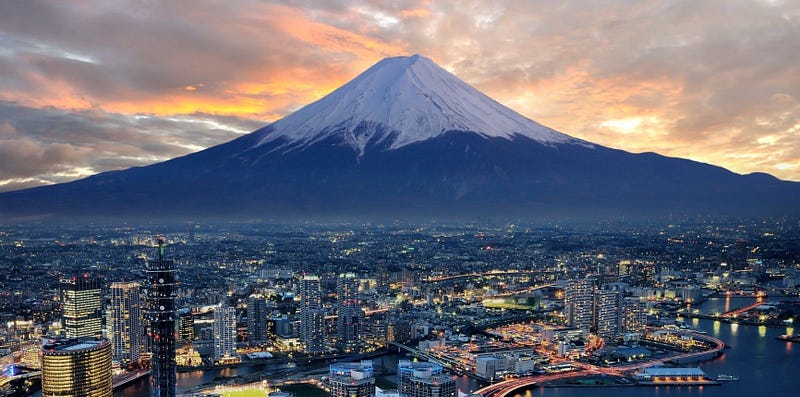
Japan’s Mount (Mt) Fuji is an active volcano, last erupted 300 years ago in 1707, about 100 km southwest of Tokyo and is the country’s tallest peak, at 3,776 meters. It is 309 km South-West of Fukushima. Mt Fuji has a base area of 208 sq km. There is an official buffer zone of 496 sq km which is subjected to landscape and land development planning eg building sites, hotels, colour, design, form, height, materials and scale. The goal of the buffer zone is to preserve and manage Mt Fuji cultural heritage properties.
The entire Mt Fuji buffer area of 496 sq km is as large as Prague City in Czechoslovakia, and Feixiang City in China’s Southern Hebei province. It is about a third of Houston City in the USA, and a third of London City in the United Kingdom (UK).
Mt Fuji main crater is 780m in diameter and 240m in depth. Its bottom is 100m-300m in diameter. The mountain has more than 70 lava tunnels and extensive lava tree molds. Its geological composition is mainly sedimentary rocks and tertiary volcanic rocks. Nearby, Mt Fuji is surrounded by five lakes: Lake Kawaguchi, Lake Yamanaka, Lake Sai, Lake Motosu, Lake Shōji together with nearby Lake Ashi. They can be used to test the filtered Fukushima wastewater impact on marine life.
The total land area of 496 sq km around Mt Fuji is therefore large enough to build huge underground tunnels and storage tanks to store the radioactive wastewater of Fukushima, and let it flow into the inner depths of the mountain through geological tunnels carved by centuries of lava flows. The wastewater would eventually reach the hot molten lava of the earth’s magna and be safely absorbed naturally without endangering the environment, human, marine and animal lives.
The technology exists in Japan to create gigantic tunnels and storage tanks for its Fukushima radioactive wastewater, augmenting Mt Fuji’s natural volcanic geological subterranean network of lava tunnels and lava trees molds.
In Tokyo, a huge underground array of tunnels and a giant storage tank can be found. Lying about 22m underground, and measuring 177m long and 78m wide, the water tank is larger than a soccer pitch. The ceiling of the water tank is supported by 59 pillars which are 18m tall and weigh 500 tons each. Tunnels stretch for 6.3km with minimum curving radius of 250m directing water to the storage tank.
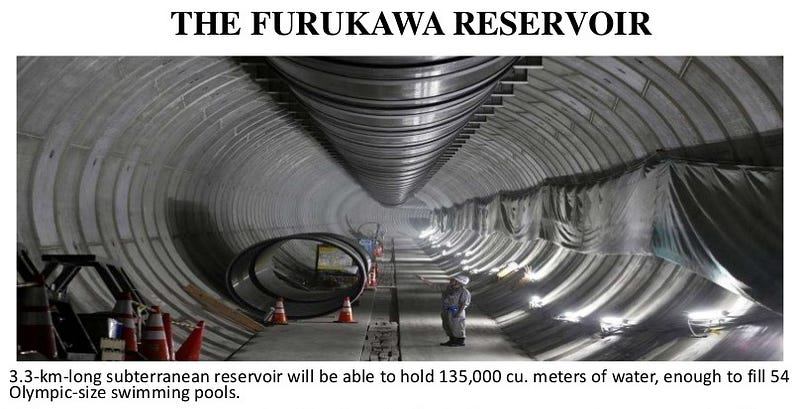
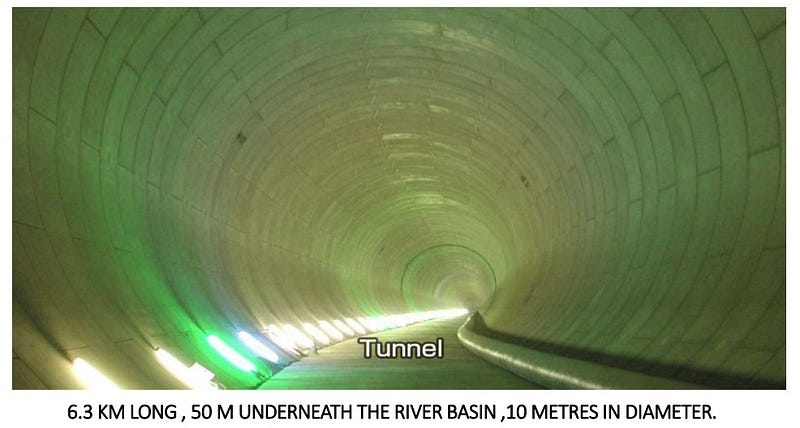
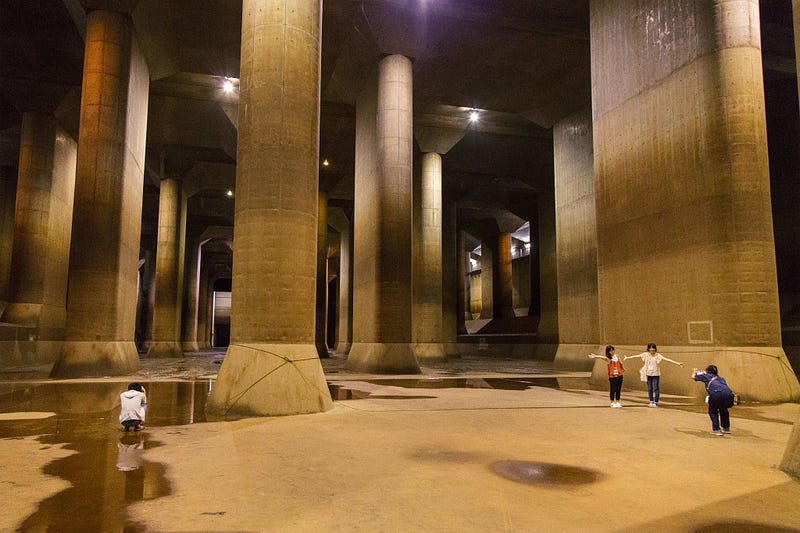
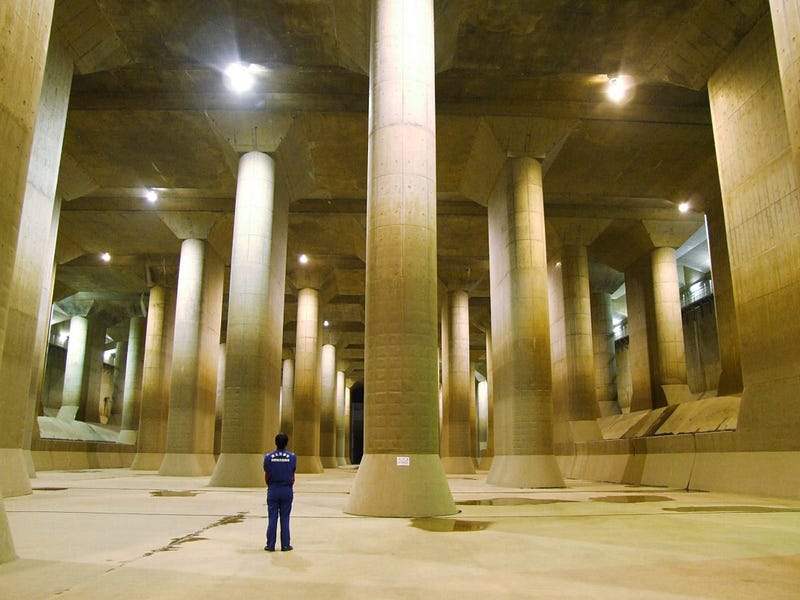
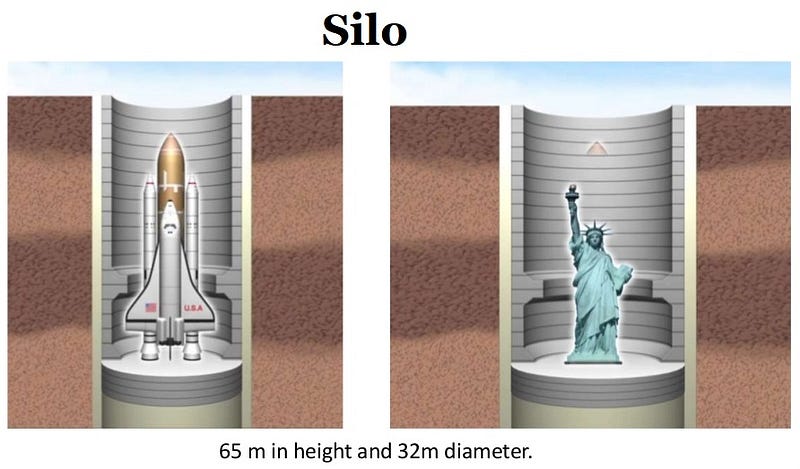
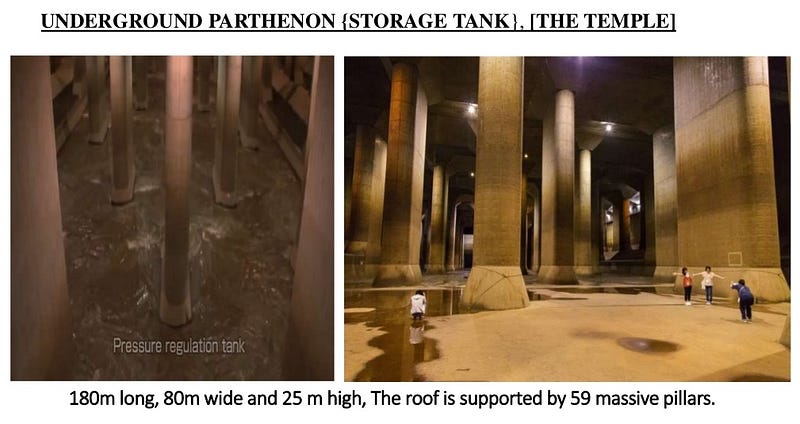
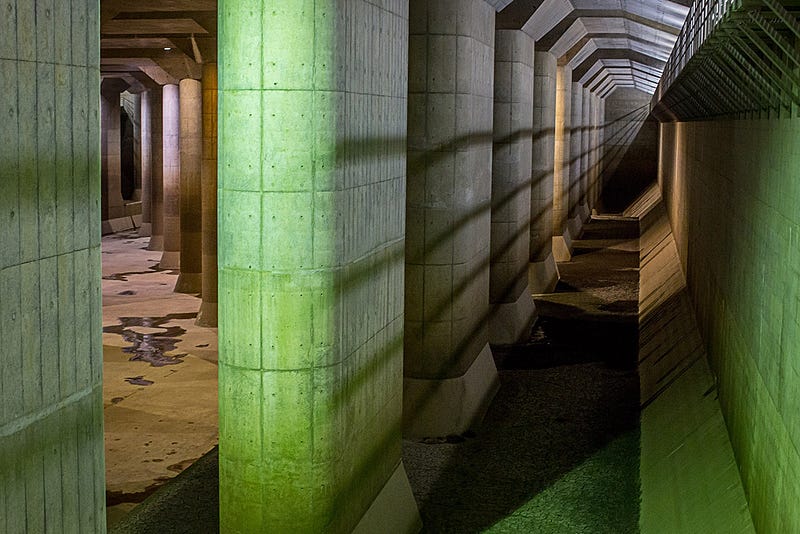
Many similar underground storage tanks with connecting tunnels can be built under Mt Fuji, with controlled water release into the depths of the Mt Fuji core. The 6 lakes above ground can also be used as storage and testing beds for the treated wastewater. The confidence of the Japanese Government would be further tested by introducing its treated wastewater into the 5 lakes.
This is the most innovative alternative to the proposed plan to just dump poisonous radioactive wastewater into the Pacific Ocean.
FUKUSHIMA’S CONTINUING HEALTH THREATS AND HAZARDS
In 2021, just over 10 years since the fukushima disaster, the mystery of the ongoing radioactivity off the seafloor off Fukushima’s coast remains puzzling and demanding answers.
The Fukushima nuclear disaster discharged an unprecedented amount of radioactivity into the sea over a relatively brief time. It was likely that the pulse of cesium and other radioisotopes make its way through the marine food chain. Scott Fowler, who helped pioneer marine radioecology for more than 30 years at the IAEA’s Marine Environment Laboratories, offered a primer on the subject at the Fukushima and the Ocean Conference in Tokyo in November 2012:
“The food chain starts with marine phytoplankton — microscopic plants that account for as much photosynthesis as plants on land. These organisms take up radioactive contaminants from the seawater that surrounds them. As the phytoplankton are eaten by larger zooplankton, small fish, and larger animals up the food chain, some of the contaminants end up in fecal pellets or other detrital particles that settle to the seafloor. These particles accumulate in sediments, and some radioisotopes contained within them may be remobilized back into the overlying waters through microbial and chemical processes.”
Another researcher, Dr Masaharu Tsubokura discovered that in that first month, “the risk of death rose in both genders and every age group,” as he wrote in a 2018 review article in the Journal of the National Institute of Public Health. The impact was most notable among the elderly living in long-term care facilities. Tsubokura and colleagues found that among 715 residents of five evacuated Minamisōma nursing homes, the relative risk of death was 2.7 times higher than before the disaster. At one facility, 25% of residents evacuated died within 90 days. The most common cause of death was pneumonia, suggesting “they died as a result of weakness, a decrease in care, and the general deterioration of their physical condition, and not from the onset of any particular disease,” Tsubokura added.
Dr Akihiko Ozaki, a breast cancer surgeon and frequent Tsubokura collaborator, found that after the disaster the lag between when women recognized possible breast cancer symptoms and when they saw a doctor grew, resulting in more advanced cancer and more difficult treatment. And Tsubokura found that the incidence of diabetes in Minamisōma and nearby Sōma increased by 5% over 3 years, and diabetes-related complications such as stroke became more common and severe. Tsubokura and colleagues blame changes in exercise habits and diet, as well as disrupted familial and community ties. The social stresses “led people to pay less attention to their own health,” Ozaki says.
The findings all suggest that, in Fukushima, those stresses were the real health threat. Evacuation after a nuclear accident may be unavoidable, Tsubokura says. Still, he believes waiting until temporary housing and other facilities are ready could sometimes save lives. Some experts think the hazards of radiation are too poorly understood to warrant a less cautious approach. “Radiation exposure from this accident was not at a level that would cause acute injury,” says Hideyuki Ban, secretary-general of the antinuclear Citizens’ Nuclear Information Center in Tokyo. But low-level exposure could still lead to a cancer increase years later, he says.
The Japanese plan to dump radioactive wastewater into the Pacific Ocean is an irresponsible and callous act of arrogance and recklessness. If she insisted on proceeding with her plan to poison the world, Japan risks being isolated by the entire world; her people barred from entering countries, her need for oil denied, her goods banned and her companies sanctioned. Japan’s survival is irrelevant and immaterial to the rest of the world as she places her interests above the health and safety of our loved ones.
Please enjoy my recent Articles.