e, we gave it space but followed it to see what it was up to. We couldn’t get enough of this magnificent creature.</p><figure id="583b"><img src="https://cdn-images-1.readmedium.com/v2/resize:fit:800/1*vwe928VtAp4jTi8ptNgnYg.jpeg"><figcaption>At one point the terrain got too steep and he flipped and flopped, rolling down the hill for about 20 feet. It was adorable! Photo Credit: Author</figcaption></figure><p id="768f">When it arrived at another tree down below, it quickly made moves to climb up it. You can view it climbing in video format at the beginning of our YouTube video below.</p>
<figure id="b60a">
<div>
<div>
<img class="ratio" src="http://placehold.it/16x9">
<iframe class="" src="https://cdn.embedly.com/widgets/media.html?src=https%3A%2F%2Fwww.youtube.com%2Fembed%2F-ec6KKLfJ_o%3Ffeature%3Doembed&display_name=YouTube&url=https%3A%2F%2Fwww.youtube.com%2Fwatch%3Fv%3D-ec6KKLfJ_o&image=https%3A%2F%2Fi.ytimg.com%2Fvi%2F-ec6KKLfJ_o%2Fhqdefault.jpg&key=a19fcc184b9711e1b4764040d3dc5c07&type=text%2Fhtml&schema=youtube" allowfullscreen="" frameborder="0" height="480" width="854">
</div>
</div>
</figure></iframe></div></div></figure><p id="9de8">We were simply amazed at this lovely creature and probably could have spent another couple of hours watching it move about if we didn’t have other things to attend to.</p><p id="59a1">After posting pictures of it on social media, a few people suggested that it is possible to touch them and pick them up, but we tend to let nature be and try not to interfere too much. We feel that we are only there to observe, and that is enough.</p><figure id="57df"><img src="https://cdn-images-1.readmedium.com/v2/resize:fit:800/1*qNoTJR3vCXfVo-kOmAY_hg.jpeg"><figcaption>Climbing up the second tree. Photo Credit: Author</figcaption></figure><p id="9990">We were told that they travel in mating pairs that mate for life, and while we didn’t see the female this time, we did see one on a separate hike a few days later. Of course, like many things in nature, the female is less spectacular and doesn’t have the same adorable horns, but she was still beautiful.</p><figure id="ff0f"><img src="https://cdn-images-1.readmedium.com/v2/resize:fit:800/1*wAGMPbdHJD7JaumqVlYi5w.jpeg"><figcaption></figcapti
Options
on></figure><p id="6a6f">I hope you enjoyed learning a little bit about the Jackson’s Chameleon. We only did see these two, but we are headed back up to that region in the near future, so hopefully, we get another sighting or two!</p><figure id="6f3f"><img src="https://cdn-images-1.readmedium.com/v2/resize:fit:800/1*FPhxaPRp8QVe_lys05LS_g.png"><figcaption></figcaption></figure><p id="1a9e"><b><i>Do you like my writing? Consider joining the Medium platform for just $5/month. It will give you access to all of my articles, plus millions of others on every subject and by many talented writers. By clicking my referral link below, I will also earn a small commission for your patronage. Thank you for your support and happy reading!</i></b></p><div id="326b" class="link-block">
<a href="https://artisticvoyages.medium.com/membership">
<div>
<div>
<h2>Join Medium with my referral link - Jillian Amatt</h2>
<div><h3>As a Medium member, a portion of your membership fee goes to writers you read, and you get full access to every story…</h3></div>
<div><p>artisticvoyages.medium.com</p></div>
</div>
<div>
<div style="background-image: url(https://miro.readmedium.com/v2/resize:fit:320/0*ozGCwnvCMYxpl7gy)"></div>
</div>
</div>
</a>
</div><figure id="024f"><img src="https://cdn-images-1.readmedium.com/v2/resize:fit:800/1*FPhxaPRp8QVe_lys05LS_g.png"><figcaption></figcaption></figure><p id="f8a4"><i>Hi there, we are 2 Canadians, Jill and Chris from Artistic Voyages. We have been nomadic since 2017 living in numerous different countries, and experiencing the life and diversity of our planet on the ground and firsthand. We have now been on the African continent for 2 years! Join our adventure by hitting the links below!</i></p><p id="72a5"><a href="http://www.artisticvoyages.com/">Website</a> | <a href="http://www.instagram.com/artisticvoyages">Instagram</a> | <a href="http://www.facebook.com/artisticvoyages">Facebook</a> | <a href="http://www.twitter.com/artisticvoyages">Twitter</a> | <a href="http://www.patreon.com/artisticvoyages">Patreon</a>|<a href="http://www.youtube.com/c/artisticvoyages"> YouTube</a> | <a href="https://artisticvoyages.medium.com/">Medium</a></p></article></body>
The Jackson’s Chameleon
Living high up in Uganda’s Rwenzori Mountains.
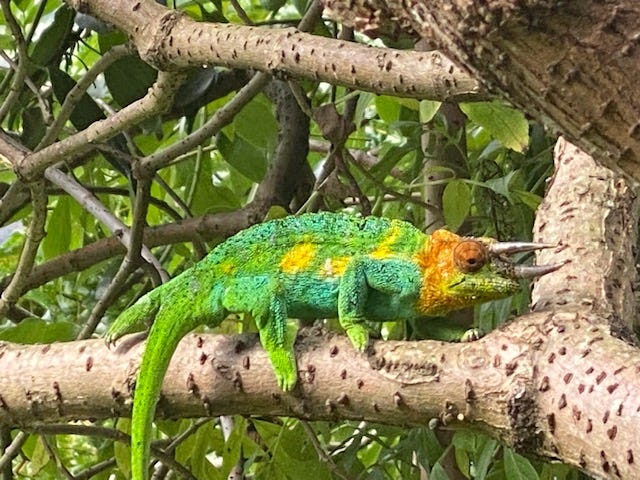
A zoomed-in view of the Jackson’s Chameleon near Rwenzori National Park in Uganda. Photo Credit: Author
We were sitting on the porch of our hotel one day in May 2021 when I saw a strange green color up in a tree nearby. It wasn’t the same green as the rest of the foliage, so I decided to inspect further.
As I got closer to the tree, I could see more colors popping out, and then all of a sudden, I saw it! The famous Jackson’s, or Three Horned, Chameleon!
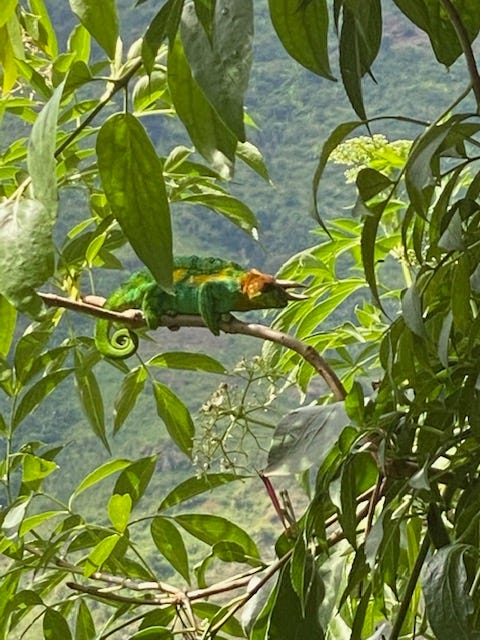
This is how I first saw it. Hanging out at the end of a branch near our balcony. A classic pose. Photo Credit: Author
This chameleon is endemic to this part of Uganda and mostly lives high up in the Rwenzori Mountain region, though it is found in other parks where the altitude exceeds 1700m. We had seen pictures of it hanging in the lodge and really hoped that we would get a good sighting.
We watched it for probably about an hour, taking a ridiculous number of photos of it as it crawled from the end of the branch towards us.
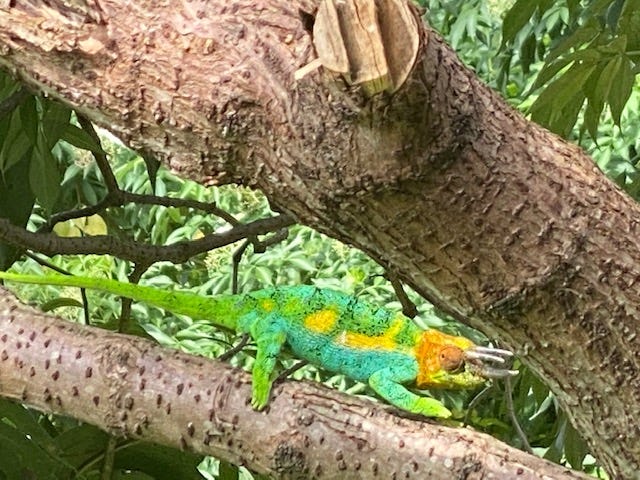
Apologies if the pictures appear grainy, these shots were zoomed in on my iPhone11. Photo Credit: Author
As it got closer, its colors shifted slightly, but it wasn’t scared of us and continued on with its mission to scale a different tree just down the hill.
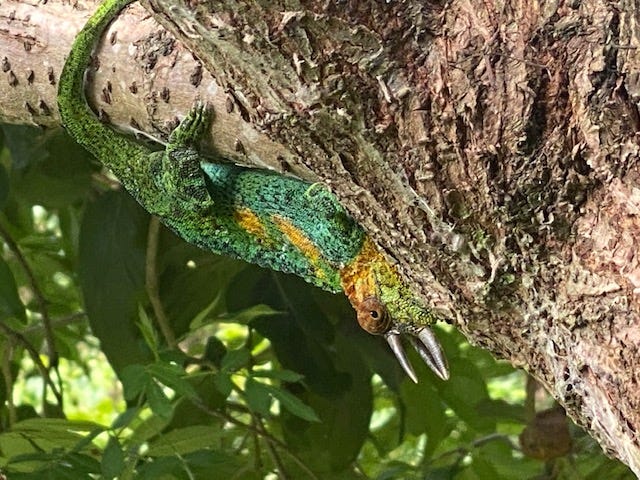
You can see the darkness that came over it as it went under the tree and into the shadows. Photo Credit: Author
We watched it crawl down its current tree, then started to walk down the hillside in front of our lodge. Of course, we gave it space but followed it to see what it was up to. We couldn’t get enough of this magnificent creature.
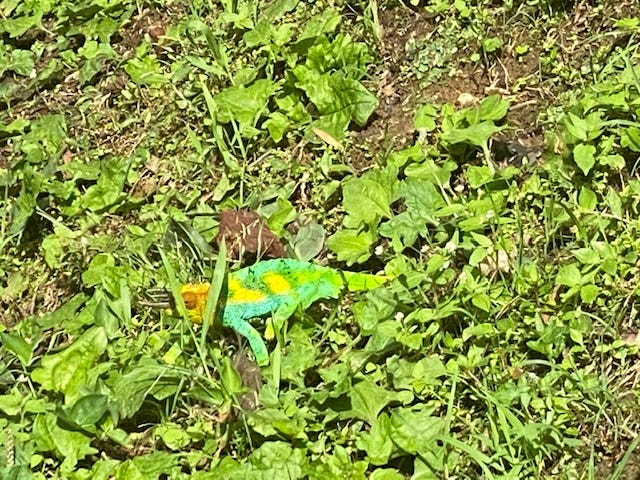
At one point the terrain got too steep and he flipped and flopped, rolling down the hill for about 20 feet. It was adorable! Photo Credit: Author
When it arrived at another tree down below, it quickly made moves to climb up it. You can view it climbing in video format at the beginning of our YouTube video below.
We were simply amazed at this lovely creature and probably could have spent another couple of hours watching it move about if we didn’t have other things to attend to.
After posting pictures of it on social media, a few people suggested that it is possible to touch them and pick them up, but we tend to let nature be and try not to interfere too much. We feel that we are only there to observe, and that is enough.
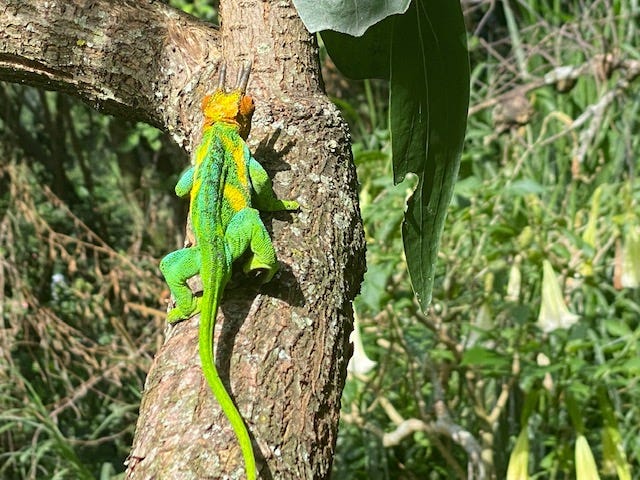
Climbing up the second tree. Photo Credit: Author
We were told that they travel in mating pairs that mate for life, and while we didn’t see the female this time, we did see one on a separate hike a few days later. Of course, like many things in nature, the female is less spectacular and doesn’t have the same adorable horns, but she was still beautiful.
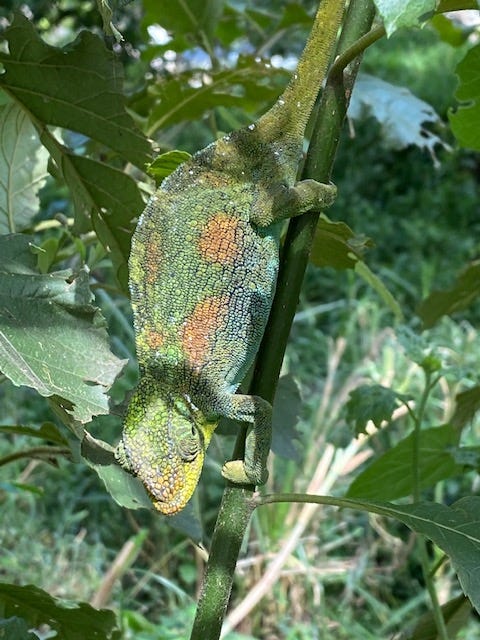
I hope you enjoyed learning a little bit about the Jackson’s Chameleon. We only did see these two, but we are headed back up to that region in the near future, so hopefully, we get another sighting or two!
Do you like my writing? Consider joining the Medium platform for just $5/month. It will give you access to all of my articles, plus millions of others on every subject and by many talented writers. By clicking my referral link below, I will also earn a small commission for your patronage. Thank you for your support and happy reading!
Hi there, we are 2 Canadians, Jill and Chris from Artistic Voyages. We have been nomadic since 2017 living in numerous different countries, and experiencing the life and diversity of our planet on the ground and firsthand. We have now been on the African continent for 2 years! Join our adventure by hitting the links below!