
WOMEN / AGING / MEDIA
The Invisibles
Images and stories in the media about older women affect the ideas about aging
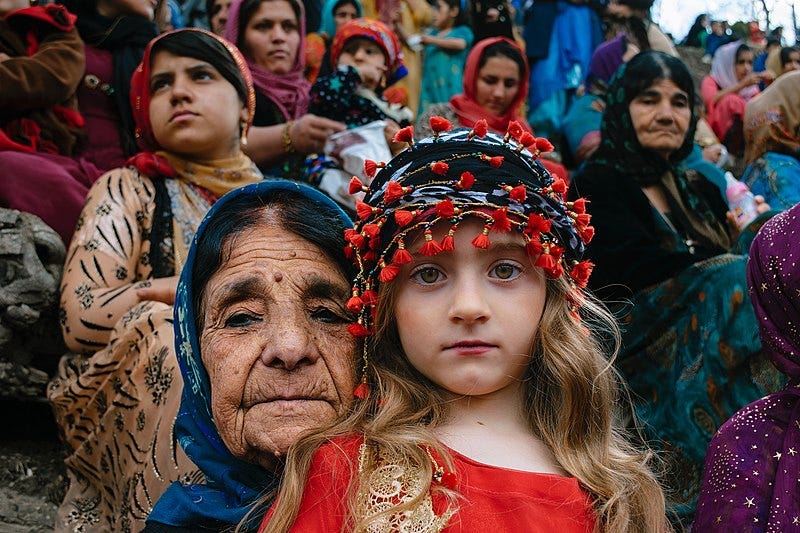

Who hasn’t heard the stereotypes about women of a “certain age?”
Despite almost a half-century of change and growth for women spurred by the second wave of the women’s movement, the tarnished image of older people, particularly women, has continued relentlessly into the 21st. Century.
Older women continue to be depicted on television as caricatures. They are invisible, irrelevant, asexual, unhinged, dried-up, hormonal disasters. Women quickly slither into frailty and become forgetful, weak, feeble, debilitated, dependent, and depressed. Or so the tale is told — those outdated narratives damage women’s physical, emotional, financial, romantic, and sexual health.
None of this even touches on the dismay of middle-aged and older women attempting to date, only to find that the men they consider viable partners are strictly interested in women fifteen years or more than their junior.
Media
News media have an agenda-setting function in that they draw our attention to specific topics and therefore contribute to shaping our ideas and opinions on different issues.
Images and stories about older adults affect how older people are perceived. Media images of aging mainly refer to older people in a simplified manner, depicting retired people as one homogenized group.
The focus is primarily on chronological age, stereotyped into polarised categories: the active golden age in advertising or the frail, helpless older woman in the news. The problem with this is that the diversity becomes invisible when the expanding group of older adults contains significant variations of lived experience regarding health, functionality, socio-economic situation, and ethnic background.
Women of all ages know that youth is the standard; to be “not young” is to be devalued by society. Part of media pedagogy is deconstructing the paradigm of ageism on television. In this paradigm, an older woman is frequently seen as “the other.”
Simone de Beauvoir laments the “otherness” that forces older people to “stand outside of humanity,” a prisoner of society’s misconceptions. “If old people show the same desires, the same feelings, and the same requirements as the young, the world looks upon them with disgust: in them, love and jealousy seem revolting or absurd, sexuality repulsive and violence ludicrous. Above all, they are called upon to display calmness: the world asserts that they possess it, allowing the world to ignore their unhappiness.” (de Beauvoir, l977, p. 10)
Very often, the privilege of not being the “other” depends upon inequality of numbers — the majority imposes its rule upon the minority or persecutes it. But women are not a minority. There are as many women as men on earth. And yet, a woman is categorized as “invisible” except for her role as either mother or grandmother.
In Fear of Fifty, Jong writes that feminist advocates have failed to establish the validation of older women and to change what female aging means. Although women activists of the 1970s challenged gender, racial, and social inequalities, they did not consider the construction of age and its impact on female identity. These stereotyped images of aging affect all of us, limiting our ideas about aging and what it means to grow older.
The invisible woman
“I’m invisible.”
It’s impossible to track how often I’ve heard or read this statement from women — some as young as 40, but increasingly as menopause hits and beyond. Some women may be relieved to be ignored by strangers. But they feel frustration or shame around the de-sexualization pushed upon us by all corners, from being commanded by magazines to cut our hair and dress in “age-appropriate” fashion — offensively including everything from no longer baring upper arms to not wearing jeans.
The invisible woman might be the actor no longer offered roles after her 40th birthday, the 50-year-old woman who can’t land a job interview, or the widow who finds her dinner invitations declining with the absence of her husband. She is the woman who discovers that she is no longer the object of the male gaze — youth faded, childbearing years behind her, social value diminished.
But if I wish to define myself, I must first say: ‘I am here to deny my feminine weakness.’ I’m a bodybuilder and don’t tell me to hide my muscled arms. In addition, I am proud of the few wrinkles time and nature sculpted into my skin. No, my age will not cloak my ability to be validated in meaningful ways. Like myself, many of my friends, haunted by a sense of femininity, share an attitude of defiance.
Older women will get the short end if appearance is the yardstick used to measure a woman’s value. Blame Hollywood for often portraying us in an unflattering manner. And an entire cottage industry exists because it convinced us that the only way to age gracefully is not to age. Aging graciously is just a marketing slogan to sell us products that fuel the hope that we can become visible again.
Changes
Yet, there have been small measures of recognition. Women over 40 swept key categories at various awards shows in 2021. However, despite this progress, changing the tide of sexism and ageism in Hollywood remains an uphill battle. Older people of any gender are seen less than young people.
Gradually, depictions of older women are breaking stereotypes, and instead of being always characterized as the other, a few portrayals defy the archetype. As early as l984, two dynamic older women on popular television shows convinced audiences that mature women could think and be involved in society.
Miss Marple (periodically from l984–1992 and returning) and Jessica Fletcher, portrayed by Angela Lansbury (Murder She Wrote, l984-l996), are clever agents investigating murders. Through observation and keen insights into human behavior, these women are the heroines who are not marginalized and are certainly not invisible.
But it is mainly in the 21st Century that television departs from the older woman as Parody. Tyne Daly in Judging Amy (2001–2005) introduces the audience to Maxine Gray. She is a sought-after professional woman and a social worker with the Dept. of Children and Families in Hartford, Connecticut.
In addition, she is a person who is respected for what she says and does. Not physically beautiful and not young, she carries herself with grace and confidence. The audience observes a gray-haired woman who knows who she is and one who is not trying to camouflage her age or her wisdom.
Parting thoughts
I am often puzzled by the bombardment of prevalent negative images in American media. With the troubling discrepancy between the positive way I see myself and the social devaluation, I feel challenged to live a life that contradicts the ‘over the hill’ stereotype. My sense of ‘personhood’ is stronger than ever, yet society and the media are fading me into invisibility, which does not sit well with me.
But with the politics of representation slowly changing on television, the debilitating stereotype of helplessness, fragility, and aimlessness replaced, it is not only older women who will benefit from a new paradigm but all of society as well. The young can look forward to a point in life that presents new opportunities and possibilities, a time of increased agency and renewed activism.
Thank you sincerely for reading this article.
If you haven’t signed up for Medium yet, and want to read all my articles, use my affiliate link! There’s no additional cost to you, and I’ll receive a small commission — thanks for your support!