
The Inventive Conspiracy Theorists of the Spanish Flu
COVID-19 is a man-made virus that escaped a military Chinese lab. No, wait, it’s Bill Gates’ nefarious attempt to control the world’s population, and it was already being produced in 2015. Fools! It’s a biological weapon, and it spreads through 5G networks. Or perhaps microchips. Or radiations. Unclear. But, guys, it probably doesn’t even exist: it’s all a government hoax, meant to scare people into getting vaccinated.
Strap on your tinfoil hats, ladies and gents, and open your umbrellas, because it’s raining conspiracy theories this year.
… or maybe it’s not just this year. Maybe it’s every damn year since humanity has acquired the ability to talk.
We’ve Got a City to Burn
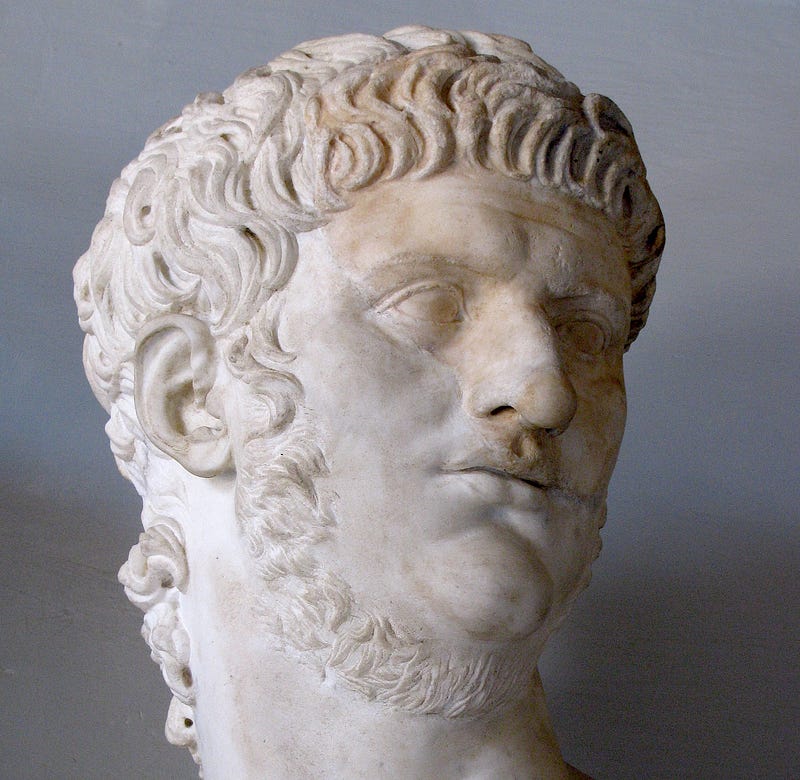
Take the Great Fire of Rome, for instance. Starting on July 19, 64 A.D., a catastrophic fire spread through Rome and raged for days: two-thirds of the city were wiped out. Fires were a common occurrence — dozens of minor ones broke out in Rome every day — but a combination of strong winds fanning the flames and an extremely dry summer made that particular wildfire spread like — well, wildfire. Nothing inherently strange about it, really — but the Romans felt differently. Rumors that the (already unpopular) Christians had started the fire spread almost immediately, beginning nearly three centuries of Roman persecution against them. Historian Tacitus blamed Nero instead, propagating the legend that the mercurial, dissolute young emperor had set Roman slums ablaze so that he could build a lavish palace in their place. This particular conspiracy theory was so popular that it has survived for nearly 2,000 years.
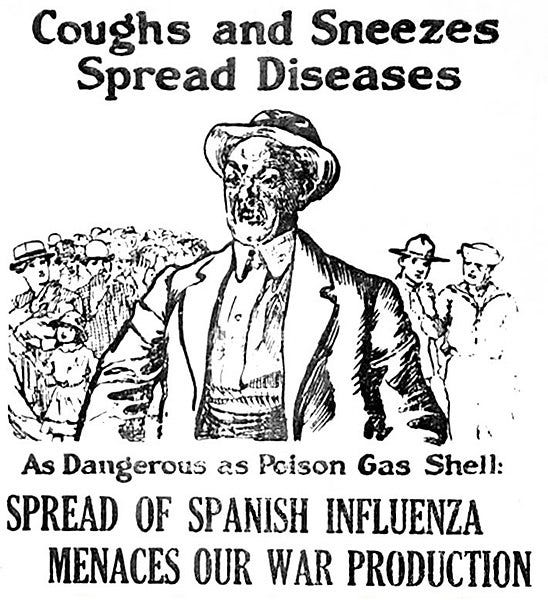
Or, better yet — take the Spanish Flu, the deadliest pandemic in history: an epidemic that infected 500 million people all over the world, lowering the average life expectancy in America by a dozen years in just a few months. If you think the lack of access to the internet back then prevented people from spreading outlandish theories, think again.
It’s always those damn Krauts
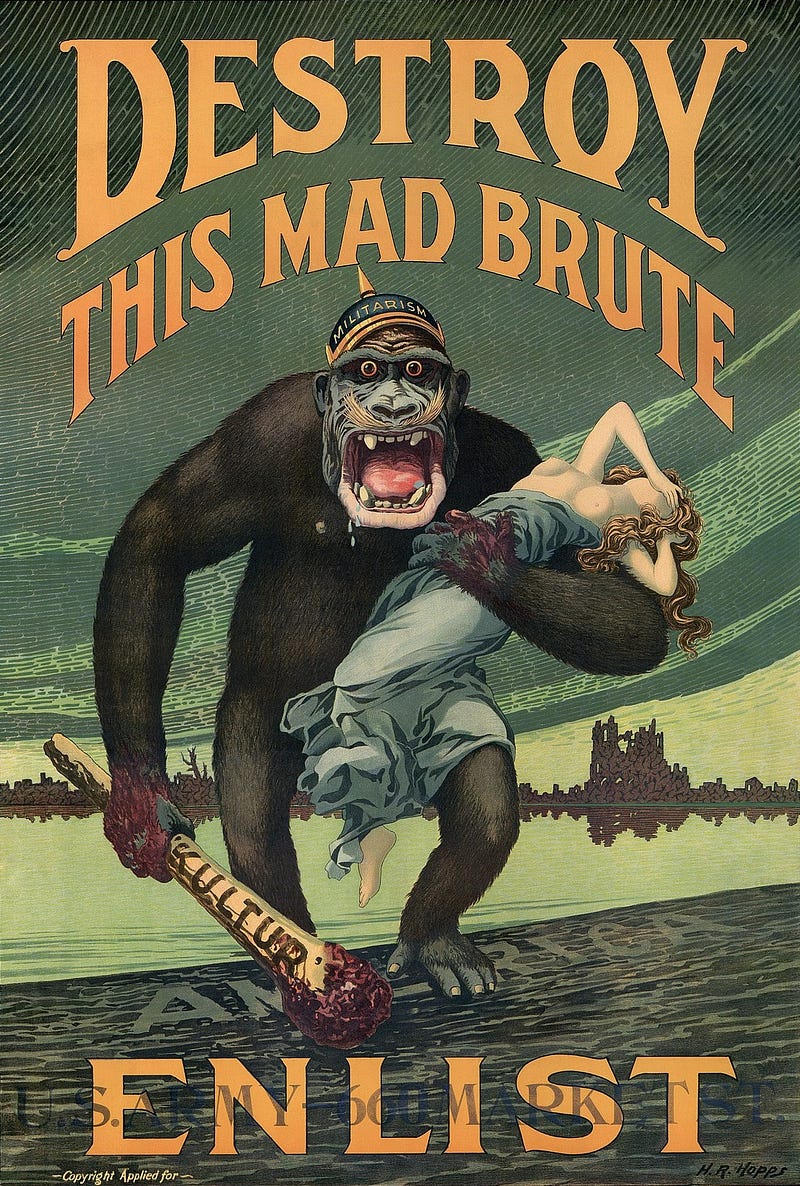
What Christians were in imperial Rome, the Germans were in 1918. After years of brutal, merciless fighting in that slaughterhouse that was WWI, nobody — unsurprisingly — liked the Pickelhauben much. Anti-German sentiments were pervasive among Allied countries. And when I say ‘Anti-German sentiments’ I mean beatings and lynching, smashing store windows and so on. In 1916 Life Magazine was trying to persuade its American readers that Germans would invade the U.S and make it “New Prussia”. They had drawn a fancy map, too.
So I guess blaming them for the “strange and wondrous disease” only came naturally.
In October 1918, the Washington Times wrote the following
it should be said that the term ‘Spanish Influenza’ is clearly an error, and that the name should be ‘German Influenza’, for investigation proves that the disease originated in the German trenches
‘investigation proves’ being the 1918 version of ‘independent studies show’. It also declares that there have been unspecified ‘reports’ that
the German U-Boats surreptitiously disseminated the infection in this country
Interestingly enough, it goes on saying that
fortunately our enormous progress and our material resources for combating disease give assurance that no plague epidemic of such magnitude[…] can occur in America at the present time
and
Fortunately, for all of us on this side of the ocean, medical science has succeeded in isolating and identifying the germs […] at the very beginning of the American epidemic, which is therefore likely to be nipped in the bud.
October 1918 — the very same month this article came out — has been America’s deadliest month ever, so the Washington Post was just a tiny bit off with this one. But let’s move on.
The germs, or “strange bacilli”, were supposedly carried in camouflaged German ships or “boats that cruise under the water” (the scary, high-tech U-Boots that, at the time, still sounded like something out of a Verne novel to many people) and released under cover of darkness. The Philadelphia Inquirer reported instead that vials filled with germs were carried by German soldiers (undoubtedly posing as fine, honest American boys, the treacherous snakes!) in crowded places to spread the disease. There were even rumors that the germ was being put in aspirin tablets — not surprising at all, considering how many theories today suggest spurious links between the virus and vaccines. (Speaking of aspirin, this Italian homeopath claims that Coronavirus symptoms are caused by salicylate poisoning, and not the virus. You’re welcome.)
In Italy, many still believed the Spanish Influenza was a German war weapon in 1921, when a Dr. Raffaele Pagniello published a pamphlet claiming that “as soon as the Germans started to doubt the outcome of the war would be in their favor, […] they had to resort to a last, extreme means of defense. And at that very time, the extraordinary epidemic of that Spanish influenza started to flare up. They kept colonies of Flu germs ready to use, and they had managed to give [those germs] an unprecedented virulence.”
Old habits die hard
Times may change but, in the face of events we struggle to understand, we are still the same people who accused Nero of playing the cithara while Rome burned; the same people who, in 1969, doubted Neil Armstrong actually set foot on the Moon; the same people who are still arguing about whether a mysterious Umbrella Man killed J.F.K.
And, I fear, we will forever be that way: afraid of the dark, hardheaded, fond of exclamation marks — and, of course, wildly imaginative.