
The Intersections Of Our Identities — New Country, New Digs, and Old Clichés
The joys of discovering the familiar in a brand new environment
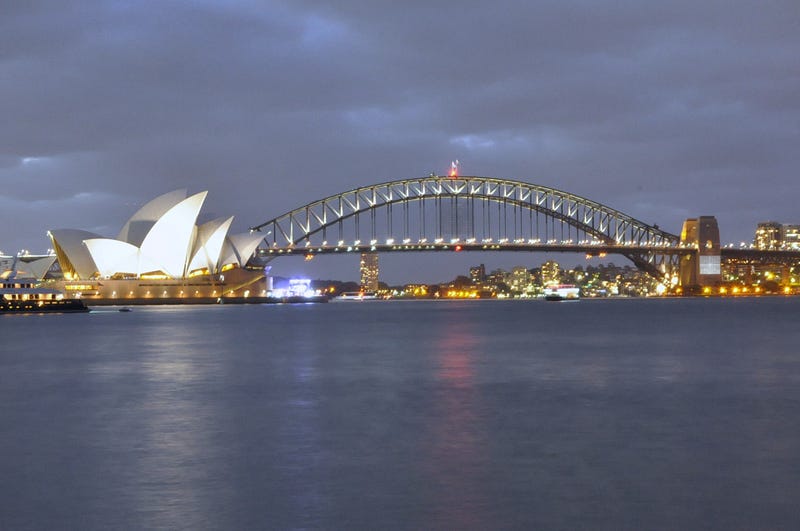
It was June 15th 2004 when I first landed in Sydney, Australia. It’s winter in the southern hemisphere. Coming from the tropics, this was the coldest I have ever been, and it was rainy, windy, and I found it to be miserable. I was shy of my 4th grade end of year exam at that time for which I had already prepared but which never came to fruition. That was the designated time that my family had to move. This was more of an issue for my older sister who was about to start her Master’s of Pharmacology back home and she had to put that momentarily on hold until things settled.
Knowing very little English, and remembering distinctly saying “Me know, me know” to a bunch of other kids in the school yard, as I was explaining that I understood what they meant, wasn’t just embarrassing because of the wrong grammar, it was terrifying because my anxiety level was over the roof thinking that I wasn’t going to fit in as this lone Indonesian kid in a brand new country. With no one else to speak the same language but my family, I thought to myself,
“here we go again, I’m going to be surrounded by yet another groups of kids who are going to make fun of me again because I am different”.
Personally, it wasn’t easy for me to make friends even back home. Here in Australia, I really thought I could invent myself with a brand new identity and start afresh in making a new persona, but not being very good at sports or knowledgeable in anime or console gaming, I was already in for some setbacks when it came to creating connections with these kids. I persevered nonetheless, and found myself in groups of fellow migrant/migrant background kids playing handball and talking about cartoons we saw on TV.
I was surprised at how quick it was for me to pick up the language, and I started to really blabber away about my thoughts and ideas. It took about another year before I realised that my grammar structure was horrible, and only then I actively started to consciously improve them. But people kept praising my English skills. Considering I had only migrated recently and had only received one English lesson and tutorial class weekly for one year before I moved to Sydney, people were amazed. They admired my attitude and my bravery to communicate with just about anyone, and immersing myself in a lot of situations.
Though, from my point of view, there wasn’t really much of a choice!
If I was to really get anything done with anyone. I had to learn to adapt quickly to the local kids and teachers. Apart from my family, I couldn’t speak Indonesian with anyone. I also owe my English development skills to the various cartoons and kids shows that have helped me quickly adapt to new cultural conventions, mannerisms and my familiarity with the English language nuances, despite most of these shows being of US origin.
It didn’t take me long to pick up an Australian accent. Despite the plethora of multicultural ethnic backgrounds within the school environment amongst the kids, everyone was for the most part speaking with an Australian accent. The exception was one teacher in year 5 that I had who had a very thick Londoner accent (It took exactly one week of constant exposure to her speaking, for me to pick up that accent).
It wasn’t long before I also started speaking “Aussie” English. Saying things like “Brekky” — Breakfast, “Arvo” — Afternoon, “Bludging” — Truanting/Lazying around, “Goon” — Wine in a bag or a slow person (a drunk), “Tucker” — food, “Mozzies” — mosquitoes, “Heaps” — Plenty of, and so on. Be in mind, these are the non-crass words. I learned that as I get older and the longer I stayed in this country, Aussies from all walks of life generally do not hold back from swearing, and I seem to pick up on that too.
As I gain further fluency in English, I began to understand where everything was in the context of our society. What fascinates me about growing up in Sydney, Australia was that I was learning about so many different cultures at once, the so-called Aussie culture and its stereotypes, as well as various cultural customs and norms from around the world. This is something that I really never expected because the Australian identity that they portray around the world is an “Anglo”, carefree folk, kangaroo-riding, boomerang-throwing, beach-dwellers, and “desert-farers”. This defines all Australians as people who seem to have everything figured out and who deal with challenges with confidence and unapologetic crassness. It is like a down under version of describing all Americans as “American Cowboys” on ranches.
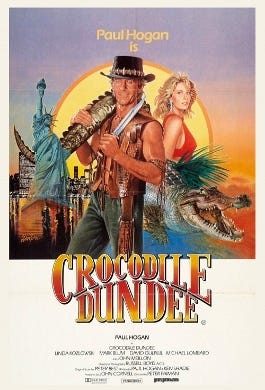

I was surprised by how much Sydney is essentially a microcosm of what a global society would look like, as it consists of people from all over the world. And for a while, I thought I was seeing what the future of the world would be, where everyone would come together as one, sharing and exchanging different customs, foods, cultures, and languages. This was the vision propagandised to us on Multicultural Day at school, as an attempt to redefine the idea of what makes us “Australian”.
Apart from the “Acknowledgement of Country” before every assembly at school, any reference to indigenous cultures in Sydney was weirdly absent growing up in the schools that I was in. It didn’t really bode well. Furthermore, the Australia that was presented to me and the Australia that is advertised around the world, generally has no hint of the 60000 years of indigenous cultures that precede Australia’s cosmopolitan identity. As I got older, I learned the truth, their tragic fate as a result of the settlement process.
“This truly devastated me”.
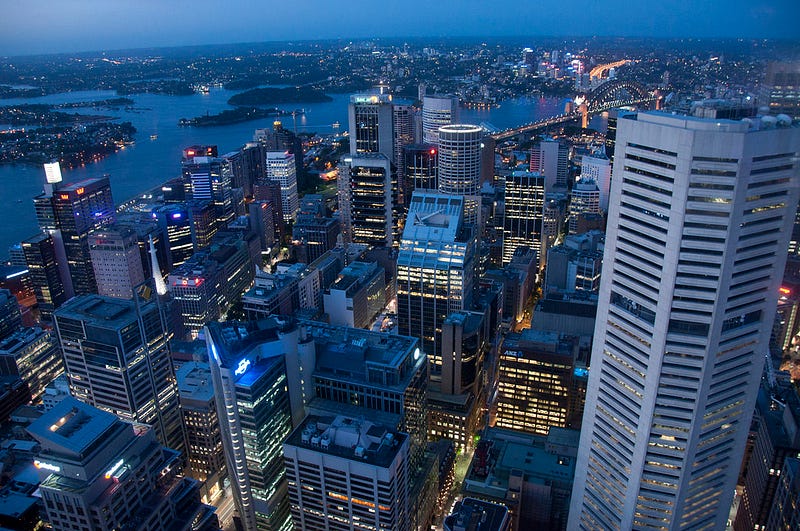
In fairness, growing up, I was in schools where there were very high migrant or migrant background population, of which mostly were various Asian backgrounds. There were Pacific Islanders, Africans and other European kids too, but it was mostly Asians nonetheless. I was very removed from what the original history of this land was, prior to colonisation. Furthermore, when I first arrived in Sydney, it was already well on it’s way to becoming a 21st century, multicultural, global city that sees itself as a hub for people from all around the world.
“The New York of Down Under”.
My studies and my focus on integrating with my school peers and the society around me served to distract me from some personal family dramas that my mum was facing. She was finding it very tough settling in Australia because she wasn’t able to speak much English and some people around her were “taking advantage of her naivety” to put it kindly. However, I had confidence in her, knowing how much of a resourceful woman she is, and how she has this ability to just talk with everybody and get them very interested in her, even if it is using a mix of body language and broken English. I never worried how we would survive here. If it wasn’t for her ingenious ways to make other people help her, and my sister’s English translation skills (she was the only one in the family who was fluent when we first arrived) we would not even be in Australia today.
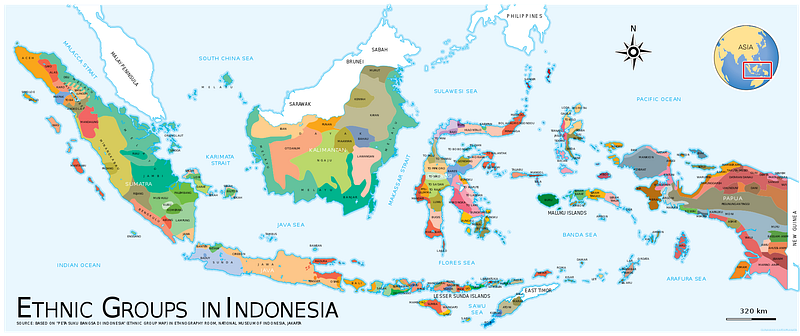
Another thing that enabled our family to adapt well in Australia was our diverse background and experience in Indonesia. I come from a mixed cultural and mixed faith family of Javanese, Sundanese, Padangnese, and Chinese heritage. Growing up, I was speaking Indonesian, Sundanese, and Javanese almost simultaneously before the age of 5. And coming from a cosmopolitan, multicultural city in Bandung, Indonesia, being constantly exposed to different languages, social constructs, cultural and religious customs and norms before moving to Australia, gave me and my family a lot of skills for adaptability. None of us were fazed by the fact that we are different from most people, even when we were in Indonesia!
As I grow up, I realised that a lot of us are still fixed, and defined by our particular traits and identities that were assigned and labelled by society. Not everyone has the opportunity to be in circumstances where diversity and difference are embraced or at least tolerated in more or less peaceful ways. I was grateful for the opportunity I had had to embrace multiple fleeting identities and hadn’t been scolded or shunned because of it. We all know that is not the case for most of us. Negotiating multiple backgrounds, clans, customs, social conventions, groups and associations, can be very confusing and frustrating! Fortunately, in my case I became more resilient.
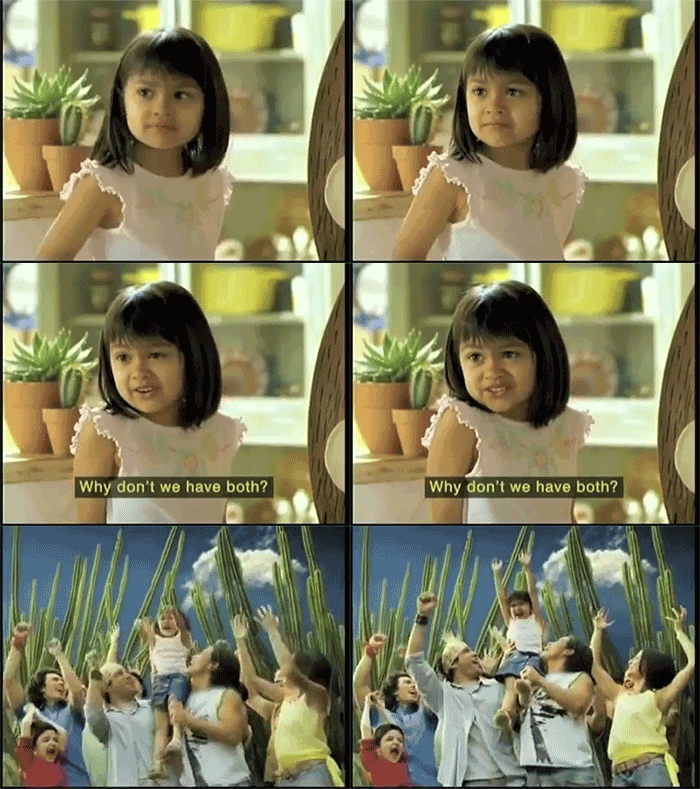
- Where do you belong?
- Is your sense of worthiness defined by a particular convention?
- Why can’t we have it all?
Let’s not get into politics…yet! But, we all have some level of awareness of why the topic of identity is such a big issue globally in recent times. This is an issue that is as old as civilisation itself. Today’s world simply has different faces and different contexts as to why its problematic.
In this series, we will explore the Intersections of our “Identities”. We will find out from everyday people, experts in certain fields, community group leaders, and fellow storytellers, what defines who we are as people, individually and collectively and what it means for us to acknowledge these commonalities and differences among us.
Because in today’s world. None of us are really just one thing. Everybody has a lot of things they can identify with. And I would like to make the following discussions more to the front of our daily lives:
- What and who are you?
- How do all of these differences come together to make who you are?
- Knowing that each of us have multiple identities, what would you like to remind others about who you are?
At the end of the day, none of us choose to be born a certain ethnicity, clans, religion, social class, sexuality, or any category we can socially conceive of.
What we can choose is how we perceive the things around us. And we can certainly choose to embrace that we are all beings of multiplicity.
— This article acknowledges the traditional Owners of this land, the Darug people where this article was written.


