avatarMallika Vasak

Free AI web copilot to create summaries, insights and extended knowledge, download it at here

4057

Abstract

bles and the third line is 5 syllables. These rules are implemented in Matuso Basho’s “The Old Pond”:</p><blockquote id="435b"><p>An old silent pond…</p></blockquote><blockquote id="924e"><p>A frog jumps into the pond,</p></blockquote><blockquote id="3447"><p>splash! Silence again.</p></blockquote><blockquote id="01b5"><p>— from “The Old Pond” by Matuso Basho</p></blockquote><p id="6efb">These poetic forms are constrained by their rigid rules; they must satisfy the form’s rhythm and numerical structure. It is an art to master their writing.</p><p id="63e4"><a href="https://www.smithsonianmag.com/science-nature/how-poetry-and-math-intersect-180968869/">Newer poetic-forms that employ strict rules include the “Fib”, based on the Fibonacci sequence</a>. The Fibonacci sequence is a series of numbers: 0, 1, 1, 2, 3, 5, 8, 13, 21, 34, and so on. The next number is determined by adding the two numbers that came before it. Its form is often depicted through a spiral:</p><figure id="28f5"><img src="https://cdn-images-1.readmedium.com/v2/resize:fit:800/1*2UrigVk2M6TFA5BtWE4hfg.gif"><figcaption>Gif from <a href="https://en.wikipedia.org/wiki/Golden_spiral">Wikipedia</a></figcaption></figure><p id="9062">The Fibonacci sequence is translated to poetry in a Fib poem, where <a 3="" 4="" 5="" 7="" 10="" 14="" 17="" href="http://--- The Intersection Between Math and Poetry Each discipline can complement the other Photo from Reflections on the TecheApril is designated National Poetry Month and Mathematics and Statistics Awareness Month. Aware of their intersection, science writer Stephen Ornes named April " math="" poetry="" month".="" the="" two="" disciplines="" may="" seem="" dichotomous,="" so="" i="" wanted="" to="" illuminate="" their="" interrelation="" for="" those="" unaware="" of="" it. ="" i've="" found="" joanne="" growney's="" blog="" intersections - poetry="" with="" mathematics="" is="" an="" excellent="" framework="" augment="" your="" understanding="" math-poetics="" junction.="" it="" features="" poems="" that="" use="" mathematical="" language="" enrich="" imagery="" and="" are="" structured="" by="" concepts,="" many="" which="" written="" mathematicians.="" all="" she="" includes="" in="" her="" effective="" highlighting="" how="" can="" enhance="" poetry.="" "number="" theory"="" scientist-poet="" mary="" peelen="" emphasizes="" underlies="" facets="" life:="" forty="" one="" apples="" tree,="" red="" round,="" praise="" awaiting="" gravity,="" wholly="" free="" abstraction.="" when="" comes="" primes="" matters="" religion,="" defer="" pythagoras,="" his="" ancient="" cult="" authority.="" -="" from="" growney="" also="" using="" concepts="" as="" a="" foundation,="" such="" "though="" survived="" winter…"="" mathematician="" mike="" keith.="" keith="" writes="" pilish,="" words="" used="" have="" lengths="" align="" digits="" pi: ="" photo="" mathematicsgrowney's="" motto="" at="" top="" reads,="" "mathematical="" heighten="" poem;="" structure="" deepen="" its="" effect".="" theory",="" terms="" poem's="" imagery.="" winter…",="" poem.="" poetic="" forms="" art="" itself. ="" further="" exemplified="" other="" forms.="" sonnets="" haikus="" employ="" strict="" syllable="" line="" counts.="" sonnets,="" example,="" lines="" length,="" must="" be="" arranged="" into="" stanzas="" conclude="" two-line="" rhyming="" couplet.="" each="" syllables="" long="" satisfy="" unstressed-stressed="" pattern.="" these="" rules="" exercised="" "sonnet="" 130"="" william="" shakespeare: ="" wikipediatraditional="" three="" total="" syllables.="" first="" syllables,="" second="" third="" implemented="" matuso="" basho's="" "the="" old="" pond":="" silent="" pond…="" frog="" jumps="" pond,="" splash!="" silence="" again.=""  - from="" pond"="" basho="" constrained="" rigid="" rules;="" they="" form's="" rhythm="" numerical="" structure.="" master="" writing.="" newer="" poetic-forms="" include="" "fib",="" based="" on="" fibonacci="" sequence.="" sequence="" series="" numbers:=""
Options

0,="" 1,="" 2,="" 3,="" 5,="" 8,="" 13,="" 21,="" 34,="" on.="" next="" number="" determined="" adding="" numbers="" came="" before="" it.="" form="" often="" depicted="" through="" spiral: ="" gif="" wikipediathe="" translated="" fib="" poem,="" where="" has="" syllable,="" fourth="" this="" employed="" athena="" kildegaard's="" poems:="" kiss="" me ="" again="" tongue="" lips="" like="" fibnoacci's ="" sequence,="" movement="" spiral,="" enfold,="" unfold,="" working="" against,="" "fibonacci="" poems"="" kildegaard="" ---="" similar="" way="" there="" beauty="" balance="" poetry,="" math.="" golden="" mean="" ratio="" phi,="" defined="" as,="" desirable="" middle="" between="" extremes,="" excess="" deficiency".="" illustrated="" segments;="" whole="" segment="" (a+b),="" another="" divided="" smaller="" segments="" (a="" b)="" combine="" equal="" length="" a+b:="" from mediumthis="" been="" hundreds="" years,="" arguably="" starting="" egyptians="" blueprints="" pyramids.="" we="" see="" architecture: ="" widewallsand="" nature:="" from jaejohns="" could="" argued="" would="" not="" beautiful="" without="" other.="" both="" everywhere,="" if="" only="" eye="" look."="">the first line has one syllable, the second line has one syllable, the third line has two syllables, the fourth line has three syllables, and so on</a>. This is employed in Athena Kildegaard’s <i>Fibonacci Poems</i>:</p><blockquote id="e951"><p>Kiss</p></blockquote><blockquote id="c268"><p>me</p></blockquote><blockquote id="9497"><p>again</p></blockquote><blockquote id="817c"><p>tongue and lips</p></blockquote><blockquote id="a036"><p>like Fibnoacci’s</p></blockquote><blockquote id="4fac"><p>sequence, each movement a spiral,</p></blockquote><blockquote id="ef45"><p>enfold, unfold, a working through and against, again</p></blockquote><blockquote id="af29"><p>— from “Fibonacci Poems” by Athena Kildegaard</p></blockquote><p id="53d8">Similar to the way there is beauty and balance in poetry there is beauty and balance in math, and beauty and balance in life that is built using math. The Golden Mean is a ratio based on phi, which is defined as, <a href="https://en.wikipedia.org/wiki/Golden_mean_(philosophy)">“the desirable middle between two extremes, one of excess and the other of deficiency”</a>. It is illustrated by two line segments; one of which is a whole line segment (a+b), and another which is divided into two smaller line segments (a and b) that combine to equal the length of a+b:</p><figure id="acf6"><img src="https://cdn-images-1.readmedium.com/v2/resize:fit:800/1*vwYOnim_-KkSfbaSAVESJA.png"><figcaption>Photo from <a href="https://readmedium.com/what-is-the-golden-ratio-d3cc17c8fefd">Medium</a></figcaption></figure><p id="6346">This ratio has been used for hundreds of years, arguably starting with the Egyptians in their blueprints of the pyramids. We see the golden ratio in architecture:</p><figure id="d1e0"><img src="https://cdn-images-1.readmedium.com/v2/resize:fit:800/1*qNzCO8LScs5dILTGtJe7xA.jpeg"><figcaption>Photo from <a href="https://www.widewalls.ch/golden-ratio-in-contemporary-architecture/">Widewalls</a></figcaption></figure><p id="797e">In art:</p><figure id="1802"><img src="https://cdn-images-1.readmedium.com/v2/resize:fit:800/1*r_2YGlXVbs9HtTytBmKjDw.png"><figcaption>“Girl with a Pearl Earring” from <a href="http://matheminutes.blogspot.com/2016/04/fibonarty.html">Matheminutes</a></figcaption></figure><p id="04c4">And in nature:</p><figure id="2d4c"><img src="https://cdn-images-1.readmedium.com/v2/resize:fit:800/1*ew3WnEg5fUdKjB8_SVd15Q.jpeg"><figcaption>Photo from <a href="https://jaejohns.com/how-to-use-the-golden-ratio-in-interior-design/">Jaejohns</a></figcaption></figure><p id="592c">The aesthetics of architecture, art, and nature are constructed by math.</p><p id="446a">Math is found in poetry and poetry is found in math. It can be argued that one would not be as beautiful without the other. Both are found in conjunction all around us, if only we have the eyes to look.</p></article></body>

The Intersection Between Math and Poetry

Each discipline can complement the other

Photo from Reflections on the Teche

April is designated National Poetry Month and Mathematics and Statistics Awareness Month. Aware of their intersection, science writer Stephen Ornes named April “Math Poetry Month”. The two disciplines may seem dichotomous, so I wanted to illuminate their interrelation for those unaware of it.

I’ve found JoAnne Growney’s blog Intersections — Poetry with Mathematics is an excellent framework to augment your understanding of the math-poetics junction. It features both poems that use mathematical language to enrich their imagery and poems that are structured by mathematical concepts, many of which are written by mathematicians. All of the poems she includes in her blog are effective in highlighting how math can enhance poetry.

“Number Theory” by scientist-poet Mary Peelen emphasizes how mathematics underlies all facets of life:

Forty one apples in the tree,

red and round,

Praise awaiting gravity,

wholly free of abstraction.

When it comes to the primes and matters of religion,

I defer to Pythagoras,

his ancient cult and authority.

— from “Number Theory” by Mary Peelen

Growney also features poems that structured by mathematical concepts, such as “Though I survived the winter…” by mathematician Mike Keith. Keith writes in Pilish, a language in which the words used have lengths that align with the digits of Pi:
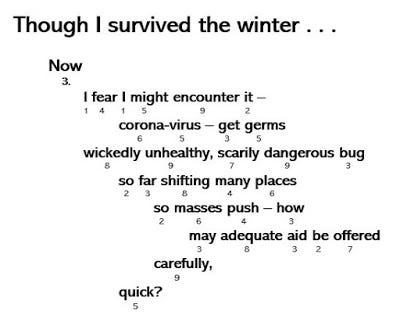
“Though I survived the winter…” from Intersections — Poetry with Mathematics

Growney’s motto written at the top of her blog reads, “Mathematical language can heighten the imagery of a poem; mathematical structure can deepen its effect”. In poems such as “Number Theory”, mathematical terms are used to enhance the poem’s imagery. In poems such as “Though I survived the winter…”, mathematical concepts are used to structure the poem. The mathematics of poetic forms is an art in itself.

Mathematics as a structure to poetry is further exemplified by other poetic forms. Sonnets and haikus are poetic forms that employ strict syllable and line counts. Sonnets, for example, are 14 lines in length and must be arranged into 3 stanzas of 4 lines, concluding with a two-line rhyming couplet. Each line must be 10 syllables long and satisfy the unstressed-stressed rhyming pattern. These rules are exercised in “Sonnet 130” by William Shakespeare:
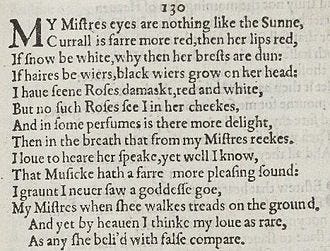
“Sonnet 130” from Wikipedia

Traditional Haikus are three lines long and total 17 syllables. The first line is 5 syllables, the second line is 7 syllables and the third line is 5 syllables. These rules are implemented in Matuso Basho’s “The Old Pond”:

An old silent pond…

A frog jumps into the pond,

splash! Silence again.

— from “The Old Pond” by Matuso Basho

These poetic forms are constrained by their rigid rules; they must satisfy the form’s rhythm and numerical structure. It is an art to master their writing.

Newer poetic-forms that employ strict rules include the “Fib”, based on the Fibonacci sequence. The Fibonacci sequence is a series of numbers: 0, 1, 1, 2, 3, 5, 8, 13, 21, 34, and so on. The next number is determined by adding the two numbers that came before it. Its form is often depicted through a spiral:
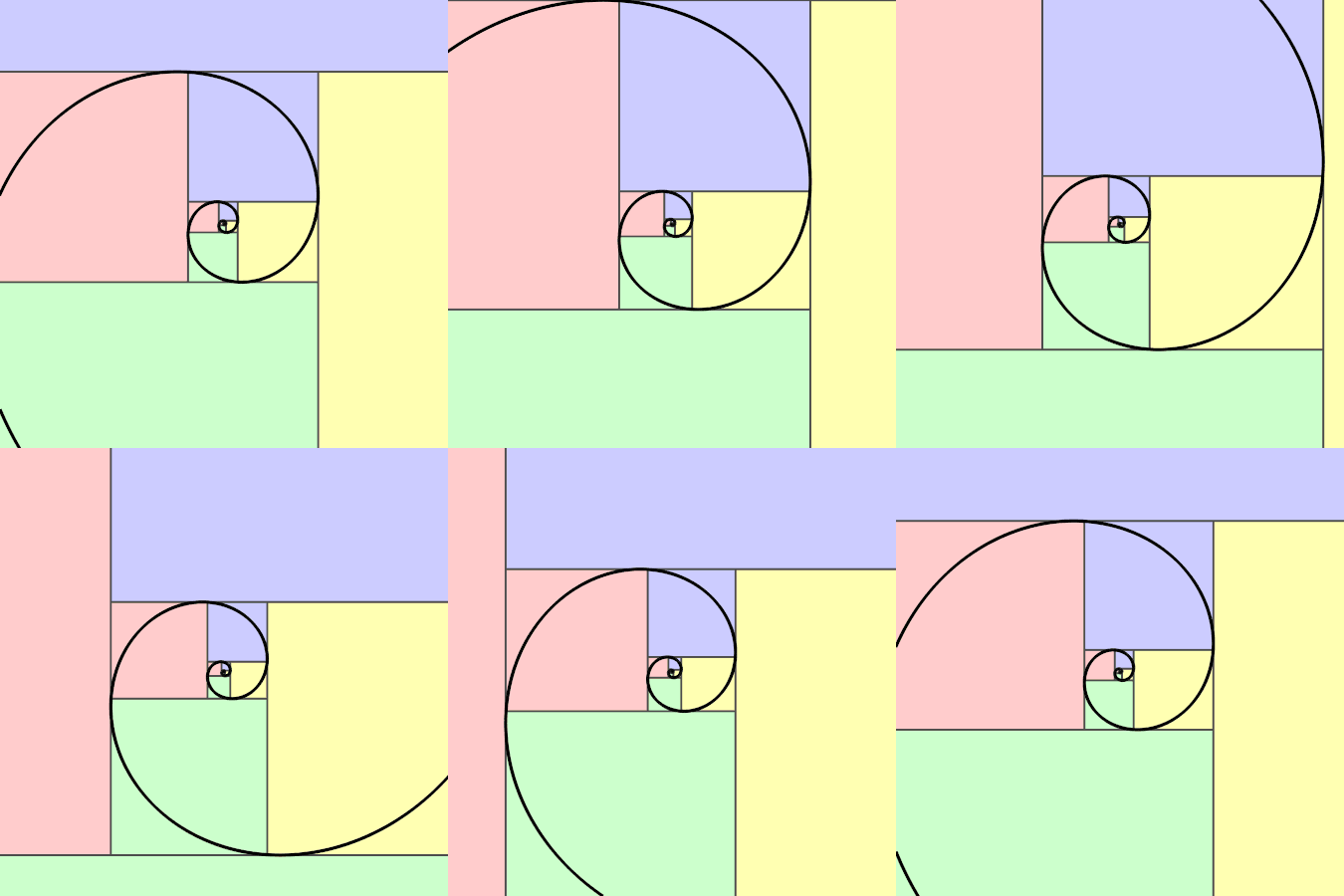
Gif from Wikipedia

The Fibonacci sequence is translated to poetry in a Fib poem, where the first line has one syllable, the second line has one syllable, the third line has two syllables, the fourth line has three syllables, and so on. This is employed in Athena Kildegaard’s Fibonacci Poems:

Kiss

me

again

tongue and lips

like Fibnoacci’s

sequence, each movement a spiral,

enfold, unfold, a working through and against, again

— from “Fibonacci Poems” by Athena Kildegaard

Similar to the way there is beauty and balance in poetry there is beauty and balance in math, and beauty and balance in life that is built using math. The Golden Mean is a ratio based on phi, which is defined as, “the desirable middle between two extremes, one of excess and the other of deficiency”. It is illustrated by two line segments; one of which is a whole line segment (a+b), and another which is divided into two smaller line segments (a and b) that combine to equal the length of a+b:
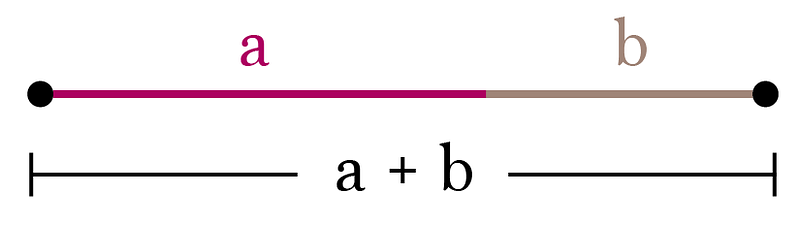
Photo from Medium

This ratio has been used for hundreds of years, arguably starting with the Egyptians in their blueprints of the pyramids. We see the golden ratio in architecture:
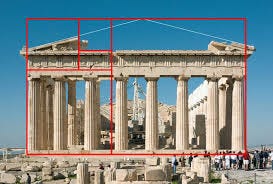
Photo from Widewalls

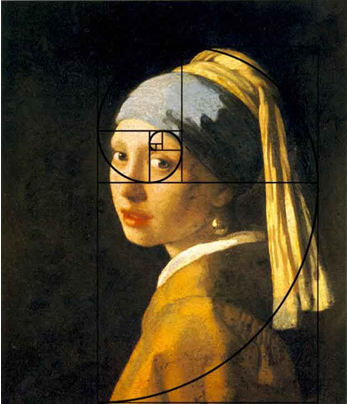
In art:

“Girl with a Pearl Earring” from Matheminutes

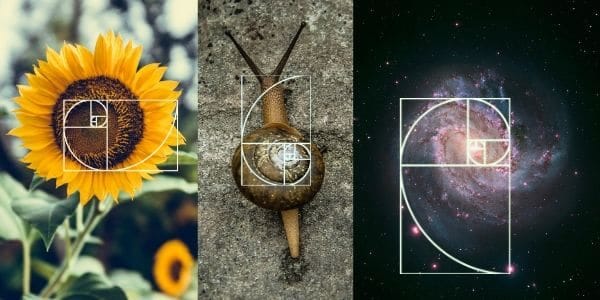
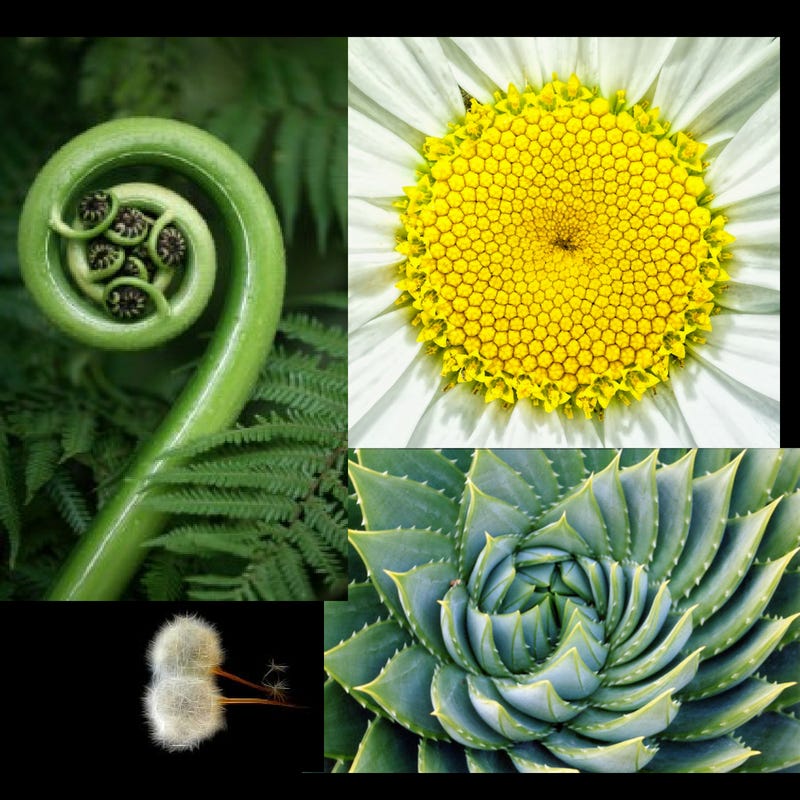
And in nature:

Photo from Jaejohns

The aesthetics of architecture, art, and nature are constructed by math.

Math is found in poetry and poetry is found in math. It can be argued that one would not be as beautiful without the other. Both are found in conjunction all around us, if only we have the eyes to look.

Math
Poetry
Mathematics
Art
Recommended from ReadMedium