
SHANGHAI TO VANCOUVER BC | FOREIGN OCCUPATION
The Innocence of Dogs
How memory can become a victim of war
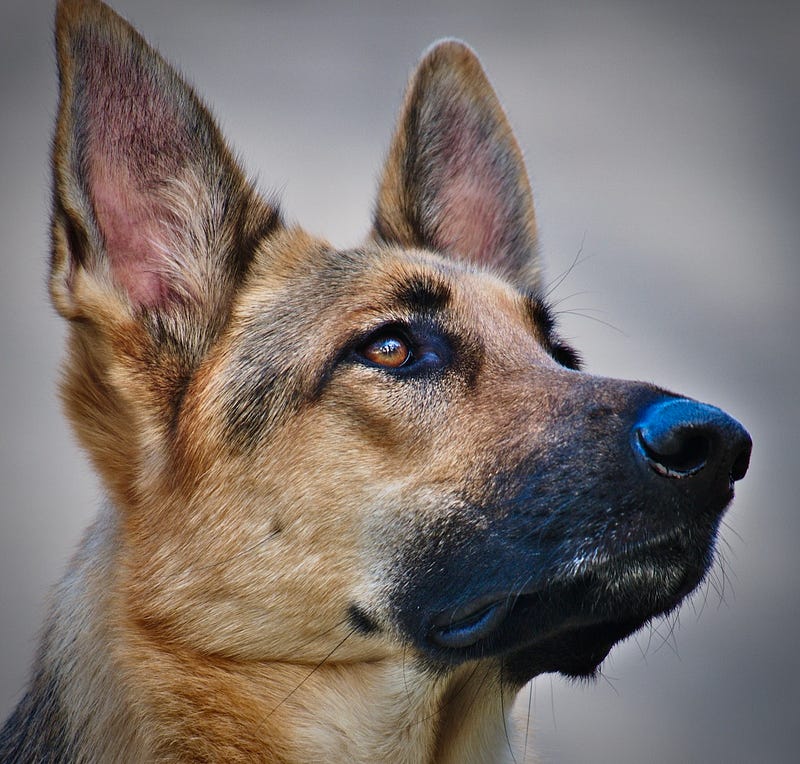
According to my mother, growing up in Shanghai in the 1930s her father was a great lover of German Shepard dogs. He kept a kennel full of them and my mother came to love these dogs as well. One of them was named Billow. She spoke often of playing with Billow and the other dogs as a young girl in the spacious gardens of their Shanghai estate. She recalled cherry blossoms, laughter and much joyous barking.
Dog kennels were just one of the signs of status in the bad old days of Shanghai. Limousines, furs, fine dining and dancing as well as regular parties with swanky foreigners were also a part of Chinese high society back then. This was the world my mother grew up in.
Since my grandfather’s last name was Soong, he had a special place in the social order of Shanghai. His cousins were the three famous Soong sisters, who had married the three founding fathers of modern China and were women of legend. Chiang Kai-Shek, Sun Yat Sen and H. H. Kung hastened the end of the last imperial dynasty in China and helped create the first republic. Their wives held unique positions of influence and status and my grandfather enjoyed a certain status in Shanghai accordingly.
The new republic had little to celebrate as civil war, foreign exploitation and the eventual Japanese invasion of China would follow one after the other. 1912 to 1949 was fraught with violence, struggle and hardship as China tried to find a place for itself among nations in the 20th century.
During the Japanese occupation of Shanghai, my mother spoke of the fear they had of the Japanese soldiers. The city was under martial law and the population lived under thumb of the Japanese military. Men like her father, who were adept at dealing with the shifting winds of political and military upheaval, found ways to make themselves useful to the Japanese without crossing the line into collaboration.
The Japanese had an interest in keeping the money and goods flowing through Shanghai, so businessmen were treated with a bit of deference. My grandfather was the general manager of the largest department store in Shanghai with many connections abroad, so the Japanese had a reason to cultivate him as a neutral asset who kept the wheels of commerce going.
Life in my mother’s already protected world did not change much, except for shortages or the occasional blackout due to bombing raids. Still, the city was under siege and the stories of Japanese atrocities in the countryside kept everyone on edge.
As far as the dogs were concerned, the servants and kennel keepers kept the dogs safe and happy on the grounds of the estate.
Until the Japanese came for them.
One day a Japanese officer arrived at the house with a small detachment of soldiers. My grandmother met them in the foyer along with a few servants. My mother, clinging to her mother’s skirts, was terrified. The Japanese wanted the German Shepard dogs. They needed them for security and patrolling. My grandmother immediately called my grandfather at his office. He told her to let the soldiers take the dogs and he would work on getting them back.
My mother told me about the tears, consternation and frustration at the dinner table that night. My grandfather tried to calm everyone, but my grandmother and her sons were enraged. My mother and her sister wept as they lamented the loss of Billow and the beloved dogs. My grandfather tried to get everyone to enjoy the special dinner of fresh fish the cook had acquired, as it was getting harder and harder to get such things in Shanghai during that time. Small blessings were to be savored.
A few days later, there was a commotion at the kennels. My mother, her brothers and sister went out to see. Billow had somehow escaped along with three of the other dogs and somehow made their way back to the estate. The servants and kennel keepers were overjoyed, as were my grandmother and her children. There was soon talk about getting the rest of the dogs back. When my grandfather returned home, he did not share in the family’s joy. He seemed grim and concerned. My mother did not know why, but later she understood: he knew the Japanese would be back.
Indeed, the next day, the Japanese officer and the soldiers returned. This time my grandfather was home. The office was furious when he discovered that Billow and the other dogs were back in their kennels. He accused my grandfather of anti-Japanese behavior and even sabotage. My grandfather stood his ground, insisting the dogs be left alone and that he was in contact with those who would give him formal permission to keep his dogs. The officer was indifferent and went out to the kennels with his soldiers. The whole family followed.
The officer ordered his men to shoulder their rifles and shoot the dogs. The soldiers did so. My mother and her family watched as Billow and the other dogs were slaughtered in their kennels. After the gunfire ceased, my grandfather began shouting at the soldiers and the officer, who told him that the other dogs who had not escaped had been shot as well.
The officer threatened my grandfather as the soldiers stood around, unsure about what might happen. My mother recalls that she felt her whole family would be massacred in that moment. Finally, the officer ordered his men to leave.
My mother said watching the servants and kennel keepers bury the dogs in the garden was one of the most difficult moments of her life. The family and servants wept. Amid the tears and sorrow, everyone know that there was something much greater being buried: a way of life, an era, a culture, something that would become the stuff of memory and heartache for the rest of their lives. Shanghai and China were torn apart by the war. The rape of Nanking would strike revulsion and terror in the hearts of all in Asia. Soon my mother’s family would have to abandon their home and all that they were for a new beginning as wartime refugees to Vancouver, British Columbia.
Mao’s peasant army would finally sweep into power after years of bitter conflict and there would be no more dog kennels, dinner parties, limousines or furs. Foreigners would be gone and the Shanghai of old would be a story from another time.
I once asked my grandfather about Shanghai when I was a boy. We were in his simple house in a middle class neighborhood in Vancouver. He was old, but still working as a manager at Trader Vic’s, a Polynesian themed restaurant. There were pictures on the wall of his living room of some luminaries who had gone to Trader Vic’s for dinner to shake his hand: Bob Hope, Peter Lawford, James Shigeta, Nancy Kwan and more. There were also photos of nationalist politicians, generals and other important Shanghai businessmen who had also fled China. It seemed there were many who respected my grandfather.
I asked my grandfather if he hated the communists for taking everything he had and forcing him to become a war refugee. He thought for a moment, then said:
“No, I don’t hate the communists. The way we treated our own people back then was wrong. Most of the people in China back then were starving and we didn’t care enough.”
I was impressed by this revelation. Then he added:
“But I’ll never forgive the Japanese for killing my dogs. They were innocent of everything.”


