The Innate Spirituality Of Psychedelics
We’ve lost touch with the sacrament
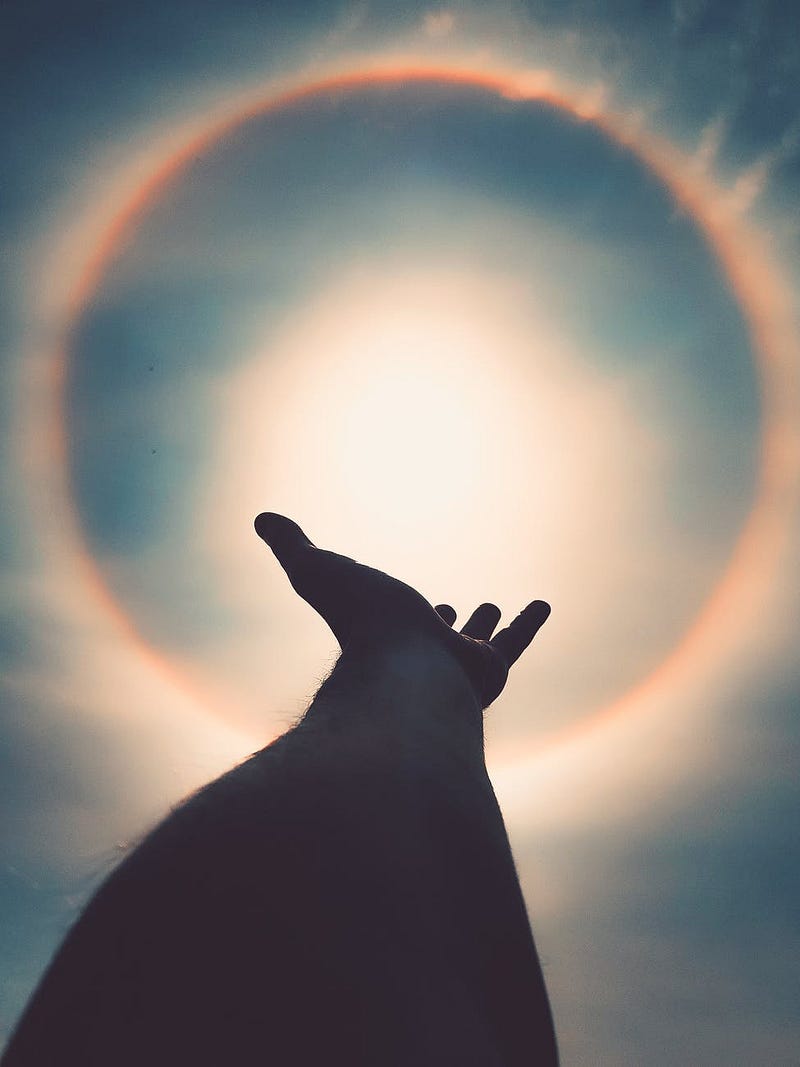
It seems so peculiar to us. The fact that cultures all over the world, throughout time, have fully integrated psychedelics into their spiritual or religious frameworks. This has even been affirmed by the US Supreme Court, which has granted certain exemptions to our drug laws with respect to the peyote and ayahuasca traditions of North and South America. There are Shamanic traditions across the globe in which psychedelics have been utilized. Ancient Greece had the Eleusinian Mysteries. The Vedas speak of a visionary sacrament called ‘Soma.’
Our culture is actually a bit of an oddball, in its total disregard for the spiritual significance of the psychedelic experience. And it really goes beyond that. In a way, our culture has diminished the significance of spirituality itself. We have taken on broadly materialistic perspectives as background assumptions, and out of that we minimize all profound and visionary experiences by relegating them mere illusions produced by the brain. Some will argue that there is a materialist spirituality to be had, and that’s fine. But let us not forget that there are philosophic assumptions underlying our dismissal of the visionary experience.
Psychedelics Are Value-Neutral Tools
To address the other end of the spectrum of thought on this topic, it is also not right to paint psychedelics with a broad brush of positivity. These substances are tools for shaking you out of your ordinary way of perceiving and contextualizing reality. You can intensely experience other ways things could be, other ways you could be. And this is really just scratching the psychological surface of the experience.
Let us never lose sight of the capacity for psychedelics to bring about a profound experience of the spiritual. This can manifest in any number of ways. Psychedelics have been affirmatively used within many different spiritual and religious frameworks. Whatever the framework, these tools can give a direct experience of spiritual realities which are ordinarily very abstract and conceptual.
Drugs Are Not One Thing
One of the biggest obstacles to an acceptance of psychedelics is this word, ‘drugs.’ I take issue with this word. The idea that it is even remotely possible to broadly characterize the whole wide world of consciousness-altering substances is absurd. There’s an old-fashioned moralistic undertone to the whole line of thought. Beyond the puritanical assumption that there is something inherently wrong with altering your consciousness, there remains little meaning left with the word ‘drugs.’
We Are Made Of Drugs
“I’m here to tell you that all experience is a drug experience. We’re all on drugs all the time, largely because we are made of drugs.” - Dennis McKenna
As physical beings, there is no experience without neurochemistry. And let us not forget why drugs even work in the first place. Our brains and bodies deal with chemicals as a matter of course, and we have neurological systems in place that are capable of handling those substances that we call drugs. LSD, for instance, interacts with our serotonin receptors. We have an endocannabinoid system. We have endogenous opioids.
Do Not Neglect The Spiritual Component
We are making substantial progress towards an acceptance of psychedelics in our society. Our psychology dictates that all drugs must be viewed with suspicion. Because of this, a drug must first demonstrate medical value if it is to justify its own existence. And for the first time in decades, we are seeing numerous legitimate studies being done on the potential for psychological benefits through the usage of psychedelics.
This is all wonderful. But, taking the long view, we should not confine psychedelic substances solely to the domain of psychology. The fact of the matter is that we never truly could. So as we find ourselves yet again marching towards the hoped for integration of psychedelics into our society, let us not leave out that gateway to spirituality that exists in the core of the psychedelic experience