
The Inherent Complexity of Sustainability.
There is no one size fits all with sustainability. Local solutions…backed by data, greater financial access, innovative infrastructure and mindsets are the best options.
So many people think “ we just need to…*insert immediately obvious solution here*” but rarely are our global problems that simple, or linear. As a matter of fact, more layered types of problems, have a special name….Wicked.

A wicked problem is a social/cultural or environmental problem that’s difficult or impossible to solve because of its complex and interconnected nature.
As it relates to the biggest and most recent conference on sustainability, and ultimately human systems, The Conference of the Parties, or this years COP28…what’s sustainable in the “global north” may not be the right answer for the “global south”. If you are not familiar with these terms, think of the richest, usually western countries (United States, Canada, most European countries, Israel, Cyprus, Japan, South Korea, Singapore, Taiwan, Australia and New Zealand.) vs. the rest of the world.
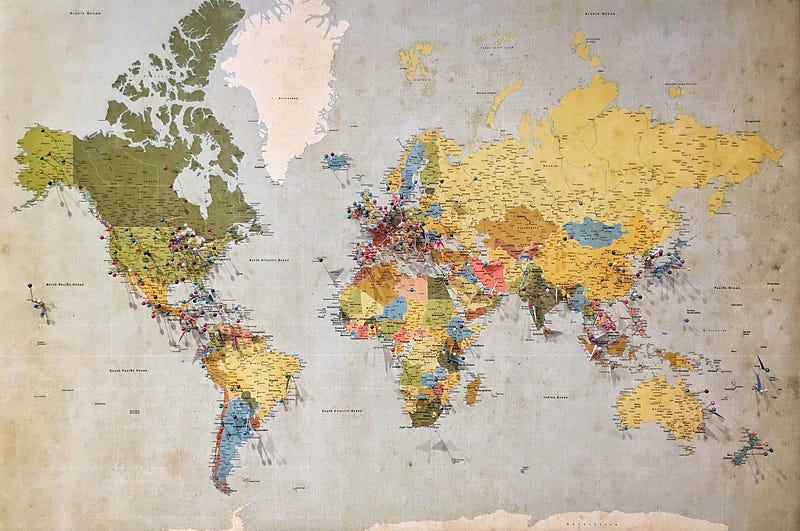
Both took different paths to their current reality and one is more dependent (forcefully or otherwise) on the actions of the other historically…and currently. How we address different parts of the world and speak to their problems is important. It’s another reason why change in this instance has to be a mixture of top down and bottom up, not just top down regulations that ignore the specific needs of the components of the system.
If you were to poll 10 people and ask them what sustainability means to them, you would probably get 10 different answers. This is another caveat with sustainability on an organizational, local, and governmental level. We have to have clear cut, component dependent definitions, which help make meaningful pathways, more obvious.
Language and acknowledgement matter here in order to enact the RIGHT change.
We must ask, are we truly being sustainable in the most relevant way? And how do these changes strengthen, dissolve or transform current systems?

“the rich world’s push for decarbonization is more likely to undercut development options for the poor world — limiting their access to cheap energy and restricting developed markets’ imports from what they may consider “dirty” sources.” (Eduardo Porter,2023, Bloomberg).
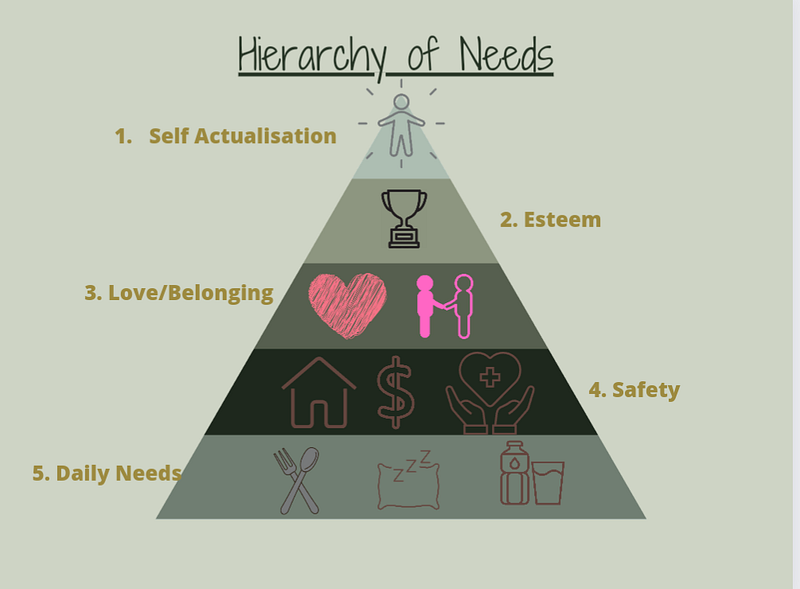
Engagement of the wildly diverse; politically, environmentally, socially, and motivationally nations, as actors in their own determinations and rights is necessary. Unfortunately people operating at the top of Maslow's hierarchy of needs fail to accurately address the needs of people at the bottom, nor do those at the bottom have the liberty to influence the political machinations at the top.
These wins, and goals are often riding on the coat-tails and exploitation of the bio rich regions of the global south. It’s easy to sit on a throne, from a castle built with minerals and materials from another place and then admonish their efforts to do the same… Sustainability requires an interdisciplinary approach, a local driven resurgence, massive infrastructure and environmental resources overhaul. Solutions have to be location specific and based on detailed, context-aware data and stories. Holistic data collection needs to consider not only environmental aspects but cultural, communinty, and historical contexts.
Embracing comprehensive understandings of a region’s unique circumstances, can drive tailored interventions to maximize impact.
This is reimagining for a new Sustainable world, not just regurgitating old patterns.
It's not as simple as switching to renewable energy, when the local infrastructure can't support/accept it.
Or carbon capture systems (CCS) when the technology and scale isn’t feasible yet.
Knowing who the stakeholders are and what they have available is crucial to understanding fractured systemic relationships.
And fractured relationships are plentiful.
For the first time, those in attendance at the COP’s 28th year, pledged to move away from fossil fuels and into renewable energy, this is a bold declaration. It remains to be seen if it’s innovation or a lip service, reshuffling the same few cards…
As Susannah Fisher, a researcher at UCLA states “The agreement on adaptation in Dubai talks generally of the need for more finance, but makes few commitments.”
Without a definite roadmap to greatly increasing financing for adaptation finance by 2025, there is currently little accountability in how this will be done.
“Global” solutions often neglect the financial access disparities among different regions and their immediate needs.
A loss and damage fund has been pledged and initially, yet sparsely, funded (700 mil). If funding is in fact provided, then how will it be utilized? Will it be mandated use, or collaborative?
Locally led adaptation is the most salient way to drive change, just as adapting one’s own mindset first, is the most salient way to get in shape.
Global agreements can set a tone, but things ultimately will be determined by whether those countries with the most historical polluting behaviors uphold their parts in addressing the climate and social systems crisis.
Fair trade between highly impacted nations, updated regulations and climate-resilient/responsive infrastructure and technology needs to be strengthened and financially backed.
Deforestation still remains a main concern, as does conventional farming practices, and broken social infrastructures.
The IPCC research states that GHG emissions need to peak before 2025 at the latest, and be reduced by 43% 2030; at the same time, methane would also need to be reduced by about a third, to limit warming to 1.5 C (2.7 F)
Creating renewable, regenerative structures is complex, implementing the right actions requires a deep, evolving understanding of supply/value chains, ecosystems, culture and consequences of our collective actions. Planning, monitoring, and adjustments are the name of the game.
As are receipts.
We, need to ask the correct questions, evaluate multiple perspectives and practice critical thinking.
Pretty words are nice to look at and say but when I'm hungry, I need real material sustenance. Not more monopolized fancy words.