
The Infinite Mathematics of Motion: The Motion Paradox
According to Wikipedia, a paradox is a statement that, despite sound reasoning from true premises, leads to a seemingly self-contradictory or logically unacceptable conclusion. A paradox involves contradictory yet interrelated elements that exist simultaneously and persists over time. Paradoxes are valuable in promoting critical thinking.
Zeno is an ancient Greek philosopher famous for inventing several paradoxes and arguments that seem logical but whose conclusion has been absurd or contradictory for more than two thousand years. Zeno has puzzled students, mathematicians, scientists, and philosophers for millennia. Over 40 paradoxes are attributed to him, which appeared in his book. However, Zeno’s ideas have inspired mathematicians and philosophers to understand the nature of infinity better. One of Zeno’s best-known problems is the motion paradox, which is the paradox of chopping in two.
The paradox of motion: “In a race, the quickest runner can never overtake the slowest, since the pursuer must first reach the point whence the pursued started so that the slower must always hold the lead.” Aristotle, PhysicsVI:9, 239b15
A lazy tortoise claims he can beat Usain Bolt as long as he is given a head start. Bolt accepts his challenge and knows no man could beat him in a race, and bolt allows the tortoise to start 100 meters ahead of him. Moreover, Bolt runs at 10 meters per second, and the tortoise moves at 2 meters per second.
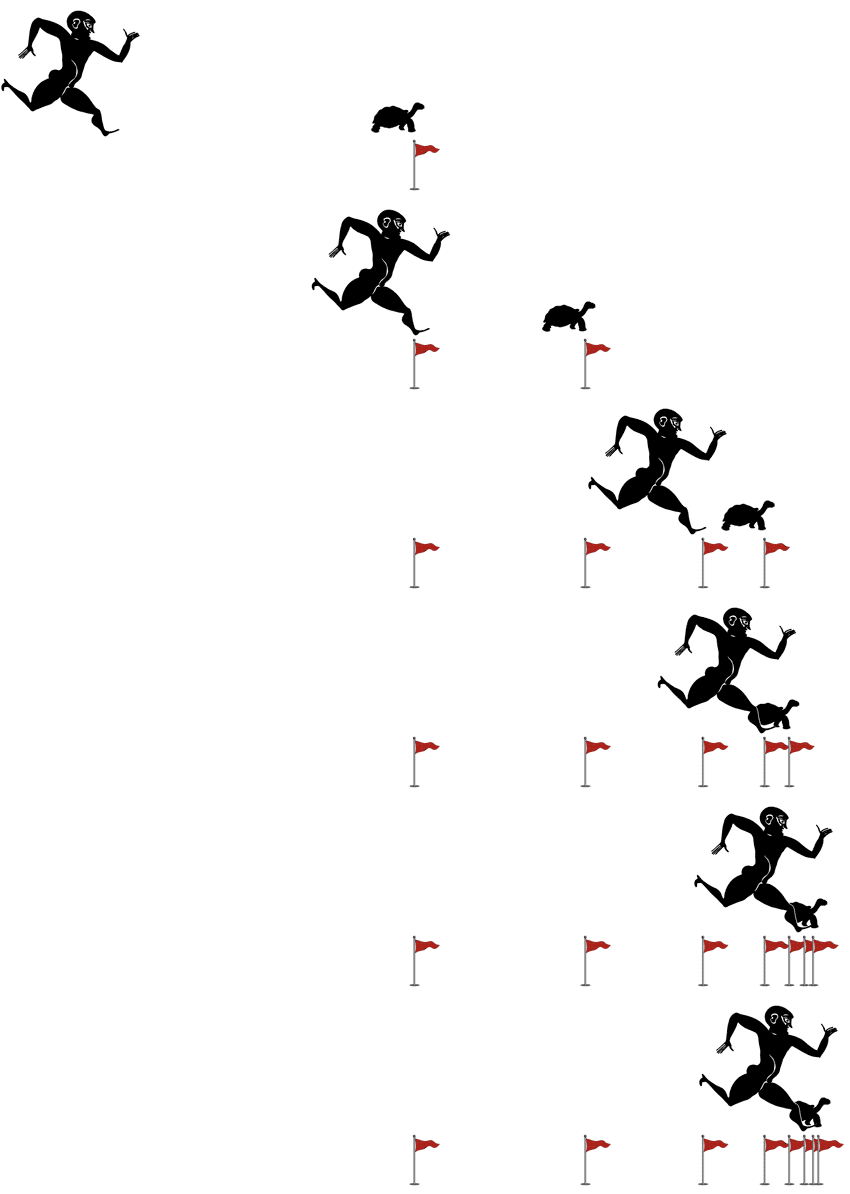
It takes 10 seconds for Bolt to reach the point where the tortoise starts the race. However, when Bolt comes to that point, the tortoise will move 20 meters in 10 seconds, and Bolt will be behind the tortoise.
After 2 seconds, Bolt will run 20 meters more, but the tortoise will also move, and he will be 4 meters ahead of Bolt.
After 0.4 seconds Bolt will think he will catch the tortoise, but the tortoise will move 0.8 meters.
Bolt will try one more time, and after 0.08 seconds, he will be so close to the tortoise. In 0.08 seconds, the tortoise will go 0.16 meters.
When Bolt reaches the point where the tortoise is, the tortoise will always move a little way ahead. After a while, Bolt realizes that;
He will never catch the tortoise because the distance between Bolt and the tortoise will never be 0.
I know this looks pretty peculiar because we know that Bolt should quickly overtake the tortoise and Bolt should pass the tortoise after 12.5 seconds, but with Zeno’s argument, it seems that Bolt will never catch the tortoise.
Let us do another example!
After a long school season, you and your family want to migrate south to a golden coast of sunshine and ocean. You focus on lying on the beach and listening to the ocean because only these two can help you to relax. The distance between you and the golden coast is 200 km. To get to the golden coast, you first have to get halfway to the coast, the first 100 km. This journey will take a finite amount of time, for 2 hours.
Once you reach the halfway point, you need to go half the remaining distance, 50 km. It will also take a finite amount of time. Once you get your new spot, you still have to go half the distance, 25 km away. Again, this will take another finite amount of time. However, you still have to go to the halfway point, 12.5 km away.
As you can see, this is going to happen again and again and again and again. Yes, it will take forever, and you will always have to go the half distance even if it is 0.00000000005… and all gaps will take a finite time to go.
At this point, I have a question. How long does it take you to get to the golden coast? It is simple, and you need to add the times of the pieces of your journey. But wait a minute!
Houston, we have a problem here!
It would help if you traveled infinite times. So, you need to add infinitely finite periods, and the total time should be infinite! Moving from your location to any other place should take an endless amount of time.
In other words, all motion is impossible.
It would help if you traveled infinite times. So, you need to add infinitely finite periods, and the total time should be infinite! Moving from your location to any other place should take an endless amount of time.
In other words, all motion is impossible.
This conclusion is clearly and utterly absurd because I know I can stand up and go to my kitchen to make the most beautiful coffee in the world. Alternatively, a young couple could have an argument, and after that, a young man can open the door and leave his love. There should be a flaw in the paradox logic.
How did mathematicians confuse us by dividing the distance into infinite pieces, with each step decreasing?
If we go back to our journey and do some calculations, we may see a flaw.
The first half of your journey takes 2 hours. The next part takes 1 hour. The third part takes a quarter of an hour. The fourth part takes an eighth of an hour, and so on. Summing up all these times, we get a series that looks like this.

What is this? Is this a number at all, or does it diverge to infinity? Zeno and his friends say that since there are infinitely many terms on the left-hand side of the equation and each term is finite; the sum should equal infinity. Are they right? Let us try to detangle the mystery.
After all, we are adding infinite positive numbers, but they do get tiny. At this point, mathematicians have figured out that it is possible to add infinitely many finite-sized terms and still get a finite answer.
Let us start with the square that has an area of one unit. That means we will have a square, and the length of each side of the square will be 1 cm. The area of a square is equal to “length times height,” and one time 1 is equal to 1.
The area of a square is equal to “length times height,” and one time 1 is equal to 1.
Now, let us split the square in half. If we add each part, we will get 1. Because it is still the same square, divide the remaining half. You can see that the sum of each part still is 1. Think that we are doing the exact thing infinite times. So? No matter how many times we slice up the boxes, the total area is still the sum of the areas of all the pieces.
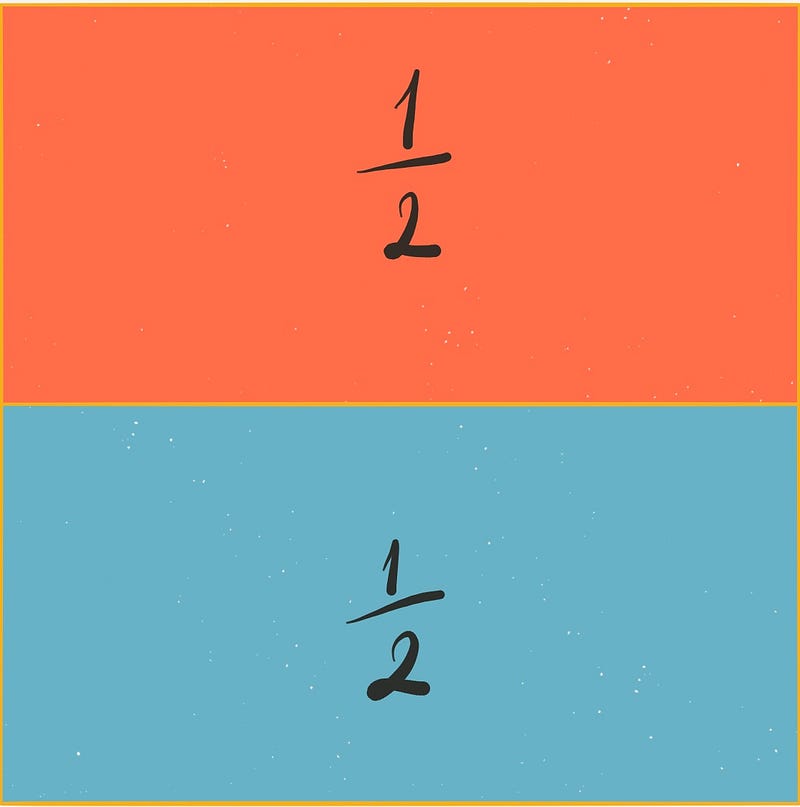
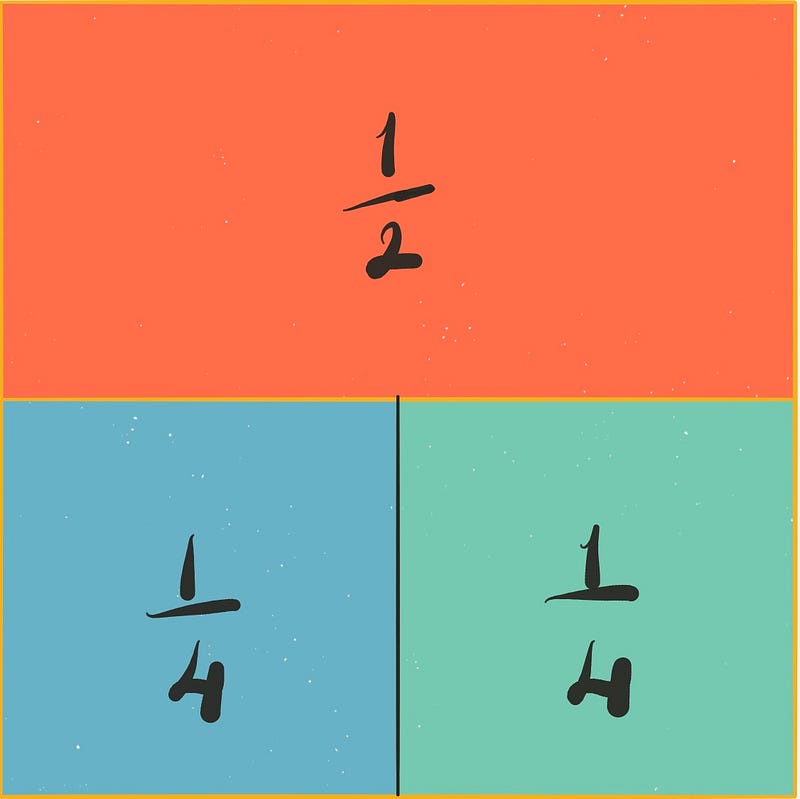
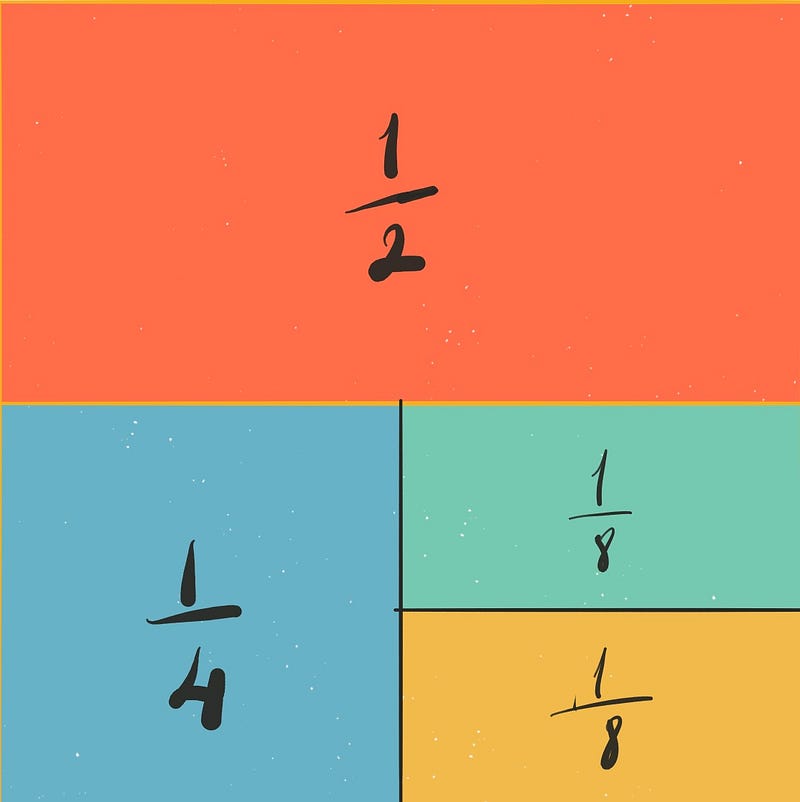
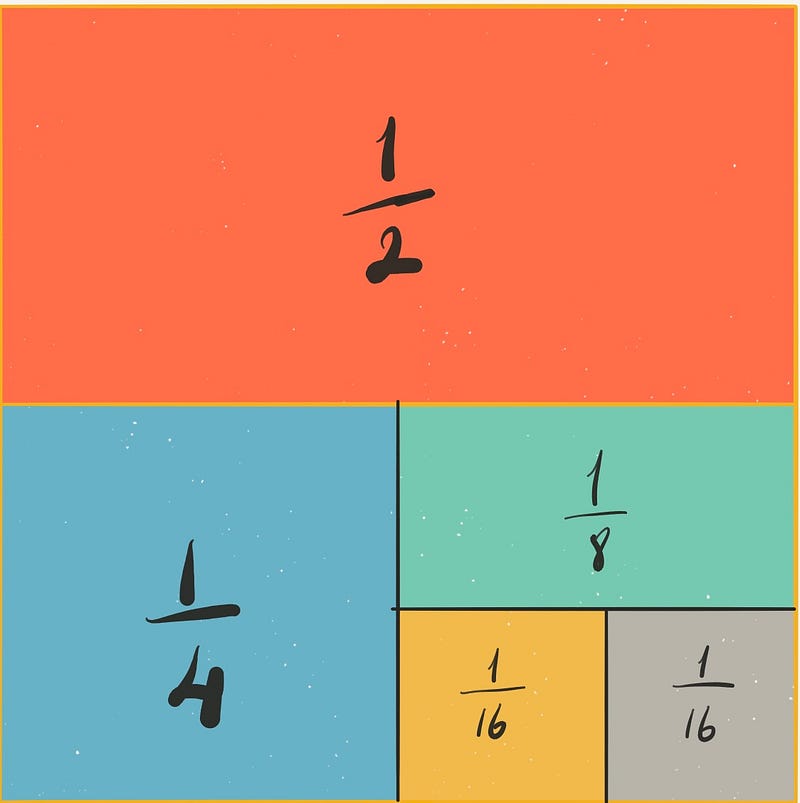
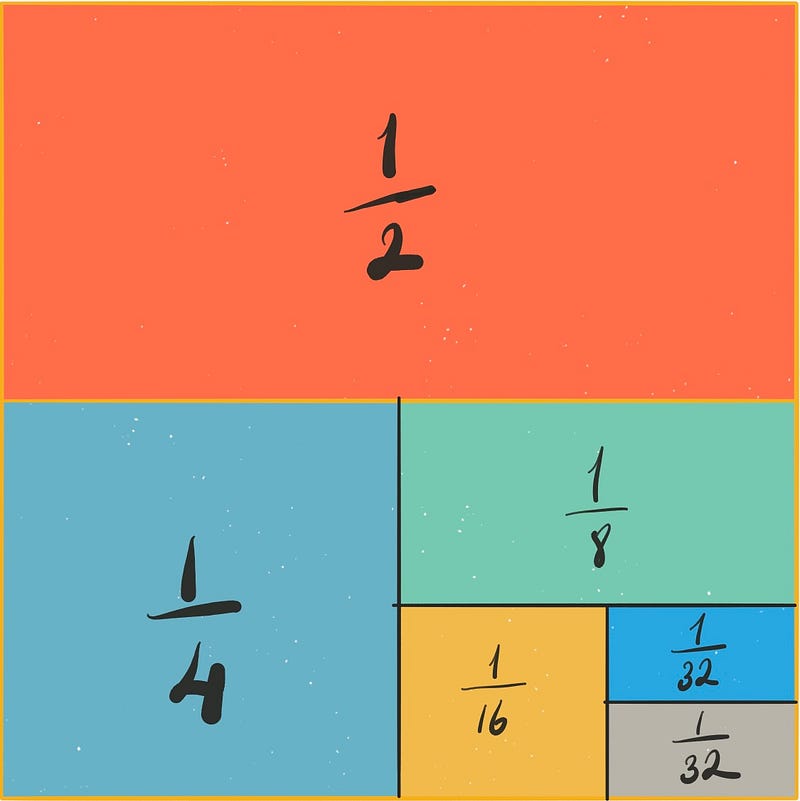
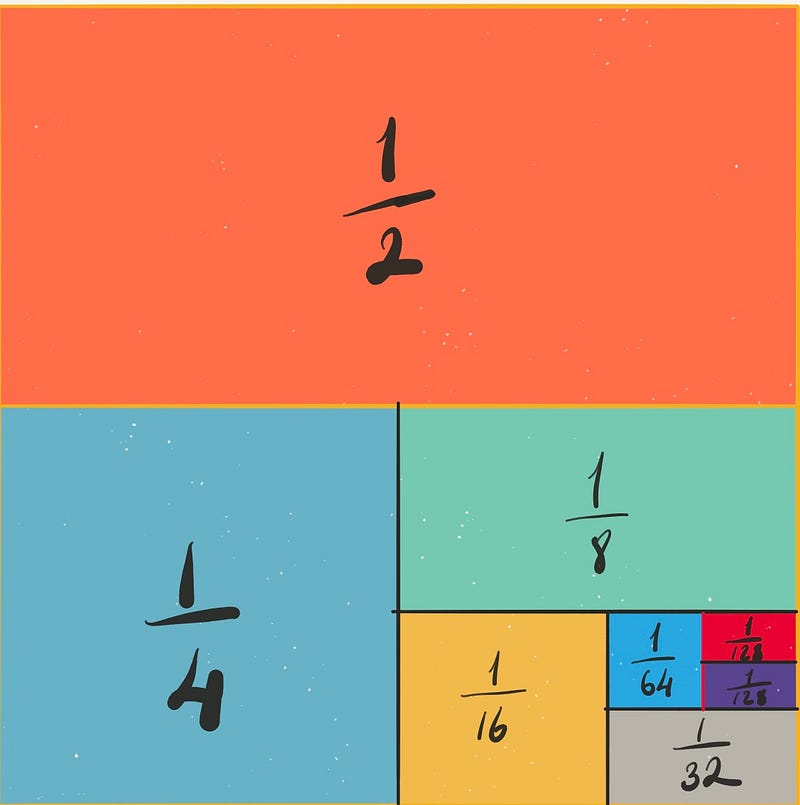
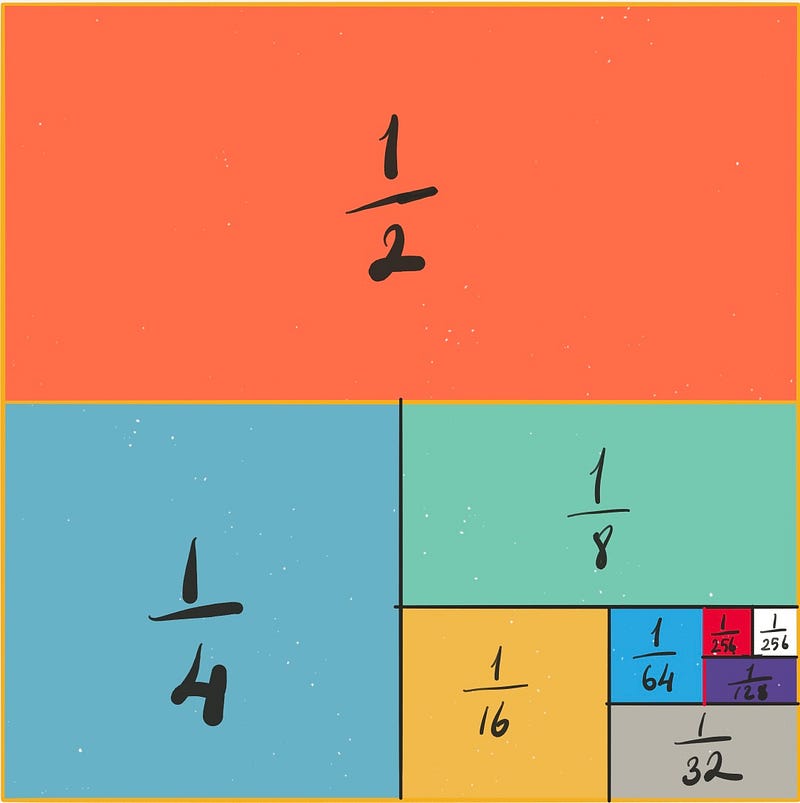
So we can finalize our operation. If you add all the small portions, you will always get the exact square, and it is just 1, and it is soooo beautiful.

It is the solution to the motion paradox, which is why we can move and hug our love.
Note: As an Amazon Associate, I earn from qualifying purchases.