
The Indian Subcontinent Partition: Roots of the India-Pakistan Conflict
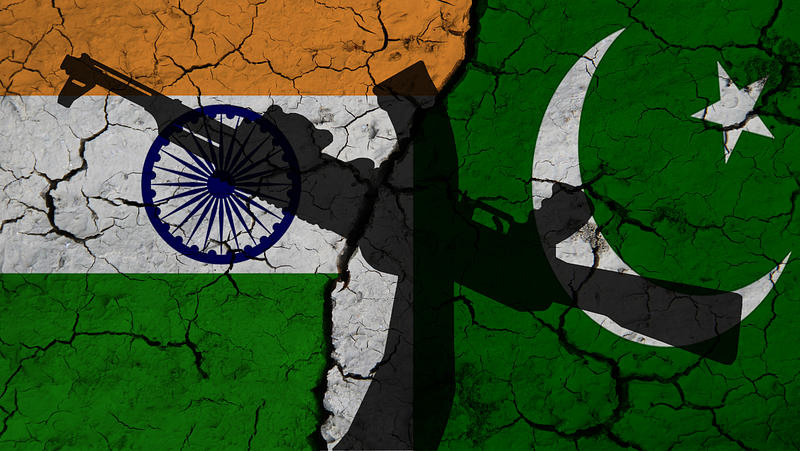
In 1947, the Indian Subcontinent witnessed a seismic shift in its geopolitical landscape. The fading British colonial rule, yielding to the pressures of deep-rooted religious, social, and political divisions, catalysed the creation of two separate entities: India and Pakistan.
The intention was to segregate the dominant Hindu and Muslim populations — a decision that gave birth to one of the largest human displacements in history, with an estimated 14 million people crossing newly drawn borders.
The atmosphere during this period was fraught with tension and violence. Communal riots sparked across regions, leading to the loss of hundreds of thousands of lives.
The echoes of this monumental event continue to reverberate in the form of the ongoing conflict between India and Pakistan today.
Prior to the partition in 1947, the Indian Subcontinent was a vast tapestry of diverse religious, ethnic, and linguistic communities, living (as a consequence of East India Company conquest and exploitation, and subsequent British Raj) under the overarching umbrella of British colonial rule.
The region was home to a majority Hindu population, but significant numbers of Muslims, Sikhs, Jains, Buddhists, Christians, and Jews also resided there. This diversity extended to the realm of languages as well, with hundreds of languages and dialects spoken across the subcontinent.
The ethnic and cultural variety, while a testament to the richness of the region, was also a source of friction and difference. Communities, although cohabiting, were marked by distinct customs, traditions, and social norms.
The unity in diversity was an integral part of the fabric of the Indian Subcontinent, but it was also the crux of many conflicts that arose due to political, religious, or social reasons.
The British, ruling India since the mid-18th century, had adopted the strategy of “divide and rule” to maintain control over their vast colonial possession.
One of the key methods to keep the local population in check was to exploit pre-existing religious, ethnic, and social divisions, with the colonial administration often favouring one community over another — pitting them against each other.
This not only helped maintain British dominion but also deepened the divides and sowed seeds of discord.
The British introduction of modern political systems and practices further complicated these dynamics. The colonial census implemented rigid categorisations of religion, caste, and ethnicity, which served to exacerbate divides and harden identities.
Policies of separate electorates for Hindus and Muslims, institutionalised by the Government of India Act of 1909, also significantly widened the communal gap.
British education policies, which favoured English and sidelined traditional languages, also led to the formation of new elite classes. This shift created a socioeconomic divide, further contributing to the tensions between different religious and ethnic groups.
By the time discussions of independence and partition began to gain traction in the first half of the 20th century, the Indian Subcontinent was rife with heightened communal tensions — much of it fuelled by decades of British colonial policies.
The stage was set for the cataclysmic events that would follow the decision to partition.
The Process and Immediate Aftermath of the Partition
The process leading up to the partition of the Indian Subcontinent was a complex maelstrom of political manoeuvres, ideological clashes, and escalating tensions, where the British administration, the Indian National Congress, and the Muslim League played pivotal roles.
Emerging from the ravages of World War II, Britain found itself grappling with a severely depleted economy and the rising costs of maintaining control over its most prized colonial possession — India.
Concurrently, the nationalist movement in India was gaining momentum, demanding an end to British rule.
The constant pressure from both these factors propelled the British towards granting India its independence.
However, an important issue stood in the way of a smooth transition: the deeply entrenched religious, ethnic, and cultural divides within the subcontinent. The question of whether a united India was viable loomed large, given the centuries-old differences and recent communal tensions.
The Indian National Congress, the leading force in the fight for independence, had always championed the cause of a united India.
Led by influential figures like Jawaharlal Nehru, the first Prime Minister of India, and Mahatma Gandhi, known for his philosophy of non-violence, the Congress argued for a secular India where Hindus, Muslims, and other minorities could coexist peacefully.
They envisioned an India where religious diversity was respected, and citizenship was not tied to religious identity.
Contrastingly, the All India Muslim League, under the leadership of Muhammad Ali Jinnah, began voicing concerns about the future of Muslims in a predominantly Hindu India.
Muslims constituted about one-third of the Indian population, and the League argued that they would inevitably be marginalised in a Hindu-majority India.
Jinnah began to promote the idea of “two nations” — one Hindu and the other Muslim, marking a departure from his earlier advocacy for Hindu-Muslim unity.
This stance evolved into the demand for a separate nation for Muslims, with Jinnah famously declaring in 1940 in Lahore that the areas in India with a Muslim majority should be grouped to constitute “Independent States.”
This declaration was the first official call for what would later become Pakistan.
Despite several attempts at compromise, the positions hardened over time. The three major stakeholders — the British administration, the Indian National Congress, and the Muslim League — engaged in numerous discussions and negotiations, yet a mutually agreed solution remained elusive.
Faced with this impasse and the urgency to end British rule, Lord Louis Mountbatten, the last Viceroy of India appointed by the British government, made the swift decision to partition the subcontinent.
The decision was taken in just a few months, from March to June 1947, and implemented with minimal planning and foresight.
This hurried decision, combined with the complexity of the task, had far-reaching implications. It led to one of the most significant and traumatic population exchanges in history and set the stage for a series of conflicts between the newly formed nations of India and Pakistan.
The scars from this tumultuous period still mark the relationship between these two countries.
Drawing the Borders
The critical task of drawing the borders between India and Pakistan was given to Sir Cyril Radcliffe, a British lawyer with no previous background in cartography or profound understanding of the Indian Subcontinent.
It was a decision made under the pressure of time and the urgency to conclude Britain’s rule in India.
Radcliffe arrived in India on July 8, 1947, with the enormous responsibility of determining the borders of the two new nations. He was given just five weeks to complete this task.
The boundary he was to draw was based on outdated maps and the 1941 census data.
This daunting task was to be carried out with the premise of maintaining territorial contiguity and dividing the regions in a way that Hindu-majority areas would fall into India and Muslim-majority ones into Pakistan.
Radcliffe headed two Boundary Commissions — one for Bengal and another for Punjab. Each commission consisted of four high-court judges — two nominated by the Indian National Congress and two by the Muslim League.
However, the commissions couldn’t reach an agreement due to differing interests, leaving Radcliffe to make the decision alone.
Given his unfamiliarity with the Indian context and the limited time frame, Radcliffe depended heavily on administrative reports and the guidance of district officials.
As a result, his partition line — known as the Radcliffe Line — was drawn with limited knowledge of the intricate demographic, cultural, and socio-economic ties that bound the various communities together.
The announcement of the Radcliffe Line caused significant confusion and dispute. Villages and even households found themselves split between two countries.
Some major regions that had a near-equal Hindu-Muslim population, like Punjab and Bengal, experienced severe issues, as it was nearly impossible to divide them without splitting communities and causing massive displacement.
The city of Lahore, a significant commercial and cultural hub, ended up in Pakistan despite its mixed population, whereas the largely Muslim population of Gurdaspur district in Punjab was incorporated into India to provide the country with access to the state of Jammu and Kashmir.
The princely state of Jammu and Kashmir, with its Hindu ruler and majority Muslim population, became a focal point of dispute — a conflict that persists to this day.
The border that Radcliffe drew in just a few weeks forced millions into migration, led to horrific communal violence, and sowed the seeds for seven decades of tension between the two countries.
Radcliffe’s lack of intimate understanding of the Indian Subcontinent’s local demographics and the hurried nature of the partition process have been cited as major reasons for the confusion, disputes, and violence that marked the partition and its aftermath.
The Immediate Aftermath of the Partition
The immediate aftermath of the partition was marked by a level of violence and human suffering that had seldom been seen in the region.
As soon as the borders, drawn by the Radcliffe Line, were made public on August 17, 1947, communal riots broke out, especially in the provinces of Punjab and Bengal which were the most affected by the partition.
Entire neighbourhoods, towns, and villages descended into chaos as the centuries-old fabric of coexistence was violently ripped apart.
There was a mutual genocide as Hindus, Sikhs, and Muslims turned against one another.
Brutality became the order of the day, as neighbour turned on neighbour, and friends became enemies overnight.
Fires raged across cities, towns, and villages as homes were set ablaze, and sacred places of worship desecrated.
The scale of the human tragedy was staggering. Conservative estimates put the death toll at around 200,000, while others suggest that up to 2 million people may have lost their lives in the violence following the partition.
Mobs roamed the streets, armed with knives and torches, inflicting unspeakable acts of violence on innocent civilians.
Mass migration occurred on an unprecedented scale. Approximately 14 million people — Hindus and Sikhs to India, and Muslims to Pakistan — were displaced in one of the largest mass migrations in human history.
The journey was fraught with peril. Convoys of refugees, or ‘kafilas’, were frequently attacked. Train cars full of corpses would arrive at railway stations — a grim testament to the pervasive bloodshed.
The impact on families was catastrophic. Many were torn apart by the abrupt and chaotic nature of the migration. Children were separated from parents, and husbands from wives.
Women, in particular, were subject to horrendous acts of violence. Many were abducted, raped, and forcibly married or converted.
The horror faced by women was such that some families killed their own womenfolk to ‘save’ them from potential abduction or shame.
Meanwhile, the newly formed governments of India and Pakistan were woefully unprepared for the scale of the chaos and the humanitarian crisis that followed. There was a severe lack of resources to provide for the vast number of refugees.
Camps were established to accommodate the displaced people, but they were often inadequate, lacking proper sanitation, food, and medical aid.
Epidemics of cholera and other diseases swept through these camps, further escalating the death toll.
The long-lasting psychological and sociopolitical impact of this violent birth of two nations is immeasurable. The trauma of partition has permeated the collective consciousness of both nations, being passed down through generations.
It has also fuelled hostility, suspicion, and resentment, feeding the ongoing conflict between India and Pakistan.
More than just a territorial dispute, the conflict post-partition morphed into a question of identity, as both nations grappled with the task of defining their nationhood in the aftermath of such a cataclysmic event.
These newly formed identities, in many ways, were built upon the memories and narratives of the partition violence, shaping the national psyches, and influencing the countries’ internal politics and foreign policies to this day.
The shadow of partition continues to loom over the India-Pakistan relationship — a constant reminder of a shared yet divided past.
The Legacy of the Partition and Ongoing Conflict
The partition’s legacy has shaped India and Pakistan’s bilateral relations, characterised by ongoing conflict and tensions that have manifested in wars, proxy wars, terrorism, and diplomatic strife.
Four major wars have been fought between the two nations — in 1947, 1965, 1971, and 1999 — most of which revolved around the territorial dispute over Kashmir. Each of these conflicts escalated the tension and deepened the mistrust between the two nations.
Proxy wars and terrorism have also become defining features of the conflict.
The use of non-state actors to perpetuate violence across borders, particularly in the disputed region of Jammu and Kashmir, has led to countless civilian casualties and destabilised the region.
The Mumbai terror attacks in 2008, which were traced back to a Pakistan-based militant group, also significantly strained India-Pakistan relations.
Diplomatic relations between the two nations have also been tense and inconsistent, with numerous failed peace attempts.
From the Simla Agreement in 1972 to the Lahore Declaration in 1999, several attempts have been made to normalise relations, but they have invariably fallen short due to sporadic outbreaks of violence and deeply entrenched mistrust.
Impacts of the Conflict
The India-Pakistan conflict’s implications extend beyond their borders, impacting the region and the world at large. It also has significant human rights implications, particularly for the people living in the disputed territories.
Reports of human rights abuses, including forced disappearances, extrajudicial killings, and torture, have been frequent in the region of Jammu and Kashmir.
Refugees constitute another major fallout of this conflict. From the initial displacement during the partition to the continuous migration due to violent escalations, millions have been forced to flee their homes, creating a humanitarian crisis.
Economically, the conflict has diverted massive resources towards military and defense spending in both countries, hampering social and infrastructure development.
The trade potential between the two countries remains largely unexploited due to political tensions, resulting in economic losses on both sides.
The conflict also has global security implications, especially since both India and Pakistan became nuclear powers in the late 20th century. The possibility of a nuclear confrontation, however remote, poses a significant threat to international peace and security.
Their nuclear arsenals not only amplify the potential destructiveness of their dispute but also make its resolution more urgent for the international community.
The legacy of the partition and the ongoing conflict between India and Pakistan have thus had profound and far-reaching consequences.
It is a stark reminder of the lasting effects of colonial policies and the trauma of hasty decolonisation, with impacts felt regionally and globally.
Efforts at Peace and Resolution
India and Pakistan have made numerous attempts at peace and conflict resolution, with initiatives ranging from bilateral talks to international mediation.
Bilateral talks have occurred sporadically throughout their shared history, with some noteworthy efforts including the Tashkent Agreement of 1966, following the Indo-Pakistan War of 1965, the Simla Agreement of 1972 after the 1971 Bangladesh Liberation War, and the Lahore Declaration of 1999.
These agreements have aimed to establish peace and promote mutual cooperation.
On the international stage, the United Nations has made various interventions, starting with the UN Security Council Resolution 47 in 1948 that recommended a plebiscite in Kashmir to determine the region’s future.
The United Nations Military Observer Group in India and Pakistan (UNMOGIP) has also been present since 1949 to monitor the ceasefire line in Jammu and Kashmir.
Despite these numerous attempts, peace and resolution between India and Pakistan have remained elusive. Several reasons contribute to this lack of progress.
A fundamental obstacle is the deep-seated mistrust between the two nations, much of which stems from the traumatic events of the partition and the wars that followed. This mistrust is often amplified by nationalist sentiments, making compromise difficult.
The conflict over Kashmir also remains the most prominent and emotive issue dividing India and Pakistan. Until an agreeable solution to this dispute is reached, efforts at comprehensive peace are likely to be stymied.
Domestic politics also play a crucial role in obstructing peace initiatives. Politicians and parties often exploit India-Pakistan tensions for their gain, which derails peace processes.
External factors, such as the influence of other countries and international politics, play a significant role in complicating the dynamics of the India-Pakistan conflict. The strategic interests of major global powers in the region have, at times, influenced the trajectory of the conflict.
The India-Pakistan conflict has drawn the attention of major global powers due to the strategic location of the subcontinent, its large population, and its nuclear capabilities.
Global powers have therefore often sought to safeguard their own interests or exert influence in the region, which has impacted the dynamics of the conflict.
Various international actors, for example, including the United States, the United Kingdom, and the United Nations, have attempted to broker peace between India and Pakistan. These efforts have at times been influenced by their own strategic interests or geopolitical considerations, which in turn has shaped the terms and outcomes of negotiations.
The India-Pakistan conflict has also intersected with broader international political dynamics. For example, during the Cold War, India and Pakistan found themselves caught in the midst of the global rivalry between the United States and the Soviet Union.
Both superpowers sought to align with one or the other country to further their own geopolitical objectives. This external interference exacerbated tensions and complicated efforts towards peace.
Regional dynamics also come into play. India’s relations with countries such as Afghanistan, Iran, and the Gulf states, as well as Pakistan’s connections with China and Saudi Arabia, have had implications for their conflict.
Strategic alliances, economic interests, and historical affiliations influence the positions taken by these countries and impact the prospects for peace in the region.
Issues of terrorism and security also have international dimensions. Some terrorist groups operating in the region, such as Lashkar-e-Taiba and Jaish-e-Mohammed, have had alleged links to external actors.
The involvement of these groups in cross-border attacks and the ensuing tensions have raised concerns among the international community, further complicating efforts to resolve the conflict.
The use of non-state actors and terrorism as a tool for achieving political objectives has significantly hampered peace initiatives. Incidents like the 2008 Mumbai attacks, for example, have provided severe setbacks to peace processes.
These factors contribute to the cycle of escalation and de-escalation in India-Pakistan relations, making sustained peace a significant challenge.
Resolution will require not just diplomatic efforts but also a transformation in political discourse and public sentiment in both countries.
The India-Pakistan conflict is deeply rooted in the partition of the Indian Subcontinent, which occurred amidst hasty decision-making and resulted in the division of communities and widespread violence.
The process of partition, with its ill-defined borders and massive displacement, left a profound impact on the psyche of both nations, shaping their identities and fuelling the ongoing conflict.
The conflict encompasses territorial disputes, nationalist narratives, and unresolved issues, such as the question of Kashmir.
The legacy of the partition and the subsequent India-Pakistan conflict highlight important historical lessons. The hurried and poorly planned partition process serves as a reminder of the consequences that can arise from rushed decision-making, particularly when it comes to drawing borders and handling communal tensions — where careful consideration, dialogue, and understanding of the complexities were needed.
Looking ahead, the future of the India-Pakistan relationship remains uncertain. The conflict has persisted for decades, with intermittent attempts at peace often derailed by mistrust, unresolved core issues, internal politics, and external factors.
While the road to peace is challenging, it is important to acknowledge that the costs of continued conflict are high, affecting not only the people of India and Pakistan but also regional stability and global security.