
The Incredible Story of the “Zombie Apocalypse Murders”
An Unnatural Fear
For most of us, television and cinematic productions such as The Walking Dead and Night of the Living Dead offer a few hours of nail-biting entertainment that is meant to be enjoyed for what it is and quickly forgotten. For one family, however, these images of a world overrun by an army of reanimated corpses became an obsession that would ultimately end in the brutal murders of both the patriarch who started it all and an autistic thirteen-year-old who got caught in the crosshairs of madness.
In statements he willingly provided to detectives in the aftermath of the slayings, fourteen-year-old Eldon Samuel III, claimed that the bloodshed had been brought on by his father’s declaration that the zombie invasion he had been warning them about for years had finally come to pass.
Like Father, Like Son
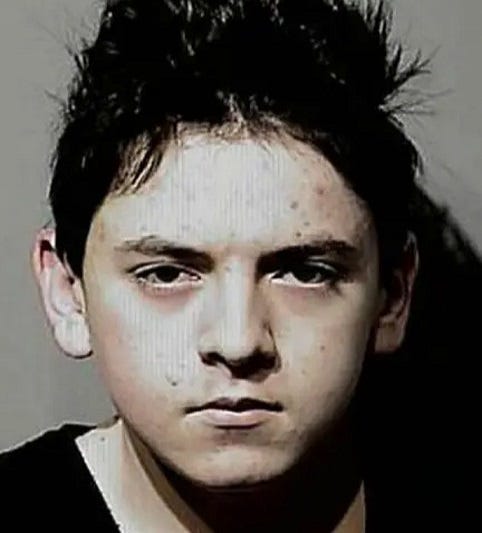
The lone survivor, who will henceforth be referred to as Samuel, recalled that on the evening of March 24, 2014, his father, forty-six-year-old Eldon Samuel II — who went by the nickname Junior — exited the state-funded house he shared with him and his younger brother Jonathon, armed and ready to do battle.
In the frenzied moments that followed, Samuel recalled hearing his father fire several rounds into the darkness before reentering the residence. Once inside, he had excitedly informed the boy that zombies were descending upon them; the time had come to fight.
When he demanded that Samuel leave the safety of the dwelling, the teen had refused to budge. Enraged by the show of insolence, Junior had allegedly struck his son and pushed him towards the door. Fearing for his life, Samuel had grabbed a 45-caliber revolver and shot his father once in the abdomen.
Down, but not out, Junior had crawled into his son Jonathon’s bedroom. Although Samuel’s version of what happened next would later be disproven, the story he held to initially was shocking to hear, even for the seasoned detectives who had seen more than their fair share of the evil that men do.
The way Samuel remembered it, upon finding Jonathon cowering under his bed, their deranged father had grabbed a machete and chopped away at the terrified boy who was trapped with no means of escape. Dissatisfied with the fact that his prey was refusing to die, Junior had then picked up one of the guns that had been strategically placed around the home and shot his youngest son several times, successfully ending his life.
Convinced that he would be next, Samuel had taken possession of the weapon and fired three shots into his father’s head, not only to put him out of commission but also to ensure that he didn’t rise from the dead and become one of the loathsome creatures that frightened him so.
With both his father and brother now deceased, Samuel had phoned 911 and told the dispatcher to send an ambulance as soon as possible. When help arrived, it was apparent from the start that the victims were beyond saving. It was also clear that their deaths had not been natural, necessitating the aid of the homicide unit.
Samuel, who showed no signs of physical trauma, was taken to the police station for questioning. In the meantime, the house was processed, which was no easy feat, considering the state of the bodies.
During his interrogation, Samuel blamed the murders on his father’s all-consuming obsession with the zombie apocalypse he had been preparing for since his children were little. A survivalist who was paranoid of the world in general, zombies had topped the list of enemies he had deemed a threat to his family’s safety.
Samuel related that his father had been dependent on prescription drugs for as long as he could remember. Back at the house they had lived in for the six months leading up to the murders, investigators had discovered hundreds of bottles of medication, including opioids, that seemed to confirm the boy’s story.
Along with the assortment of drugs, a cache of weapons was also found. Hidden in plain sight were a machete, an assortment of knives, pistols, hatchets, mallets, and throwing stars. Curiously, the shotgun used to kill Junior was conspicuously absent and has yet to be found.
While some elements of Samuel’s story seemed plausible, others did not. Detectives found it hard to believe that a man bleeding profusely from a gunshot wound to the belly had found the strength to commit the brutal acts that had been unleashed on Jonathon. Their instincts told them that a monster had indeed been present in the residence that evening, and it hadn’t been Junior.
Murder Most Foul
When the detectives let him know that his story lacked the ring of truth, Samuel amended his version of events. In the revamped account, he reluctantly admitted that he was the one who had killed Jonathon. When asked why he would do such a thing, his answer was chilling in its simplicity: he hated him and always had.
Samuel explained that, while it was true that their father had sought shelter in Jonathon’s room, he had barely made it past the doorway before collapsing. Following close behind, Samuel had found his brother hiding under the bed. Lifting up the mattress, he had ordered him to come out. Aware of the danger he was in, Jonathon had opted to stay put.
His anger boiling over, Samuel had retrieved a machete and began hacking away at his brother, who had tried desperately to avoid the razor-sharp blade. When all was said and done, Samuel estimated that he had sliced Jonathon around thirty times. An autopsy would reveal that the number was closer to one hundred.
To finish him off, Samuel had shot Jonathon — who had remained under the bed frame throughout the ordeal — at point blank range. Owing to his autism, the teenager had always found comfort in small spaces. Unfortunately, on that night, he had learned in the most horrific of ways that no place was safe.
Detectives probed deeper into Samuel’s psyche in an attempt to learn what perceived wrong Jonathon had committed to warrant such violence, and from his own flesh and blood, no less. Giving it little thought, the confessed killer had no trouble answering the question. According to him, all of the family’s woes could be traced back to his brother, whose autism had put such a strain on his parents that they had turned to drugs in order to cope. While this was clearly not the case, Samuel had chosen an easy scapegoat, and no one was going to change his mind.
Samuel went on to say that he had been contemplating killing his brother for five years. It seemed that everything Jonathon did set him off. In one instance, after their father bought chocolate bars for the boys, Samuel had tried to take his brother’s candy. When Jonathon refused to hand over the rare treat, Samuel had raged about how selfish he was, seemingly unable to take responsibility for his own entitled behavior.
At the conclusion of five long hours of questioning, it was evident that Samuel had killed his brother and father in cold blood. The coroner’s report would help seal his fate.
The medical examiner determined that Junior had sustained four gunshot wounds, one to the stomach and three to the face. A toxicology report revealed that he had traces of muscle relaxers, sleeping pills, anti-anxiety meds and opiates in his system at the time of death.
Jonathon’s autopsy showed that he had sustained five shotgun blasts and five additional wounds from an automatic pistol. He had also suffered dozens of slashes from a machete, one of which had nearly severed the hand he had used to ward off the blows.
With these findings in mind, Samuel was charged with two counts of first-degree murder and held over on a million dollars bail. Prior to the case going to trial, the charge relating to Junior’s slaying would be downgraded to second-degree murder.
A Family on the Edge
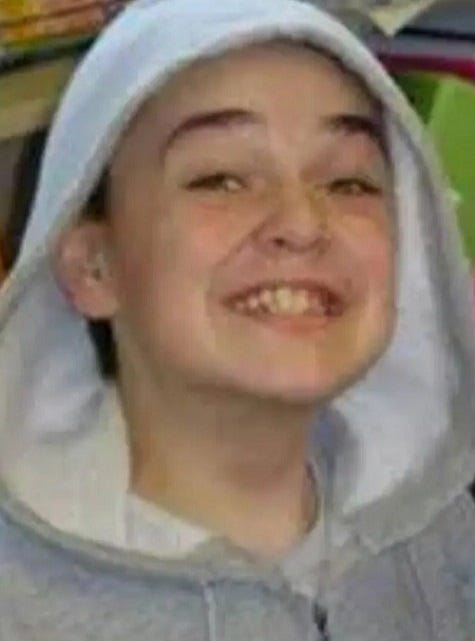
While outside sources confirmed that Junior was a bit unhinged, they remembered Jonathon as a gentle, loving boy who had born little resemblance to the attention-seeking burden on the family his brother had described to detectives.
In preparation for the upcoming trial, investigators learned that the family, which had included the boys’ mother Tina, were originally from California. While residing in their home state, the tight-knit clan had moved no less than twenty times, never staying in one place for very long. Perpetually broke and unable to pay their rent, they would flit from one rundown hovel to another, leaving the slumlords in the lurch.
In a move that would prove to be the beginning of the end of the marriage, Junior had allegedly struck his wife with a car in a fit of temper, breaking her collarbone and sending her to the hospital in serious condition. As a result of her injuries, Tina had become addicted to prescription pain pills. With both parents now chemically dependent, Samuel and Jonathon were stuck between a rock and a hard place.
Destitute and hooked on drugs, Junior and Tina spiraled downward at an alarming rate. Samuel recalled that his father had been a violent bully during those dark days who had beaten both him and his mother with little or no provocation. The only one who had been spared was Jonathon, whose struggle with autism had made him the center of the household, and therefore immune to physical punishment.
Court records showed that the warring couple had taken turns filing orders of protection against each other during their tumultuous union. Samuel asserted that he had witnessed his father pouring lighter fluid on his mother and threatening to set her on fire. On another occasion he claimed that Junior had tied Tina to a chair and forced Samuel, who was ten at the time, to urinate on his mother.
With tensions in the family reaching a boiling point, in 2012, Tina pleaded guilty to child cruelty and was subsequently ordered to serve six months in detention. While the identity of the victim was not made public, it has been speculated that the child in question was her son, Eldon Samuel III.
When the marriage broke down for good in 2013, Junior had taken the boys and relocated to Idaho, while Tina stayed behind in the Golden State and worked on putting her life back together.
Although Junior’s father (Samuel’s grandfather) would later claim that his son had gotten clean after the move to Idaho, neighbors begged to differ. They reported witnessing what they believed to be drug deals going down at the residence on a regular basis. On the occasions when they tried to be friendly, Junior — whom they described as “weird” — would return their smiles with a piercing stare that warned them to keep their distance or else.
Child Protective Services was no stranger to the family, having been called numerous times, both in California and Idaho. Unfortunately, the complaints always went nowhere, and no actions were taken to remove the children from the home.
A pediatrician in Idaho who examined Samuel noted that he was malnourished and suffering from advanced dental disease. It was also reported that he was often truant from school, allegedly due to a lack of structure at home.
Junior’s father, who was loathe to say anything negative about his dearly departed son, did admit to an interviewer that he had been quick to rile in his youth. Contrary to his grandson’s recollections, he claimed that he had never seen him lay a finger on any of his children in anger. He was adamant that, while Junior may have doled out a tongue lashing or two in his day, he wasn’t the type to cause bodily harm to someone he loved.
In contrast to the glowing picture he painted of his late son, the elder Mr. Samuel had nothing good to say about his daughter-in-law. From what he knew of his son’s estranged spouse, she was a troubled soul who spread misery like dandelions spread seeds. From his perspective, if anyone was physically aggressive in the relationship, it had been Tina, not Junior.
Judgement Day
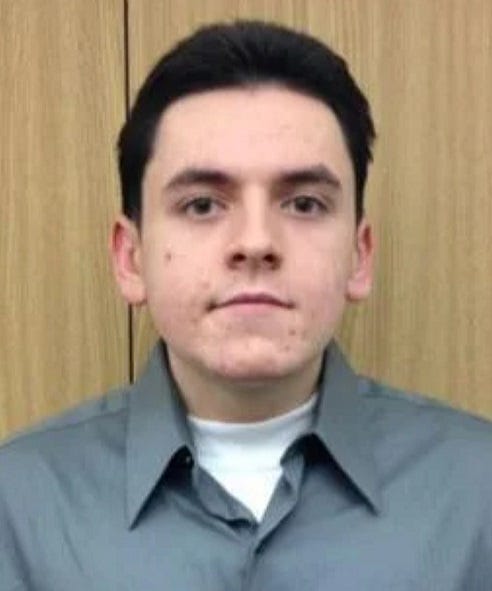
Samuel’s trial finally got underway in January of 2016, two years after the murders. The prosecution’s case was fairly straightforward. They argued that the teenager, fed up with his father’s nonsense and controlling ways, had decided on the evening of March 24 that enough was enough. With no shortage of weapons lying around at his disposal, he had slain Junior in a surprise attack.
With his father out of the way, he had headed to his brother’s room where he dispatched his nemesis in a textbook example of overkill. The resentment he had carried around with him for years finally coming to a head, he had slashed and shot the middle schooler with a savagery that had shocked a community and members of law enforcement alike.
The defense’s position was that Samuel had killed his abusive father in self-defense. His mind poisoned by years of having the threat of a zombie apocalypse drilled into him, they argued that he had temporarily lost control of his senses. Jonathon’s murder, which was characterized as a “rage killing,” had been the result of the delusions fed to him by his father over the years.
After sitting through three weeks of testimony, the jury returned their verdict. Samuel was found guilty on one count of first-degree murder in the death of Jonathon and guilty of second-degree murder for taking Junior’s life.
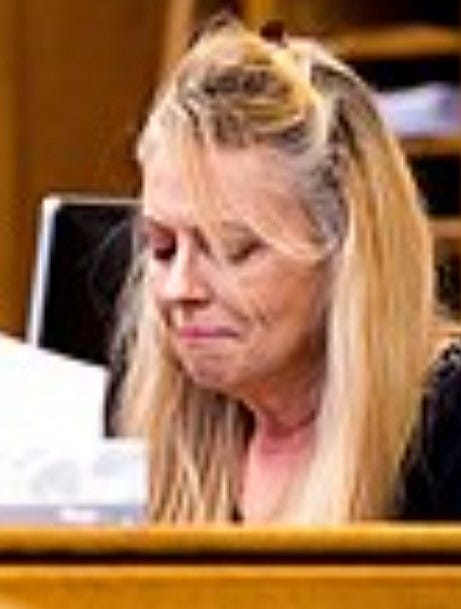
During the sentencing phase, Samuel’s mother had taken the stand to plead for mercy on her son’s behalf. Having lost Jonathon, she explained that she couldn’t bear the thought of her only remaining son spending the rest of his life behind bars.
In April of 2016, after taking everything into consideration — including the killer’s age — the judge sentenced Samuel to serve twenty years for Jonathon’s murder and ten for their father’s slaying. Since the terms were ordered to run concurrently, meaning at the same time, he will be eligible for release in 2036.
The verdict was appealed in September of 2019 on the grounds that Samuel’s Miranda rights were violated during the initial interrogation. His appellate lawyers argued that their client, who was only fourteen at the time, had not fully understood that he had the option of remaining silent, if he so chose.
After determining that there was no evidence to support the notion that Samuel’s rights had been infringed upon, the Idaho Supreme Court upheld the jury’s decision. As a result, the verdict stands, at least for now.
Additional appeals were filed on June 13, 2023. These efforts seem to revolve around Samuel’s dissatisfaction with his legal representation. As of this writing, the wranglings continue.
Aftermath
During the media frenzy that accompanied the case, Junior’s son from a previous marriage, Anthony, made it known that his father had never been abusive towards him or his sisters. According to his recollections, though he could behave erratically while under the influence, violent physical outbursts were virtually unheard of. If their father had beaten Samuel on a regular basis, as he had alleged in court, the behavior had been completely out of character for the man he had known and loved.
As for Samuel, who’s now twenty-three and serving his time in an adult prison, with maturity has come reflection. No longer the eerily calm teenager who described slaughtering his father and brother as if their brutal deaths had been nothing more than a momentary hiccup in his life, he now expresses regret for his actions. He has even gone so far as to proclaim his love for them, especially his father.
Whether or not he still believes that zombies are preparing to take over the world is unknown. With that said, it should be noted that when he was asked shortly after his arrest if he believed that zombies would one day wage war on humanity, he acknowledged that it could very well happen. Having been forced to prepare for just such an occasion since childhood, his hesitation to dismiss the possibility outright was, and is, somewhat understandable.
If there is any hope for a successful life outside of prison walls, it undoubtedly lies in Samuel’s ability to make peace with his unsettling past. While it won’t bring Junior and Jonathon back, coming to terms with his actions on that spring night might allow Samuel to become a productive member of society. As is often the case with monumental events such as new leases on life and possible zombie uprisings, in the end, only time will tell.
Resources:
·kxly.com
·spokesman.com
·dailymail.co.uk
·nydailynews.com
·law.justia.com
·facebook.com
·bonnercountydailybee.com
·dockets.justia.com
·cdapress.com
·Explore With Us (Web Show)
Images used under provisions of the Fair Use Act for purposes of reporting and education.