
How Play Impacts Language Development
Discover how play influences speech and language development in children.
Explore the benefits of creative play and its impact on cognitive skills and communication.
When we think of play we don’t necessarily think about cognitive and language development.
We imagine fun.
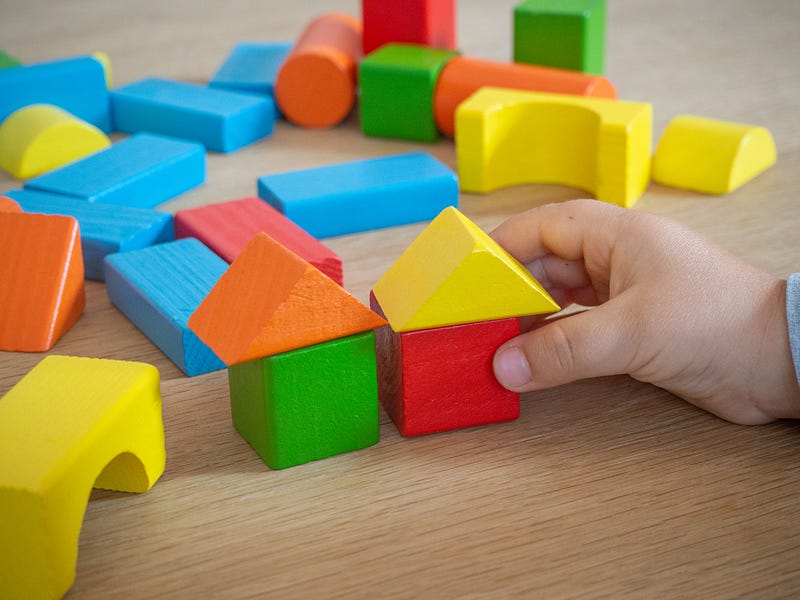
We visualize a toddler on the floor of their living room playing with multicolor blocks, stacking the blue block on top of the yellow. Topping off the tower with that round red cylinder.
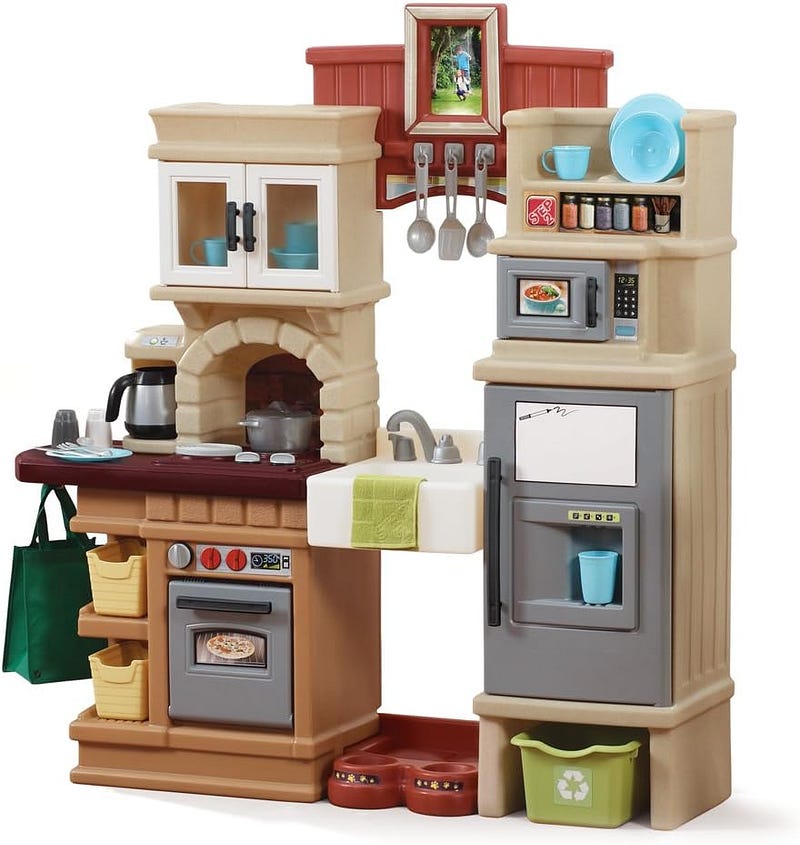
Maybe we even imagine a child playing with their pretend kitchen. You know that Step2 Kitchen that’s in every household- the one with the pie on the oven door and the sink that has the sound of running water when you turn it on.
The Benefits of Play
When we think about pretend play we think about a child’s imagination running wild.
Let’s think about this from an academic standpoint.
Pretend Play mimics life skills.
Pretend play offers an opportunity to problem solve and think in an abstract manner.
It also allows children to develop their communication individually and alongside others.
Imagine the social skills that are developed when playing with peers or even with adults. When you pretend to burn your hand on the stove, you’re teaching safety awareness. When you’re taking turns with Pop the Pig, you’re developing a child’s social skills.
The crazy thing is that language and cognitive skills are directly tied to play development.
Numerous researchers have spent their entire careers researching the importance of play. The one I want to talk about today is the Westby Play Scale. This was created by Carol E. Westby, a guru every speech-language pathologist knows.
She has created a play scale of 10 stages for typical play skill development.
The Wesby Play Scale
Play stages and language development
Stage one (9–12 months) is when children develop this idea of object permanence or the ability to find a toy that isn’t directly in front of them. This is also when you’re going to see a child actually move toward the object that they desire. At this point, you’d expect to hear vocalizations/sounds, not real words that you can understand.
Stage two (13–17 months) is when a child is going to operate a toy, like pushing a button or turning a switch. This is when a child is going to start learning the concept of cause and effect. this is the point where you’re going to start to hear those single words like push, open, and more.
Stage 3 (17–19 months) is when children start to demonstrate auto-symbolic play, like pretending to feed themselves. Symbolic play is when a child uses an object to represent another or gives an attribute to that object. For example, a child has pretend food and is going to feed himself.
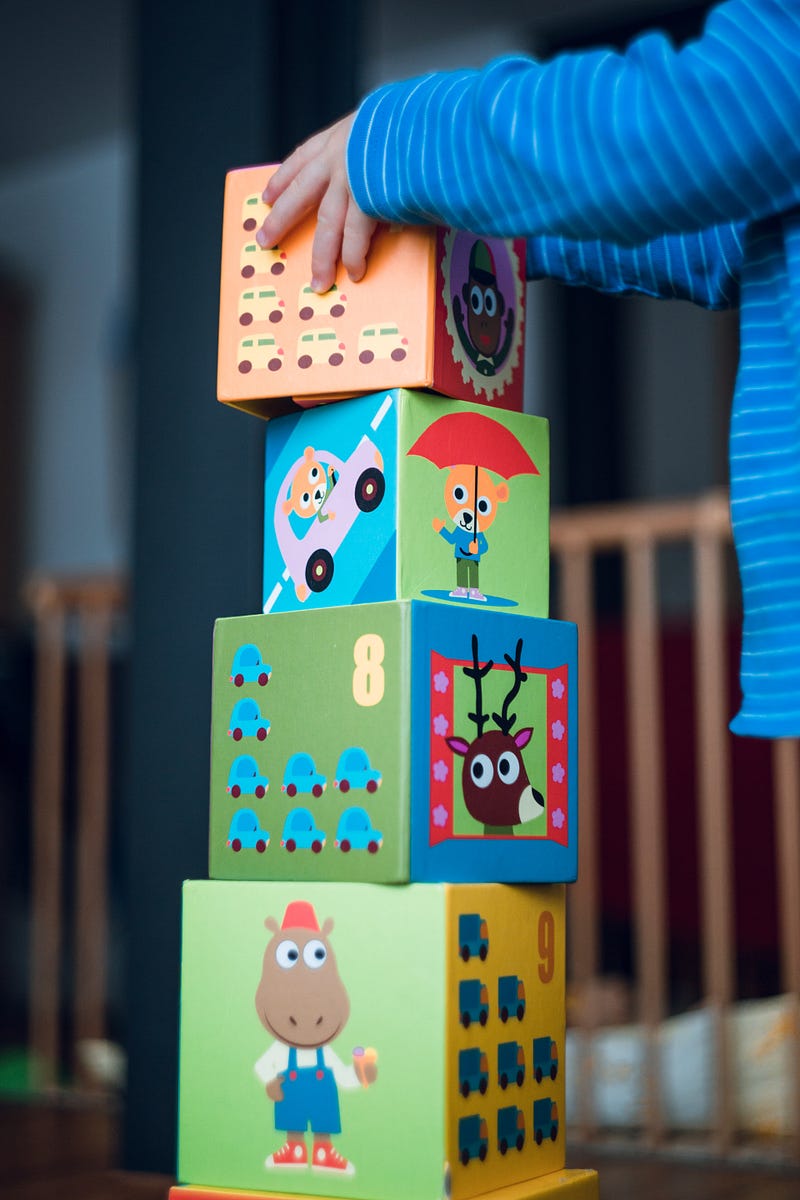
Stage 4 (19–22 months) is when that symbolic play is used upon others, like brushing their dolls’ hair or cooking food for a parent. At this point, you’re going to hear two-word combinations like “gimme brush” or “I do.”
Stage 5 (24 months) is when children start to build blocks, play house, or engage in water play. This is when a child uses short sentences and begins to talk about their daily experiences.
Stage six (30 months) play is when parallel play emerges. This is when a child might play next to another child or adult, but doesn’t directly interact with them. At this point, kids are going to start asking those WH (e.g. who, what, where, why) questions.
At stage 7 (36 months) play kids will start to sequence. That’s when you have a child who will gather ingredients, make a hamburger, serve it, and then wash the dishes.
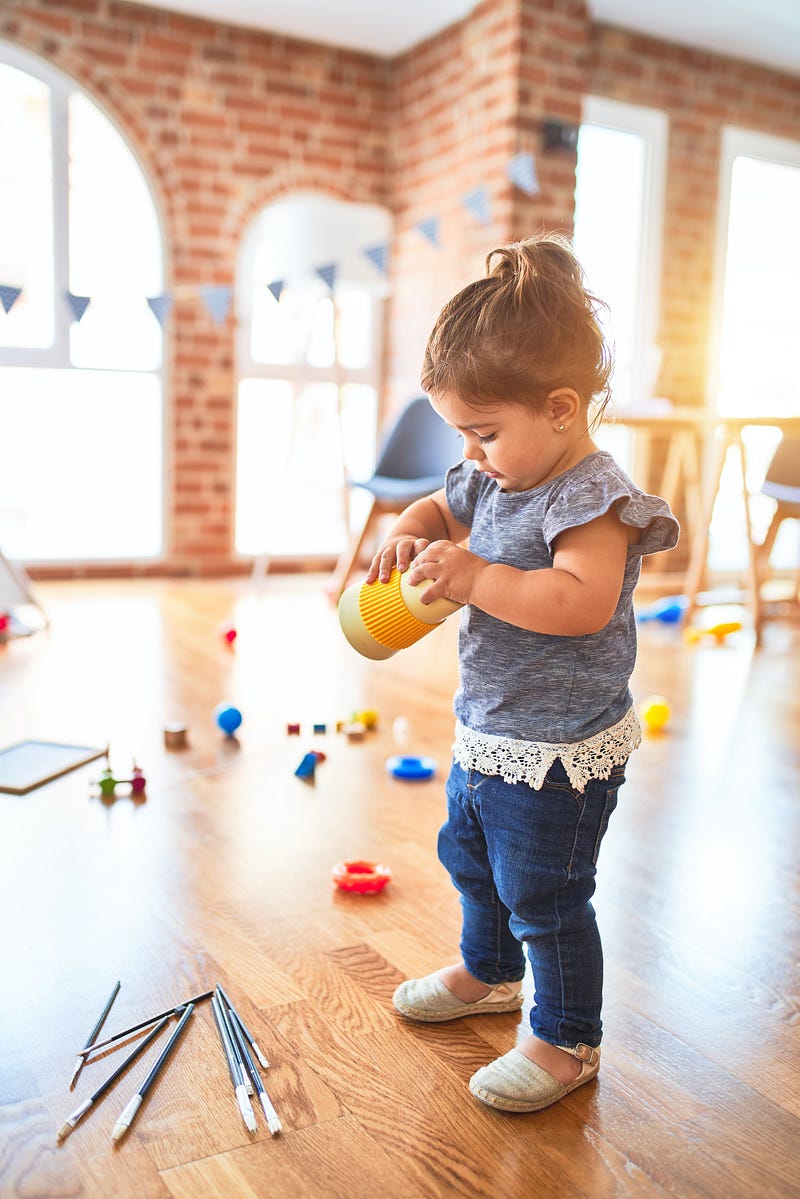
At stage 8 (36–42 months) play kids will begin to develop theory of mind. Theory of mind is the ability to take on someone else’s perspective. For example, a peer might lose their toy. The ability to understand that child may be sad is the theory of mind.
At stage 9 (48 months) children begin to develop problem-solving skills. You’ll notice that language is also more complex at this point, where children are using conjunctions and more complex concepts.
At stage 10 (60 months) children will develop and exhibit full cooperative play. This is when children are playing the same game in the same space. this is where temporal components (e.g. first, next, last) will emerge.
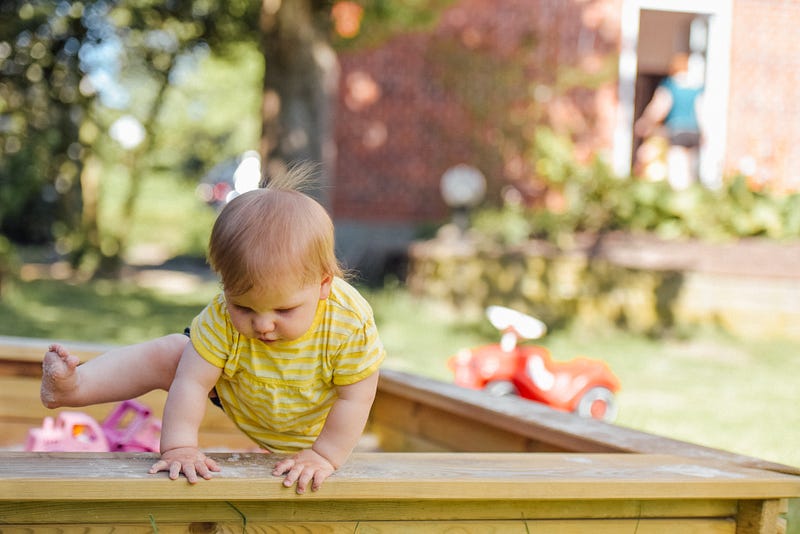
This scale delineates ten stages of typical play skill development, each associated with specific age ranges and language milestones.
Pretend play, in particular, takes children on a journey that mirrors real-life situations. It invites them to problem-solve and think abstractly.
Furthermore, it serves as a platform for honing communication skills, both independently and in collaboration with others. Through pretend play, children develop their social skills, learning the art of taking turns, sharing, and cooperation.
To read a PDF of the Westby Play Scale click here.
Conclusion
Play is the cornerstone of effective communication and linguistic development in children. The Westby Play Scale illustrates the remarkable journey that early childhood play fosters. These developmental stages are instrumental in shaping a child’s cognitive and linguistic skills. However, if you observe that your child is lagging behind these play-skill norms, it may be time to consult a speech-language pathologist.
Want to learn more? Share, follow or comment on this article to keep the conversation going!
Hi! I am Lindsay, a speech pathologist. I write about life, mindfulness, my career, and financial literacy. Want to see more stories on your feed? Follow me!
Embracing creative play lays the foundation for a lifetime of effective communication and language prowess, making it a vital aspect of every child’s growth and development.
Read more:
https://leader.pubs.asha.org/do/10.1044/kid-confidential-teaching-parents-the-power-of-play/full/