
If You Don’t Own Gold, You Know Neither History Nor Economics
Gold has very high volatility in the short term, while it tends to be very stable in the long term.
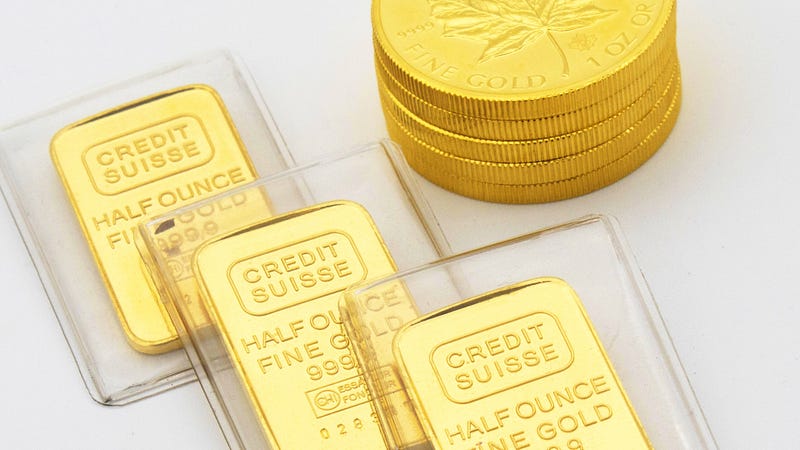
Gold has been for more than 2000 years an element that has served as a store of value. This has managed to coexist with many other subjects that have served as a means of payment, where animals, salt, or even shells could be highlighted.
What has made gold maintain its monetary role has been thanks to two physical characteristics that distinguish it from other commodities: first, gold is chemically so stable that it is almost impossible to destroy it; and secondly, it cannot be synthesized from other materials, and can only be extracted from its unrefined mineral, which is very rare on our planet.
“I believe it would be both risk-reducing and return enhancing to consider adding gold to one’s portfolio”
— Ray Dalio
Why gold and not other commodities?
The main reason why gold has been the dominant commodity is because of its high stock-to-flow ratio. This means that the discrepancy between the annual production and the total supply of gold and, for example, silver is enormous.
Whereas in the event that the price of gold increases significantly, it would be totally impossible to extract more than 3% per year of gold from the earth (being 1.5% of the average annual extraction rate).
On the contrary, silver, being more common in the earth’s crust, can be extracted much more easily, and therefore, silver mining companies can increase their extraction rate exponentially (up to 20%).
This caused that in March 1980, the Hunt brothers, who had accumulated many futures contracts, were quickly devalued, and they came to assume losses of 1.7 billion.
This means that silver is not a commodity that I like to have in my personal portfolio since the silver bubble has already burst before and will do so again if it inflates again.
Should I have money invested in gold?
First, it is necessary to talk about the dangers that it presents and that there have been periods like 1980–2000, in which gold has had a devaluation of more than 80%. These periods of loss are generally in periods of economic boom.
Moreover, gold has very high volatility in the short term, while it tends to be very stable in the long term.
On the other hand, it seems very convenient today with Central Banks that do not stop printing money, and that in the case of the dollar has lost 46% of its value since 2016 (as I tell you in this article), to have the money in those assets that are more difficult to obtain.
There is another popular myth: central banks at the beginning of the 20th century accumulated most of the gold stocks of citizens to have control over it, a tremendously rational decision.
Even with that, they did not manage to have control of more than 20% of world stocks. Therefore, if they decided to sell these stocks, the most likely impact would be that gold, which is highly appreciated for its aesthetic and industrial use, would be quickly acquired without a lot of depreciation.
Conclusion
For these reasons, it is known that many of the main investors worldwide have a part of their portfolio invested in gold. For example, we could highlight Ray Dalio (yes, the title phrase is his), Taleb, Warren Buffett (through mining companies ).
As I describe in this article, it seems absolutely necessary to have an asymmetric portfolio that can fight against the monetary policy that central banks are leading, leading us to a crisis. The worse, the more they try to delay it.
This article is for informational purposes only. It should not be considered Financial or Legal Advice. Not all information will be accurate. Consult a financial professional before making any major financial decisions.