
The Importance of Daydreaming in the Creative Process

Children, by virtue of simply being children, have unlocked a startling secret- the best way to accomplish new and interesting things is to imagine them.
Children want to play and daydream and “goof around”. As adults with schedules, bills, and big problems, we largely discount the wisdom of their approach. We’re so focused on logic and answers that we forget the power of being curious and creative.
1. Creativity and Logic
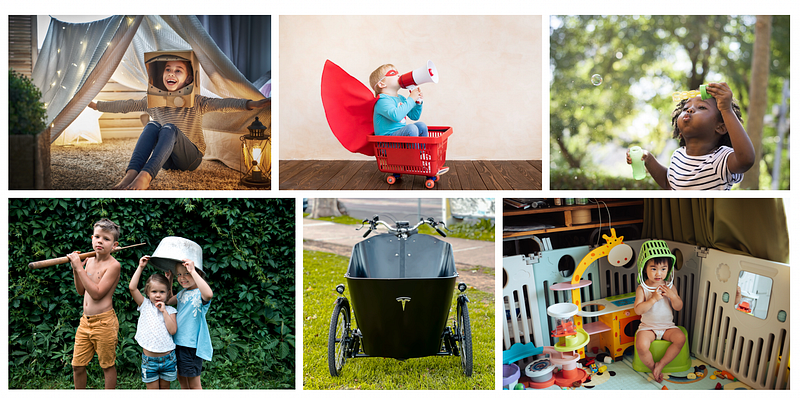
Children have a special way of looking at things outside the box-this is why we have sayings like “Out of the mouth of babies” and “kids say the darnedest things”. These phrases are used indulgently when kids say things wise beyond their years, or that we can begrudgingly admit are true.
Why are children able to see things so clearly when we understand the world much better than them, have a more developed brain, and have a better grasp of logic?
This is because children have an all-powerful tool in their possession-creativity. More specifically, they can daydream about anything. A child’s imagination is unparalleled, a cardboard box is a spaceship, a stuffed toy a real dragon, a stick turns out to be Excalibur.
This valuable instinct, to create a world out of thin air, is one all children have. They use creative thinking to discover new information. The question they ask is, “What if I…?”. This is why children do seemingly crazy things like sticking a straw up their nose or playing in the street.
To an adult, it looks like a child being silly, but to the child, they can now see the bubbles they blow in their milk, and the asphalt of the road is keeping them warm as they play.
As we teach kids a set of established rules and logical reasoning, this instinct is buried behind walls of conformity. These rules and logical deduction are called convergent thinking- it involves knowing things to be true and applying that knowledge to figuring out an answer. “If it’s too cold to play outside, go inside.”
This process isn’t inherently bad-convergent thinking is what helps us narrow down good ideas to ideas that will work. The issue lies in too much importance being given to convergent thought.
We see this commonly in praising sciences and maths over traditionally artistic pursuits such as cooking and theater. As we teach children the one and only right way to find answers, they are unable to practice creatively finding solutions.
2. What Daydreaming Brings to the Table
Daydreaming is not a priority in our day-to-day lives. There are deadlines to be met; besides, we know our favorite car is outside our budget, so there’s no point in wasting time.
The value of daydreaming is that it opens a pathway to divergent thinking. Divergent thinking is what we mean when we say we need to think outside the box. It’s dreaming big and seeing possibilities. It allows us to use creativity as a tool to solve problems and create new and surprising things. In my case, daydreaming allowed me to see possibilities where before none had existed.
I was never interested in cars as a hobby; I knew their importance and functions, but had no fascination with them beyond that. Then, two of my coworkers introduced me to Tesla cars. My first coworker follows Tesla cars closely, fascinated with the design and functionalities. My other coworker owns a Tesla car and was kind enough to give me a free ride. This car ride inspired me to set a goal of having my own Tesla.
This was, of course, a challenge, because Tesla cars are expensive as a result of their amazing design. This led me to start a joke project that quickly became serious; to create my own Tesla.
I say this started as a joke project because the concept sounds crazy. Only through setting aside the strict logical rules I had learned could I see potential solutions to the big problems.
To create my own Tesla, I had to look past the constraints of traditional rational thinking, and daydream what the perfect Tesla looked like to me. In my case, this was a bike, because I had always loved riding bikes.
By daydreaming about this, I was able to find a better way of doing things. Instead of allowing the world to shape my dream to its rules and regulations, I thought outside of the box to shape the world to my dreams.
By daring to dream, approaching the challenge with childlike bravery, and using a dash of craziness, I was able to create my Tesla bike with the help of my best friend, who happens to be a designer and bike lover.
The reactions I get on the street show me that this sense of creativity and wonder is something people react too strongly.
As I cruise the streets, people laugh and smile in pleasure. The surprise and fun of seeing a peculiar model with a Tesla sign have made this a special model that opens creative possibilities.

3. Try a Different Approach
Children seem to have everything figured out with the confidence and ease that adults often envy. As adults, we need to harness this childlike creativity to free ourselves from the stifling rules we’ve been taught that hold us back from solutions.
Rather than saying, “Because I don’t have enough money, I can’t have a Tesla.” We can choose to approach the question from a creative viewpoint; “What would the perfect Tesla look like for me?” This leads to an openness that makes space for answers, rather than being stonewalled by problems.
If we refuse to entertain a thought because it’s “impossible” we cut ourselves off from seeing the options that can get us to a solution. What are the possibilities? Allow yourself to think big. Choose to recognize only possibilities- not the impossible that weighs us down and holds us back. By choosing to focus on the possibilities, we give ourselves tools to discover options that support those possibilities.
4. Free Yourself by Valuing Small Wins
Daydreaming serves another important function; motivation. Reaching a roadblock with no easy way around can be demotivating. If we focus only on the logical reasons things will not work, we may never see the creative answer that lies just beyond the roadblock.
Celebrating the small wins reinforces the creative thinking part of our brains. It allows us to maintain the momentum that can help carry us through difficult problems. Valuing the small wins along the way that brings us to the finished product helps fuel our creativity through a mentality of “If I could solve X, then I can solve Y.”
Rather than focusing solely on the end product, I invite you to have fun with the process. Play around with your materials. How do they fit together? What does that shape make? What if I do this? What does this do? This activates a childlike ability to create that circumvents what we formerly believed was impossible.
5. Find New Solutions and Realities
We frequently teach children to get through unpleasant tasks by making them fun through teaching them using games and competitions or singing songs like “The Clean Up Song” in kindergarten.
We teach concepts by asking children to write short stories about them, participate in plays, or create science projects. As children get older, and we can teach them the logic behind why they should clean up after themselves and why learning is important, we abandon these concepts of fun, creativity, and daydreaming.
Using your creativity and daydreaming when pursuing your goals can allow you to find previously impossible solutions. By using creativity as an instrument, you can make things happen regardless of previously held limitations. Tap into a childlike imagination that opens up worlds of possibilities.

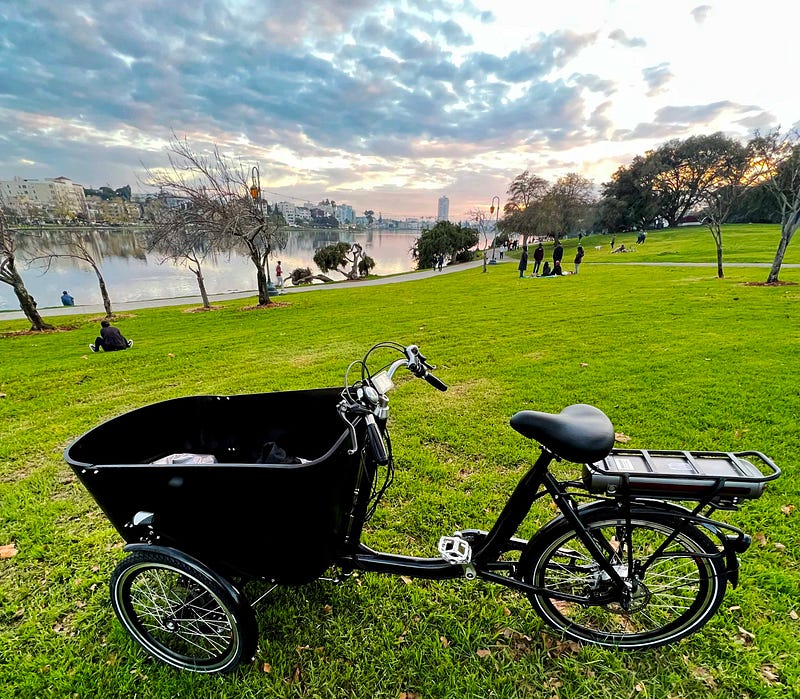
Photos by Ben Areno, featuring my talented friend Gregory Sarkis-Kelly, who helped me build the first Tesla bike.


