
The Importance of Continuous Learning
The best way to help yourself is by continuously learning, and consciously choosing the information you consume. Let’s see why and how.
Human beings need to keep learning throughout their lifetime. No age at which any human stops learning and challenging their minds.
The day we stop learning is the day we make a verdict on our brains to die and our awareness to be altered and manipulated easily.
In this modern age, information is everywhere, including false information. It’s important to understand that not everything on the internet should be believed or adopted. This is why one must consume knowledge from trusted sources and choose carefully what they consume.
To be able to tell what’s fake and to learn what to trust, you must develop critical thinking skills to help you define things as they are. In the upcoming sections, I will discuss tips for ensuring your learning sources are trusted. But first, let’s discuss further the importance of learning for the human brain.
Learning Importance For Brain and Memory
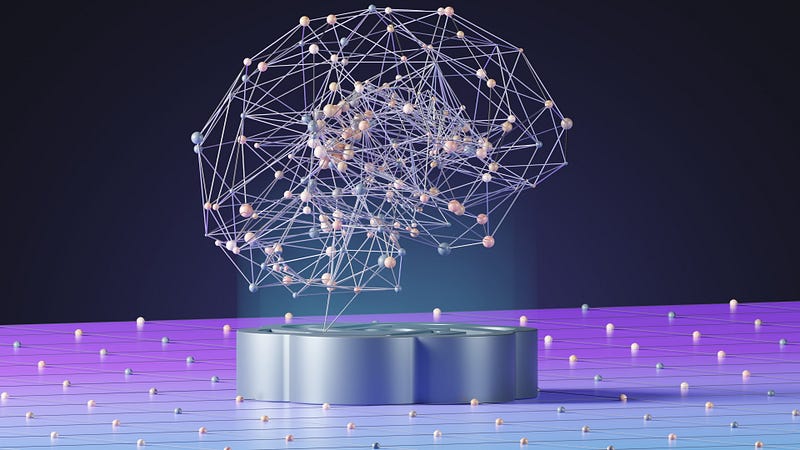
The human brain is a dynamic and adaptive organ. It possesses an extraordinary ability to change and grow throughout our lives, a phenomenon known as neuroplasticity. Central to this capacity for transformation is learning, which plays a fundamental role in shaping our brains and influencing memory.
Learning is not a finite process reserved solely for classrooms and textbooks; it is an ongoing, lifelong journey.
Every experience, from the simplest of daily tasks to complex academic pursuits, results in changes within the brain’s complex neural networks. This reshaping is closely associated with memory formation and retention, as well as overall cognitive function.
Numerous studies and scholarly articles have highlighted the significance of learning in brain health and memory. “The Brain That Changes Itself” by Norman Doidge and “How We Learn” by Benedict Carey are just a couple of examples. They explore the concept of neuroplasticity, showcasing how the brain can adapt and reorganize itself in response to new information and experiences.
Moreover, research published in esteemed journals like “Nature Reviews Neuroscience” and “Neuron” often investigates the neural mechanisms underlying learning and memory. These studies have revealed that learning is formed by multiple processes involving the strengthening and formation of synaptic connections between neurons. These connections, known as synapses, are essential in consolidating memories and acquiring new skills.
Learning influences the development and maintenance of cognitive abilities. In a society where lifelong learning is encouraged, it is essential to recognize the direct impact on cognitive health.
Engaging in new activities, acquiring new knowledge, and challenging the mind all contribute to enhanced memory and cognitive function in individuals of all ages.
In conclusion, the importance of learning for the human brain and memory cannot be overstated. It is a continuous, transformative process that enriches our lives and keeps our brains active and healthy. As we seek to expand our understanding of this complex relationship, we turn to a wealth of research and literature that underscores the fundamental role of learning in shaping the human brain and enhancing memory.
False Learning

False or fake learning refers to the acquisition of information or knowledge that is incorrect, misleading, or based on misinformation. It can occur when individuals believe they are learning something valuable, but the information they are exposed to is not accurate, reliable, or based on sound principles. False or fake learning can result from various factors, including:
1. Misinformation: Learning from sources that provide incorrect or inaccurate information, often due to a lack of fact-checking or the dissemination of biased or unreliable content.
2. Pseudoscience: False learning can occur when people engage with pseudoscientific concepts or ideas that are not supported by scientific evidence but are presented as factual.
3. Confirmation bias: When individuals only seek out information that confirms their pre-existing beliefs or opinions, they may engage in false learning by not considering alternative viewpoints or evidence.
4. Misleading educational resources: Educational materials that are poorly designed, outdated, or based on inaccurate data can contribute to false learning.
5. Lack of critical thinking: Failing to critically evaluate information and accept it at face value can lead to false learning.
6. Educational fraud: Some institutions or individuals may claim to offer educational opportunities but provide subpar or fraudulent instruction, leading to fake learning experiences.
7. Overconfidence: People who believe they have mastered a subject or skill but have not done so may suffer from false learning due to overconfidence in their abilities.
It’s essential to be critical consumers of information and to seek out reliable, evidence-based sources for learning. Developing strong critical thinking skills, fact-checking, and staying open to alternative viewpoints can help mitigate false or fake learning. Additionally, it’s important to be aware of misinformation and disinformation in today’s information-rich environment, where false or misleading information can spread rapidly through various media channels.
The solution: critical thinking skills
Fact-Checking organizations: Organizations like FactCheck.org, Snopes, and PolitiFact are dedicated to fact-checking and debunking false information.
Media literacy organizations: Organizations like the Center for Media Literacy and the National Association for Media Literacy Education offer resources and tools for enhancing media literacy skills.
Critical thinking and education:
- The Critical Thinking Community: The Critical Thinking Community offers a variety of resources to improve critical thinking skills.
There are also numerous online courses from respective professors about how to develop critical thinking skills.
How to Choose Reliable Knowledge Sources?
All action results from thought, so it is thoughts that matter. — Sai Baba
Consuming information from trusted sources is essential, it’s like trying to eat healthy food to make sure your health is kept well. It’s the same for the knowledge you consume, it must be checked they are coming from good sources, to make sure your mind and actions are healthy.
Books
There are tons of books now, ones that are so short to an extent that they don’t provide real value, and others that are written by authors who are specialized in the field they are talking about.
A bad book example is, reading positive thinking books from people who decided to come up with theories without any research or analytical proof and claim that their theories are true just because they worked for them.
A good book example is written by an author who is a recognizable social scientist, psychologist, and/or neural scientist, describing how human minds work in different situations, backing up his theories with scientific proofs, statistical analysis, papers, or books. That is a good trusted source.
Online Content: Newsletters, Podcasts, YouTube videos and Blogs
Books are not the only way to get respectful knowledge and awareness nowadays. Different online sources suit almost all tastes.
Numerous Newsletters discuss certain subjects, from Tech to Music, to Psychology to Parenting, and politics, it’s all there. The trick is to choose a person who writes based on solid evidence for the topics that need proof like politics, psychology, religion, and more. For the topics that don’t need actual proof, and are related to personal experience, then it’s okay to choose an author whose writing is worth reading and whose experience is worth learning from.
Newsletters are a good source of knowledge and they can be a good alternative to people who don’t like reading long content like books or don’t have time for it but still want to develop a reading habit.
Podcasts and the rest of the online sources are not different from how you should choose your sources carefully.
In general, try to apply critical thinking to anything you read, listen to, or watch online. Don’t take things as is, instead try to ask “Why?” and “How?” all the time, and try to validate the information from the sources the content creator mentions, so that you validate their assumptions and theories, and at the same time expand your knowledge even more.
Final Thoughts
Good Knowledge Sources Are Like “Personal Mentors”
I like to think that good knowledge sources are my mentors, they can teach, guide, and pass human experience along. And, that’s what a mentor is about.
One of the remarkable aspects of these mentors, in the form of books, articles, experts, or educational resources, is their constant accessibility. You can reach out to them at any time, without scheduling appointments or waiting for the right moment.
Whether you have a specific question in mind or a problem to solve, you can always count on these mentors to offer a wealth of information and guidance.
In essence, good knowledge sources are more than just information; they are our personal mentors, nurturing our intellectual growth, and helping us become better versions of ourselves.
Find me on X/Twitter | Checkout my 💻 Tech Newsletter and 📚 Books Newsletter


