
The Importance of Calming Our Athletes Minds and 5 Quick Tips to Make it Happen.
Athletes of all ages, from young to pro, come to the field/court/rink/gym/game/practice with a myriad of distractions and demands on their attention.

Photo by Roberto Salinas on Unsplash
As coaches, we spend most of our time on the development of their physical skills. What about all the potential variables that can take the athletes’ mind away from doing well in sports?
Some examples around stress or anxiety in the sporting world:
o created by something at home or school
o created by a relationship issue
o created by worrying about performance and concerns over doing well
o worried about outcome and disappointing others
What the athlete brings to the practice and playing field is often beyond the attention of the coaches, parents and teachers. Yet, this can have a massive impact on how they are able to develop.
It is only at the very highest levels that organizations invest in support around mental training for better performance, yet it affects all levels of performance. It affects participation rates and attrition. If our role as leaders is to support the development of the person, then we must address the mental aspect of being an athlete.
“Awareness is curative” — Tim Gallwey, author of the Inner Game
Below picture courtesy of (https://theinnergame.com/)
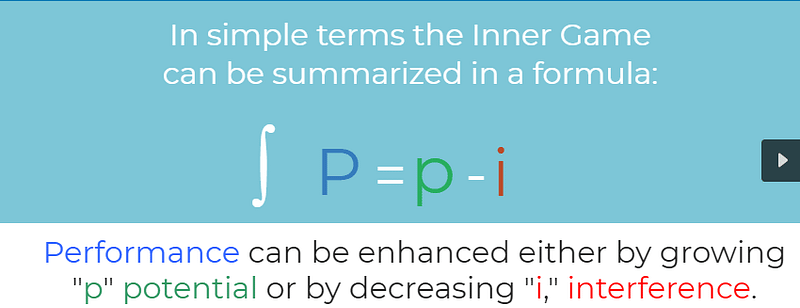
Growing potential is what our goal is as leaders, yes? That is what drives us to spend time, commit to all that it takes to support others.
A big part of that is, as Tim Gallwey describes, decreasing interference. Removing distraction. Helping with focus.
Decreasing interference can be supporting by calming the mind.
As leaders of young people, it is critical that we invest some attention to helping our troops calm their mind.
Here are 5 ways to increase our awareness, and participate in preparing your athlete for improved mental performance and development.
1. Teaching athletes the importance of calming their minds, starts by calming our minds. Some simple meditation tips on focusing on breathing can be built into practices/cool down/warm ups and even off field sessions for athletes, coaches, assistant coaches and all involved.
2. Focus on process and not only on outcome. We have heard over and over again in The Physical Movement interviews. Developing an area of focus around the process of getting better will help connect the blueprint towards competitive outcomes. Not the other way around.
3. Help your athletes let go of trying to make everyone happy with their performance. In team sports, coaches often talk about playing for the crest on the front of the jersey and not name on the back, but to play to avoid disappointing others is not productive. There is a balance here.
4. During practices and games, athletes often mirror the personality of the coach. Hyped up coaching leads to hyped up performance. In sports like baseball and golf, hyping up the energy levels has not been proven to allow the central nervous system to focus on the task at hand. Some try hard sports may be helped with this approach, but more often that not, an understanding of where to focus energy is a more productive approach to better performance and development.
5. Integrate some fun into the process. After all athletes are playing a game. 100% serious 100% of the time, makes it hard for anyone to enjoy what they do. What would you rather have, athletes enjoying and engaged in what they do, or fearful that a poor performance will result in negative consequences? Everyone has different methods, but I would contend that young athletes, non-professional athletes need more fun in their activity.
In conclusion, an awareness that your athletes, students, children bring lots of distractions to the playing field on a regular basis. There are often many stresses in their lives that we don’t see, but they are there. An awareness that this is a topic worth addressing in their development and performance is step 1. Step 2 are some examples on how to address and practice.
By finding small, consistent ways to address the mental side of preparation and performance allows you to better support your athlete in their development and performance.
That is a process and outcome worthy of some effort!
Some references around calming the mind and athletics:
A useful resource:
Originally published at https://thephysicalmovement.substack.com.


