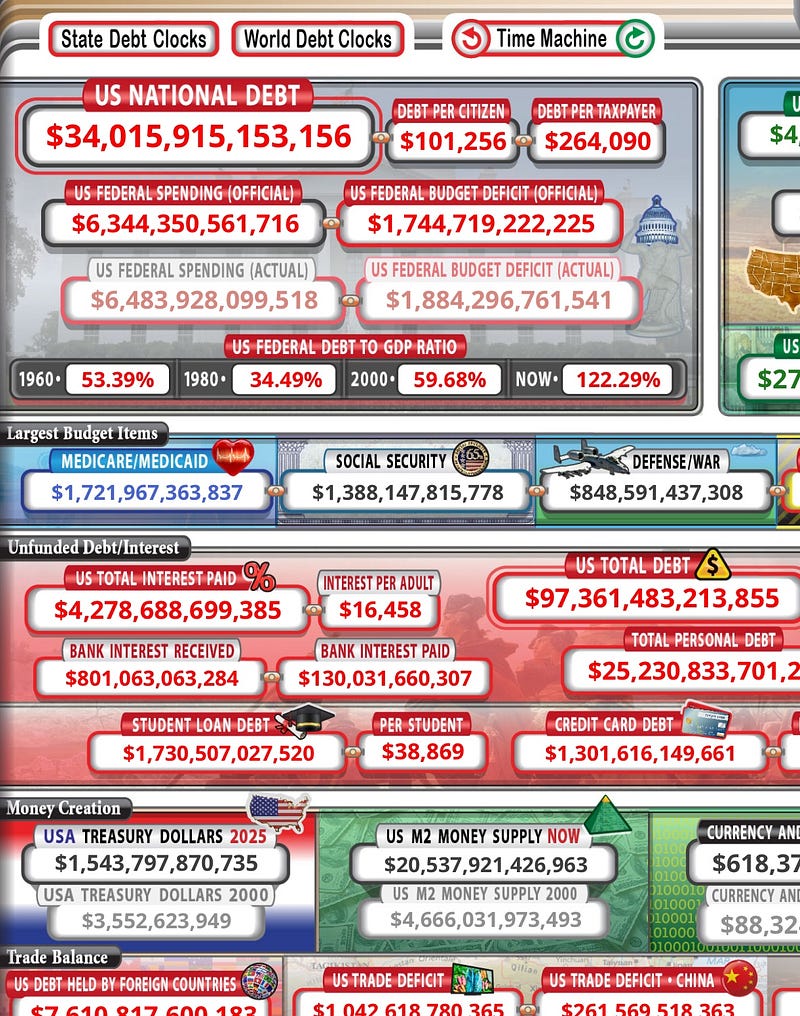
The Impact of Excessive Dollar Printing on US & Third World Economies
Exporting print money and not technology, is prime income of America now
The printing of excessive dollars has a profound impact on both the US economy and third world economies. This practice, also known as quantitative easing, involves the creation of new money by central banks to stimulate economic growth. While it can have short-term benefits, such as boosting investment and consumption, it also carries long-term consequences that can destabilize economies. This article will explore the economic ramifications of excessive dollar printing in the US and the implications it has on third world economies.

The Economic Ramifications of Excessive Dollar Printing in the US
Excessive dollar printing in the US can have several economic ramifications. Firstly, it can lead to inflation. When more money is injected into the economy, the purchasing power of each dollar decreases. This means that goods and services become more expensive, eroding the value of people’s savings and reducing their standard of living. Inflation can also make it harder for businesses to plan and invest, as prices become more unpredictable.
Secondly, excessive dollar printing can contribute to asset bubbles. When there is an abundance of money available, investors may pour it into assets such as real estate or stocks, driving up their prices beyond their intrinsic value. This can create a false sense of prosperity and when the bubble bursts, it can lead to a financial crisis. The 2008 global financial crisis, triggered in part by excessive dollar printing, serves as a stark reminder of the risks associated with this practice.
Lastly, excessive dollar printing can lead to a devaluation of the US dollar itself. As the supply of dollars increases, its value declines relative to other currencies. This can have a negative impact on international trade, as imports become more expensive while exports become cheaper. It can also cause capital flight, as investors seek more stable currencies, further weakening the US economy.
The Implications for Third World Economies
Excessive dollar printing in the US also has significant implications for third world economies. Firstly, it can exacerbate currency mismatches. Many developing countries rely on dollar-denominated debt, and when the US dollar weakens, their debt burden increases, making it harder for them to repay their loans. This can lead to financial instability and economic recession in these countries.
Secondly, excessive dollar printing can cause commodity price fluctuations. When the US dollar depreciates, commodity prices, which are predominantly priced in dollars, tend to rise. This can have a devastating impact on developing countries heavily reliant on commodity exports, as their terms of trade worsen. It can exacerbate poverty, inequality, and social unrest in these nations.
Thirdly, excessive dollar printing can create a volatile global financial environment. As investors seek higher returns, they may engage in riskier investments in emerging markets, lured by the abundance of liquidity. However, when the tide turns and the US tightens its monetary policy, these investors often withdraw their funds, causing capital outflows and financial turmoil in third world economies.
The impact of excessive dollar printing extends beyond the borders of the US, affecting third world economies in various ways. From currency mismatches to commodity price fluctuations and financial volatility, the consequences can be severe. It is essential for policymakers in both the US and developing countries to carefully manage the printing of dollars and its potential ramifications to maintain economic stability and minimize the negative impacts on vulnerable economies.
Examples:
Turkiye (Turkey) now is facing 40%- 50% inflation now on Lira now. People are rushing to buy US dollars or Euro right? Wrong, They do not know that US dollar has 5–10% inflation. Indeed Turks are donating 10% of their hard work money to Uncle Sam.
In the world of uncertainly, you should be away of any kind of paper money. So what is the solution for Turks to keep their true value of money is to buy Gold or Land or a physical commodity not another worthless paper money. Something like Gold or Land, which does not drop in real value and can be touched. Stay away from any currencies, no matter paper, or digital currency, because soon you will lose all your savings if you do so. Global inflation is on its way. I repeat Gold or Land or similar commodities.
Because of this, US inflation will soon be in two digits. It will hit hard. That might be the same for Europe. Now the sole income of some countries are exporting their worthless money. Remember national American debt is $34 Trillion and country is on the edge of collapse. Sell your dollars, sell your Euros, and convert them to Physical Commodities or lose all your life savings.
This is my message to both Americans Europeans and Third world countries