The Idea of Race
A short snippet from my textbook, due to be released in December.
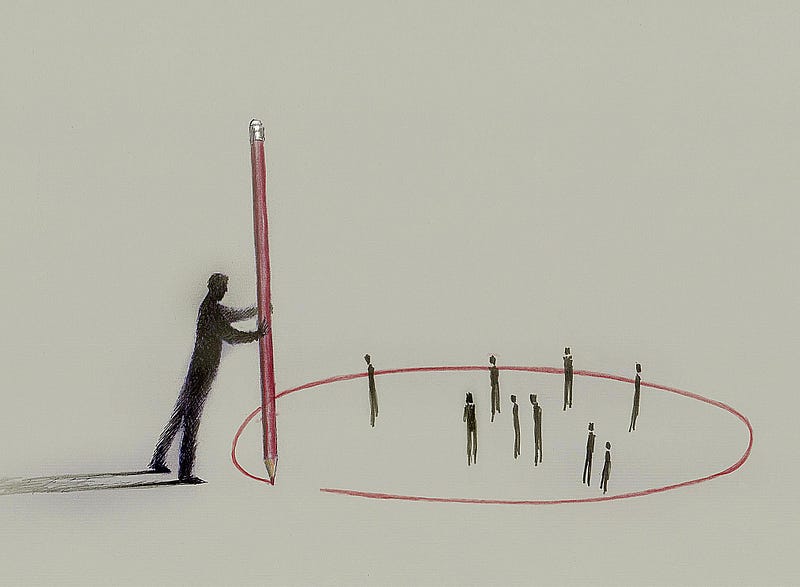
Race is a manufactured concept. Biologically, there is only one human “race,” the species homo sapiens to which all people belong. The idea of race as a biological distinction emerged in the 1700s, most notably with Carl Linnaeus who established much of the taxonomy of organisms in use today. He divided homo sapiens into four varieties: Europeanus, Americanus, Asiaticus, and Africanus. Some people took the taxonomy one step further, claiming that there were multiple species of human beings with Europeans a species that had a different origin than other species that originated in other continents. By the late 1700s, it became a common “intellectual” argument that the supposed cultural and moral superiority of whites over non-whites was proof of inherent biological differences between them.
The prejudicial conceit of biological race seeped into the thought of otherwise intelligent philosophers. David Hume stated that all non-white species were “naturally inferior to the whites” and “there never was a civilized nation of any other complexion than white.” Immanuel Kant wrote that “The Negroes of Africa have by nature no feeling that rises above the trifling.” G.W.F. Hegel felt that Africa “has no historical interest of its own, for we find its inhabitants living in barbarism and slavery in a land which has not furnished them with any integral ingredient of culture.” Even J.S. Mill in On Liberty did not extend liberty and the right to not be harmed to the immature “barbarians” of other races.
The idea of biological race gained significant momentum with the development of theories of biological evolution, most notably Herbert Spencer in 1857 and Charles Darwin in 1859. The bogus field of scientific racism attempted to demonstrate that Europeans were a superior race through comparative anatomy, dividing humanity into up to seven separate races, roughly parallel with the continents. Because Europeans and Americans of European ancestry were the people creating these classifications, the European race was seen as superior to all other races.
Dividing humanity into races is to try to make objective what is fundamentally subjective — to justify personal prejudice. Modern conceptions of racial differences adopts a very old assumption that people are born with inherent characteristics. Way back in Chapter 2 we saw Aristotle’s idea that some people are natural slaves — some people have inherent characteristics that mean they are suitable only for the menial labor of a slave. Aristotle was hardly alone in the assumption that some people are of noble birth possessing superior characteristics to others. Most people engage in some form of thinking that certain groups of people are born with inferior traits. Race is one common expression of such prejudice.
The assumption that one group is superior the others inferior can be attached to any difference among people — economic status, profession, religion, ethnicity, and the idea of race. Racialism is the assumption that people are born possessing particular characteristics common to all members of that race. Though racialism does not necessarily assume that some races have inferior inherent characteristics to other races, it provides the intellectual justification for racist attitudes.
Some philosophers in the mid-1800s began to critique the idea of race as a justification for slavery. The law in the United States stated that Black people had no civil rights — not even a right of self-defense if attacked by a white person. Alexander Crummell (1819–1898) began arguing in 1840 that civil rights should not be based on skin color as decided by governments but that civil rights are natural rights that pre-exist any rights granted by law. Crummell’s appeal to natural rights was similar to the natural law theory proposed by a number of philosophers, most notably, John Locke. Crummell said that the truth that all people, regardless of skin color, have natural rights can be inferred from the primary sentiments of our human nature. Civil rights are not abstract principles that can be arbitrarily decided but are derived from our human nature — sentiment for our fellow humans is part of what it means to be human. David Hume has similarly called for recognizing that our human sentiments is the basis for our moral judgments about what is right and wrong. Crummell added that we use our light of reason to understand the principles of natural rights and our human sentiment. Using reason we can see that Black people have natural rights, human sentiment, and human reason to understand moral wrong, and therefore we can understand that slavery and other indignities and wrongs inflicted on Black people are wrong.
The bottom line of Crummell’s reasoning is that Blacks are fully human, and are thus entitled to have their civil rights protected. This would seem to be the fundamental question of race: are non-white people full human beings? Philosophers of race, like Crummell, say that yes, of course, non-whites are fully human. From that fact they reject racialism and racism and ask how those prejudices have affected society and how they can be eliminated and the damaged they have caused rectified.