
The “Humans of New York” Creator Bursts into Tears — and Shows Us the Overwhelming Power of Passion
How to structure your life around your passion, so you can do what you love rather than work for money.
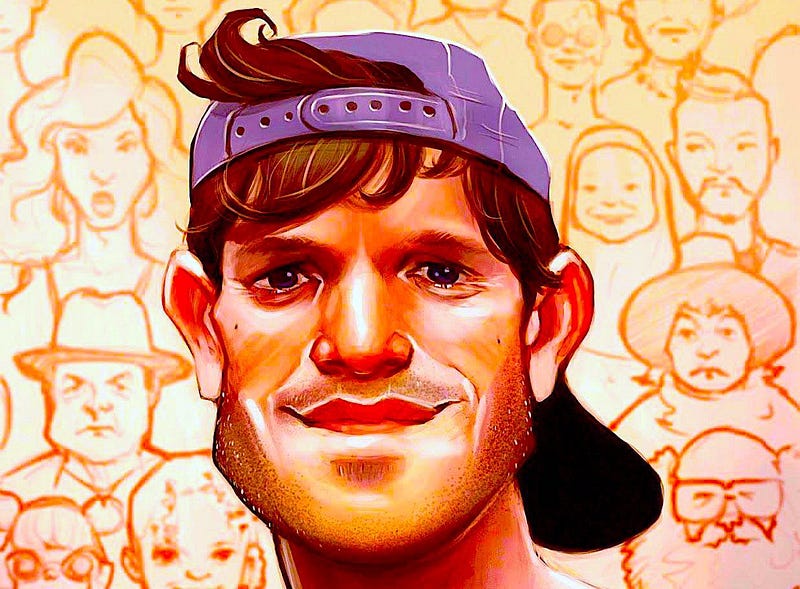
In 2018 I listened to an interview that had a major impact on me. It started out like any other interview of someone who has achieved a lot in their life.
It was the typical narrative of someone who left their career behind to follow their creative passion. The interview was with Brandon Stanton who created the largest photography project in the world called “Humans of New York.”
The first part of his career was spent in the world of finance as a bond trader. Making money to him, at that time, was nothing more than a game. Outside of work he’d take photos in downtown Chicago.
There came a point when he was laid off from his job during the 2008 Recession, where instead of spending his time making money, he wanted to play a game where he’d make just enough money, to where he could control his time.
The idea that grabbed him was to do something that was nourishing in the moment. Photography was how he chose to nourish and create space in his mind away from work and the game of money.
His reason to photograph every day had nothing to do with building an audience, or being successful, or because he was good at taking photos — he wasn’t. Brandon took photos because he loved it in the moment.
I wanted to structure my life around creating as much time for this as possible.
I want to make just enough money to where I can pay my rent, eat and photograph all day long.
To be more specific, Brandon wanted money for:
- Peanut butter and jelly sandwiches
- Eggs
- Rent
There was no money left for anything else and he wore the same shoes and clothes because he couldn’t buy new stuff.
“Eat, sleep and photograph all day long” was his motto.
Brandon became obsessed with his passion for photography. “It was like a treasure hunt,” he says. His dream was to take photos all day and earn a living from it. His life became that simple.
The start of Brandon’s passion for photography had nothing to do with photographing people. The first shots were of architecture and graffiti. He then progressed to taking candid shots of people.
The photos of people seemed the most unique compared to everything he saw on social media in 2008. So he took the next step and started stopping strangers in the street and asking to take their photo. “It was an extra layer of difficulty,” says Brandon.
I got the feeling while listening to Brandon that he was incredibly lonely at that point in his life. His passion for photography seemed like a way for him to be social and feel like he had a place in the world where he could fit in.
Candid photos vs. photos where the person gave him permission to take the shot — and they posed as if they were somebody — completely changed the game.
Random photos in the street are normally only taken of famous people.
Brandon took photos of people who thought they were nobodies, and made them feel like they were somebody. It was beautiful to hear this part of his story and how he used passion for something more.
The passion he discovered grew and grew as he went out every single day to take people’s photos. After trying several locations, he settled on New York for practical reasons. Not being able to afford a car was one reason. Having lots of people in one place was a close second.
As the process continued, Brandon began asking the people he photographed questions that led to conversations. The next iteration of Brandon’s passion was to begin interviewing the people he took photos off, giving them a unique voice. Then it became a 60–90 minute psychological interview with random strangers as his journey progressed. The output of these interviews, coupled with a portrait, became the stories for Humans of New York.
The learning process was unusual. He was so addicted to taking photos that he never tried to learn how to take a photo from an expert. Buying books or doing a course on photography just wasn’t an option for him because he was financially poor, and full of passion that took up all his time.
Taking photos and the act of it was what he loved, not sitting at home trying to work out how to take the perfect photo.
Put another way, getting an interesting person in the photo was far more powerful, he thought, than technical ability. Nobody was thinking of photography like that. By being that engaged and emerged in the process, he innovated.
Brandon says that if his idea of taking stranger’s portraits and interviewing them for his blog was original in any way, it was because he was so addicted to the process.
Curiosity was how he found the next photo to take.
What was odd is that in the early days, he would take fifty photos of the same person because he didn’t know how to take a photograph. This gave him options to choose from when he got home.
There was always one photo in the fifty he took that was good enough. As he took more and more photos, his photography skills got better and he could take fewer shots.
Huge vs. Daily
Brandon started out creating a huge art project where he was going to photograph 10,000 people. What changed was when he started posting the photos he took, daily, on social media.
The daily results kept him going far more than the idea of doing some huge project that would take years and perhaps go nowhere would. So he pivoted away from huge, and fell in love with daily. This made his passion for photography more personal and immediate.
Make no mistake, this daily practice was not easy.
He worked on thanksgiving. He worked on Christmas Eve. He tried not to go home.
He worked every single day and photographed all day long.
The process was nothing more than go out and take a photograph; come home and take a nap; go back out at nighttime and take more photos.
The daily obsession he followed fuelled his loneliness; his passion was the only thing to keep him company in New York where he only knew two people.
Passion always evolves
If you’ve read this far you might think Brandon’s passion is photography. That is what it started out as but that’s not what his obsession became.
Brandon had to get really good at asking strangers to take their photo. There was a unique art to this.
At the time —
His friends didn’t believe in his passion and thought he was crazy. His family didn’t believe in his passion. He had no photography experience.
The Moment That Brought Him to Tears
So far you have a man who is just getting by financially, is lonely and living in a new city, and who is not a great photographer.
Approaching strangers stopped his project from being a photography one. Brandon doesn’t even view himself as a photographer anymore.
What Brandon discovered about his passion, accidentally, is that everyday people were curious about the lives of other people around them but were too afraid to ask.
He discovered his skill was dealing with rejection, not taking photos.
Rejection on the streets of New York, though, was not always polite.
I’d go out some days and ten people in a row would make me feel like I’m some sort of freak. “No you can’t take my photo — get out of here!”
When nobody was paying attention to his work and he had been trying for so long after losing his job, it was tough on his psychology.
Brandon: “There were days when I couldn’t do it anymore and would go home and lay in bed.
Ahh…..[long silence]”
Interviewer: “You there?”
This was the moment were Brandon started crying during an interview with one of the most famous podcasters of our time. It was hard not to feel Brandon’s pain. I felt the same feeling of rejection trying to be a writer and having people tell me I was stupid or that I should shut up.
The hardest part of Brandon’s passion for photography — that evolved into a passion for talking with strangers — was the rejection. All the doubt, not having any money, and his battle with loneliness was tough.
Retelling what it felt like made him cry.
He felt the rejection all over again.
One Christmas there were two weeks where he didn’t see a single person he knew. All he had was conversations with strangers.
He spent Christmas Eve alone in a diner and his only coping mechanism was to go out and take photos to take his mind of everything. Taking photos was what kept his thoughts off how unlikely his dream was and how stupid of an idea people thought it was.
The act of doing his passion — rather than thinking about it — helped him overcome all the rejection.
The result of Brandon’s passion for speaking with strangers, interview them, and take their portrait turned into the most followed photography project in the world. (It’s more of a humanitarian project though.)
Takeaways
- Work on your passion every single day
- Fight the loneliness associated with doing your work
- Expect massive rejection
- Allow your passion to evolve
- Add a unique layer to a passion that looks normal (it can be small)
- Connect with real humans
- Utilize your emotion, courage, and vulnerability
- Make your passion about more than yourself
Final Thought
This interview with Brandon Stanton is one I go back to time and time again when I think about my passion for writing. When the interview reaches the halfway mark and he starts crying as he retells what it was like to be rejected on a daily basis, I feel his pain and shed a tear too.
I saw my writing dream in Brandon’s dream to connect with strangers, tell their stories, make them feel comfortable, document humanity, battle loneliness, live with very little money, and live fully present in the moment, away from the game of trading time for money.
Brandon shows us the overwhelming power our passion has to overcome adversity and make an impossible goal come true, while perhaps changing the world in some small way, in the process.
Let your passion guide you and see where it takes you. Like Brandon, it might surprise you and bring you to tears as you retell the story one day.


