
The Human Side of "The Great Resignation"
Or why we need to re-think the concept of work
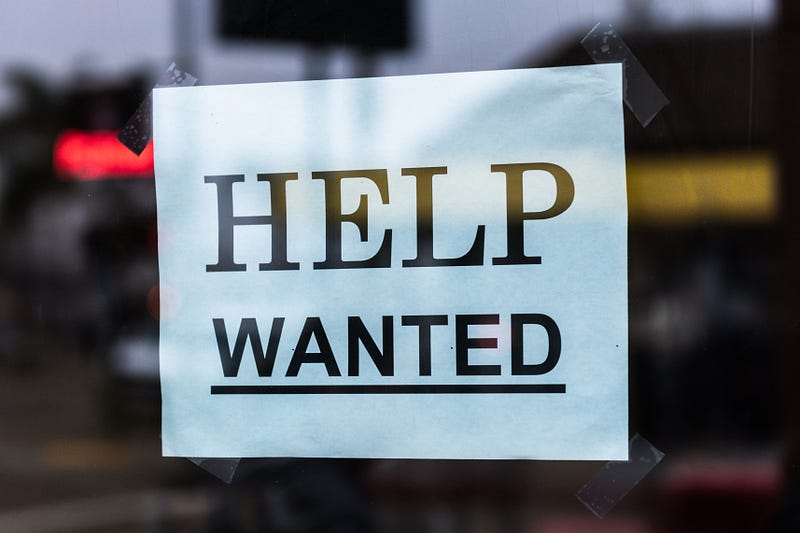
I recently discovered that the fastest-growing subreddit for the past few weeks is one on the subject of "anti-work." There, you can find hundreds of stories about workers standing up to abusive bosses and quitting. The stories go from humorous to cringe-worthy to frankly depressing. The entitlement of some employers when it comes to controlling their employees' time is heartbreaking.
Only in July, 4 million Americans quit their jobs (according to the US Bureau of Labor Statistics). By August 2021, there were 10 million job openings, and the number only seems to be growing. Since resignations peaked in April 2021, hundreds of articles and research papers are trying to explore what's driving employees to resign at such high rates. Some say that people are afraid to go back to work in person. Some claim that resignations are related to pandemic-driven burnout (especially in the healthcare industry). Childcare/schooling issues are cited as the main driver for women's resignations.
While each of these studies offers valid and insightful points to understand the problem, I believe the underlying issues are not adequately explored. The stories about working conditions, wages, and benefits (or lack thereof) portrayed in the subreddit I mentioned above are eye-opening and frankly infuriating. But more importantly, they shed light on a deeper issue, our collective concept of work.
Problem #1: Work=Personal Subordination
While hierarchical structures help organize work, and leaders are not only important but necessary, I believe we have a messed-up idea about subordination. Many of the resignation stories on Reddit revolve around employers stepping into employees' personal lives. The line between professional subordination and invasion of someone's time off, personal choices, political views, and religious beliefs is blurred at best and sometimes plainly ignored.
Most complaining employees also state that these personal details were never brought to the table when they got their job offer. So, normally, they expected to do what they were hired to do, according to the agreements they signed upon being hired. The entitlement that you can read on some of these stories is mindblowing. For example, this one, in which a manager is extremely concerned about “how the employee addresses management”, and not a bit worried about the corporate mistake that put the employee in a very difficult situation.
Problem #2: Employment=Healthcare
I firmly believe that healthcare is a human right. In one of the Reddit stories that particularly got my attention, the employer threatened to take away the employee’s health coverage if they didn’t show up to cover for a sick colleague. I read many others in which people remained in toxic work environments because of chronic health conditions or sick children. When our primary livelihood is tied to our employment, standing our ground in front of abuse becomes nearly impossible.
Problem #3: Employment is Meritocratic
Since I was in school, my teachers told me that they were rating effort and not results. While I believe that students should be graded according to personalized standards, effort should be graded differently. We learn that merit is as important or more important than actual results from very early in life.
Employees who participate more in corporate events, work more hours than those agreed upon (and paid for), or do things that others are unwilling to do are evaluated higher than those with excellent performance and results. Employees are evaluated more on a personal level than a professional one, meaning that supervisors will take into account things like how “friendly” they are, how much longer they stay after their shifts end, or how much they defend the company culture.
A Freelance Approach
Before I move forward, I would like to clarify that I think freelancing is not the same as the gig economy, which is employment disguised as freelancing to avoid paying benefits to workers (I’m talking about you, Uber, Doordash, Lyft, and all other similar brands).
Now, I’ve been freelancing for a long time, and, while I understand this is not the best approach for everyone, there are some intrinsically democratic aspects to it.
- Because I’m not a part of my client’s businesses, they don’t expect me to “take one for the team”. We agree on a product or service and I get paid when I deliver it.
- As an external contractor, most of my clients don’t even ask about my religious beliefs or political views (which should be the norm for any kind of professional exchange).
- There is no sense of merit involved; no expectation of overtime, no evaluation on my personal exchanges with peers, and no invasion of my personal life.
- Freelancing is a balanced exchange. If I do a good job, my clients get what they need and my business grows.
The only thing that would be missing is, of course, healthcare. And advocating for universal healthcare needs to be a shared responsibility.
I firmly believe that companies who are really looking for ways to retain talent should apply these simple, yet very effective principles. People don’t need a gym pass, unlimited Starbucks cards, or ping-pong tables. What they need is a sense of growth, to be treated as professionals (regardless of their seniority and/or position), and basic human respect.


