
The Hostage
Don’t put God in a box
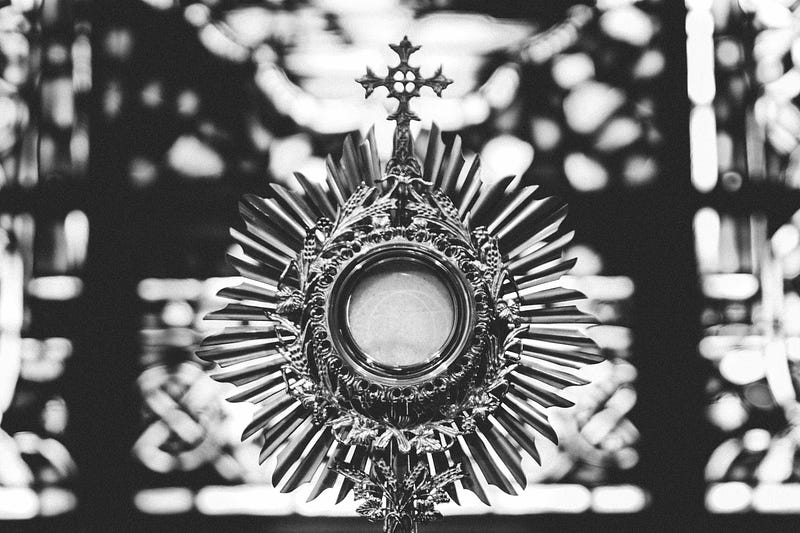
Father Digby Cuthbertson is relishing his role as a curmudgeonly old man. He has been preparing for this position all his life. His body, mind and spirit are now finally, in his seventies, perfectly matched to each other.
He has blotted out the memory of his infancy and childhood entirely, so that he finds it as difficult as his students to imagine that he ever ran around in short trousers or climbed trees. If he ever talks of his youth, what he means is his intellectual formation at the seminary in Cork, followed by those blissful years at the English College in Rome, with no responsibilities other than the acquisition of knowledge.
Now he is so much a part of the furniture at the De La Salle Seminary that, at the beginning of each academic year, the seminary’s course directors automatically construct their timetable around Digby’s sessions of Dogmatic Theology and Church History. These have been fixed in their current timeslots for so long that it is unthinkable that they could ever be moved.
If the priests in this Diocese have one thing in common with each other, it is the memory of Dogmatic Theology with Father Cuthbertson on Tuesday and Thursday afternoons.
One might think that after forty years of teaching the same subject, Father Digby might be prone to running through his lessons on autopilot. Not so. It never fails to astonish and petrify his students that he engages afresh with every class that is entrusted to him, not only memorizing all of their names but also seemingly committing to his awesome memory every one of their utterances, whether trivial or profound.
“Mr Stephens suggests that for an Atheist to maintain the non-existence of God, in the absence of proof of God’s existence or non-existence, is a matter of Faith rather than of reason.
Now those of you who were paying attention three weeks ago may remember this same Mr Stephens suggesting that it was perfectly rational for us to deduce that the Loch Ness monster does not exist because of the lack of reliable evidence to the contrary. Would anyone like to help Mr Stephens to square this particular circle? Would Mr Stephens like to retract either of his assertions?”
It is, feels Father Digby, rather a good life.
In between his scant teaching hours, he fills a part-time role as the warden of the Old Library, to which few staff and even fewer students ever venture.
There he can follow the threads of the questions which have exercised his mind for years. Were the Gnostic, Illuminist and Alumbrado movements completely separate heresies or did they have the connective tissue of a shared philosophical approach?
And, because he makes the rules in the library, he can roll himself a cigarette, with infinite patience and precision, to smoke while he is ruminating on the results of his quest.
-Father Digby, I’m so pleased I’ve found you. - Where else would I be at this time of the day? - We tried your room first. - We? - Father Tim and I have been looking for you. Tim took a call from the Palace. Apparently the Bishop needs to see you urgently. - Really? Then the call was to advise us of his imminent visit? How kind. - Erm. I think the idea was to get you to visit His Grace. - Nonsense. I’m sure that Ambrose would suggest no such thing. If there is a matter of great urgency to be addressed, which cannot be dealt with entirely by telephone, I’m sure he will make use of his chauffered car service to come here in person, rather than expect a man of my years to find his way to the city. You did say it was urgent? - That’s what Father Tim was told. - Then I’m sure we can expect His Grace’s imminent arrival.
Bishop Ambrose Cahill is not in the best of humours. On the way to the seminary he is sorting through budget submissions in the back of his official car, in preparation for a long meeting back in the palace this afternoon. He is vexed to find that he has left behind the briefing document prepared by his assistant. It must be sitting on his desk, where by rights he should be sitting now himself, instead of chasing round the country like this.
In the absence of the summary, he is trying to get to grips with the detailed submissions, which are making his head spin. He has never had a great grasp of figures, his forte being more in the field of social engineering, the cut and thrust of church politics and diplomacy.
Now, having achieved most of his life’s ambitions, he feels he should be entitled to sit back and relax somewhat. But the work of the church grinds on and he is finding himself with an ever-increasing load of frankly unpalatable tasks, many of which he is unable to delegate.
- Did you want something, your Grace? - No, nothing, I’m fine.
He has been caught out by the driver while craning his neck to catch a glimpse of himself in the rear-view mirror, for lack of any other reflective surface to use. He is quietly content at the way the hair on the side of his head is turning to silvery grey. Distinguished, he repeats to himself, as though imagining a compliment being paid to him by some admirer.
The worst aspect of his current aggravation is that he knows he must suppress any trace of it if he is to secure the assistance he needs.
-Father Digby. It has been far too long. - Ambrose. I’m not so hard to find, surely. - I was always sorry that we couldn’t persuade you to take a more active role in diocesan management. You know that you have the respect of the clergy throughout the area. - Which might have dissipated had I become their overseer. - It seems such a waste of your talents for you still to be stuck in this place, with a brain like yours. - I think we have had similar discussions several times before. I’m afraid that I simply don’t have any ambition that you would recognize as such. Maybe you were given my quota. What brings you here, Ambrose? I’m sure that it can’t be anything trivial. - Do you remember the desecration that took place ten years ago at St Patrick’s Church? - I remember. The Sacrament was stolen for use in a Black Mass. The details were posted on the Internet for all to see and the diocese received a well-deserved reprimand from the Holy See for mishandling the situation. - We did what we thought best at the time. You may not be aware that I was the one advising Bishop Thomas on how best to proceed. - Yes, I think I was aware of that. - Digby, a similar incident occurred two days ago in St Edmunds. - Father Norbert’s parish. - Exactly. Didn’t the two of you attend the English College together? - We were contemporaries, certainly. What exactly happened. - Well, I’m sure you know that Father Norbert’s views on liturgy and canon law show a certain…inertia with regard to change. His is the last parish in the diocese still to have traditional Benediction every week, latin hymns and all. He was the last priest to turn the altar to face the congregation and has fought a rearguard action against receiving Communion in the hand. He even tried to resist the introduction of the sign of peace. Said he didn’t think people shaking hands in church showed appropriate reverence for the Sacrament. - You didn’t come here to give me a litany of complaints against Father Norbert. - It’s background, Father. And it may be a factor in why his church was targeted. - You think he was singled out? - This is not a normal desecration, as far as I can tell. It smacks more of someone trying to make a point. And if you were aiming to criticize the backwardness of certain aspects of the church, what better person could you target than the most backward-looking priest in the whole diocese? - Let me ask you again. What exactly happened? - Father Norbert seems to have ignored many of the changes which have been introduced in recent years in respect of the Reserved Sacrament. At any given point in time, it appears, he is accustomed to leaving a ciborium containing anything up to forty or fifty consecrated hosts in the Tabernacle on the side altar of St Edmunds. - Outside of the Easter Triduum? - Yes. Just as a matter of normal routine. He has been keeping a stock waiting ready for sick communion or in case of running short at Sunday Mass. - I thought that this question had been resolved years ago. - So did we all. Father Norbert decided that he knew better than the Council of Bishops on this matter. That is a disciplinary matter which will be addressed separately. - So someone broke into the Tabernacle and removed the hosts. - It gets worse. There was no need for anyone to break into the church or the Tabernacle. The church was open, but unattended, during a time set aside for veneration of the Sacrament for several hours before the weekly Benediction service. The Tabernacle was unlocked. One host was on display in the Monstrance. That was taken, as were an estimated thirty more hosts from the ciborium in the Tabernacle. - I’m sorry. Are you saying that the altarware was left behind? - Yes. None of the gold was touched. Only the hosts. - So you suspect Satanism again? - That would have been my first thought. But we’ve had to rule that out. - Because? - Because of a note left behind in the Tabernacle. - What did it say? - I’ve brought it to show you. It would be comical if the situation wasn’t so serious. It looks like a ransom note from a B movie. Look, you can see each word has been cut out of a newspaper and pasted on. - Would you read it out loud for me please? - You can read it clearly enough yourself - Please just humour me. - Shouldn’t Keep God In A Box. Will Be In Touch. - Thank you. - Why was that necessary? - Why do you think that newspaper cuttings were used? - Some melodramatic impulse? - Any other possibilities? - So it would be deniable once the person was caught. - Or? - Digby, this isn’t a schoolroom. If you have a better suggestion, please let me hear it. - I was thinking more that the person might do it to avoid detection. That he or she might have sufficiently distinctive handwriting to give the game away. - And no access to a typewriter. - Fair point. And I asked you to read it out loud so that I could catch something of the cadence of the speech. There’s something peculiar about the diction. - Enlighten me. - Loss of the pronouns. Surely most people would say “You shouldn’t keep God in a box” and “I” or “We” will be in touch? - Perhaps. Do you think you can help me Digby? - I thought that was what I was doing. - I mean can you take this on? Track down who did it? - Have you a clear idea why you want to identify the thief? Do you know what to do once you find him or her? - I think you can stop saying she and her all the time Digby. I’m pretty sure we’re dealing with a male. Specifically, I think we are dealing with a headstrong young priest or trainee, possibly even one of your students. Someone who wants to cause severe embarrassment to the church hierarchy. - Which of your many assumptions do you want me to start dismantling first? - I’m open to correction. But I do want this matter to be cleared up quickly. I dread to think what might happen next. - I think your dread may be mainly of suffering that embarrassment you mentioned. What about the Sacrament itself. God held hostage. What are your feelings about that? - It’s an absolutely abhorrent thought. I would hate to see a headline like that in the tabloid press. - Again, Ambrose, I have to question your priorities in this matter. The important thing surely is what happens to the Blessed Sacrament rather than who knows about the situation. - Absolutely. I didn’t mean to imply anything different. Let’s just say it’s best in every respect if this matter is cleared up without delay. - And how exactly do you think I can help? - By doing what you do best. Thinking. Considering the little evidence we have available and pondering on who might have done such a thing. All you need is to give me a name. I can take it from there. And it doesn’t have to be a case that would stand up in court. The balance of probability, as assessed by Father Digby Cuthbertson, is quite good enough for me. - I assume you haven’t involved the police? - There’s no surer way of tipping off the press. No. I would rather not inform the police at all. What would we tell them? From their perspective, someone walked into an open church and stole some scraps of bread while ignoring altarware worth thousands of pounds. I doubt that they would take it terribly seriously. - What would you see as a good outcome? - In the best of all possible worlds? If I could, I would roll back time so that this had never happened. I can’t see a good outcome from where we are now. - So return of the hosts to Saint Edmunds would be an acceptable solution? - Do you think they may still be intact? - I think that it’s highly likely that our perpetrator holds the Blessed Sacrament in even greater reverence than Father Norbert. - Digby, if you know something or suspect someone already, it is your absolute duty to inform me now. - I know nothing more than you have told me and shown me, Ambrose. But I will only give the matter any further consideration provided you release me from any obligation to give you a name. - That can’t happen, Digby. Something like this cannot go unpunished. - I thought you wanted to roll back time. - What do you mean? - If the hosts are restored to their proper home, and the public is unaware of their temporary disappearance, then time has effectively been rolled back and there is nothing to punish. Saving the small disciplinary matter of bringing Father Norbert’s practices in line with the rest of his priestly brethren. - Digby, you’re going to drive me to distraction. - Thank you, Ambrose. I take that as your full agreement to my conditions.
-Father Michael, how nice to see you again. Thank you for coming over so promptly. - Delighted to have a reason to visit the place again. Message did sound rather urgent. - Ah, yes. There is quite a pressing matter we need to talk about. But before I begin, I need your absolute assurance that you will not interrupt me while I am speaking, either to confirm or deny what I am saying. And especially not to give me any confirmation. Do you understand? Not so much as a nod of the head. - I think I understand. But wh…. Sorry, I’ll just listen. - Good. There will be time afterwards for you to say your piece, but only once we take certain…ah…precautions.
-Fine. - Now I asked you here to discuss the removal of the Blessed Sacrament from St Edmunds a few days ago, which action I attribute to you. I am looking away from you deliberately at the moment. Please compose your face so as to disguise any alarm or fear before I continue. The reasons for my deduction are fairly flimsy and circumstantial, but would certainly be enough for Bishop Cahill to hang you out to dry. Unless you would like to spend the rest of your priestly days as an airport chaplain, I suggest you just continue to listen and entrust yourself to my intervention.
The clue you gave in your message was the clipped speech pattern, which I remembered from your time here. You didn’t trust yourself to write a kidnap note because of your distinctive florid handwriting style. But that note was pasted together from sections of your local free advertiser paper. I was able to replicate it from last week’s edition. And all stuck on with thick white school glue. I remembered hearing glowing reports of the work you’ve been doing with the children at St John’s Primary School.
All of which would have counted for nothing, had it not been that I could clearly remember your stance with regard to the Reserved Sacrament. You were one of only six students in the past forty years to react with outrage to the very concept. And you were the only one in all of that time to ask about the doctrinal and practical consequences that would ensue in a hostage situation, such as we have at the moment. Now I can sense that you’re bursting to tell me things. For your own protection, let us get onto a more formal footing. Please repeat after me, “Bless me Father, for I have sinned….”
- Bless me Father, for I have sinned… - It has been … how long since your last confession?
-Father Digby. - Ambrose. How nice to see you again. Two visitations in a week. My standing with the other members of staff will be riding high. - I’m here to tell you what you already know. That the hosts have been returned to St Edmunds. They were found in a little stack behind the Tabernacle this morning. - And Father Norbert is sure they weren’t there all along? You know how forgetful we old people can get. - Father Norbert is adamant on the point. And has evidence to back it up. - Really? - Yes. It seems that although the correct number of hosts seems to have been returned, four of them are not from the batch that was taken. - How does he know that? - It seems that the wafers he uses incorporate a simple pattern, a slightly raised cross. Four of the returned hosts were completely plain. For all we know they may be unconsecrated and four of the original hosts may still be at large. - Ambrose, I think I can set your mind at rest on these points without betraying any confidences. As I suspected, the thief was intent on making a doctrinal point rather than merely causing embarrassment to the Church. From the day on which he took the hosts he consumed one of their number each day, with all due reverence. That left a shortfall of four wafers, which he was keen to see restored, once I had convinced him of the desirability of their restitution to St Edmunds. - What did you have him do. - I assisted him in a practical manner. As I say a daily mass for the nuns attached to the seminary, I merely consecrated an extra four wafers, which I gave to him to make up the numbers. I was unaware of any difference in pattern and he doesn’t seem to have noticed it either. - Digby, you realize that you’re going to have to tell me this person’s name. - We have an agreement, Ambrose, which I couldn’t break even should I wish to. - But you know that under canon law you owe a duty of obedience to your Bishop. What if I should simply command that you divulge the priest’s name, for the greater good of the Church, irrespective of any agreement we had. - Then I would have to tell you that my obligation to you under canon law is overridden by an even greater and more compelling obligation on me as a priest. - Meaning what? - The confidentiality of the sacrament of confession. - Where does confession come into it, Digby? - Every word of admission and explanation given to me on this matter was given under the disciplines of the sacrament of penance. Even were you to have recourse to the rack and flame of the Holy Inquisition, I’m afraid I couldn’t tell you a word of what passed between us. -Digby, I know what you’ve done. You took his admissions under the guise of confession precisely so that I could not force you to divulge anything. - Ambrose, sometimes you are so astute I think you may yet make Cardinal.


