
The Horrifying Fate of World War II’s ‘Comfort’ Women
Amongst the many stories obscured in the pages of time, the untold suffering of thousands of Korean and Chinese women forced into sexual slavery by the Japanese military deserves a re-telling.
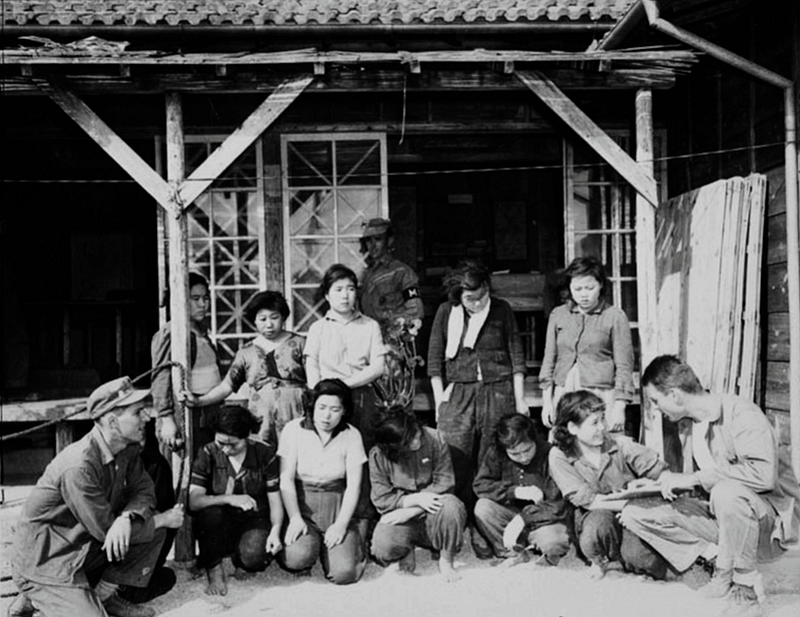

Lee Ok-seon was on a simple errand for her family when her life changed dramatically. A group of men in uniforms suddenly appeared, assaulted her, and forced her into a car.
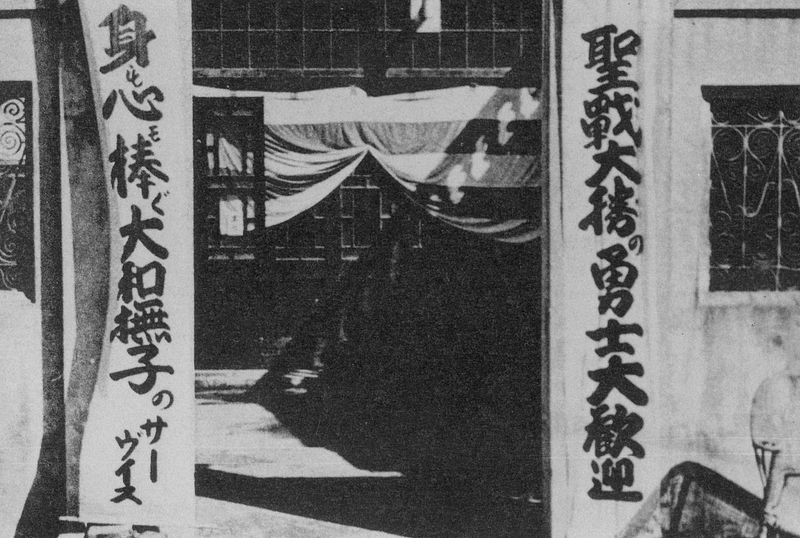
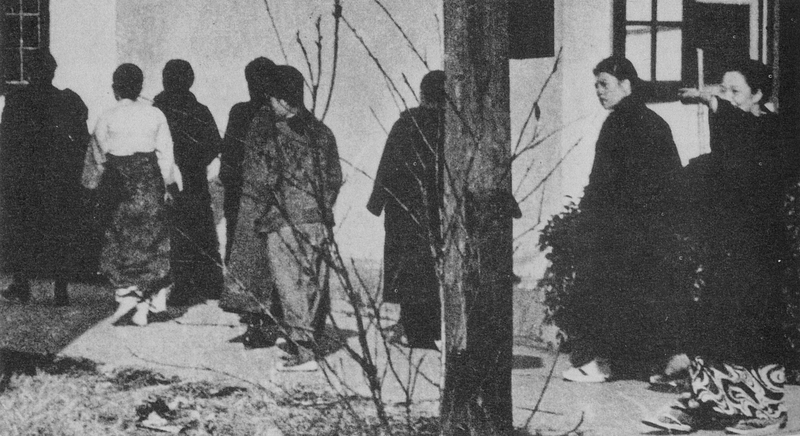
As they sped away, she was unaware that she would never again see her family. At just 14 years old, Lee’s normal life in Busan, a city in what is now South Korea, came to an abrupt end. She was taken to a so-called “comfort station” — essentially a brothel for Japanese soldiers — located in Japanese-occupied China. There, Lee became one of many “comfort women”, coerced into sexual slavery by the Imperial Japanese Army during the period from 1932 to 1945.
Nearly a hundred years have passed since the initial coercion of women into sexual slavery by Imperial Japan, yet the harrowing details of their ordeal remain deeply painful and a source of political contention in Japan and its former occupied territories. Documentation of these women’s experiences is limited; very few survivors remain, and it is estimated that about 90 percent of “comfort women” did not survive the war.
The establishment of military brothels by the Japanese military began in 1932 and expanded significantly following one of the most heinous events in Imperial Japan’s campaign to conquer the Republic of China and other parts of Asia: the Nanking Massacre. On December 13, 1937, Japanese soldiers initiated a six-week massacre that nearly obliterated the Chinese city of Nanking. During this period, an estimated 20,000 to 80,000 Chinese women were subjected to sexual violence.
The global outrage over these mass rapes was profound. Concerned about Japan’s international reputation, Emperor Hirohito directed the military to increase the number of “comfort stations,” or military brothels. This directive aimed to prevent further war crimes, curb the spread of sexually transmitted infections, and provide a controlled group of women to fulfill the sexual demands of Japanese soldiers.
Dongwoo Hahm grew up with no inkling that, had she been born a few years earlier, she might have been abducted and forced into sexual enslavement by the Japanese military during World War II. This realization didn’t hit her until many years after the war’s end.

In 1992, while Hahm was in her 50s, a visit to her church, the Korean United Methodist Church of Greater Washington in McLean, Virginia, changed her perspective. An elderly Korean woman spoke at the church, recounting her traumatic past of being repeatedly violated by Japanese soldiers.
Studies by scholars from Vassar College and Shanghai Normal University reveal that these women were forced to “serve” between five to 60 soldiers each day. Hahm remembers the shock and sorrow that swept through her and the congregation upon hearing this testimony, marking her first encounter with the tragic history of comfort women.

A new educational guide on ‘comfort women’ is set to be distributed in California schools.
Most of these comfort women were young teenagers, lured into the military-run brothels by deceptive promises of lucrative jobs, educational prospects, or overseas travel, as noted by Bonnie Oh, an ex-professor of Korean studies at Georgetown University. In the 1940s, many Korean girls were also taken directly from their schools or abducted from the streets, according to Oh’s research. By the end of World War II, Hahm was 12 years old. She reflects, “If the war had lasted a few more years, that could have been me.”
The testimony at Hahm’s church deeply impacted its members, leading to the formation of a group dedicated to addressing this issue. Hahm was chosen as the inaugural president of this group, which became known as the Washington Coalition for Comfort Women Issues, Inc.
This organization is believed to be the first of its kind in the United States, focusing on advocacy for comfort women. Over the past 27 years, the coalition has spearheaded various initiatives, including film showings, an exhibition on Capitol Hill, and numerous campaigns to raise awareness about the plight of comfort women and to seek an official apology from the Japanese government.
Remorse and Reparations
The complexity of the comfort-women issue transcends simple binaries such as Korea versus Japan, victim versus perpetrator, or women versus men.
Historians have delved deeply into its nuances, examining the comfort-women system that encompassed several hundred stations across war-torn Asia, involving people of various nationalities and a multitude of experiences. There is ongoing debate among scholars about the extent of the Japanese military’s involvement compared to that of private recruiters in acquiring these women.
In South Korea, confronting the role of local recruiters who entrapped fellow Koreans, and the part played by impoverished families in their daughters’ fate, has been challenging. The term “sex slavery” has been debated for its appropriateness in describing the experiences of these women, which involved abuse and rape but differed from traditional chattel slavery.
Historians, over time, have acknowledged a spectrum of coercion used against comfort women, with violence and threats being a common element. However, Ramseyer’s comments have been criticized for oversimplifying the issue, claiming that Korean comfort women were essentially voluntary prostitutes at the war front.
The conclusion of Japanese colonial rule in Korea, Taiwan, Manchuria, and the Western Pacific followed Japan’s surrender to the U.S. at the end of World War II. This marked the beginning of over seventy years of disputes, apologies, and denials regarding Japan’s wartime crimes. The 1951 peace treaty signed in San Francisco between Japan and the Allied Powers recognized Korea’s independence.
In 1965, a treaty normalized relations between South Korea and Japan, declaring that all issues regarding property and interests were “settled completely and finally,” with no further claims to be made. The absence of specific mention of comfort women in this treaty led to subsequent disputes over whether their grievances had been resolved.
In Korea, where victims of sexual assault faced societal stigma, the issue of comfort women remained largely unspoken for decades. But the early 1990s saw survivors beginning to publicly share their stories. In 1993, the Japanese government issued the Kono Statement, acknowledging the Japanese military’s role in the comfort stations and the forced recruitment of women, admitting that “they lived in misery at comfort stations under a coercive atmosphere.”
The Japanese government offered “sincere apologies and remorse,” and committed to acknowledging these historical facts and ensuring such mistakes were never repeated. However, under Prime Minister Shinzō Abe’s leadership beginning in 2006, the Japanese government’s approach approach seemed to shift away from the apologetic tone of the Kono Statement.
Alexis Dudden, a historian specializing in modern Japan and Korea at the University of Connecticut, described the climate in Japan as hostile to objective historical research on comfort women. A notable incident was the Japanese Foreign Ministry’s failed attempt in 2014 to persuade McGraw Hill to remove sections on comfort women from a world-history textbook; the publisher stood by the established historical facts, which Abe later regretted not contesting more vigorously.
In 2015, twenty American historians, including Jelani Cobb from The New Yorker, voiced their concern in the American Historical Association’s magazine about Japan’s attempts to suppress textbook references to comfort women. They likened these efforts to American educational boards trying to downplay the history of African American slavery. Among the signatories was Andrew Gordon, a modern Japan historian at Harvard University.
Later that year, Gordon and Dudden helped organize a letter, ultimately endorsed by numerous Japanese studies scholars worldwide, on the seventieth anniversary of World War II’s end. The letter emphasized that “the evidence makes clear that large numbers of women were held against their will and subjected to horrific brutality,” and advocated for “the freedom of historical inquiry,” urging governments to support this principle.
Continued Denialism
In South Korea, there was growing resentment towards Japan for downplaying its wartime actions, sometimes leading to an unwillingness to accept anything but the narrative of Korean women being forcefully taken as sex slaves.
In 2015, Korean scholar Park Yu-ha faced lawsuits and criminal charges for her book, which explored complex aspects of the comfort women issue, including the involvement of Koreans in recruiting these women and the development of relationships between some women and Japanese soldiers.
While Park’s work did not exonerate Japan or deny the suffering of comfort women, it led to significant controversy. Sixty-six scholars, including Gordon, expressed concern over Park’s indictment and acknowledged her academic contributions. Park was found liable in a civil case and ordered to pay damages, although she was acquitted of criminal charges on grounds of academic freedom, a decision later overturned on appeal.
In the same year, Japan and South Korea reached an agreement, facilitated by the Obama Administration, in which Prime Minister Abe offered a heartfelt apology and the Japanese government agreed to pay $8.3 million to the comfort women.
The agreement, which both governments hoped would conclusively resolve the issue, was met with criticism from comfort women and others in South Korea, who felt excluded from the negotiation process. This sentiment intensified after South Korean President Park Geun-hye was removed from office, with her successor, Moon Jae-in, questioning the agreement’s efficacy in resolving the comfort women issue.
Japan’s response to the global recognition of comfort women, including the installation of memorials in various countries, has been one of strong objection. This includes legal actions to remove memorials in the United States and the severance of Osaka’s sister-city ties with San Francisco following the erection of a monument.
Japan’s Ministry of Foreign Affairs has also altered its online content, omitting reference to the Kono Statement and challenging claims about the forced recruitment of comfort women and the term “sex slaves,” suggesting these allegations lack historical basis.