
The Homosexuality Trial Of Oscar Wilde
Wilde was tried for homosexuality on April 26, 1895.
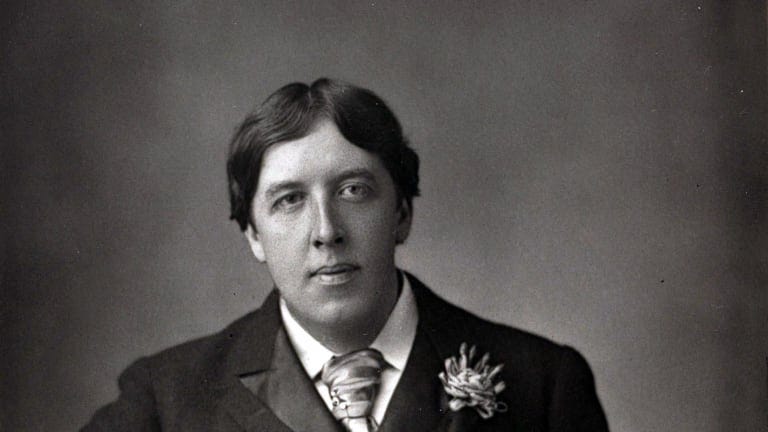

Oscar Wilde, the world-famous poet, novelist, and playwright was born on 16 October 1854 in Ireland. His amazing work, personality, and eccentric lifestyle rose him to fame in the late nineteenth century. Wilde was a homosexual.
This was the time when homosexuality was a criminal offense. In 1895, he was put on trial for gross indecency right after he was accused of having an affair with a British aristocrat.
Wilde started writing at a very young age. He began writing short poems when he was a student at Dublin’s Trinity University in the 1870s. After graduating from Trinity he got acceptance from Oxford in England and moved there permanently.
He continued writing there, and by the early 1890s, he was known as one of the most popular playwrights in London. His famous plays included Salome and The Importance of Being Earnest. However, Oscar is best known for his 1890 novel The Picture of Dorian Gray.
The Affair
For obvious reasons, Oscar kept his homosexuality a secret. He got married and has two children as well. It was in 1891 when he began an affair with a young British poet and aristocrat, Lord Alfred Douglas, who was sixteen years younger than him.
Father of Lord Douglas, the Marquess of Queensberry found out about their affair and was furious. He decided to expose Oscar and left and calling card for him at the private Albemarle Club in London. The card said,
For Oscar Wilde, posing somdomite [sic].
As expected, this totally ruined Oscar’s public relations since homosexuality was a criminal offense in England back then. It remained illegal until 1967.
Oscar’s friends who were aware of his sexual preferences advised him to flee to France until things calmed down. Homosexuality was legalized in France in 1791 during the French Revolution.
Oscar said no, he won’t flee and decided to sue Douglas’ father for defamation. He took him to court for criminal libel.
Criminal libel is an alternative name for the common law offense which is also known (in order to distinguish it from other offenses of libel) as “defamatory libel” or, occasionally, as “criminal defamatory libel”.
The Defamation Case
The Libel case against Douglas’ father Marquess of Queensberry was opened on April 3, 1895. The newspaper media went crazy over the trial and gave it immense coverage. The case was heard at the Old Bailey, also known as the Central Criminal Court of England and Wales.
The trial didn’t go as Oscar hoped it would. The main issue was that the allegations which were made by the defendant were, in fact, true and didn’t qualify as defamatory.
Apart from that, the defense counter accused Oscar of soliciting 12 other men in order to commit sodomy. Queensberry’s defense also asked Oscar about his 1890’s controversial novel The Picture of Dorian Gray. They alleged that Oscar seduced Lord Alfred Douglas by using the novel’s homoerotic themes. The novel was about an old artist who is sexually attracted to the beauty of a young man whose portrait he paints.
Just three days after the court proceedings began, Oscar had to withdraw the lawsuit. The British authorities thought of it as a sign of his guilt and consequently issued an arrest warrant for Oscar on the charges of gross indecency.
In 1885, the British parliament passed the Criminal Law Amendment Act which is also known as the Labouchere Amendment. This act officially criminalized all sorts of sexual acts between men as “gross indecency.”
The Trial, Retrial, and Conviction
Oscar’s friends again asked him to flee to Paris but Oscar being Oscar said no and decided to stand trial. On April 26, 1895, he was tried for homosexuality.
There were 25 counts of gross indecency against him and he pleaded not guilty.
A preliminary bail hearing was set up for Oscar which went horribly wrong for him. A housekeeper and some hotel chambermaids testified before the court that they saw young men in Oscar’s bedroom and also found fecal stains on bedsheets.
The trial began and Oscar took the stand. He was questioned extensively. An interesting thing that the state brought up was a phrase from Lord Alfred Douglas’ poem “Two Loves,” published in 1894,
The love that dare not speak its name
They interpreted this phrase as a euphemism for homosexuality.
The trial ended because the jury couldn’t reach a verdict, and just three weeks later, Oscar was tried again for the same offense. However, this time he was convicted of the crime.
Poor Oscar received the maximum sentence that was allowed for gross indecency which was two years of hard labor.
The Prison Sentence
Oscar Wilde was taken to London’s Pentonville Prison on May 25, 1895, where he was put to work like other prisoners. The work was picking oakum. For those who don’t know, oakum was a material used to remove gaps in shipbuilding.
After spending several months in the Pentonville Prison, Oscar was transferred to London’s Reading Gaol. He remained there until he was released in 1897. Wilde became quite sick in the prison, and his health continued to deteriorate after his release.
He spent the last three years of his short life living in exile in Paris, France. This was where he wrote his last poem The Ballad of Reading Gaol, which was about an execution he saw in the prison.
Oscar Wilde passed away, at the age of 46, on November 30, 1900. He was initially buried in the Cimetière de Bagneux outside Paris. However, in 1909 his remains were disinterred and transferred to Père Lachaise Cemetery inside the city.
References
“Oscar Wilde (1854–1900); BBC. The blackmailer and the sodomite: Oscar Wilde on trial; Feminist Theory.”
“https://www.history.com/topics/gay-rights/oscar-wilde-trial”
“https://www.biography.com/news/oscar-wilde-trials-downfall-gross-indecency”