
The Holy Grail of North American Shipwrecks
Le Griffon remains one of the most enduring wrecks in the world, but how much does the search for it cost?
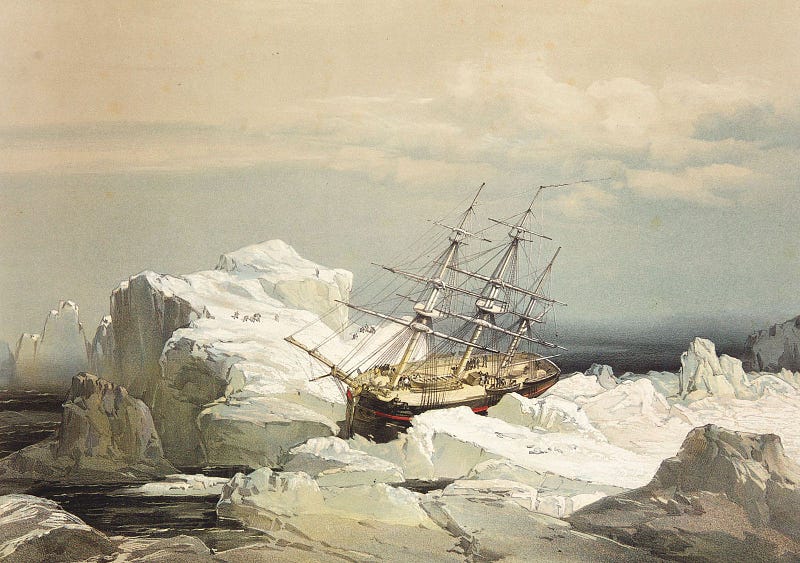
Seeking gold and glory, leaving weathered, broken bones / And a long-forgotten lonely cairn of stones.” So sang Stan Rogers of the Northwest Passage, the English moniker for a long-theorised western sea route to Asia. Sought as early as 1000 C.E., when Viking navigators started trading with Inuit tribes following the settlement of Greenland. The search for a shortcut to the Orient didn’t begin in earnest, however, until the 15th century and expeditions searched in vain for the fabled passage for the next four hundred years. This intensified in the 1800s when Sir John Barrow, newly minted Second Secretary of the Admiralty, pushed for the Royal Navy to carve a path through the Arctic once and for all.
The most famous of these attempts was certainly Sir John Franklin’s expedition of 1845. Setting out on board HMS Erebus and HMS Terror, the crew spent almost two years locked in the ice before disappearing. Contemporary reports suggested poor planning, scurvy, malnutrition, and improperly prepared tinned food contributed to the expedition’s loss. In 1848, John Rae heard reports of Inuit interacting with British sailors on the ice, suggesting they abandoned the ships; learning of “a large group of white men who had died somewhere in the west.” Even trading for some of their abandoned effects.
But with the Internet age came a new fascination with the mysteries of the Arctic. Though after Rae there was never any question what happened to the ships — if there was, it was where the ice confounded them — Internet sleuths have conjured myriad explanations for the disappearance, from giants and government conspiracies, to mystery illnesses and aliens.
All of which were rendered more farfetched in 2014 when, guided by Inuit historian Louie Kamookak, a Canadian research team discovered the wreck of Erebus near King William Island. Two years later, the Arctic Research Foundation found Terror.
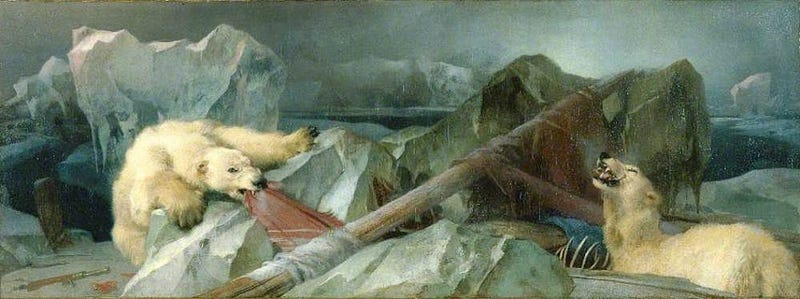
For all the romance and mystery of Arctic exploration, the wrecks now stand as a memorial to 134 men lost for the sake of maintaining Britain’s sense of “superiority” and feeding “the dark side of Britain’s increasing self-confidence.” And as famous as Franklin’s expedition is, there is another ship lost to the search for the Northwest Passage that is more enigmatic for its enduring elusiveness. It never reached the Arctic; neither foundered at sea nor succumbed to the ice. The ship, dubbed “the holy grail of North American shipwrecks” disappeared, not to be seen again, in the Great Lakes of North America.
La Salle’s Bid
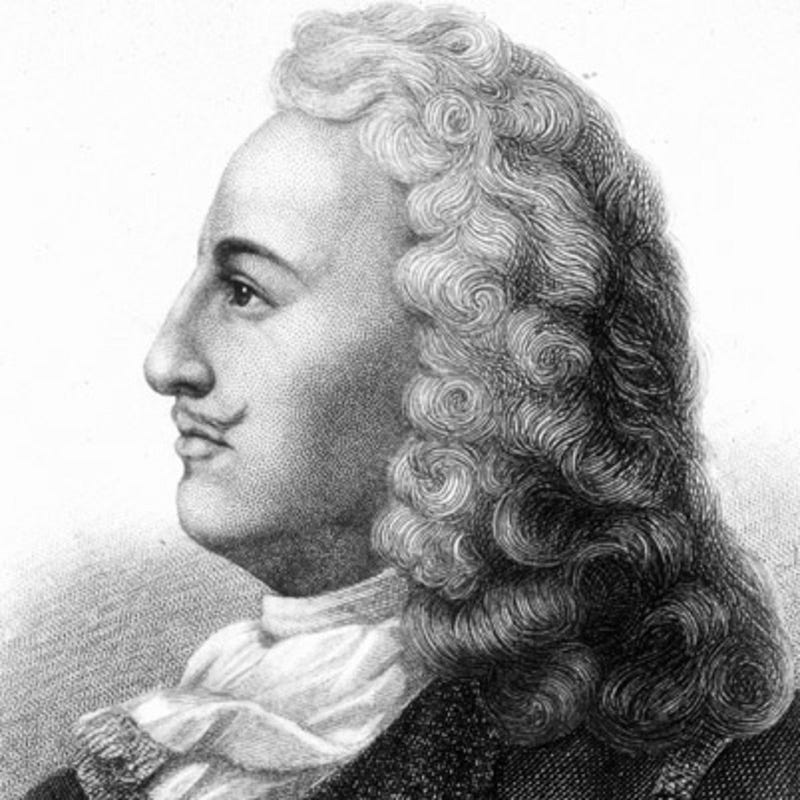
Born in 1643, René-Robert Cavelier, Sieur De La Salle was a French priest-turned-explorer. In 1679, he set off on an ambitious bid to build a fur-trading empire in the wild and unmapped portions of North America known as Nouvelle France. La Salle identified the vast Great Lakes that form the border between what is now the USA and Canada as the most likely site of a shortcut to Asia.
Arriving in what is now upstate New York, he encountered the first of many obstacles: the small matter of the Niagara Falls. La Salle understood that in order to explore the Great Lakes, he would need a formidable ship, but now it became apparent he would need to build it above the falls.
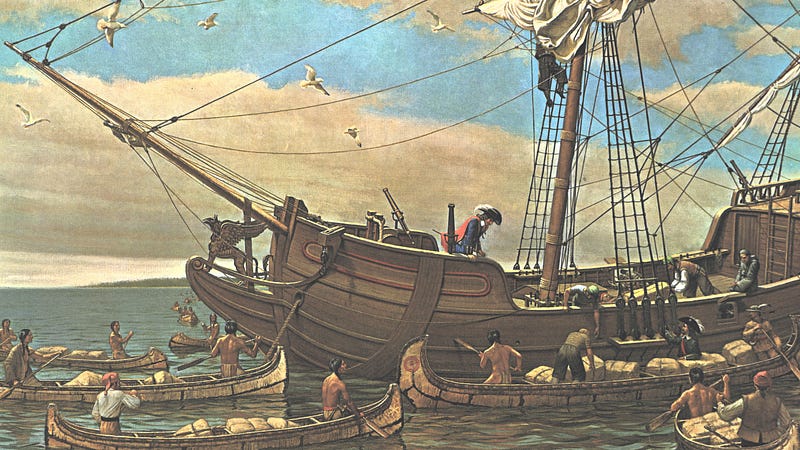
The six-man crew worked through wind, driving snow, and attacks from the local Seneca Tribe. Once they finished, they christened it le Griffon. The ship now gives its name to bars, streets, and one of New York’s most famous parks. Yet experts disagree on the category of boat La Salle employed. While no images or descriptions remain, in his own accounts La Salle referred to it as a “barque”: traditionally a sixty-ton ship with three masts. This suggests he engineered a ship fit for sea. A logical step considering the immensity of the Great Lakes.
The challenges didn’t abate once le Griffon was complete, however. It may have been the first ship to traverse Lake Huron and Lake Erie, but before reaching the entrance to the latter it had to be pulled, manually, up the forty-mile shallows of the St. Clair River.
Following a journey of almost 1000 miles, La Salle sailed into Lake Michigan and landed in what is now Green Bay, Wisconsin. After picking up a shipment of furs, he disembarked to explore the head of the lake. Deep in debt, he couldn’t afford to let le Griffon languish onshore. So, he sent the crew back to Niagara to sell the furs and take on extra provisions before returning.
The ship has been lost ever since.
The needle meets the haystack
The word lake conjures images of wide, tranquil water. Perfect for fishing or beside which one can spend a leisurely summer afternoon. The Great Lakes of North America are a different beast: so vast — the smallest, Ontario, has a surface area of 7340 square miles — that they can form their own waves and weathers systems. Storms roll in quickly and at unpredictable intervals, so that even today sailing can be treacherous. It is estimated that 4000 to 5000 wrecks dot their lake floors.
While the search for le Griffon is restricted to three of the five Great Lakes, that does not narrow the field much in the largest freshwater system in the world.
Like the Franklin Expedition, the question isn’t so much what happened but where. The prevailing theory is that le Griffon sailed back to the top of Lake Michigan, where it ran into a storm. But how far it travelled thereafter is unknown. In 1680, La Salle wrote to his creditors to explain his failure. He claimed that,
“Some Indians, called Potawatomis, who had anchored with [the remaining crew] on the northern coast, tell me that two days after the vessel left the island [now Green Bay] a storm arose… the pilot, believing the wind to be favourable, set sail contrary to their advice. The wind increased very much and after that the barque could not keep a straight course, but drove obliquely towards some islands in the offing called the Huron Islands.”
The Huron Islands do not appear on modern maps, a fact that has confounded many searching for le Griffon’s grave. But contemporary charts list what is now Beaver Island as Des Isles Huronnes. It is tempting to think the mystery is solved. The search area surrounding the island, however, is over 1000 square miles — and that’s only for those who agree it’s the right spot. Dwight Boyer reports that “a dozen old wrecks from the sand dunes of Lake Michigan to the rocky Canadian shore of Lake Huron [have been] tentatively listed as the remains of le Griffon.”
One of the most tantalising aspects of the disappearance of the le Griffon is that it has ostensibly been solved many times over. Whether it’s the discovery of six skeletons in a cave at the Mississagi Straits, the Manitoulin Island Wreck, the scan of a hull believed to be le Griffon in 2018, or one of the thousands of wrecks still unclaimed on the Great Lakes’ beds. But until a consensus is reached or hard proof found, the only certainty is that le Griffon remains lost.
Lost and found
One of the greatest ironies of the search for the Northwest Passage is that evidence suggests that members of Franklin’s expedition crossed the Simpson Strait, before succumbing near the Adelaide Peninsula. Whether they knew they were walking across the eventual Northwest Passage is unknown. But once the route was confirmed in 1860, the Royal Geographic Society bestowed credit for its discovery upon Franklin, celebrating it as a victory of British exploration.
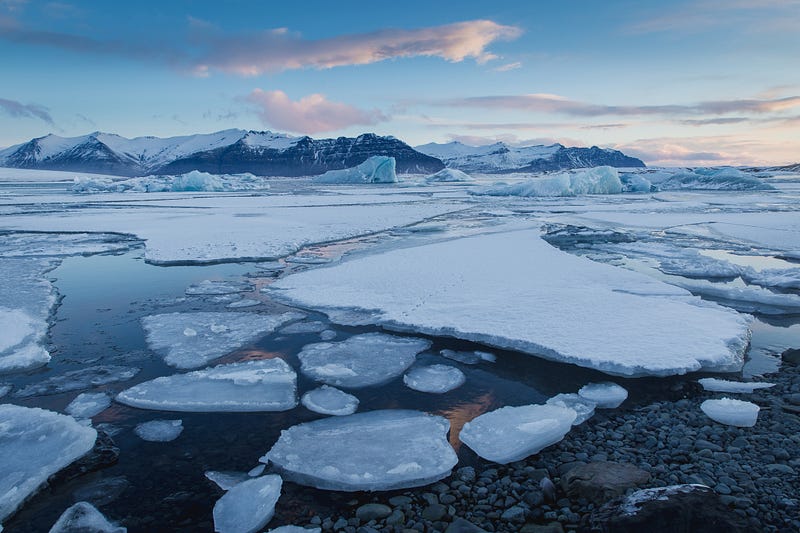
The ferocity with which European powers explored and mapped the Arctic, however, had a profound effect on the local Inuit way of life, damaging it to where,
“Inuit subsistence… became increasingly and irrevocably tied to European economic forces and foreign consumer goods, contributing to widespread starvation after the collapse of fur prices in the 1930s.”
This has only worsened as our continued industry and the resultant global warming has opened up new shipping lanes through the ice. Not only supplementing the Northwest Passage but supplanting it as previously unconsidered paths open through the Russian Arctic.
We may entertain ourselves with the mystery of Arctic disappearances, but we must also regard them as costly reminders of the damage European colonialism has caused to indigenous populations. No sooner had Rae returned with news of what happened to Franklin’s expedition, than the public turned on the natives that had aided so many expeditions before, with Charles Dickens branding them, “uncivilised people, with the domesticity of blood and blubber.”
There was tragedy in the losses around the Northwest Passage, but also a tragedy as the homes of major indigenous populations were stolen and destroyed by British greed. When Stan Rogers romanticised Franklin’s voyage with the words “for just one time I would take the Northwest Passage / to find the hand of Franklin reaching for the Beaufort Sea,” it was to celebrate the land into which Franklin and so many others ventured in search of the shortcut to the Orient. While the search for le Griffon continues, and many other wrecks besides, we must acknowledge the damage those searches are doing and consider whether all of history’s mysteries are worth answering. Because the land is disappearing, and the people are going with it.
