
The Hollow Planet Theory
Understanding the scientific plausibility behind hollow planets in our universe
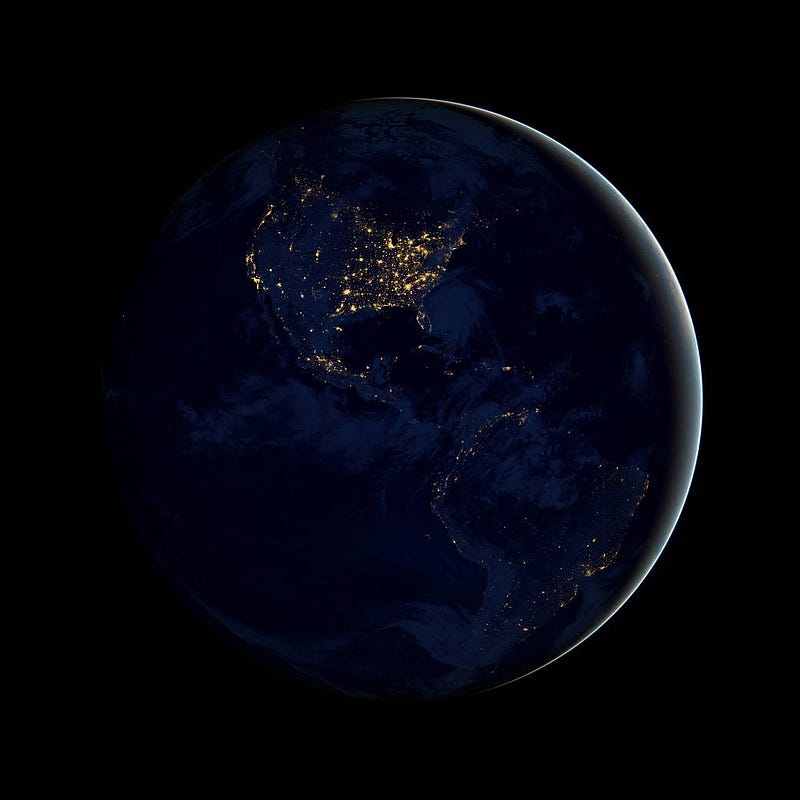
The Universe we live in contains hundreds of billions of stars and tens of millions of planets and moons, most of these planets are enormous and are almost made up of trillions of kilograms of rock and water.
These planets are huge and roughly spherical compared to us but the question we look to answer is if all these planets are solid?
The idea that humanity is living inside of a planet rather than on it has been going around for a long time where the ancient Greeks thought that there was a system of underground caves and caverns that led to another world something like an “Underworld.”
The scientist Edmund Halle the discoverer of Halley’s comet in a world slightly more recently also proposed that the Earth is was not solid and it was actually a series of concentric shells.
These theories and stories have led many today to wonder if “hollow planets exist and if the earth is one of them?”
Let us start by defining what the word “planet” means. The word planet means wanderer in Gree and currently is defined as a celestial body distinguished from the fixed stars by having an apparent motion of its own (including the moon and sun), especially with reference to its supposed influence on people and events according to Google which is forced from the Oxford dictionary but what makes “the planet” a planet.
The hydrostatic equilibrium is a concept states that everything will start to come to normal and separate itself when gravity, pressure, and density come to arrest is what we can use to define a planet.
A planet like Earth or Mars is a lot of substances combined together but these substances are in a certain proportion, Jupiter is a gas giant and huge enough to round itself under its own gravity but not massive enough that the gravitational forces ignite a thermonuclear fusion in its core and transform it into a star. The reason why planets round themselves out under gravitational forces is that when there is enough mass to be a planet that gravitational force overcomes the rigid forces of the material presenting to form a planet and makes solids move like fluids.
So planets, as we humans define them to be, are under hydrostatic equilibrium so for hollow planets to exist these planets should be strong enough in their shells to fight the gravitational forces trying to solidify and make them spears.
If the theory of these planets is true and the Earth is one of them it would be easy to prove would it not be? We can try to dig a hole to the center or beyond the Earth’s core but it is not that simple as we are unfortunately not good at digging and the deepest hole in the world the Kola super-deep borehole is only about 12 kilometers deep and the core of the earth is about 6400 kilometers from the surface and so digging has not yet ruled out a hollow earth theory.
The hollow planet/earth theory is analogous to the concept of a Dyson Sphere and the amount of force needed by a hollow planet to overcome the gravitational forces trying to solidify them can be calculated using similar calculations in scientific papers for a Dyson Sphere using the formula.
(GM/2r)p = F/A = S
Where: G is Newton’s gravitational constant M is the Mass of an Interior Star r is the Radius of the Shell p which stands for rho is the density of the shell
If we use conservative estimates for the hollow earth with a star in this case our sun at the center we get a number roughly equivalent to 57 peda Pascal’s which is about 57 thousand trillion Newton’s of force on every square meter of the shell of the earth/hollow planet.
This number exceeds the theoretical maximum strength of matter in our universe the pressure at the core of the sun pales in comparison to this calculated number if our assumptions about the density of the earth and the mass of the sun are true.
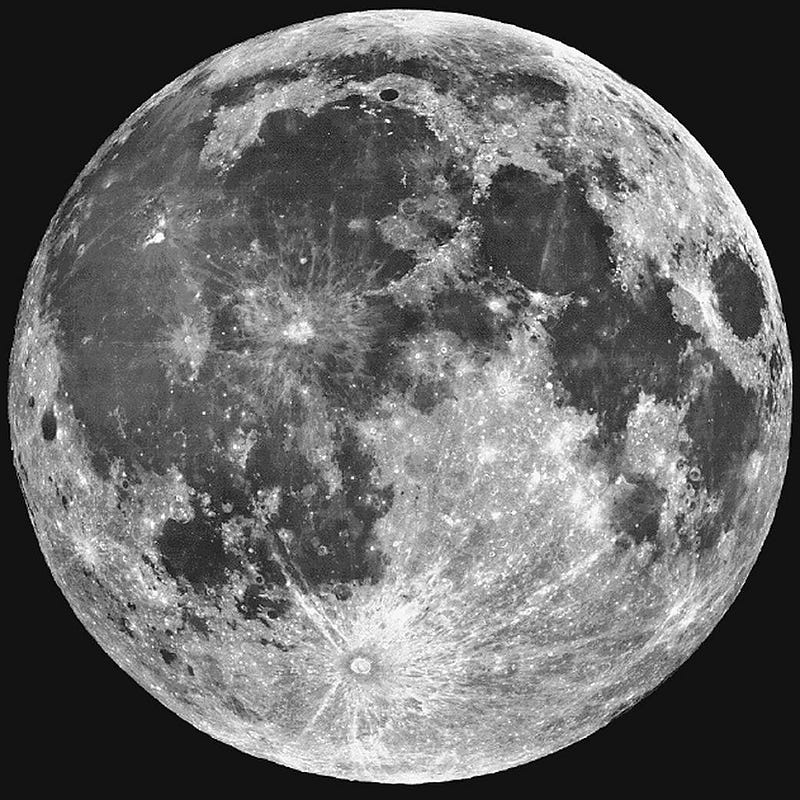
Not necessarily is everything in hydrostatic equilibrium a planet but it is a condition that we need to be a planet as the dwarf planet Ceres is the smallest object in space in hydrostatic equilibrium and the largest object we know which is not in hydrostatic equilibrium is the Earth’s moon which is 77 times larger than Ceres.
The hollow planet theory is proven to be impossible in two ways, the Shell Theorem by Sir Issac Newton which proves that an object in the center of a hollow shell mathematically will be weightless because the sum of the vectors acting on the object will cancel out and the theory that states without a core for protection at the center there will be no magnetic field that protects the Earth from the cosmic radiation in space.
In conclusion with the help of physics, mathematics, and observation we can be fairly confident that no true hollow planets exist in the universe and the earth is itself not hollow.


