
The Holiday Rush Has Begun and It’s As Over-the-Top as Ever
And more
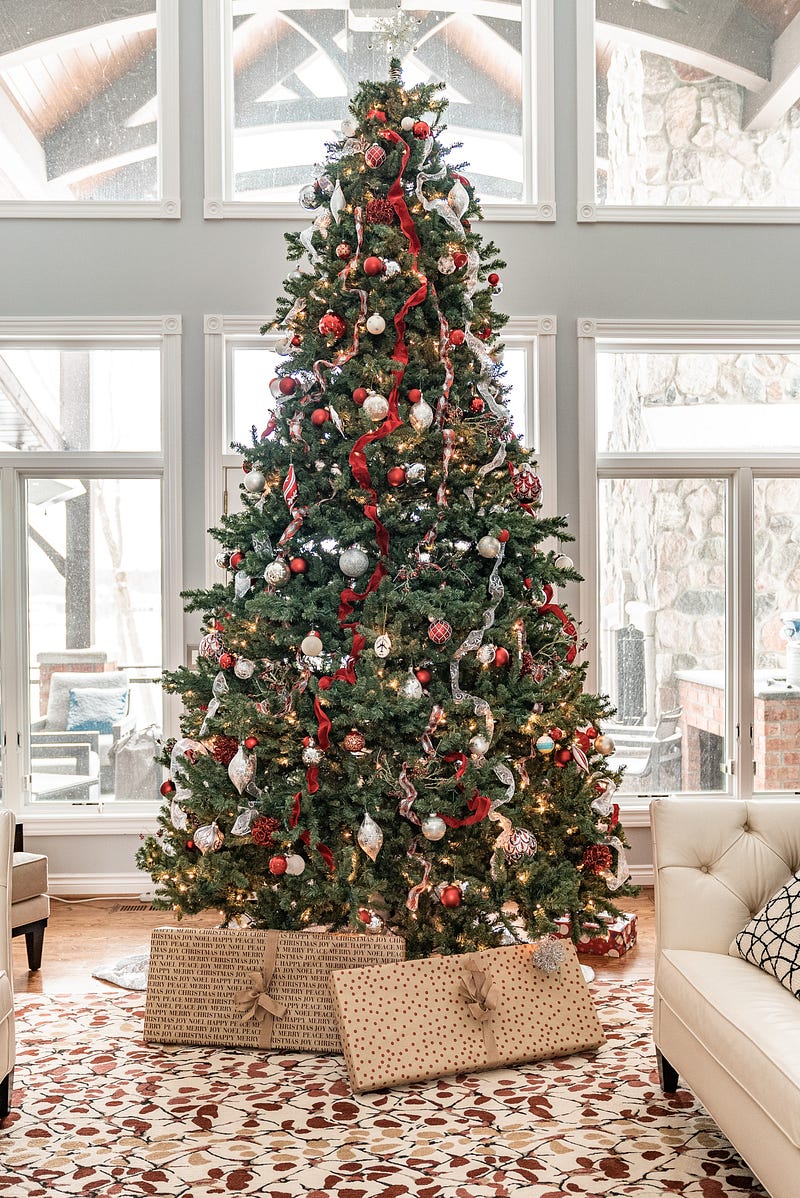
Time to toss out the pumpkins and orange mums and replace them with evergreens, red decor and sparkly Christmas lights.
There’s decor for every season. Why wouldn’t it be?
Holidays in the United States are no joke. In my town, small shops managed to swap all fall decor with Santa and his reindeers as soon as Thanksgiving was over. It felt and looked like an overnight transformation from one holiday to the next.
Last year, I wrote a story about how I experienced this focus on all the material parts of the holiday at the start of our adventure overseas.
During our second year in the United States, I came across a giant, plastic Christmas tree in New York City. I’d never seen a fake tree so big. My mind automatically started wandering to plastic excess. Needless to say, there’s been some culture clashes for me after moving from Norway to the United States. It all tends to become very visible around holidays.
As for the upcoming one, here are my two cents.
The spending
Gifts are fun, but at some point, it becomes too much.
Holiday retail sales during November and December are expected to grow between 6% and 8% over 2021 to between $942.6 billion and $960.4 billion. This is according to National Retail Federation, which also expects that online and other non-store sales, which are included in the total, to increase between 10% and 12% to between $262.8 billion and $267.6 billion.
Although these numbers are said to reflect “healthy” holiday spending during inflation, it still seems high to me.
Gallup expects the average person in the United States to spend $932 on Christmas gifts this year. Which brings me to my next point.
The gifts
What are the gifts you remember receiving?
Are there any gifts that struck a chord with you, gifts that were just a little different and unique — like the person gifting it to you took time and thought specifically about you?
My mom knit me a wool sweater one year. My son purchased an extremely colorful, little purse at his holiday shop at school. Then he filled it with homemade drawings and gave it to me. The purse looked horrendous but the drawings were everything, and more.
Personally, it’s not the gift cards I remember. It’s not the clothes, socks, or the dark chocolate. They’re fun gifts, for sure, but in today’s world, many of us purchase clothes when we need them.
We don’t wait until Christmas and hope we get a pair of socks. I buy chocolate every time I’m at the grocery store. Gift cards are just like giving money to someone.
It’s those gifts when someone really thought about you that I remember.
The $932 amount makes sense to me.
My husband and I both come from decent-sized families. We have a lot of extended family. We have narrowed down the gifts to the closest family and kids, nephews and nieces.
But in addition to personal gifts to family and close friends, there are all the gift exchanges. Secret Santas in schools and daycares. A $5, $10, $15 small thing, often made of plastic, here and there.
It adds up.
The stress
It’s no secret stress levels can increase during the holidays. Many of us experience it, myself included.
Holidays and vacations can trigger divorces, too. Not very surprising. A study from the University of Washington, featured in Psychology Today, discovered that divorce is seasonal and there’s a consistent peak during the periods following both winter and summer breaks. The time families have off may exacerbate underlying tensions and conflict for couples.
There are expectations, hopes and dreams about having a blissful time together. But when it comes down to it, the time can be emotionally charged and incredibly stressful and the opposite of fun. If there are financial issues involved, the spending isn’t likely to help anything.
Holidays, especially Christmas, can be stressful no matter where you live. For me, Christmas has never been about excess. My parents were always generous when it came to gifts though and I have fun memories remembering the excitement of opening gifts on Christmas. But toys are more expensive in Norway and we were four siblings. There is simply less stuff in Scandinavia, fewer options, so the holiday never felt like it was about all the material things.
Looking back, what really was valuable was the time spent together. The holiday rush wasn’t as stressful in Norway because stores aren’t open 24/7.
The valuable stuff
As mentioned earlier, holidays are about family and Christmas for me is about faith, too. There are also some tiny Scandinavian traditions, non-commercialized ones, I’d never want to be without.
Plenty of outdoor time. Crafting out some quality family time to be out in the fresh air, finding a Christmas tree. Going on walks and hikes during the week between Christmas and New Year’s.
Baking.
It gets messy, baking with kids, but it’s a tradition my grandfather passed down. He made the best Norwegian lefse, a rolled-up soft flatbread with butter, sugar, and cinnamon). My mom passed the holiday baking down to us. It’s common among households to bake around the holidays and as one who enjoys food, sweet and savory, I value this one.
A creamy rice porridge, with a hint of cardamon, is a Norwegian staple around the holidays. It’s common to eat this meal with a larger group of family or friends. There’s a little action involved too. Whoever makes the porridge hides a peeled almond in it. I know, not the kind of action you expected. If you stumble upon the almond while eating, you’re supposed to keep it a secret until the meal is finished.
Then, the “winner” is revealed, and will receive a large marzipan pig.
I know, it sounds very odd, but it is fun.
It can be jolly and fun, celebrating holidays in the United States.
When there’s a balance.
If not, it becomes too much. I’d rather get an orange for Christmas, like my grandmother enjoys telling me she did back in the day than to drown in over-the-top excess.


