
The History of Ukraine’s Struggle for Independence in the Twentieth Century
Ukraine’s complicated fight to win independence through political awakening, geopolitics, and guerilla warfare
Growing up as an ethnic Ukrainian born in the United States to Ukrainian nationalists, I found it often frustrating and sad that few people knew there was a distinct Ukrainian history, heritage, culture, and language. Americans often called me Russian when I told them I was Ukrainian.
During the Cold War didn’t most people call Soviets — Russians? That was my experience at least. One can only imagine my family’s elation when Ukraine became an independent country in 1991 born out of the implosion of the U.S.S.R.
Ukraine’s fight to win its independence from the powers surrounding it, Russia, Austro-Hungary, Germany, and Poland was a metamorphosis of struggle during the entire twentieth century culminating in the formation of Ukraine as a country. Ukraine’s independence movement took many twists and turns and was significantly influenced by factors such as writers, geopolitics, labor movements, world wars, and man-made disasters.
How was the modern Ukrainian national identity forged? How did the movement start? How did Ukraine’s imperial overlords suppress it? How did Ukrainians sustain it over time? How did Ukraine finally win its independence?
Ukrainian Identity Awakens Through Writers in the Nineteenth Century
After the dissolution of the Ukrainian Hetmanate in the eighteenth century and the full integration of Ukraine into the Russian Empire, the Ukrainian language and identity flourished in the countryside while the Russian Tsars ruthlessly Russified the cities.
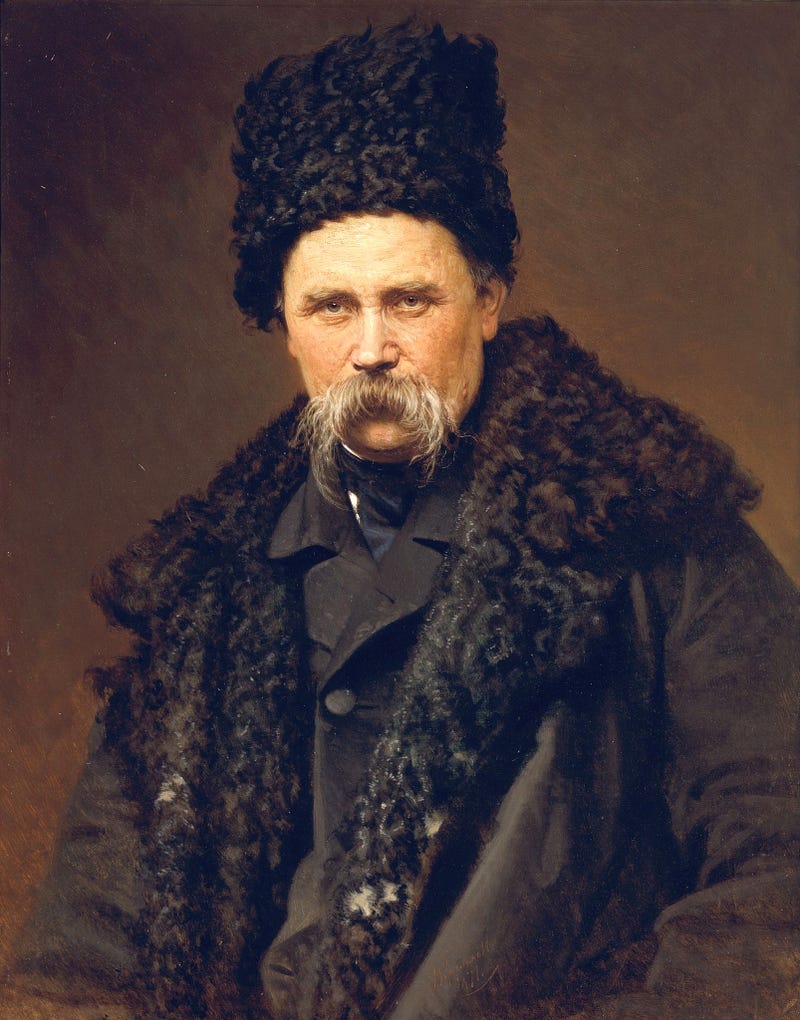
One of the fathers of Ukrainian literature, Taras Shevchenko, began to write poetry in the Ukrainian language in the mid-nineteenth century in the Russian Empire. Others began to do the same. Seeing Ukrainian literature and newspapers as a clear threat to their Russification campaign, as early as 1863, the Russian Empire made publications in the Ukrainian language in everything except fiction illegal. Then Tsar Alexander followed it up in 1876 by banning the publishing or importing of works in the Ukrainian language.
The Austro-Hungarians had a very different policy towards its ethnic minorities. They encouraged their minorities to study, publish, and work in their native tongues. The Empire also liked to pit its minorities in the same region against each other and did this often with Ukrainians and Poles in the Austro-Hungarian region of Galicia. Therefore, Ukrainians in Austro-Hungary wrote and published works in their native Ukrainian at will while their countrymen in the Russian Empire were prohibited from doing so.
The Tsarist laws, however, did not stop Ukrainian writers in the Russian Empire from smuggling their Ukrainian works into Austro-Hungary to print them and then, illegally import them back and distribute them throughout the Empire.
These writers, through their poetry and prose, brought the Ukrainian language to the educated Ukrainians in the cities ensuring that complete Russification did not occur but also igniting Ukrainian nationalism. Not only did Tsar Alexander’s policy not work to fully Russify Ukraine, but it also cemented long-term relationships between the Ukrainians of Austro-Hungary and the Russian Empire.
Political Parties Form out of the Labor Movements and Democracy
In the late nineteenth and early twentieth centuries, Europe watched absolute monarchies' dissolution and representative governments' birth. This occurred first in Austro-Hungary and then in Russia. With the new representative government in Austro-Hungary, Ukrainians began to form political parties and push Vienna for more ethnic rights such as schools, administrative positions, and autonomy.
Galicia became a hotbed of Ukrainian nationalism because of the competition with Poles. Poles were seeking independence from Vienna. They dreamt of reconstituting a Polish State with the same boundary lines as the Polish Commonwealth partitioned a couple of hundred years earlier by Germany, Austro-Hungary, and Russia. This dream was inconsistent with Ukrainian hopes for greater autonomy and independence. Therefore, the Ukrainian political parties tended to be more pro-Vienna and status quo than their Polish neighbors.
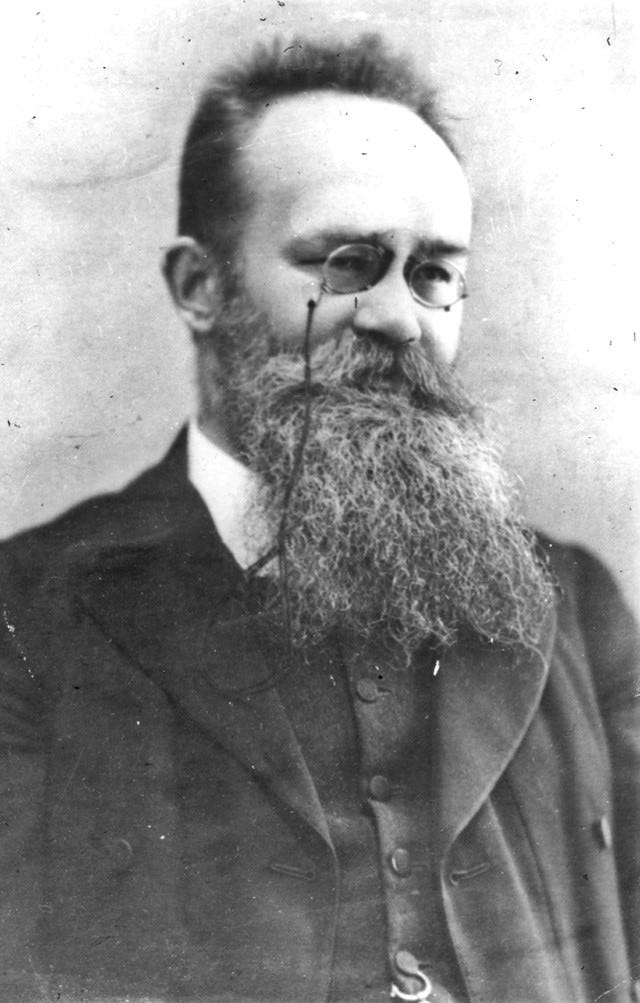
The Ukrainian National Democratic Party was formed in 1899 by the most famous Galician writer, Ivan Franko, and historian, Mykhailo Hrushevsky. The party stated its future goal to be eventual independence for Ukraine. They longed to do this by partitioning Galicia into Polish and Ukrainian parts since East Galicia had a majority of Ukrainian residents. The Polish parties opposed the Ukrainian National Democratic Party as they wanted a federated Poland and even some like the Polish National Democratic Party wanted to integrate and Pollinize Ukrainians. The Poles won the most seats in the Imperial Galician parliament in 1907, and Galicia stayed intact for now.
In Russian Ukraine, the first political party was formed in 1900 called the Revolutionary Ukrainian Party, and claimed independence as its primary goal. Then came the revolution of 1905 against Tsar Nicholas II. It was started by laborers striking for better working conditions and peaked in October with a railroad strike that impeded the Empire from functioning. With growing dissatisfaction and unrest, in 1905, the Tsar proclaimed universal male suffrage and civil rights and created the Duma, Russia’s first Parliament. Additional political parties in Ukraine developed in concert with the Labor movements and strikes with diverse aims such as communism, worker’s rights, nationalism, independence, and even pro-imperialism.
Finding and Losing Independence Between the World Wars
The end of World War I secured the demise of empires in Europe. In February 1917, Nicholas II abdicated the throne, and the Duma took over creating a provisional government. Kyiv took the opportunity for the change to create its parliamentary organization called the Rada with the plan to be in a federated republic with Russia.
However, the Bolshevik Revolution of October 1917 changed some of this. The Central Rada proclaimed the Ukrainian People’s Republic to be an independent state but in some form of federal union with Russia. They also added new territories to Ukraine like Kursk, a non-traditional part of Ukraine though filled with Ukrainian majority populations. This pitted the Bolsheviks against the Central Rada.
The Bolsheviks moved to invade Ukraine while setting up a competing state called the Ukrainian People’s Republic of Soviets. The Central Rada then declared its full independence and proceeded to negotiate a peace treaty with Germany and Austro-Hungary. The Central Rada could not mobilize an army and so looked to the Central Powers’ troops to protect them in exchange for grain. The Central Powers pushed the Bolsheviks out of Ukraine but then dissolved the Rada and put in place a dictator, General Pavlo Skoropadsky, a descendent of a former Hetman, who would be loyal to the Central Powers. At the close of the war, the Central Powers’ armies left Ukraine, Skoropadsky was overthrown, and the Central Rada was back in control.
With the end of the war and the dissolution of Austro-Hungary, Western Ukrainians also declared an independent state called the Western Ukrainian People’s Republic from the regions of Galicia, Bukovyna, and Transcarpathia. Since Galicia was never divided up between West and East, Poland claimed all of it leading to a civil war between the Poles and West Ukrainians.
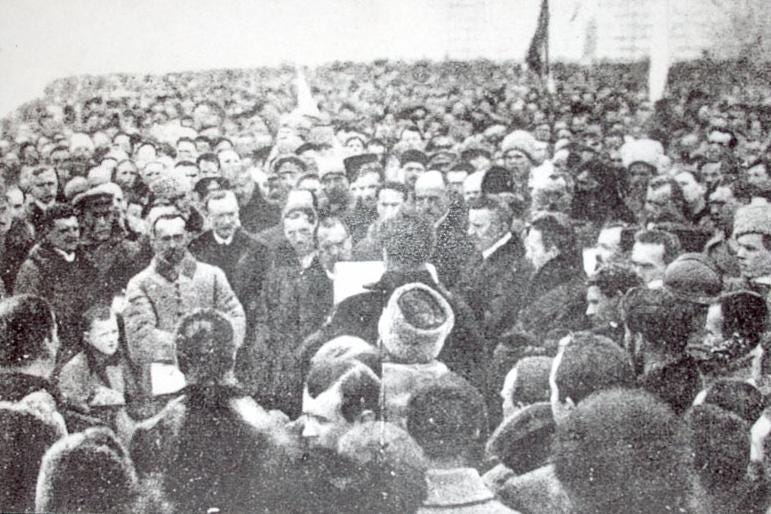
On January 22, 1919, Both Ukrainian entities declared the formation of a single state now celebrated as Unity Day. The two governments while strong in Ukrainian identity and unity, they had other weaknesses. The West Ukrainians were conservative and suspicious of their Eastern Ukrainian countrymen who were much more liberal causing internal disagreements. While the Galician Ukrainians had strong military capabilities, they had a small population to draw from for an army. The Eastern Ukrainians had the population but didn’t have the disciplined troops and military expertise. They also had opposite enemies. The Westerners were fine allying with the Bolsheviks while the Easterners felt the same about Poland.
The West Ukrainians were able to hold onto Eastern Galicia until a Polish Army supported by France arrived and was able to take not only Eastern Galicia but move into Eastern Ukraine looking to reinstate the boundaries of the old Polish Commonwealth. The White Army backed by the British and French was moving from Southern Ukraine to Russia, and the Bolsheviks were moving West from Russia. The Ukrainian armies lost every battle they fought, and by the end of 1919, their independent states were eliminated.
The primary fighting then turned between the Polish and Bolshevik armies with the Bolsheviks close to taking Warsaw. Helped again by the British and French, the Poles could take Galicia, Volhynia, and parts of Podolia from the Bolsheviks. The Poles and Bolsheviks then signed an armistice in October 1920. The border would not change again until 1939.
Famine, Chaos, and Death prior, to and during WWII
The Bolsheviks could only conquer Ukraine in 1920 because they realized they would need the help of the Ukrainian peasants in the countryside. They would only obtain their help if they acknowledged that a unique Ukrainian identity existed from a Russian one. Initially, they gave Ukrainians some autonomy and the formation of their republic — the Ukrainian Soviet Socialist Republic.
During the 1920s, the Ukrainian S.S.R. was able to implement a policy of Ukrainization. Ukrainian was taught in school, and publications were continued in the Ukrainian language. Even many of the party’s leaders and administrators in Ukraine were ethnic Ukrainians or from Ukraine. Party meetings were also conducted in Ukrainian.
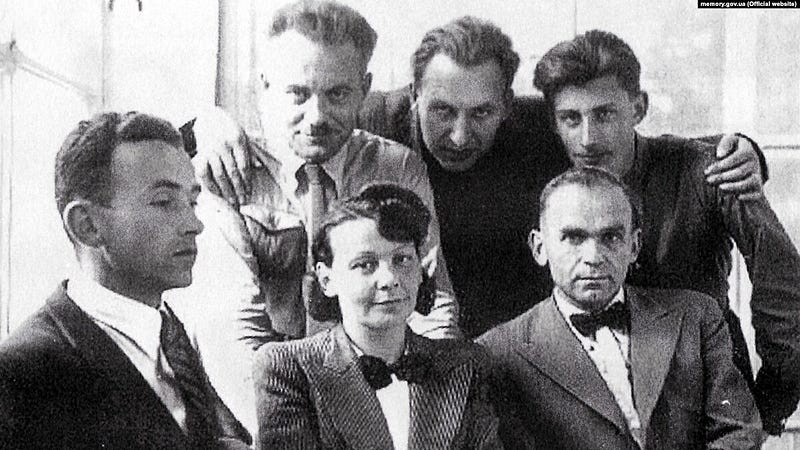
In other countries with significant Ukrainian populations, the opposite was the case. Poland began policies to wipe out Ukrainian nationalism by pushing colonization of Ukrainian territories with more Poles, suppressing Ukrainian schools, discriminating against Ukrainians for administrative and government positions, and jailing nationalists. Ukrainians countered by forming organizations like the Organization of Ukrainian Nationalists (OUN), which applied guerrilla tactics and assassinations against the Polish government. The treatment of Ukrainians was similar in Romania. Czechoslovakia was a bit better in treating Ukrainians but favored Czech and Slovak causes.
When Stalin took over, Ukrainization policies changed. Stalin created a famine in the early 1930s by forcing the collectivization of farming onto the Ukrainian farmers and raising grain targets to unrealistic levels, forcing Soviet Administrators to confiscate most of the grain and food from the countryside, causing widespread famine. This manmade famine called the Holodomor left between five to six million people dead in Ukraine and Kuban and a nation traumatized for years. He also began another period of harsh Russification of Ukraine as well as purges of anyone who might threaten the regime.
WWII and the invasion of Nazi Germany did not help the plight of Ukraine. While the end of the War finally united the regions of Ukraine into one Soviet Socialist Republic, it resulted in over seven million Ukrainian deaths between the Jewish exterminations, the concentration camp victims, the forced labor victims, the Red Army conscriptions, and civilian casualties. It was a bloody and violent time with mass exterminations of Jews, Poles, and Ukrainians by Nazis and Nazi collaborators. In addition, most of the fighting between Germany and the Soviet Union occurred on Ukrainian soil, resulting in the deaths of millions of soldiers and civilians alike.
Chernobyl, Dissolution of the U.S.S.R and Independence
After WWII, the Soviet Union, like many other nations, engaged in significant rebuilding efforts, including in the Ukrainian S.S.R, such as building nuclear plants for energy, taking men into space, and participating in the arms race. In the 1950s, Khrushchev, the leader of the U.S.S.R at the time, placed administration and control over Crimea to Ukraine, cementing its current borders.
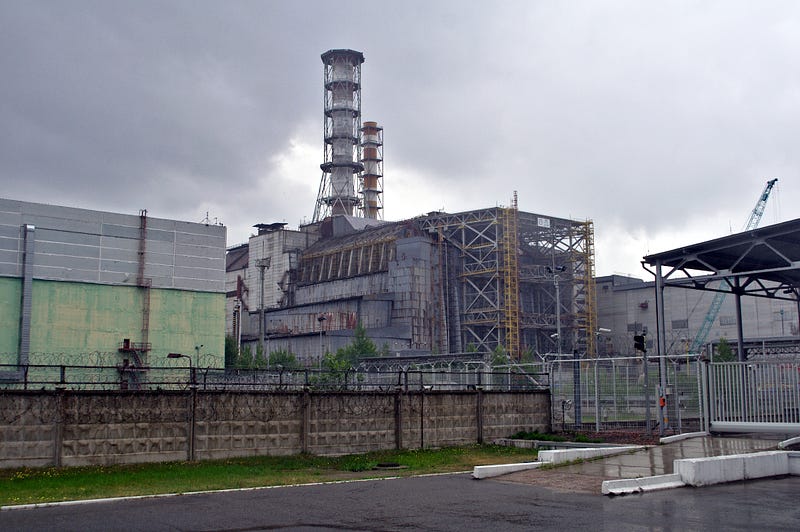
The 1980s began a period of stagnation for the Soviet Union. President Ronald Reagan from the United States had started a new arms race with the Soviet Union, and the country struggled to keep pace. In 1986, another critical event occurred in Ukraine when the Chernobyl Nuclear Power Plant seventy miles outside of Kyiv had a meltdown and blew fumes of radiative materials into the air for days before the fire was finally gotten under control. It is estimated over the years, approximately 4,000 people lost their lives to the radioactive effects in Belarus and Ukraine.
Between the nuclear disaster, the unpopular war in Afghanistan, and the costs of the U.S. arms race bankrupting the Soviet economy, Mikhail Gorbachev, the leader of the U.S.S.R., began the reforms of glasnost and perestroika to save the nation. However, many Soviet citizens, especially Ukrainians, after witnessing the government’s handling of Chernobyl, began to lose confidence in the state to reform itself. With the fall of the Berlin Wall and the Iron Curtain in 1989, the future of the U.S.S.R became more uncertain.
For one, the Soviet Republics began to assert themselves and their independence. 1989 ushered in the first semi-free elections to the Republic’s newly formed parliaments. In the summer of 1990, the Ukrainian Parliament (Rada) voted to declare Ukraine a sovereign country,, putting its laws above those of the U.S.S.R.
Gorbachev continued with his reforms, but on August 18, 1991, the hardliners in the Soviet government attempted a coup, which failed when Boris Yeltsin, the head of the Russian Soviet Socialist Republic, encouraged Moscow citizens to take to their streets against the Army. The failed coup meant the end of communism. Yeltsin began to take over the administrative services of the Union and dissolved the Communist Party. Gorbachev resigned on August 24th as the Secretary General of the Party. On the same day, the Ukrainian Rada voted in favor of Ukraine’s independence.
However, the Rada agreed to ultimately let the people decide. In the same year, on December 1, 1991, Ukraine held a referendum for independence from the U.S.S.R which was fully supported by the head of the Ukrainian Soviet Social Republics, Leonid Kravchuk. An overwhelming 84% of the voting public came out to vote and of those 90% voted for independence from the U.S.S.R. Leonid Kravchuk who backed independence against the continuation of the Soviet Union became its first democratically elected President.
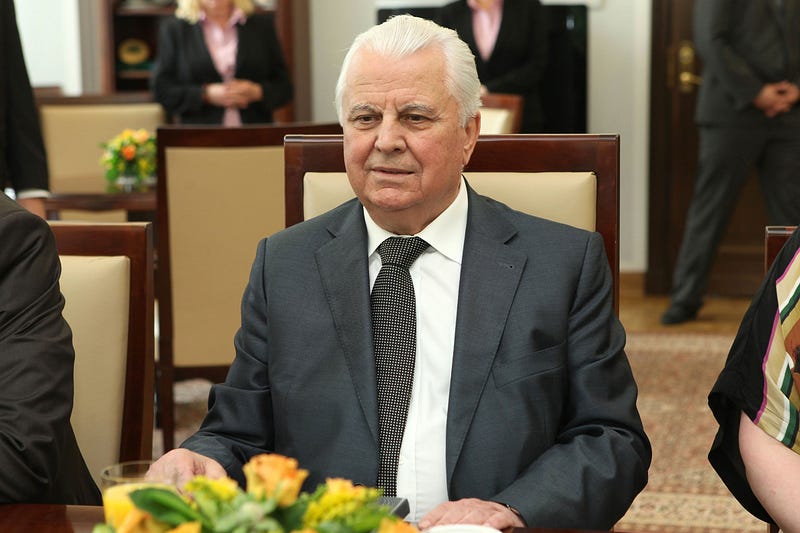
Ukraine after over a hundred years of struggle finally won its independence from the U.S.S.R.
The Struggle for Independence Continues
After hundreds of years of struggle against foreign domination from Lithuanians, Poles, Russians, Austrians, Romanians, Hungarians, and Germans, Ukraine became an independent nation through the peaceful process called a democratic referendum.
While neighbors like Belarus and Russia have fallen into dictatorships, Ukraine has maintained its democracy. In its thirty-plus years as a nation, it has had six Presidents and multiple Parliaments. Its democracy is far from perfect with endemic corruption inherited from the Soviet Union, however, elections still take place with plural political parties running competitive candidates. It also is working to improve government transparency and tackle corruption.
As an independent country, its citizens have held two mass protests to replace governments who were not following the will of the people. It is now in another existential fight with Russia which many are calling its war of independence. While the outcome of the war is still uncertain, Ukraine’s future as an independent country charting its own path is not.
References
· The Gates of Europe (chtyvo.org.ua), pages 197–322
· October Revolution — Wikipedia
· The true toll of the Chernobyl disaster (bbc.com)
·1991 Soviet coup attempt | Facts, Results, & Significance | Britannica