
_Portchester_Castle_-_geograph.org.uk_-_697560.jpg)


The History of Toilets
Have a good look before you flush down the contents
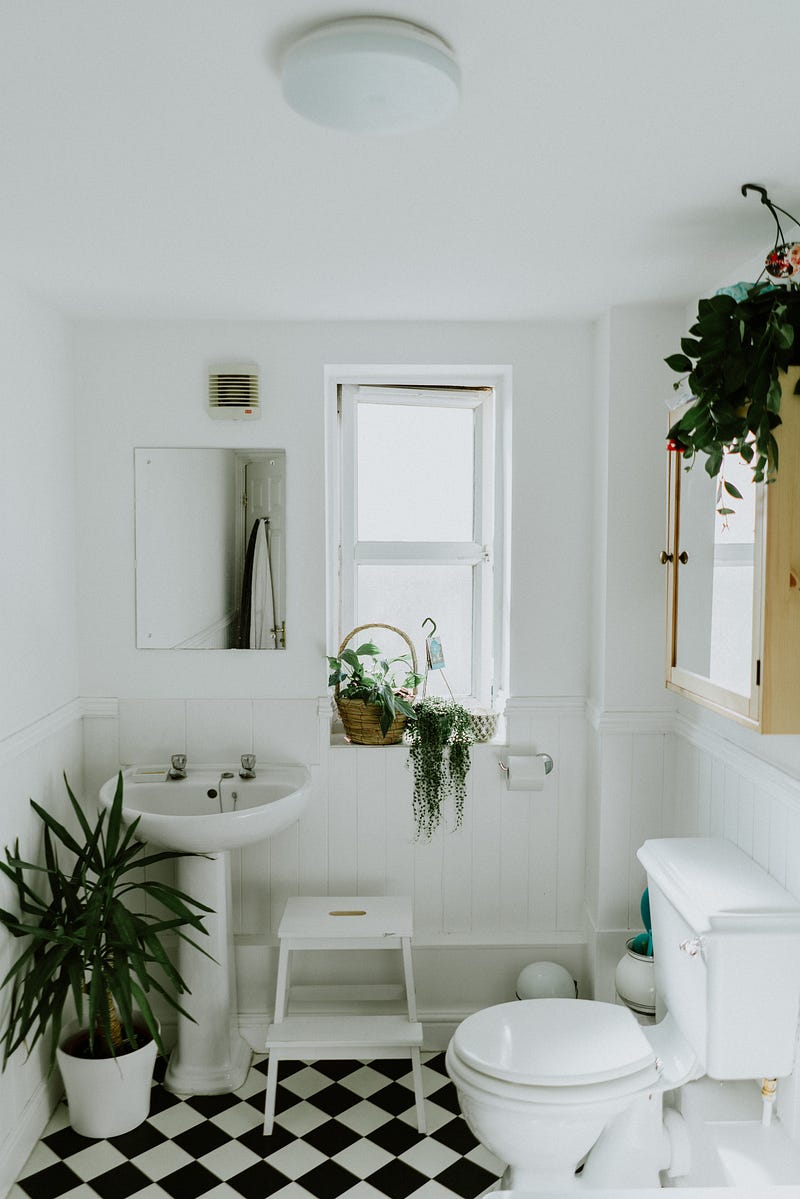
Except for a few parts of India, where toilets are still a luxury, everybody else poops in a toilet. But it wasn't always this luxurious to go and relieve yourself as it is today. It would be hard for you to believe that visiting the toilet used to be, once, a group activity. Disturbing, isn't it?
So how did we go from defecating in the open to sitting comfortably on a piece of art? Let us take a look in the history books to understand the history of toilets, before it becomes intolerable and flush the contents down the sewage system.
Toilets were first invented around 2500 BCE
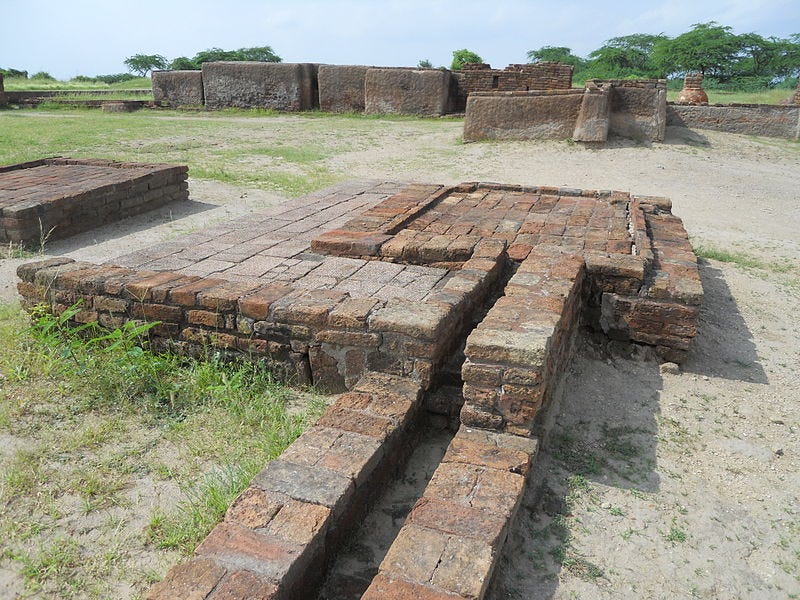

The first-ever signs of a toilet and sewage system were observed in Northern India and Pakistan, in and around 2500 BCE. The Indus Valley Civilizations, was way, way ahead of their times when it came to planning the construction of houses. They were the only ones who could have a separate room dedicated to defecation.
These rooms had drainage pipes that were connected centrally to the city’s sewage system, which could be flushed as easily as dumping water in the toilet. Sounds quite familiar so far.
The sewage was carried through a simple grid system in pipes that were made of either bricks or terracotta. This system allowed wasted to be carried from multiple floors of a building and be dumped in the nearest body of water, which is known today by the name of Florida.
These pipes were quite sophisticated for their times with accessible utility holes that led from the street to the main drainage line. There were wooden screens built into the end of the drainage lines to block the solid wastes. Both these structures allowed the maintenance of the sewage system as easy and less gross as possible.
While many of the elements of this ancient infrastructure strongly resemble what we use today in modern times, it would still take a thousand messy years before the western societies would catch up with his high-quality sanitation system.
Ancient Egyptians used sand-filled toilets
.jpg)
It is not surprising that the people who worshipped cats used a defecation system similar to their beloved creatures.
The toilets designed during the ancient Egyptian civilization were designed specifically keeping water conservation in mind. They took water conservation way too seriously and believed in using H2O only with the intention of reusing it.
Despite having separate rooms for bathing, the Egyptians did not have running water in their homes. They would put water onto themselves during bath time, which was collected into jars, and reused for agriculture and gardening purposes.
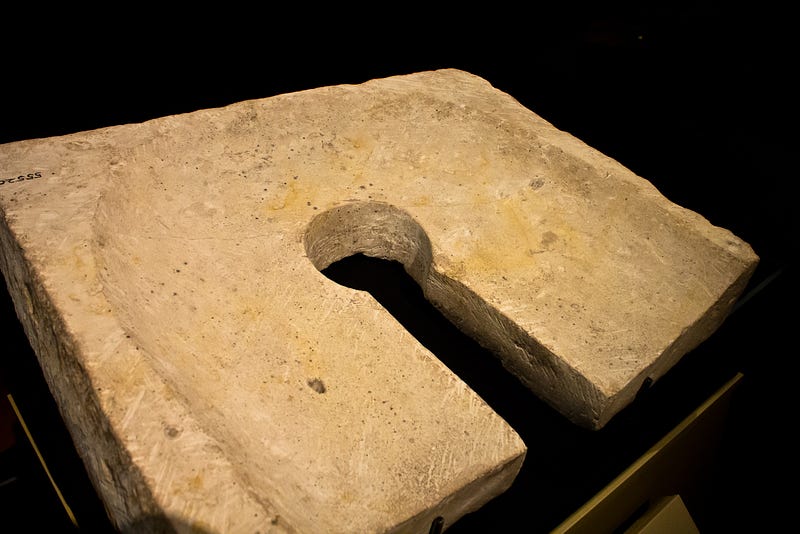
They would relieve themselves into containers filled with sand, which would be later cleaned by the servants or what today sounds like owning a cat. The lower class is known as the plebeian class also relieved themselves in pits of sand. But their poor butts had to settle on a wooden stool with a hole cut in the middle, instead of a more glorious non-splintery option.
Pig toilets in China’s Han dynasty

Imagine the ancient Chinese tune playing in the background when you read this.
It will help soothe your senses while reading something so gross. If you weren't hungry before reading this, you're going to be starving especially for a bacon treat.
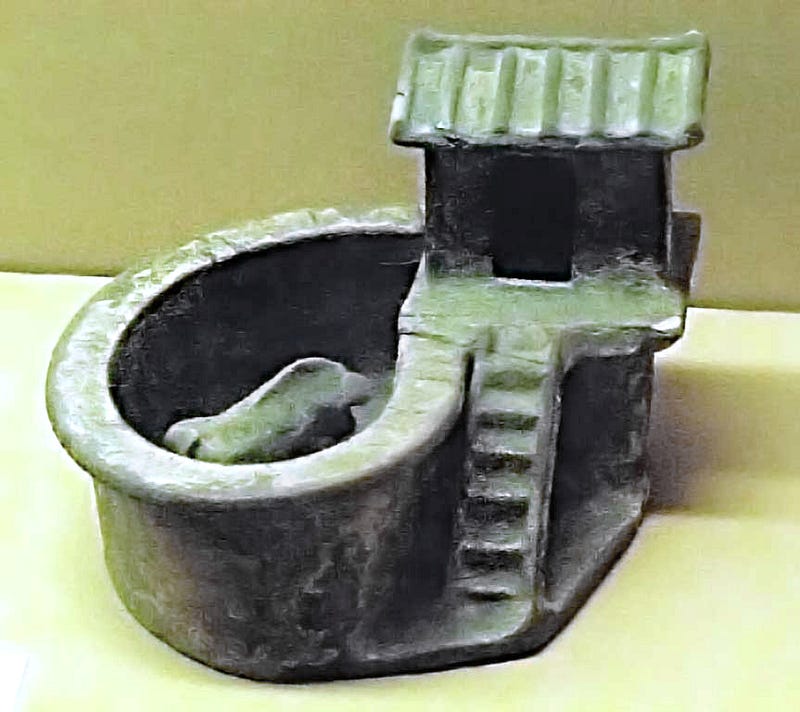
During the Han Dynasty in China, farmers constructed toilets that were directly connected to their pig pens. Though these toilets looked similar to the traditional toilets found in an outhouse, there was one minor difference.
Rather than the human waste being fed into a hole in the ground, it fed into the hole of a pig’s face. The waste was diverted into a pigpen, which the pigs, being pigs, would then consume as a light snack. Hold on to your gag reflex, there's more.
Once this was digested, the waste from the human waste, turned into pig waste, would be used as a fertilizer, thus eliminating the need for a full-fledged sanitation system.
The Romans built easy-to-flush latrines
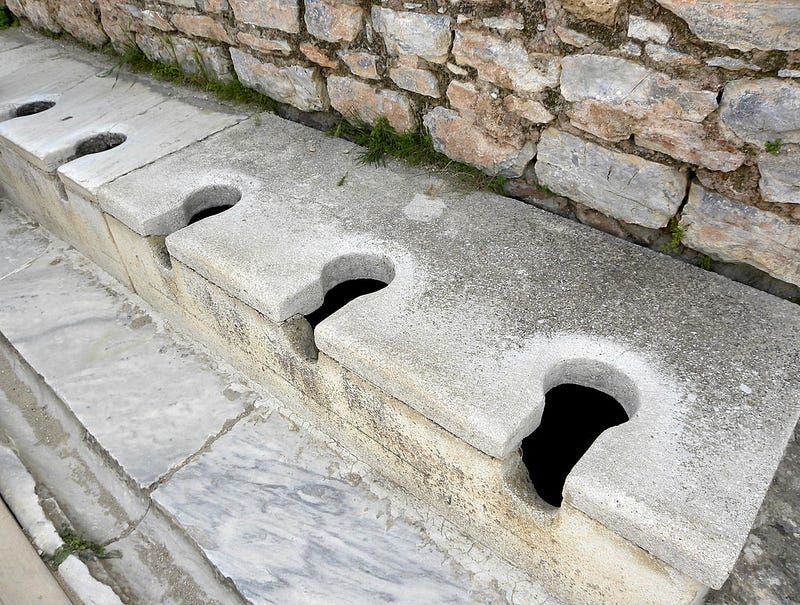
The word ‘latrine’ must have been such a relief especially after reading about the Chinese sewage process.
Roman bathrooms sounded like quite the social scene. Their bathrooms consisted of long stones or wooden benches with holes scattered about for the users to perform their natural business while being comfortable in their sitting position.
These elevated wooden benches were purposely built one to two feet above the ground to make it easier to flush the water through the sewage system that ran throughout the city.
Unfortunately, there were no dividers between the bench holes, making going to the bathroom a social activity than a private moment to oneself. Now your mismatching bathroom tiles don't look that bad, do they?
Running water directed from Rome’s aqueducts flushed out the troughs beneath the toilets. While it was a great way to flush out the waste, it was a bad way to prevent rat attacks from open sewer lines and occasional fires from the built-up methane.
But when it comes to ancient toilet systems, you win some and you lose some. A bunch of rats burning in the fire can probably go in the losing column.
Castle toilets were glorified chutes
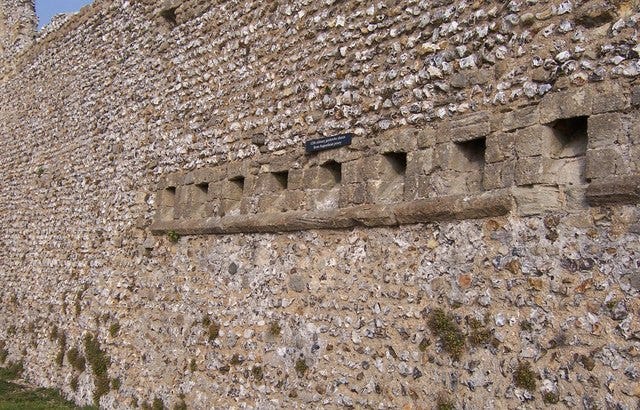
The toilets in the Medieval era relied mostly on the power of gravity to do most of the heavy lifting of the waste to a more desirable place and away from the castle.
Castles had special rooms dedicated to answering nature’s calls. But they were called garderobes, not bathrooms.
Garderobes were nothing to write home about, with very few bells and whistles. The garderobe was a small room with chutes that led to a moat or a communal cesspit for the dung to float away or around the castle.
If the idea of the moat was to keep enemies at bay, then this was a rock-solid idea. Although, an addition of a floating poo could also act as a deterrent for crossing.
Chamber pots
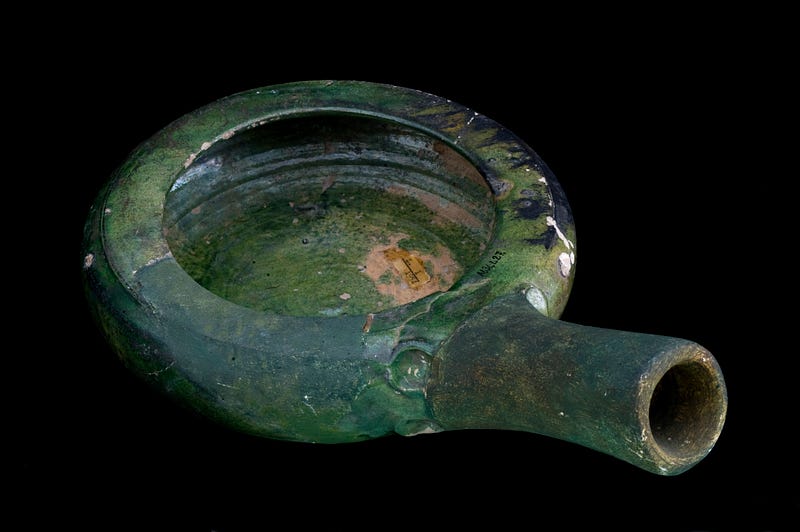
Before indoor flushing toilets became popular in the 20th Century, most people wandered down the local cesspools in order to relieve themselves.
This was a pretty nifty inconvenience where convenience is of paramount importance. This trip could even prove to be a hazardous one if taken at night. So wandering around a local cesspool, people started having chamber pots in the room.
Chamber pots were small metallic or ceramic containers designed specifically to hold waste that was later emptied into pools or just casually thrown out of the windows. A fun thing to look out for when walking underneath a window, surely.
They remained a popular way to go to the bathroom until WWII and are used even today in some parts of the world where indoor plumbing is still a few light-years away.
Since chamber pots were a regular fixture in people’s homes, they didn't mind jazzing them up a bit. Turning them into less of a pissing-pot to more of a fun little home decoration to whiz in.
Some were ornate and made of ceramic or fine China. Others were encased in decorative boxes. Some were designed with versus like, ‘’use me well and keep me clean, and I’ll not tell what I’ve seen.’’ which now, of course, has been reduced to simply, ‘’live, laugh, love.’’
The modern flushable toilet was invented in the 16th century
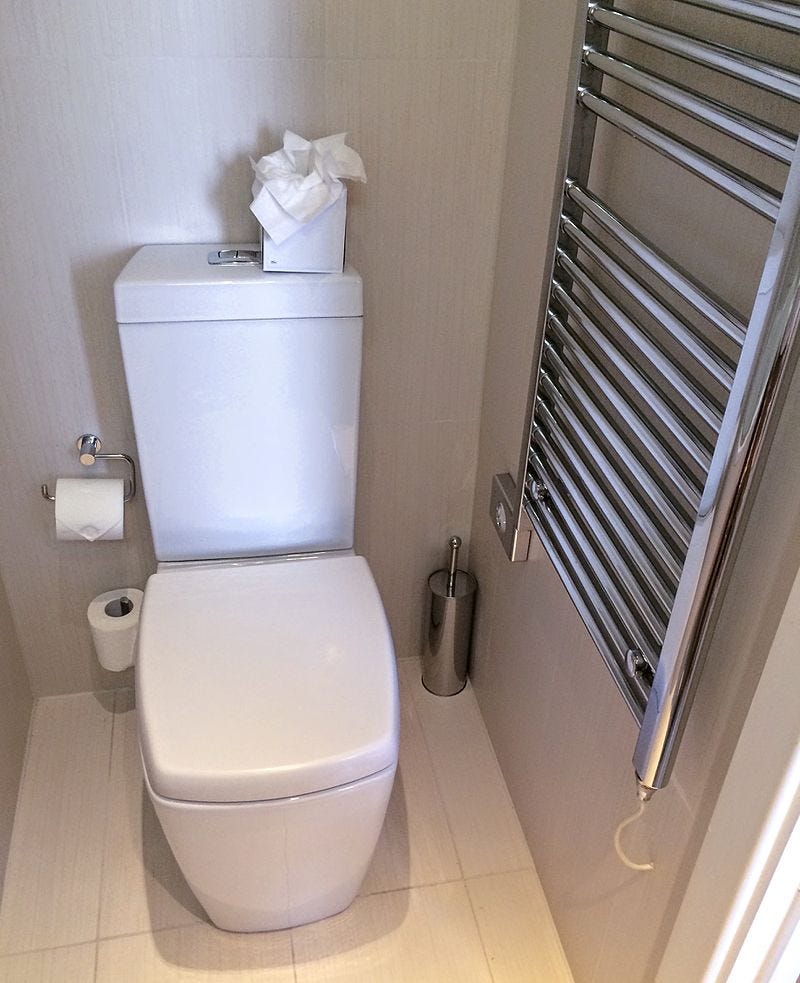
Sir John Harington was a controversial writer known for his risqué poetry and political writings. He also invented the flush toilet in the late 16th century. A poet inventing a flush toilet, hmm, writers I hope you noted this point here?
In the metamorphosis of Ajax, Harington described the device as an elevated cistern that dumped water into the toilet bowl and removed waste via the pulling of a chain or what sounds remarkably like our modern-day toilets.
Unfortunately, the metamorphosis of Ajax was also a thinly veiled criticism of the English government. So the invention of the toilet somehow sandwiched between the critiques of the monarchy and presumably got thrown out with the bathwater, as they say for nearly two centuries.
Queen Elizabeth I, however, did have one built for herself, which is probably not the takeaway Harington was aiming for when it came to a queen reading his antigovernment pamphlet.
They refined the flushed toilet in the 18th century
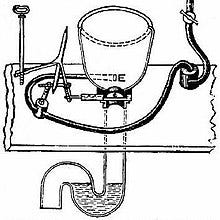
It wasn't until the mid 18th century when the flushable toilets were beginning to truly gain momentum. Scottish inventor Alexander Cumming and English inventor John Braham both together developed the advanced plumbing devices that assisted in the creation of the modern-day flushing toilet.
Now, these two deserved as important places in history as the Wright brothers, right?
Anyway, Cumming created an S-trap which allowed the water to sit in the bowl and act as a barrier against the foul smell of sewage and gas, and also a popular source of drinking water for bad dogs.
Though Harington technically was the first to invent the toilet, it was Cumming who held the patent. Cunning! It was during the installation process of Cumming’s design when Braham developed a valve with a hinged flap that sealed the water in the bowl.
Thanks to these two advances in toilet design, these babies began selling like hot cakes in the market. With water closets growing in popularity throughout the mid-18th and 19th centuries.
After WWI, all new buildings built in the UK were required to include an indoor toilet. We have come a long way from throwing our dung out the window.
Thomas Crapper was famous for selling flushing toilets
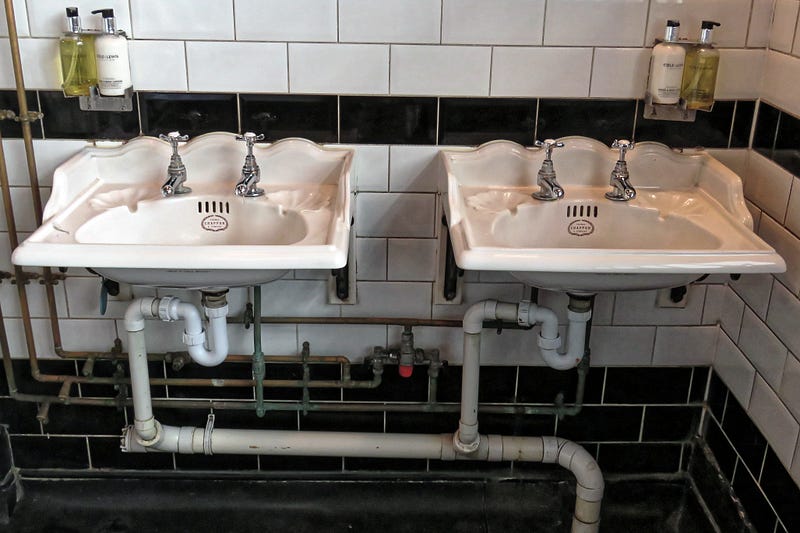

Given his last name and how hilarious and ironic it would be, Thomas Crapper is often falsely credited as the inventor of the modern toilet. In reality, Crapper was more like the band, kiss, of toilets. He didn't invent the toilet, but he sure knew how to market the crap out of it.
An early sanitation pioneer, Crapper is credited for inventing the oddly beautiful U-bend plumbing trap that is still used in toilets and sinks today. Crapper displayed his toilet products in showrooms and tried to sell his sanitation designs to the wealthy.
And yes, Crapper was not the inventor of the flushing toilet. But when people would draw the conclusion, he didn't go out of his way to correct them. Why the crap ruin it? It was better this way. After all, the number one marketing strategy is to let them believe what they believe until is working in your favor.
Edward VII hired him to install dozens of indoor bathrooms in several royal palaces, which contributed to his fame. But mostly, of course, it was that his last name was Crapper, and his whole life was about toilets. Only if our life’s purpose was as easily revealed as our surnames.
Public pay-per-use toilets
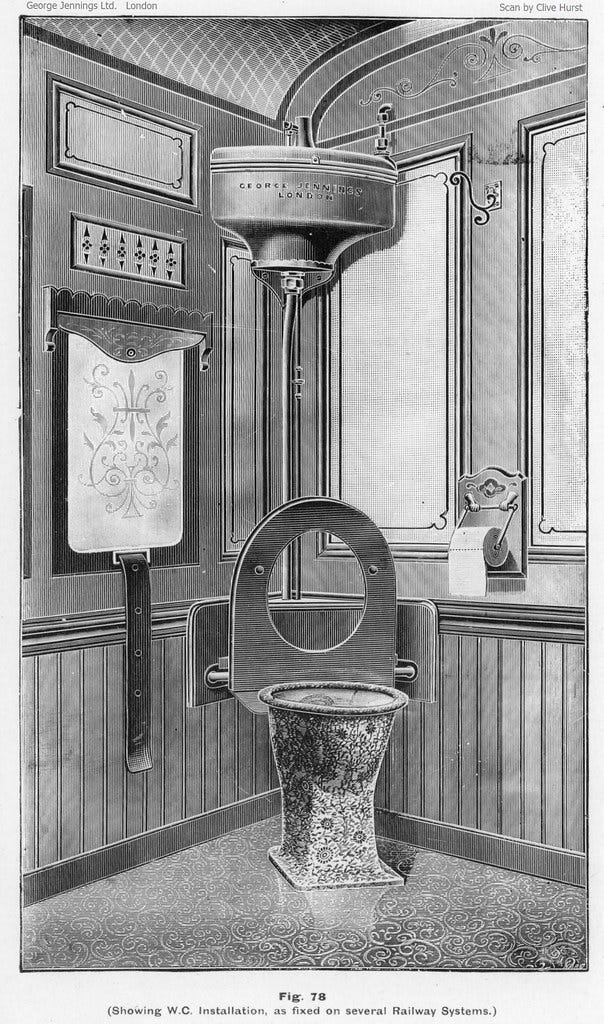
George Jennings, a sanitation engineer, and Autour toilet inventor was the first to propose the idea of installing public flush toilets throughout London. Jennings designed a series of toilets for use at an art exhibit in 1851 that cost a penny peruse.
Jenning’s art toilets that cost money for use were a big hit, especially with the poorer folk who couldn't afford a flush toilet on their own but could afford a penny to use one. With these toilets being a bona fide hit, Jennings proposed to build public facilities at the Royal Exchange, a major commerce and business sector in London.
The government ignored this idea at first with a strange belief that nobody would want a public bathroom, claiming the results of several trial public bathrooms proved they were bunk.
The Royal Society of Arts, the money behind Jenning’s public toilets at the art show, installed d handful of test pay toilets around London, soon after to see if it was a thing people wanted.
The move ended up being a financial catastrophe, even if its heart was in the right place. In 1885, London officials finally came around to Jennings’ idea several years after the poor plumber passed away.
The first facilities were built at the Royal Exchange, but not by Jennings’ company, which seems like a real jerk move by the Royal Exchange.
‘’Dry toilet’’ were invented to help fight cholera
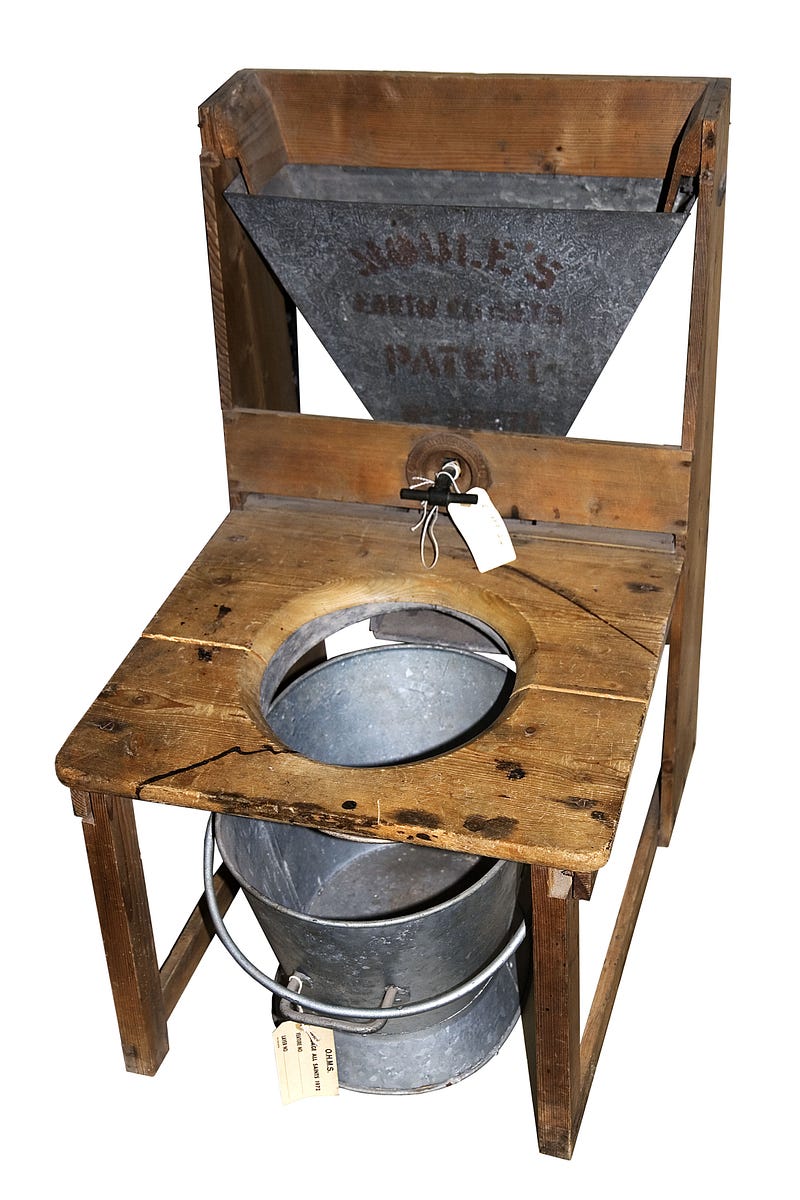
As the population began to boom, so did the contagious diseases that spread like wildfire, due to widespread unsanitary conditions. Cholera, in particular, was the contagious disease du jour whose spreading was aided greatly by poor sanitation systems.
Because of this, a dry toilet was invented as a way to use the bathroom without water as the flushing mechanism. But rather, it would divert waste or use covering materials such as peat to absorb the liquid.
First, invented by an English priest named Henry Moule with a patent in 1873, he was able to get the design in schools and public hospitals in England and India. But despite cutting maintenance costs and eliminating odors famously associated with sewage systems, his design did not catch on.
We can thank this failure today for all our wet toilets.