
The History of Shepherd’s Pie and a Kosher, Gluten-Free Recipe
Shepherd’s pie or cottage pie is a meat pie with a crust or topping of mashed potato originating from Ireland. Jews have come to adopt the recipe and it is a popular meal for Shabbat and Passover.
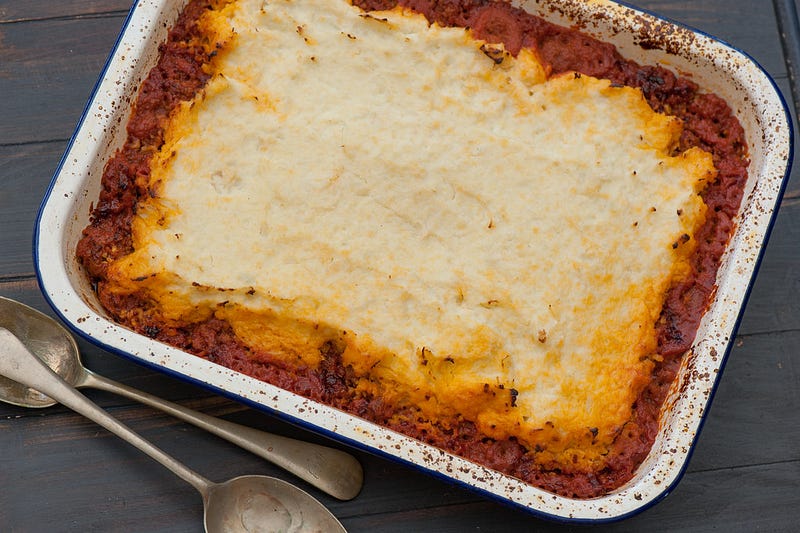
Shepherd’s Pie came about in the late 1700’s in Ireland. It was created by housewives looking to make meals frugally, by incorporating leftovers from other meals. The challenge came, as it does today, from making a dish that spouses and children would not complain about or refuse to eat.
Recipes vary but all have the same basic structure. There’s a crust of mashed potatoes on the top and the bottom and inside is a filling of minced meat. Technically, the dish is called Shepherd’s Pie when the filling consists of mutton or lamb, and it’s called Cottage Pie when it’s filled with beef. The meat is simmered in a gravy or sauce with onions and other chopped vegetables like celery, carrots or peas. The dish is something that all Irish cooks like to put their personal spin on.
The history of the dish is a bit confused but some sense can be made of it from looking at the history of Ireland. Here are some of the basic facts that help clarify the dishes origins.
The Norman invasion of Ireland started in the 13th century and lead to a turbulent joining of the nation with England. This resulted in England taking control of Ireland in the late 1400’s and imposing Protestantism in the predominantly Catholic country. Converts became landowners with government protection while those refusing to convert becoming impoverished. The lower class peasant land workers lived in modest cottages.
There are different accounts as to how the potato reached the British Isles given they are not native the the area. One legend has it that in 1588 ships that were part of the Spanish Armada carrying potatoes wrecked off the coast of Ireland and some of the potatoes washed ashore. A different legend holds that in 1589 Sir Walter Raleigh, sent by Queen Elizabeth I to explore North America, found potatoes and brought them back to England. Regardless of how the potato was introduced to Ireland, it had become an inexpensive stable of the Irish diet by the 1700’s, especially for the poor.
Around the mid to late 1700’s a dish came about somewhere in Ireland which was referred to as Cottage Pie. The name seemed to be more related to those who ate the dish, poor Irish peasants living in cottages, than to the ingredients. It was created as a clever and frugal way to use up leftovers so nothing would go to waste.
After making a Sunday roast, the unused scraps of meat were combined with whatever vegetables were at hand and made into a pie. Instead of using a dough crust which would have been more expensive, the pie was topped with a potato crust. Sometimes a crust was added on the bottom as well to soak up all the juices so literally nothing would be wasted. Because the Irish peasants couldn’t afford beef, cottage pie was made with mutton.
The term Shepherd’s Pie was first coined in the mid-1800’s. For a while the name was used interchangeably with Cottage Pie but over time a distinction was made. The dish was called Shepherd’s Pie when it was made from mutton or lamb (shepherds tend sheep). It was called Cottage Pie when it was made with beef. Traditionally, the Irish were more likely to make the version with lamb while the British made it with beef.
Jews and Shepherd’s Pie
It is unclear when Jews first began eating Shepherd’s pie, but it is likely they adopted the dish in Ireland. While the various Jewish communities in Ireland were generally fairly affluent, they were still careful not to wasted food and so would have also wanted to create tasty meals that incorporated leftovers. Due to their resources, they probably ate Cottage Pie with beef, as opposed to the lamb version.
Due to episodes of antisemitism in Ireland, and the lack of a large community there, a number of Irish Jews immigrated to the United States and brought their love of Shepherd’s or Cottage Pie with them. In addition to making a great midweek meal, Jews will sometimes eat on Shabbat and it is a popular meal on Passover.
The recipe I have included below is one I have developed over the years as my love for the dish has grown. You can make it as Cottage Pie with lamb or as Shepherd’s Pie with beef. You can also make it with veal or turkey though I’m not sure what name these would fall under. I have include some preparation hacks to speed things up if you prefer. I have also listed possible wines that go well with the dish that you might enjoy trying.
Recipe for Shepherd’s Pie
[Note: If preparing for Passover leave out the peas, corn, cornstarch and fennel seeds unless your custom is to eat Kitniyos.]
Preparation Time:
45 minutes — 1 hour (decrease preparation time by using some of the suggestions included below)
Ingredients:
- 1 lb potatoes, peeled and quartered
- 4 to 5 tablespoons chicken broth (can use reduced sodium if desired)
- 1 tablespoon hot sauce of choice
- 2 tablespoons gluten free, fish free Worcestershire sauce (if you are having difficulty finding this look for hechshers on organic, gluten free brands)
- 1 large can chunky pasta-style tomatoes or diced tomatoes drained (for extra flavor I use the kind with chilies but this makes it spicier so adjust to taste)
- 1 small can tomato paste (can use reduced sodium or no salt added if desired)
- 1 lb kosher ground sirloin (can use kosher ground turkey, lamb or veal if desired)
- 1 large onion chopped (in the summer use two Vidalia onions if you can get them)
- 1 large green pepper seeded, membrane removed, chopped
- 2 cups yellow summer squash
- 1 cup chopped carrots
- 3 large stalks celery, peeled and chopped
- 1 cup frozen or fresh corn kernels [leave out for Passover]
- 1 cup frozen baby sweet peas [leave out for Passover]
- 1 cup chopped white button mushrooms
- 4 cloves fresh garlic, peeled and chopped (or fresh, chopped garlic from supermarket)
- 1 tablespoon fresh parsley
- 1 teaspoon fresh oregano
- 1 teaspoon rosemary
- 1 teaspoon thyme
- 1/2 teaspoon fennel seeds, finely crushed
- 1 tablespoon Italian seasoning
- A dash each of cinnamon, nutmeg and cloves
- 1 tablespoon of paprika (if you have a strong sense of taste for this spice you can leave it out as it is meant for decoration not to alter the flavor of the dish)
- 1 cup pareve (neither milk nor meat products included) gluten free creamer (If you have trouble finding it, try a brand that is vegan, kosher for Passover and non-gebrokts or has no grain products included).
- 3 egg yolks (can discard one after checking or leave out entirely if you have high cholesterol or are vegan)
- 2 tablespoons pareve margarine
- 1 teaspoon potato starch dissolved in same amount of water OR 1 tablespoon cornstarch dissolved in same amount of water (see notes about the difference between these two options) [Don’t use cornstarch for Passover]
Instructions:
- Preheat oven to 375⁰F. Cover potatoes in water in medium pot and bring to a boil. Boil, uncovered for 20–25 minutes or until thoroughly cooked through
- Drain the potatoes well. Mash or whip, adding butter, and non-dairy creamer to make light and fluffy. Combine egg yolks well and add while continuing to mix or whip. Add salt and pepper to taste. Put aside. *If using packaged, fresh or frozen peeled potatoes or dehydrated potato flakes prepare according to instruction provided.
- Heat the oil in a large skillet on medium heat until it begins to shimmer.
- Add the onion and carrots and sauté until they begin to take on color.
- Add the celery and sauté another 2–3 minutes.
- Add the celery, green pepper and garlic and sauté another 2–3 minutes.
- Add the meat and brown ensuring it is fully cooked (time depends on the meat you are using). Drain fat from mixture.
- Stir in seasonings. Add Worcestershire sauce and hot sauce if you choose. Mix.
- Add squash, mushrooms, tomatoes, corn, peas and tomato paste. Mix well to combine flavors until it starts to bubble.
- Mix in starch and water.
- Reduce heat to low, cover and let simmer for 10 minutes or until the sauce is slightly thickened.
- Spoon mixture into a 2.5 quart glass casserole dish.
- Spoon mashed potatoes over the top, beginning around the edges to make a seal to prevent the mixture from bubbling up. Smooth with a rubber spatula.
- If using paprika, sprinkle it over the top for color.
Cook Time:
Place casserole on a parchment lined half sheet pan on the middle rack of the oven. Bake for 20–25 minutes or until the potatoes just start to brown. Remove to a cooling rack and let sit for 15 minutes before serving.
Serves 6–7
Alterations to Save Time
While this recipe takes some time to prepare, the results are well worth it. One ingredient, in particular, that you can save a good deal of time preparing are the potatoes. Try using peeled and quartered potatoes but don’t forget to wash them thoroughly under cold water as starch tends to build up once they are peeled. Also make sure they are raw or they will become too mushy when boiling. You can even use dehydrated potato flakes which eliminates the first step (just follow the recipe on the container). I have used the dehydrated potato flakes numerous times and with some milk, margarine, salt, pepper and parsley flakes (just to add some color) I can’t tell the difference from the real thing.
You can also cut the preparation time by using frozen, mixed or canned pre-cut vegetables. While fresh herbs always seem to taste the best they also take time to shop for and prepare. Dried seasonings often taste almost as good as fresh and save a great deal of time though I wouldn’t cheat on the fresh garlic as there is no comparison between garlic powder and fresh chopped garlic. You can still buy the chopped garlic at the store (though again I taste the difference when I use fresh garlic and chop it myself.) For those who prefer finer garlic pieces a press is quick and easy. Further time can be shaved off by using only the Italian Seasoning, and leaving out the extra basil, parsley, garlic and oregano.
Information on Going Gluten Free Kosher
Before “gluten-free” became a household word, Passover was eagerly awaited by many non-Jews. It was not uncommon for the Celiac disease-afflicted, along with others adhering to a gluten-free diet, to consult Passover recipes year-round and, come spring there was a bonanza of recipes and products available since companies add new ones all the time.
See this article for information about choosing kosher for Passover foods when you need to eat gluten free.
See this article about being gluten free when keeping kosher for Passover.
Wine Pairings
There are now numerous great kosher wines on the market from all over the world. For this dish, you can choose from several different wines depending on the meat you choose. For lighter meats try a Pinot Noir or even a Zinfandel. If you prefer a Pinot choose a warmer vintage for just the right amount of fruity undertones to enhance the more delicate flavor of the meat. Or try a lighter Zinfandel for a zesty, peppery flavor with a hint of blackberries to bring out the unique spices in the dish.
If you are using beef, a Malbec is an ideal choice to bring out the complex flavors created by the herbs and spices in the meal with berry and plum flavors enhanced with a spiciness that tastes of anise and caramel undertones. For those preferring a heavier, more robust wine that goes well with beef, a Syrah (shiraz) is a hearty, intense wine with flavors of black fruits with toffee notes and a hint of black pepper spice. Merlot works well with any meat as it is less tannic, has fruity and herbal flavors and a round texture.
Notes:
- You will notice that in addition to Italian seasoning I double up on some of the spices found in this blend. You can always season to taste, add spices you like or leave out spices you don’t like. While the sweet spices may seem a bit odd for this recipe, give them a try at least once as they blend into the overall flavor and don’t stand out on their own
- While there has been a lot of hype about gluten hiding on the spice shelf . But with a little precaution, you can keep your favorite flavors. Individual herbs and spices do not generally contain gluten, though a non-gluten anti-caking agent (e.g. calcium silicate, silicon dioxide or sodium aluminum silica) may be added. The other thing to remember is spices are eaten as part of other foods. Since levels of gluten are typically measured as the number of ppms in a food, the total amount of gluten added through a spice would be considerably less than what might be found in a pure spice effectively neutralizing it’s effects for most people. In very rare cases, wheat flour or wheat starch may be added to spices to reduce cost and while there has been concern about cross contamination research into spice production and packaging facilities have shown the rates of cross contamination with a gluten containing product is almost zero. It’s always best though, to buy quality spices to minimize any chance that a gluten containing ingredient may have found it’s way into the spice.
- When choosing between potato and corn starch, you don’t need to buy one if you already have the other. If deciding between the two if you don’t have either, however, I usually choose potato starch as it doesn’t have an after taste and you don’t need to use as much. It also provides a smoother taste quality which I prefer. While both are inexpensive, if you have an Asian market nearby, you can often find large bags of potato starch priced less than a dollar. Root starches don’t stand up to heat and lengthy cooking as well as grain starches so when using potato starch it’s generally better to use it at the end of cooking while when using corn starch it’s generally better to use it at the beginning of cooking (good for dishes like macaroni and cheese). For this dish, either can be added at the end as even if it isn’t as well thickened as you’d like, you will be baking it and that will allow the juices and other liquids to fully gelatinize.
- Different people hold to different standards on how they keep kosher. Use your own standards when deciding which brands of ingredients to choose.
- Regarding the fish free Worcestershire sauce, most people keeping kosher refrain from mixing fish and meat together. The mandated separation between meat and fish is made out of concern for medical risk, not because the combination is explicitly prohibited by the Torah.
I’d love to know any variations you know of in terms of this dish and other relevant historical facts you may be aware of. Please comment below.

If you enjoyed this article you might also like to read this one:
You can find links to my other work on Medium and follow me here. Thanks for reading!


