
The Historical Lessons of China’s Three “National Advances and Private Retreats”
Since the end of the Qing Dynasty, there have been three “national advances and private retreats” in Chinese history. The results have proved that “national advances and private retreats” are not sustainable, and “people advance together” is the right way in the world.

1. The first “advancement of the country and retreat of the people”: detonated the Revolution of 1911
Since the Opium War, the strong ships of the great powers opened the door of the Qing Dynasty, and the advanced productivity and free trade of the West brought China’s traditional natural economy to disintegration. The Qing government had no choice but to “learn skills from the barbarians to control the barbarians”, and the Westernization Movement came into being, but its main idea was still state capitalism.
The modern Chinese industry and commerce founded by the Westernization Group started with military industry and then developed into industries related to civilian use. However, the disadvantages of government-run enterprises such as poor management, corruption and waste are becoming more and more obvious, coupled with difficulties such as shortage of funds, Li Hongzhang proposed the policy of “government supervision and commercial management” in 1872, which opened a door for the privatization of state-owned enterprises.
Large-scale civil enterprises operated in the form of government-supervised commercial offices mainly include Steamship Merchants, Kaiping Mining Bureau, China Telegraph Bureau, Shanghai Machine Weaving Layout, and Hanyang Iron Works.
Many of the private investments in these enterprises come from dignitaries and gentry. They enjoy preferential treatment and privileges such as tax-free, tax-reduced loan interest and patents. Due to unclear property rights, some “government-supervised and commercial-run” enterprises wearing red hats are actually a combination of government and business, and the rich water has flowed into private pockets.
The most typical one is Sheng Xuanhuai, the boss of many “state-owned enterprises”. His dual identities as an official and a businessman make him the biggest beneficiary of turning public affairs into private interests.
The Qing government has been vacillating about the development of private capital, and has not opened up private establishment of new enterprises for a long time. Some people in the ruling group still regard government-supervised commercial enterprises as government property, and demand to prevent private capital from becoming big; others advocate the development of private capital, otherwise they cannot embark on the road to prosperity.
It was not until the defeat of the Sino-Japanese War, the decline of national power, and the “Treaty of Shimonoseki” that outsiders could invest in factories in China, the restrictions on private factories were lifted, and the government-run enterprises were ordered to “change their plans quickly and attract investment to undertake”, and encouraged private enterprises to set up enterprises. This is the first time in modern history that “the people advance and the country retreats”.
According to estimates, from the total industrial capital from 1894 to 1913, the growth of national capital exceeded that of bureaucratic capital: bureaucratic capital scale growth multiple was 4.32, with an annual growth rate of 9.2%; national capital scale growth multiple was 20.45, annual growth rate The rate is 17.5%.
At the same time, it should be pointed out that the previous historical expressions generally confuse state capital and bureaucratic capital. In fact, there is a difference between the two. The latter is the private capital of the elite that evolved from state capital.
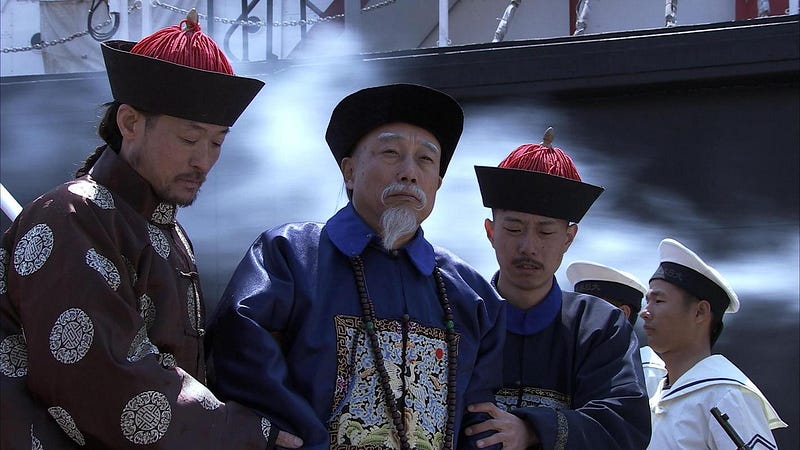
The Qing government opened the private sector to industries such as spinning, rice milling, and wine making, but was still reluctant to let go of industries such as shipping, telegraphs, and railways. In 1877, some bureaucrats launched an offensive to nationalize China Merchants, which was suppressed by Li Hongzhang.
After Li’s death, Yuan Shikai became the governor of Zhili and the minister of Beiyang. In 1902, he took the Telegraph Bureau controlled by Sheng Xuanhuai back into the government, and took back the commercial shares at a low price;
In 1908, with the support of Li Lianying, Sheng Xuanhuai made a comeback and became the right servant of the postal department. He mobilized the commercial shareholders of the General Administration of Telegraphs to negotiate with the Qing government and recovered part of the investment losses. In the same year, Guangxu and Empress Dowager Cixi collapsed, Yuan Shikai dismissed his post and lived in idleness, and Sheng held a general meeting of shareholders of China Merchants in the following year on the grounds of operating losses.
Behind the above-mentioned incidents, there are not only struggles among bureaucratic groups, but also intertwined contradictions between government and business, as well as contradictions between the central government and the local government. This restructuring phenomenon continued until the early years of the Republic of China. When the Beiyang government ended, about 44 government-run and government-business joint ventures realized the transformation from government-run to private-run.
In 1911, Sheng Xuanhuai entered the “royal cabinet” and served as Minister of Posts and Communications, in charge of railways, telegraphs, shipping, and postal services, and became an important minister of the imperial court. In order to expand his sphere of power, Sheng Xuanhuai changed his previous ideas and introduced a policy of “advancing the state and retreating the people”, which triggered a wave of road protection in Sichuan and eventually led to the collapse of the Qing Dynasty.
After the railway was introduced to China in 1865, its economic importance grew. In 1904, the government-run Sichuan-Han Railway Corporation was established in Chengdu. In 1907, it was changed to a commercial one. In 1909, the Yichang-Wanxian section started.
Unlike the commercial shares raised in other provinces, Sichuan’s railway equity capital mainly comes from “rental shares”, which are usually collected forcibly along with the grain, and are worth 3 out of 100, which is equivalent to the government’s apportionment of funds to raise funds. As far as equity is concerned, Sichuan people, rich or poor, high or low, all have a stake in the railway.
In May 1911, under the advocacy of Sheng Xuanhuai, the Qing government suddenly declared that “the main railway lines were state-owned”, and signed a loan contract for the Guangdong-Han Railway and the Sichuan-Han Railway with a consortium of banks from Britain, France, Germany, and the United States. Borrowing £6 million. It is stipulated that foreign chief engineers should be employed on the two roads, and the four-nation syndicate enjoys the right to build and extend the priority of continuing investment.
There are many precedents in various countries for the nationalization of railways, and private railways do have disadvantages such as insufficient funds and poor management. In the context of the era of surging nationalism, although the state-owned railway policy is not without economic basis, the change of imperial orders and switching back and forth between government-run and private-run ones is more likely to sell the right of way and compete with the people for profit.
At that time, both roads had suffered huge losses, and the completion of the project was nowhere in sight. The government redeemed the commercial shares of Hubei, Hunan, and Guangdong with state shares. Due to the different degree of loss of commercial stocks in each province, the treatment at the time of redemption is also different. The two lakes are the best, followed by Guangdong. Although the merchants protested, the trend quickly subsided.
However, among the 14 million taels of gold in Sichuan, 3 million taels were in shortfall and the government did not approve it. A large proportion of the shares in the Sichuan Provincial Railway came from the lower class people. The share capital could not be returned, and the exchange conditions were lower than those in other provinces. This inevitably aroused public anger, and a storm of road rights broke out.
On June 17, more than 2,000 people from various groups in Chengdu established the “Sichuan Road Protection Comrades Association” and put forward the slogan “Break the contract to protect the road”. The Baolu Comrade Branches of various groups in various parts of Sichuan have been established one after another, and the number of members has rapidly grown to hundreds of thousands. In August, there was a wave of mass strikes and school strikes. After entering September, it developed into a province-wide resistance to grain and donations.
Zhao Erfeng, the acting governor of Sichuan, trapped the leaders of the road protection movement, shut down the railway company and comrades’ associations, and shot down the demonstrators. The Tongmenghui joined forces with the Gelaohui and other anti-Qinghui parties to launch an uprising, and the situation in Sichuan Province was completely out of control. The Qing court urgently dispatched the Minister of Guangdong-Hanchuan-Han Railway to supervise Duanfang and led the Hubei army to suppress it. Wuchang was empty of troops. .
With the independence of the provinces one after another, Qing Shi was forced to announce his abdication, and history has since turned a new page.
Sheng Xuanhuai is an industrial leader with great influence in modern times, and he has been in both political and business circles for a long time; Duanfang and Zhao Erfeng are also capable ministers of the “new school” in the Qing court, and their insight is far from comparable to that of conservative bureaucrats; these cutting-edge figures in the system and The constitutionalist gentry in various provinces promoted the trend of “preparatory constitutionalization” in the late Qing Dynasty and competed with the revolutionary faction headed by the Tongmenghui.
“If you don’t review the situation, you will be lenient and strict.” When the economic rights protection incident evolved into a large-scale group confrontation between the government and the people, it ignited the fuse of the revolution, and the reform elites in the system could not escape the fate of being destroyed.
2. The second “advancement of the country and retreat of the people”: dragged down the Kuomintang regime
If the “National Advancement and the Mint Tui” in the late Qing Dynasty had more distinct features of the rule of man, the “National Advancement and the Mint Tui” of the Nationalist government had a profound group imprint. The Tongmenghui, the predecessor of the Kuomintang, inherited the tradition of the party, and the Kuomintang rebuilt “using Russia as a teacher” has incorporated the centralized blood of a Leninist party.
The authoritarian color of its economic policy has become increasingly prominent with the deepening of foreign aggression and the expansion of power.
The period from 1927 to 1937 is known as the “golden decade” of Chinese national capitalism. Private capital and state capital developed in parallel, with mutual growth and decline. The average annual growth rate of national industrial capital exceeded 8%. Private enterprises have advantages in economic fields such as textiles, mining, transportation, and electric power.
By 1936, before the outbreak of the Anti-Japanese War, China’s national industrial capital (including mining) was about 1.376 billion yuan, of which private capital was about 1.17 billion yuan, and government-run capital was only 206 million yuan, accounting for about 15%. In the first three years of the Anti-Japanese War, the investment in private industries in the rear also exceeded the national average before the war.
The Great Depression of the world economy in the 1930s led to the rise of the thought of planned economy in the world, and also affected the leaders of the national government. Chiang Kai-shek admired the “controlled economy” of Nazi Germany, and Song Ziwen, Vice President of the Executive Yuan and Minister of Finance, admired the “planned economy” of the Soviet Union. Domestic entrepreneurs and scholars also agree with the planned economy to a certain extent.
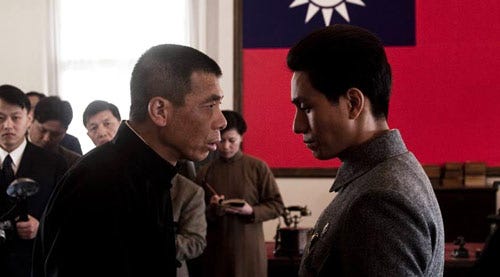
For example, Lu Zuofu advocated: “Under the principle of planned economy, the government must directly invest in businesses that cannot be run by the people. In addition, it must invest in businesses run by the people, and let the people manage their profits and losses. The government Only stand in the management position of the overall industry, manage its mutual relationship, manage its mutual cooperation relationship, and reward and guide to help each business, but not directly manage each business.”
After the “September 18th Incident”, the government began to turn to the wartime system, focusing on the development of state-owned enterprises. In 1934, the former National Defense Design Committee was reorganized into the Resources Committee, which was led by the Military Committee to manage the national industrial construction and implement the heavy industry construction plan, becoming the most powerful economic department.
After the “July 7th Incident”, the national government established a joint office of the four major banks of the Central Committee, China, Communications, and Farmers (Four Union Headquarters) to implement a state monopoly on finance; at the same time, it controlled war resources through the Resource Committee and implemented comprehensive intervention in the economy .
After the Fifth Plenary Session of the Kuomintang Central Committee officially established the central position of state-owned industries in 1939, the government unilaterally supported state-owned industries, and state capital invaded the traditional territories of private capital such as flour, matches, textiles, electric power, and transportation, and quickly took advantage.
Under the one-party dictatorship system, the bureaucratic capital represented by wealthy families such as Kong and Song took the opportunity to control the economic situation by relying on the power of the system, turning public affairs into private interests, competing for interests with the people, and making great fortunes in national calamity.
By the end of the Anti-Japanese War, state capital and bureaucratic capital were already in an overwhelming advantage. Inflation, financial monopoly, material control, and the oppression and plunder of state capital and rich and powerful have made the private industry in a difficult situation.
Financial monopoly, material control, and inflation during the war resulted in private industries having no access to borrowing, lack of resources, and shrinking under the oppression of state capital and bureaucratic capital.
After the victory of the Anti-Japanese War, the national government was busy with demobilization and acceptance, and most of the military orders stopped. Many private manufacturers are unable to pay wages and are on the verge of bankruptcy. But the authorities regard it as a burden and ignore it.
Private entrepreneurs were unwilling to sit still, relying on groups such as the Qianchuan Factory Federation and the China Industry Association, they continued to hear about the state, participated in the constitutional movement, called for “economic democracy”, and were determined to unite in the struggle.
They asked to participate in the government’s reception and demobilization of the enemy’s counterfeit industrial and mining industries, to continue to order and purchase products, and to issue emergency industrial loans to overcome difficulties.
After the war, the national government took over a large number of enemy and counterfeit industries, which not only led to the corruption of the regime, but also increased the proportion of “state advancement and private retreat”. Among the 2,243 industrial and mining enterprises received by the Ministry of Economic Affairs, in addition to 448 unprocessed ones, 1,017 were directly operated by the Ministry of Economic Affairs or handed over to resource committees and other agencies, 298 were returned to the original owners, and sold to private operators 441 power plants were not put up for auction because most of them were state-run or had previous owners before the war.
After the war, the private industrial capital only recovered to 78.6% of the pre-war level, while the bureaucratic capital suddenly increased to 2.8 times the pre-war level.
The consequence of this “advancement of the state and retreat of the private sector” is that a large number of private factories closed down and workers lost their jobs; the rapidly expanding state-owned enterprises were corrupted, with low efficiency and bubbles. Social inflation is out of control, prices are soaring, and government tax revenue has dropped sharply.
When the Nationalist government realized the crisis, it tried to remedy the situation with “privatization of state-owned enterprises” out of consideration of expanding tax sources.
The corruption of state-owned enterprises and the decline of private enterprises cannot be solved by the one-party dictatorship system. Financial collapse, changes in people’s minds, and military defeat eventually led to the overthrow of the Kuomintang regime on the mainland.
3. After the founding of the People’s Republic of China, public-private partnerships, “state advances and private retreat”: delayed China’s modernization
When the People’s Republic of China was founded in 1949, it promised a long period of development for private capitalism. The “Common Program” of the founding of the People’s Republic of China affirmed that “under the leadership of the state-owned economy, all kinds of economic components should be divided into labor and cooperation, so as to promote the development of the entire social economy.”
As of 1952, private industry and commerce had 3.8 million employees, and its industrial output value accounted for about 40% of the total industrial output value.
The “Five Antis” movement launched from January to October 1952 destroyed the confidence of entrepreneurs, and under tremendous pressure, many people did not want to continue their business. In 1953, the “General Line for the Transition Period” was put forward, and the decision to launch the socialist revolution ahead of schedule, the promise of the “Common Program” has actually been cancelled.
The 1954 Constitution stipulates that the policy of utilizing, restricting and transforming capitalist industry and commerce shall be adopted. After the government gradually grasped the lifeline of the economy by confiscating old bureaucratic capital, promoting state capitalism, unified purchase and marketing, and agricultural cooperatives, the government began to implement the “reform of capital”.
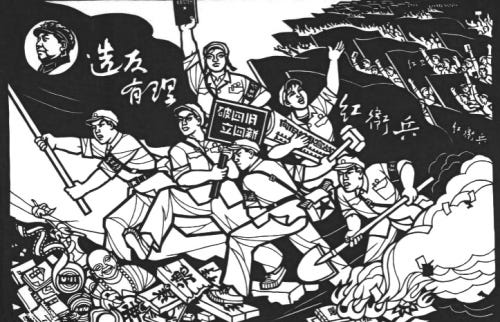
In fact, the article in the 1954 Constitution that “the state protects capitalists’ ownership of means of production and other capital ownership according to law” was abolished.
According to the redemption policy at that time, the assets and capital of private enterprises were cleared. According to statistics, in 1956, the total private shares of public-private joint ventures nationwide were 2.42 billion yuan. According to this, 5% annual fixed interest was paid to private shares. A total of 1.142 million shareholders.
This redemption method of repaying principal and interest is somewhat similar to today’s closed-end capital preservation funds, but the interest rate is not only lower than the profit rate, but even lower than the deposit rate.
At the end of 1956, the public-private partnership of the whole industry was completed, and 99% of the private industrial households in the country became public-private partnerships, and most of the commercial households realized public-private partnerships or cooperatives. After the public-private partnership, private personnel have positions but no rights in enterprise management, their management experience is not valued, and they are reduced to “reform targets” politically.
At that time, if the capital was 2,000 yuan, they were classified as capitalists, and 95% of the people received a fixed interest of only a few yuan per month. Many people would rather give up the fixed rate to take off the embarrassing “exploitation” hat.
It is said that the fixed interest will be paid for seven years, but he also said: “The seven-year tiger head, the five-year snake tail, and the third five-year plan. If it needs to be extended, it can be delayed until the fourth five-year plan.”
By the launch of the “Cultural Revolution” in 1966, the bourgeoisie changed from “objects of transformation” to “objects of dictatorship”. The payment of fixed interest was stopped in September of the same year. It was paid for a total of 10 years, equivalent to 50% of all private equity capital. After legal procedures, all public-private joint ventures have become state-owned enterprises.