People | History
The High Cost of Being a Prodigy
He had the highest IQ ever recorded
Can you imagine a child reading the New York Times at 2 years old? How about speaking eight languages by the time you were 6? What about inventing a language called Vendergood by the age of 8?
This is a true story about a prodigy and the high cost he paid in life. Let’s look at some of the lessons we can learn from this extraordinary person.
The prodigy
While much of what you are about to read may sound like fiction, it was reality for a child prodigy in the late 19th and early 20th centuries.
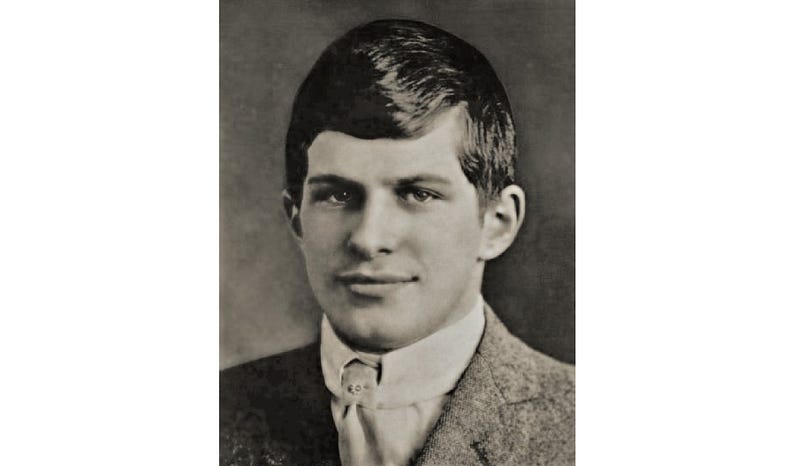
Have you ever heard of William James Sidis? He was born on April 1, 1898, in New York, NY. Sidis was a genius in every sense of the word. He was accepted by Harvard University when he was only 9 years old.
Interestingly, the language he invented, Vendergood, was for his second book, the Book of Vendergood, which he wrote when he was only 8. The language was based primarily on Latin and Greek while drawing on German, French, and other Romance languages.
Education
In an article in the Boston Herald, Sidis’s father said he guided his son’s early education, claiming he finished three grades his first morning and grammar school in six months.
Although Harvard accepted him when he was 9, the University asked him to wait until he was 11 before attending because of his young age. After five years, he graduated cum laude with a degree in mathematics at 16 years of age.
After a group of students at Harvard threatened to harm Sidis physically, his parents secured him a job teaching at the William Marsh Rice Institute for the Advancement of Letters, Science, and Art, now known as Rice University, in Houston, Texas, in 1915 at the age of 17.
He served as a teaching assistant and taught three classes, which included Euclidean geometry, non-Euclidean geometry, and freshman math. While there, he wrote a textbook for the Euclidean geometry course in Greek. During that time, he was a graduate fellow working toward his doctorate.
Unfortunately, after less than a year, he became frustrated by the teaching requirements of the department he worked in and how students older than him treated him. He confided to a friend he did not enjoy teaching and was unsure why the school hired him.
After less than a year, he withdrew from the school in good standing and returned to New England, later telling a friend he didn’t leave; he was asked to leave. At this juncture, he abandoned pursuing his graduate degree in mathematics.
Sidis enrolled in Harvard Law School in 1916 but withdrew in 1919, his final year.
Parents
Sidis’s mother, Sarah Sidis, was born in Russia and schooled herself at home for her primary and secondary education. She applied and was accepted at the Boston University School of Medicine, where she received her M.D. degree.
Sidis’s father, Boris Sidis, immigrated from Berdychiv, Ukraine when he was twenty and earned three degrees from Harvard before he was thirty. As a psychologist, physician, psychiatrist, and philosopher of education, he founded the New York State Psychopathic Institute and the Journal of Abnormal Psychology.
He once commented that his childhood was not full of happy memories, describing his parents as “pushy and aggressive.”
Adult years
Sidis avoided the public eye during his adult years as much as possible. He worked a series of menial jobs, moving from one position to the next whenever someone discovered his identity. He once stated:
“All I want to do is run an adding machine, but they won’t let me alone.” William Sidis (1898–1944)
He wrote several books using assumed names. A fascinating piece of information about Sidis is he alluded to dark matter before it was formally theorized. He also predicted the “black hole” in his book, The Animate and the Inanimate!
He was one of history’s few prodigies with multiple abilities, although his greatest strengths were mathematics and linguistics.
Sidis mastered over 40 languages, becoming conversant in 25 languages and dialects. Besides his writing, his contributions were few for a person of his extraordinary intelligence and talent.
How high was his IQ? Abraham Sperling wrote about it in his 1946 book Psychology for the Millions.
“Helena Sidis told me that a few years before his death, her brother Bill took an intelligence test with a psychologist. His score was the highest that had ever been obtained.
In terms of IQ, the psychologist related that the figure would be between 250 and 300.
Late in life William Sidis took general intelligence tests for Civil Service positions in New York and Boston. His phenomenal ratings are matter of record.” Abraham Sperling (1912–2000)
Sidis’s life was filled with anxiety, especially when he was young. As an introvert, he preferred being alone, and at his graduation from Harvard, he told the media:
“I want to live the perfect life. The only way to live the perfect life is through seclusion. I have always hated crowds.” William Sidis (1898–1944)
During an interview with the Boston Herald, Sidis reportedly made vows to remain celibate and never marry. He remained alone and finally found peace in his later adult years. Biographer Amy Wallace, speaking about Sidis, stated:
“So I think he really went from being completely traumatized as a young boy to becoming a happy man.” Amy Wallace (1955–2013)
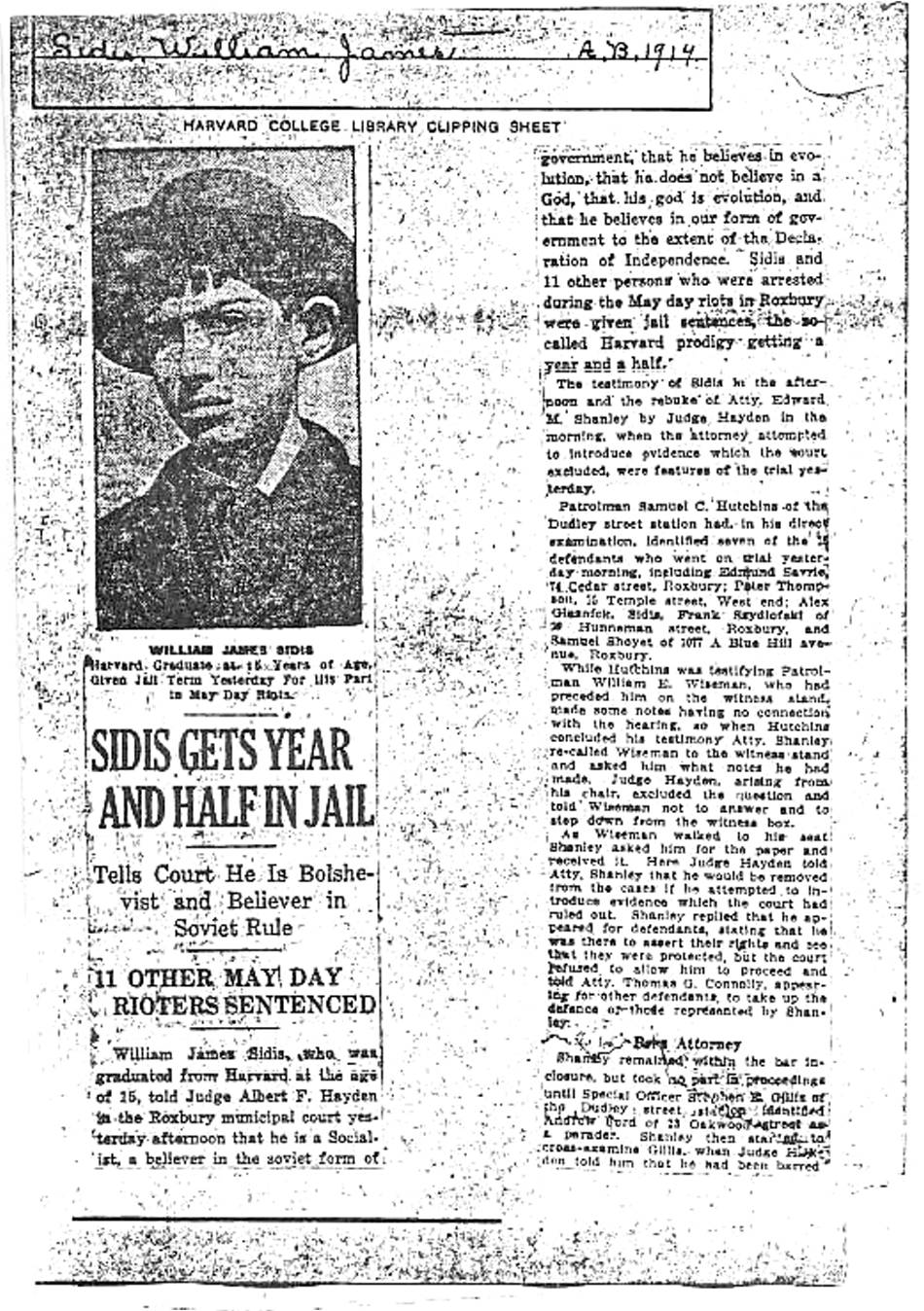
An avowed atheist, He stated his God was evolution. Sidis was also a socialist, claiming to believe in the Soviet form of government. He participated in the 1919 May Day riots in Boston. He and eleven other rioters received a sentence of a year and a half in prison.
Sadly, Sidis died in the hospital in obscurity, penniless, in Boston, Massachusetts, on July 17, 1944, at the young age of 46 from a cerebral hemorrhage.
Amy Wallace’s book, The Prodigy: a Biography of William James Sidis, America’s Greatest Child Prodigy, was the basis of the script for a movie about Sidis’s life released in 1997 — Good Will Hunting.
Final thoughts
A significant lesson from William Sidis’s life is that raw intelligence, as measured by IQ, does not make for a better life, regardless of how high it is. In fact, his high IQ hindered him in many ways.
Today, we realize IQ is only a measure of one type of intelligence. IQ alone does not make a person who they are. Other forms of intelligence, such as emotional, interpersonal, intrapersonal, musical, existential, and spiritual, are far more important to living a good life.
“It takes something more than intelligence to act intelligently.” Fyodor Dostoyevsky (1821–1881)
There is little you can do to improve your IQ; however, improving other forms of intelligence throughout life is possible. You can focus on improving the types of intelligence you find most appealing and those that matter most. When you do, you and everyone around you will benefit!
References:
- Abraham Sperliing, Ph.D. — A Story of Genius
- Boston Herald — Sidis Gets Year and a Half in Jail
- Amy Wallace — The Prodigy: a Biography of William James Sidis, America’s Greatest Child Prodigy
- Sarah Sidis, M.D. — The Sidis Story — unpublished manuscript, 1950
BillAbbate| LinkedIn |Twitter| Medium| Facebook| AmazonAuthorPage | NewsBreak | Truth
Bill Abbate Leadership Writer and Editor in ILLUMINATION
Thank you for reading this article! If you enjoyed it, please check out the others below! Medium has boosted each!