avatarCoded Conversations šŸ”šŸ’¬

Free AI web copilot to create summaries, insights and extended knowledge, download it at here

3459

Abstract

bed&display_name=YouTube&url=https%3A%2F%2Fwww.youtube.com%2Fwatch%3Fv%3DKKSyB476n9o&image=https%3A%2F%2Fi.ytimg.com%2Fvi%2FKKSyB476n9o%2Fhqdefault.jpg&key=a19fcc184b9711e1b4764040d3dc5c07&type=text%2Fhtml&schema=youtube" allowfullscreen="" frameborder="0" height="480" width="854"> </div> </div> </figure></iframe></div></div></figure><p id="f483">Here’s a breakdown of the primary types you’ll encounter in the wild:</p><h1 id="78b1">1. Centralized Botnets</h1><p id="c950">These are the old-school classics. In a centralized botnet, all the infected devices, or bots, are controlled through one (or a few) central server(s). The bot herder sends commands directly from this server, and the bots respond accordingly. This setup is simple and effective but has a major Achilles’ heel: take down the server, and you’ve decapitated the botnet. Examples include the infamous Conficker and Bredolab botnets.</p><h1 id="5320">2. Decentralized (Peer-to-Peer) Botnets</h1><p id="3397">Think of decentralized botnets as the guerrilla warfare of the botnet world. Instead of a central command center, each bot can act as both a command and control (C&C) server and a client. This peer-to-peer structure makes them much tougher to take down since you’d need to neutralize every single bot to kill the botnet. ZeroAccess and Storm Worm are notorious members of this category.</p><h1 id="e3c5">3. Hybrid Botnets</h1><p id="aa62">Hybrid botnets mix the centralized and decentralized models, aiming to combine the best of both worlds. They might use a central server for critical commands and peer-to-peer communication for redundancy and resilience. This type offers flexibility and a harder target for cybersecurity forces trying to take it down.</p><h1 id="cf44">4. IoT Botnets</h1><p id="bade">The Internet of Things (IoT) botnets specifically target the ever-growing number of internet-connected devices like cameras, routers, and even refrigerators. These devices often have weaker security, making them easy targets. IoT botnets can launch massive DDoS attacks, leveraging the sheer volume of devices they infect. Mirai, which took down parts of the internet in 2016, is the poster child for IoT botnets.</p><h1 id="8005">5. Mobile Botnets</h1><p id="c9b2">As smartphones have become ubiquitous, so too have botnets targeting them. Mobile botnets spread through malicious apps and can steal information, send spam, or even enlist your phone in a DDoS attack. Their mobility and the personal data they carry make them particularly valuable targets for cybercriminals.</p><h1 id="d890">6. Social Network Botnets</h1><p id="4317">Social network botnets exploit social media platforms to spread malware, phishing scams, or to amplify misinformation and spam. These bots can mimic human behavior, making them hard to detect. They leverage the trust within social networks to spread, making them particularly insidious.</p><div id="c827" class="link-block"> <a href="https://youtube.com/shorts/EzxS_l5_Lk0?feature=share"> <div> <div> <h2>Distributed Denial of Service DDoS The Basics #DDOS #cybersecurity #cyberattack</h2> <div><h3>Distributed Denial of Service (DDoS) attacks are a formidable threat in our digital age, where cyber attackers #hijack…</h3></div> <div><p>youtube.com</p></div> </div>

Options

<div> <div style="background-image: url(https://miro.readmedium.com/v2/resize:fit:320/0*ZrUtk1T9rftCzcx4)"></div> </div> </div> </a> </div><h1 id="ccd1">The Stealth and Shield Against Botnets</h1><p id="a0cb">Detecting a botnet is linked to finding a needle in a digital haystack. These botnets can remain dormant, making them difficult to spot until an attack occurs. However, unusual network traffic patterns can serve as a tell-tale sign of botnet activity. Advanced security tools and vigilant network monitoring can help unearth these patterns, offering a glimpse into potential botnet breaches.</p><p id="7139">Preventing botnet infections starts with fundamental cybersecurity practices: updating software to patch vulnerabilities, using robust antivirus solutions, and exercising caution with emails and downloads from unknown sources. Despite these measures, the chameleon-like nature of botnets requires constant adaptation and vigilance from cybersecurity professionals.</p><h1 id="e6a0">Navigating the Future Battleground</h1><p id="5068">As technology advances, so too do the tactics of cybercriminals. The future may see botnets that leverage artificial intelligence to evade detection or automate attacks, necessitating a new era of cybersecurity strategies. The arms race between cybercriminals and defenders continues to escalate, with each side developing more sophisticated methods of attack and defense.</p> <figure id="fbe9"> <div> <div> <img class="ratio" src="http://placehold.it/16x9"> <iframe class="" src="https://cdn.embedly.com/widgets/media.html?src=https%3A%2F%2Fwww.youtube.com%2Fembed%2FCHrES3Swpw4&amp;display_name=YouTube&amp;url=https%3A%2F%2Fwww.youtube.com%2Fwatch%3Fv%3DCHrES3Swpw4&amp;image=http%3A%2F%2Fi.ytimg.com%2Fvi%2FCHrES3Swpw4%2Fhqdefault.jpg&amp;key=a19fcc184b9711e1b4764040d3dc5c07&amp;type=text%2Fhtml&amp;schema=youtube" allowfullscreen="" frameborder="0" height="480" width="854"> </div> </div> </figure></iframe></div></div></figure><p id="3cbd">The fight against botnets is a collective endeavor involving individuals, organizations, and governments. International cooperation and information sharing are pivotal in dismantling botnet networks and holding their operators accountable. The battle is ongoing, with each seized server or disrupted botnet marking a small victory in the larger war against cybercrime.</p><div id="c98d" class="link-block"> <a href="https://www.patreon.com/CodedConversations/shop/156094?utm_campaign=productshare_creator"> <div> <div> <h2>Buy "Building a Home Cybersecurity Lab (Resource Manual)" on Patreon | Coded Conversations</h2> <div><h3>"Building a Home Cybersecurity Lab," your guide to creating a personal, safe, and fully operational security laboratory…</h3></div> <div><p>www.patreon.com</p></div> </div> <div> <div style="background-image: url(https://miro.readmedium.com/v2/resize:fit:320/0*iyXq9dAdr8uQ0-D2)"></div> </div> </div> </a> </div><blockquote id="4475"><p><b><i>If you enjoyed this, don’t forget to give a clap, share with your peers, and leave your thoughts in the comments.</i></b></p></blockquote></article></body>

The Hidden World of Botnets šŸŒšŸ’»šŸ¤–

Exploring the Underbelly of Cyber Threats: The Intricate Mechanics of Botnets

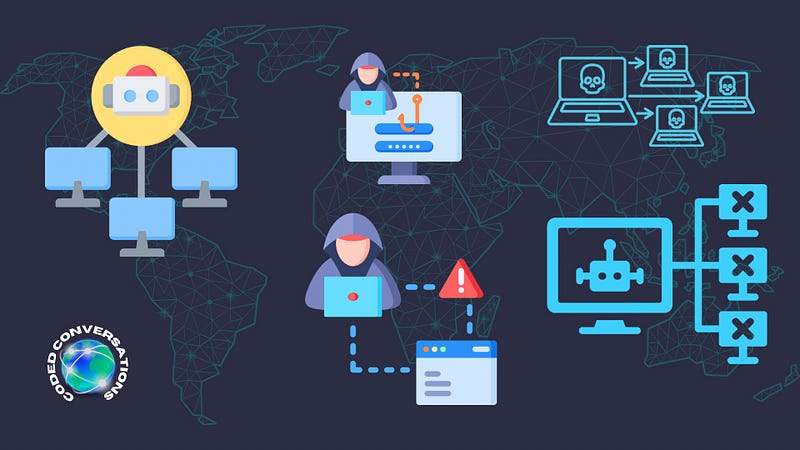
Botnets represent a complex, shadowy world where cybercriminals control an army of infected devices without their owners’ knowledge. A botnet is a network of hijacked computers, smartphones, or other internet-connected devices, commandeered by malware to form a legion of digital zombies. These enslaved devices are then used to launch coordinated cyber-attacks, steal data, or spread spam, often without a trace to the unsuspecting device owner.

The Birth of Botnets

The genesis of a botnet starts with infection. Cybercriminals exploit software loopholes or deceive individuals into downloading malicious software. Once a device is compromised, it becomes a puppet in the vast botnet army, awaiting commands from its puppeteer, known as the bot herder. This initial breach is often achieved through phishing emails, malicious advertisements, or exploiting unpatched software vulnerabilities.

Historically, botnets were managed through centralized servers, which, while effective, presented a single point of failure. Modern botnets, however, have evolved into more resilient structures, adopting peer-to-peer (P2P) networks. This decentralized approach significantly complicates efforts to dismantle them, as there’s no central server to target.

Enjoy the Content Buy Me a Coffee

The Dark Deeds of Botnets

The applications of botnets are as varied as they are nefarious. They can launch distributed denial-of-service (DDoS) attacks, overwhelming and shutting down websites. They’re also used for stealthy operations like stealing sensitive information through keylogging, distributing spam emails, executing click fraud in advertising, and even mining cryptocurrencies illicitly.

A vivid example of a botnet’s destructive capability was observed in the Mirai botnet attack of 2016. This attack turned ordinary Internet of Things (IoT) devices like cameras and routers into a botnet that launched a massive DDoS attack, temporarily crippling major internet platforms and services.

Here’s a breakdown of the primary types you’ll encounter in the wild:

1. Centralized Botnets

These are the old-school classics. In a centralized botnet, all the infected devices, or bots, are controlled through one (or a few) central server(s). The bot herder sends commands directly from this server, and the bots respond accordingly. This setup is simple and effective but has a major Achilles’ heel: take down the server, and you’ve decapitated the botnet. Examples include the infamous Conficker and Bredolab botnets.

2. Decentralized (Peer-to-Peer) Botnets

Think of decentralized botnets as the guerrilla warfare of the botnet world. Instead of a central command center, each bot can act as both a command and control (C&C) server and a client. This peer-to-peer structure makes them much tougher to take down since you’d need to neutralize every single bot to kill the botnet. ZeroAccess and Storm Worm are notorious members of this category.

3. Hybrid Botnets

Hybrid botnets mix the centralized and decentralized models, aiming to combine the best of both worlds. They might use a central server for critical commands and peer-to-peer communication for redundancy and resilience. This type offers flexibility and a harder target for cybersecurity forces trying to take it down.

4. IoT Botnets

The Internet of Things (IoT) botnets specifically target the ever-growing number of internet-connected devices like cameras, routers, and even refrigerators. These devices often have weaker security, making them easy targets. IoT botnets can launch massive DDoS attacks, leveraging the sheer volume of devices they infect. Mirai, which took down parts of the internet in 2016, is the poster child for IoT botnets.

5. Mobile Botnets

As smartphones have become ubiquitous, so too have botnets targeting them. Mobile botnets spread through malicious apps and can steal information, send spam, or even enlist your phone in a DDoS attack. Their mobility and the personal data they carry make them particularly valuable targets for cybercriminals.

6. Social Network Botnets

Social network botnets exploit social media platforms to spread malware, phishing scams, or to amplify misinformation and spam. These bots can mimic human behavior, making them hard to detect. They leverage the trust within social networks to spread, making them particularly insidious.

The Stealth and Shield Against Botnets

Detecting a botnet is linked to finding a needle in a digital haystack. These botnets can remain dormant, making them difficult to spot until an attack occurs. However, unusual network traffic patterns can serve as a tell-tale sign of botnet activity. Advanced security tools and vigilant network monitoring can help unearth these patterns, offering a glimpse into potential botnet breaches.

Preventing botnet infections starts with fundamental cybersecurity practices: updating software to patch vulnerabilities, using robust antivirus solutions, and exercising caution with emails and downloads from unknown sources. Despite these measures, the chameleon-like nature of botnets requires constant adaptation and vigilance from cybersecurity professionals.

Navigating the Future Battleground

As technology advances, so too do the tactics of cybercriminals. The future may see botnets that leverage artificial intelligence to evade detection or automate attacks, necessitating a new era of cybersecurity strategies. The arms race between cybercriminals and defenders continues to escalate, with each side developing more sophisticated methods of attack and defense.

The fight against botnets is a collective endeavor involving individuals, organizations, and governments. International cooperation and information sharing are pivotal in dismantling botnet networks and holding their operators accountable. The battle is ongoing, with each seized server or disrupted botnet marking a small victory in the larger war against cybercrime.

If you enjoyed this, don’t forget to give a clap, share with your peers, and leave your thoughts in the comments.

Botnet
Ddos
Cybersecurity
Computer Networking
Computer Network
Recommended from ReadMedium