avatarCaroline de Braganza

Summary

The article discusses the potential negative effects of excessive empathy on an individual's health and well-being, emphasizing the importance of setting emotional boundaries and practicing compassion to maintain a healthy balance.

Abstract

The article titled "The Hidden Truth — Too Much Empathy Is Hazardous to Your Health" delves into the concept of empathy, its benefits, and its drawbacks when experienced in excess. Empathy is defined as the ability to share and understand the emotions of others as if they were one's own. While it is a valuable trait that fosters connection and understanding, the author cautions that over-empathizing can lead to emotional burnout and loss of self-identity. The author reflects on personal experiences, including the impact of excessive empathy in their first marriage, to illustrate the risks of prioritizing others' feelings over one's own. The article suggests that by practicing compassion instead, individuals can maintain a healthy emotional distance, acknowledge the suffering of others, and offer support without being overwhelmed. The author emphasizes the importance of self-awareness, setting boundaries, and engaging in self-care practices to cultivate compassion and emotional intelligence. The article concludes with a list of recommendations for nurturing compassion, such as unconditional self-love, self-compassion, acts of kindness, forgiveness, non-judgment, and mindfulness.

Opinions

  • Empathy, when overextended, can lead to increased negative emotions and emotional exhaustion.
  • It is crucial to establish personal boundaries to prevent emotional drain and maintain one's well-being.
  • The author admits to having experienced the negative consequences of too much empathy in their personal life.
  • Compassion is presented as a healthier alternative to empathy, allowing for emotional support without losing one's self-awareness.
  • Self-care is not selfish; it is essential for preserving the ability to help others effectively.
  • Emotional intelligence is developed by balancing one's own needs with the desire to support others.
  • The author advocates for intentional acts of kindness, forgiveness, and mindfulness as ways to cultivate compassion.
  • It is acceptable to acknowledge one's own limits and decline to help when personally depleted, as long as it is not an emergency situation.

The Hidden Truth — Too Much Empathy Is Hazardous to Your Health

Beware the emotional snare
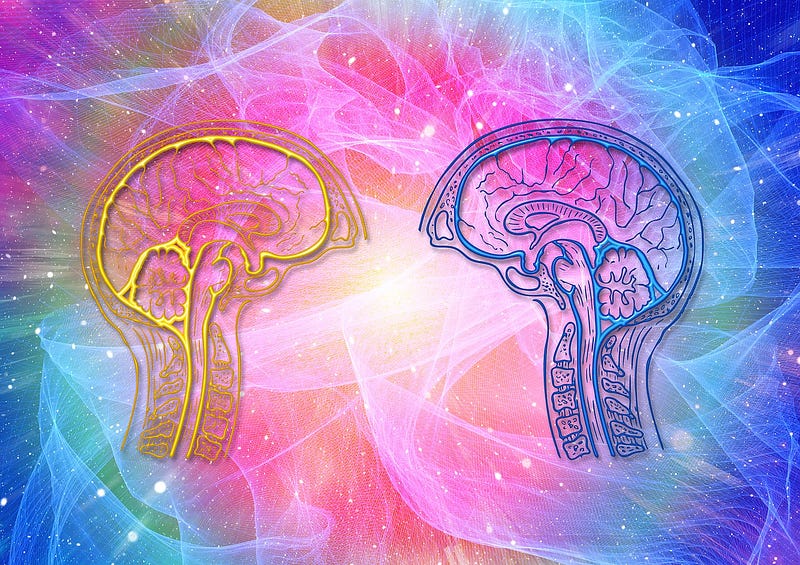
Am I feeling what you’re feeling? (Source: Gerd Altmann on Pixabay)

Now before you call me nasty names, let me explain.

I don’t have a mean bone in my body.

But I once had a fragile heart. I wanted to be in the shoes of everyone who was suffering; so caught up in their pain that I buried my own.

What is empathy?

It is our ability to share the thoughts and feel the emotions of somebody else as if they were our own.

Olga Klimecki, a researcher at the Max Planck Institute for Human Cognitive and Brain Sciences in Germany says,

“When we share the suffering of others too much, our negative emotions increase. It carries the danger of an emotional burnout.”

If we get too caught up in how others are feeling, we drain our own cognitive and emotional resources.

I’m guilty of doing that in my first marriage. My ex had a huge chip on his shoulder and blamed everything and everybody for what was wrong in his life. As the loyal wife I fiercely defended his feelings until one day I woke up at 34 and said this is nonsense — I don’t know who I am any more.

We have to set boundaries for our own well-being or we are of no help to ourselves or others. We cannot always allow other people’s feelings to take precedence over our own.

How can we stop doing that?

Practice compassion

We cannot be compassionate without empathy.

The difference is we create a distance between another person’s feelings and our own. We can acknowledge their suffering, their pain but maintain our self-awareness while doing so.

That’s how we develop our emotional intelligence.

Weighing up our own needs is not selfish.

It’s vital we create an emotional balance whereby another person’s feelings don’t overwhelm us.

This enables us to go a step further than showing empathy.

Compassion requires us to offer a helping hand or just listen. But WE decide what is appropriate and when. Not because we’re unkind or don’t care.

Sometimes we’ve also had a tough day and need time out. Our energy is depleted and we don’t feel able to offer that helping hand right then. Unless it’s an emergency, we can just say “I’ve had one hell of a day myself — can we talk about it tomorrow?

Cultivating Compassion

Here are some fertilizers to help grow your compassion:

  • Love yourself unconditionally
  • Practice self-compassion
  • Perform acts of kindness with no desire for reward
  • Forgive yourself and others
  • Do not blame or judge
  • Engage in meditation or mindfulness

Happy gardening!

Thanks for reading.

Compassion
Mental Health
Life Lessons
Inspiration
Relationships
Recommended from ReadMedium