
The Hidden Spirituality in “Bridge Over Troubled Water”
What no one knew about the Simon & Garfunkel masterpiece
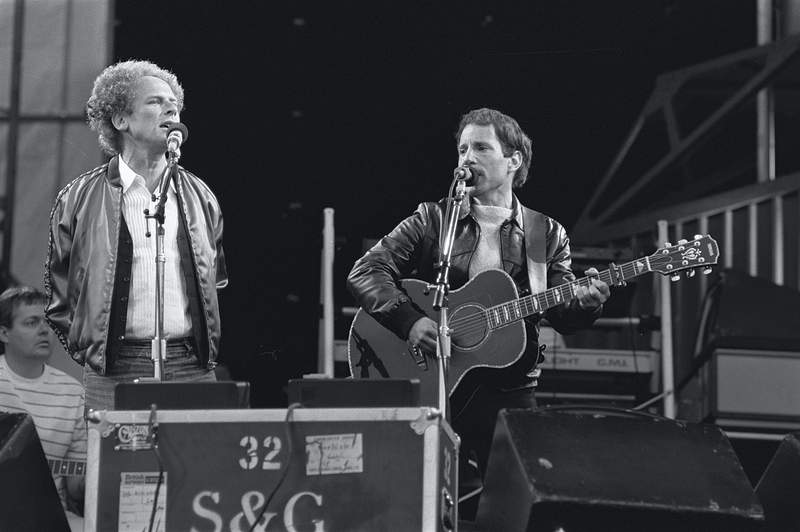
“Some stories are magical, meant to be sung…And all of these spirit voices rule,’’ — Paul Simon
He didn’t feel he was writing — music just seemed to flow through…
Who or what inspires the greatest music and messages of history? Paul Simon still can’t fully explain how or why “Bridge Over Troubled Water’’ came to be.
“I have no idea where it came from,’’ Simon says in a recent interview. “It just came. All of a sudden… One minute it wasn’t there and the next: the whole line was there…
“It was one of the shocking moments in my song-writing career… I remember thinking this is considerably better than I usually write.’’
Simon knew it was his greatest song — coming together just as the Beatles created the similarly spiritual “Let it Be…’’
Paul Simon and Art Garfunkel were both cultural Jews. But throughout their careers they’ve found themselves drawn to Christian music and messages. When something was meant to be, they felt it quickly.
“I think it’s a part of my thoughts on a fairly regular basis,” Simon said in 2012. “I think of it more as a spiritual feeling. It’s something that I recognize in myself and that I enjoy, and I don’t quite understand it."
“‘ll take your part, when darkness comes. And pain is all around. Like a bridge over troubled water. I will lay me down…’’
A half century ago, Simon, still in his 20s, was listening to a 1958 Swan Silvertones record. He repeatedly played their Gospel hit, “Mary Don’t You Weep,’’ a much older spiritual.
Singer Claude Jeter felt called to add a crucial line:
“I’ll be a bridge over deep water if you trust in my name..”
Jeter’s words inspired Simon to write “Bridge Over Troubled Water.’’
Gospel producer and historian Anthony Heilbut later said when Simon met Jeter, he immediately wrote him a check to acknowledge his indebtedness.
Jeter, of course, was speaking the words of Jesus raising Lazarus (John: 11). In 1969, when many young people thought the world was falling apart, the words seemed exactly what the people needed to hear.
“A little hymn,’’ was all Simon expected the song to be but it grew…
He came up with the tune on guitar but knew it needed to be a piano song rooted in Gospel. And he wanted his partner Art Garfunkel to sing it.
“The fact is from the moment I locked onto that melody and the fun of singing, there was a thunderous reaction and always has been,’’ Garfunkel recalls.
It “wants to be bigger’’ Garfunkel said, wanting an uplifting finish…
Simon wrote the third verse in the studio but then thought it was “probably too long for a commercial record.. I didn’t think it was a hit. I thought “Cecelia” was going to be the hit.’’
Garfunkel went to pray in St Bartholomew’s Church in New York…
Garfunkel needed help to get the song right. So he prayed at St. Bartholomew’s Church.
“When I did the vocal, I did the big last verse first and nailed it,’’ Garfunkel recalled. “But the first verse required a delicacy that was maddening. I couldn’t get it. So it was, just: ‘Lord help me relax.’ Help me find that lovely place as a performer when you believe you get a visitation from higher powers, and it passes through you.’’
Legendary music producer Clive Davis “just knew’’…
The makers still didn’t see their “exceptional song” was a hit.
Clive Davis, president of CBS Records said “No, I want to get behind it all the way. It’s the title of your album. It’s the first single. Be unapologetic about such a slow song cause I’m gonna get behind it with faith.’’
“That’s how songs happen,’’ Simon told Dick Cavett. “They piece themselves together… Sometimes, it’s very fast…’’
Many of the greatest singers in history, including Aretha Franklin (the daughter of a famous minister) and Elvis Presley both immediately saw and embraced the song’s spiritual messages and did their own famous covers.
“That’s it — I quit,’’ Simon said, in awe of the power of Presley’s version.
What Paul Simon wouldn’t have known…
St. Catherine of Siena, a doctor of the Catholic Church, in 1370 dictated “The Dialogue” to her secretaries as she heard the Voice of God, which spoke extensively about sending Christ to earth as “a Bridge’’ between God and man:
“I have given you the Bridge of My Son, in order that, passing across the flood, you may not be drowned…this Bridge, My only-begotten Son, has three steps, of which two were made with the wood of the most Holy Cross, and the third still retains the great bitterness He tasted…
…the soul strips herself of vice; on the second she fills herself with love and virtue; and on the third she tastes peace… ‘If I am lifted on high I will draw all things to Me.’… he who goes over the Bridge goes to life… My dearest sons, walk over the Bridge, and not underneath it…
New Orleans musician Allen Toussaint sums it up: “That song had two writers: Paul Simon and God.”


_in_Feijenoordstadion,_Rotterdam,_Bestanddeelnr_932-2092.jpg)