
The Hidden Perils of Swimming Pool Water
Do you really know what you are swimming in?
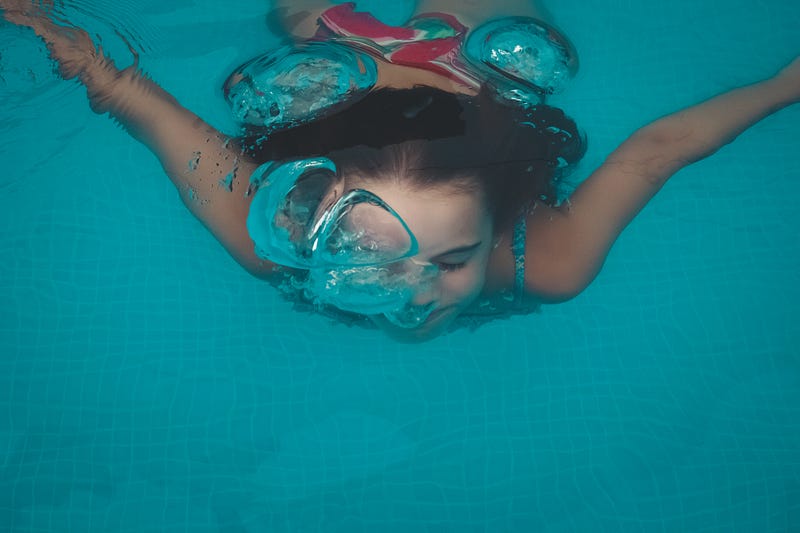
We all enjoy a splash in a cool swimming pool on a hot summer’s day.
But how safe is the water that you are swimming in?
My interest in this topic started when I was a young teacher. One of my responsibilities was to take my pupils to the local swimming baths each week. From the side of the pool, I taught many seven- and eight-year-olds how to swim.
One particular day, a group of my pupils had progressed to the stage where they were completing lengths of the pool. Suddenly, out of the corner of my eye, I caught sight of one pupil vomiting in the pool.
I encouraged the pupil to leave the water immediately. As he exited the water, I noticed a second pupil swimming at a rapid rate towards the contaminated water. I blew my emergency whistle and shouted to seek his attention, but he was wearing a swimming cap and couldn’t hear me.
I watched helplessly as he swam right through the floating vomit.
Fortunately, neither pupil came to any long-term harm.
Over the next few years I had a couple more experiences which made me question the safety of swimming pools. The final straw for me was when I took my young children to a water park and ended up in a whirlpool containing faecal matter.
After I had recovered from the initial disgust, it made me curious to find out more. Was I actually putting the health of myself and my children at risk?
So, what exactly can be found in pool water?
Urine
Research has shown that nearly all public pools contain urine. In fact, averaged out, each swimmer leaves the equivalent of one shot glass of urine in the pool.
Further studies have backed this up and show that a 220,000 gallon swimming pool would contain about 20 gallons of urine.
Despite this unpleasant thought, urine on its own is relatively low risk. The potential harm comes from when this urine interacts with chemicals in the pool.
More about that later…
Faecal matter
Faecal matter gets into the pool when it washes of swimmers’ bodies. This contains a variety of harmful germs, the most significant being cryptosporidium.
Cryptosporidium causes gastrointestinal disease. Swallowing a single mouthful of infected water can make an otherwise healthy person ill for up to three weeks.
More worryingly, cryptosporidium can be life threatening for people with weakened immune systems such as those with cancer, HIV, transplant patients or those taking immune suppressing medication.
For most people though, the risks are fairly small. Only a tiny minority of people will be affected.
Chlorine
Chlorine is a chemical element and is used to disinfect water. It is very effective at killing most harmful germs.
Many people feel reassured when they smell a strong chlorine smell as they feel that there are adequate levels of chemicals in the water which means it is safer. However, what you are actually smelling is something slightly different.
When chlorine combines with pollutants such as urine, faeces, skin cells and personal care products it creates chemical irritants called chloramines. It is these chloramines that emit a strong chemical smell as they turn into gas.
Chloramines can cause a range of negative health effects including:
- Nasal irritation
- Coughing
- Sneezing
- Irritated eyes
- Rashes and skin irritation
- Triggering asthma attacks in susceptible people
This process also means that there is less chlorine available to kill harmful germs.
Healthy pools should not have a strong chemical smell.
Should we avoid swimming altogether?
Unless you have a medical condition that puts you at risk, probably not.
Life is full of dangers. Living a risk-free life would be very bland and unfulfilling — and is probably impossible, anyway.
Swimming has many health benefits and has also been good for emotional wellbeing. A few of the benefits include:
- Improving muscle definition and strength
- Building bone mass
- Building cardiovascular strength — benefiting the heart, lungs and circulatory system
- Reducing inflammation
- Helping to burn calories
- Reducing blood sugar
- Alleviating stress and reducing depression
On balance, for most people this wide range of benefits will far outweigh the reasonably slight health risk posed by contaminated water.
Well-maintained pools contain levels of chlorine, which inactivate most germs within minutes. A study by Imperial College in London showed that even Covid-19 is inactivated within about 30 seconds.
Keeping yourself and others safe
To ensure that we can all continue to enjoy the many benefits of swimming, each of us needs to play our part in keeping both ourselves and others safe.
By taking the measures below, you can enjoy the many health benefits of swimming without having to worry too much about the risks.
- Ensure that you shower before entering the pool.
- Do some preliminary checks before entering the pool. Does it look well maintained? Does there appear to be a regular cleaning schedule? Can you smell chloramines?
- Are the filters in a good state of repair and free of obstructions? Does the water look clear?
- Take children on regular toilet breaks.
- If you or your children are ill, especially with gastrointestinal illnesses, leave the swimming until another day.
- Avoid sitting on water jets.
- Where possible, avoid getting the water in your mouth.
- If you have a compromised immune system, seek your doctor’s advice before swimming.
- Keep alert for faecal matter or vomit in the pool. Report this to the lifeguards if you spot it.
And obviously:
- Don’t pee in the pool!
Sources
https://www.webmd.com/children/news/20170630/danger-and-pee-lurk-in-swimming-pools
https://www.cdc.gov/healthywater/swimming/swimmers/rwi.html
https://www.cdc.gov/healthywater/swimming/swimmers/rwi/chemical-irritants.html
https://www.swimming.org/swimengland/swimming-pool-water-inactivates-covid19-virus/
https://www.lifehack.org/articles/lifestyle/ten-benefits-swimming-you-may-not-know-about.html