
The Hidden Cost of Having Things You Want
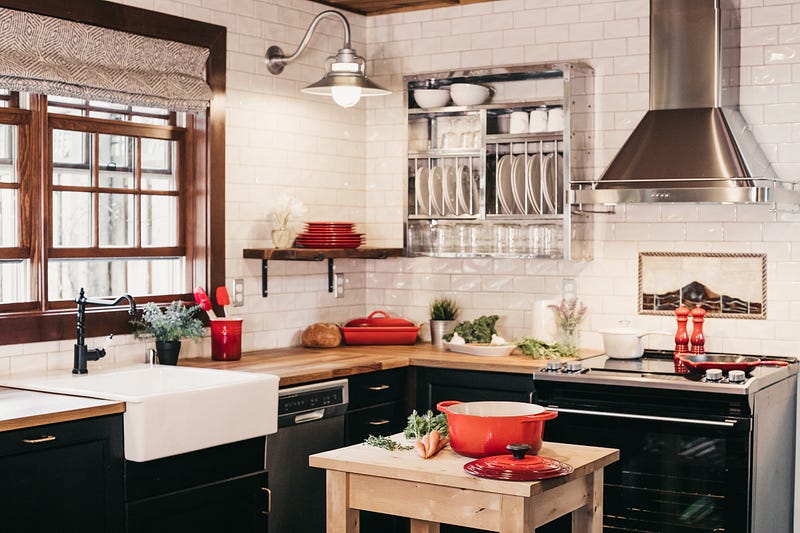
(nb: THAT IS NOT MY KITCHEN.) (My kitchen is less ridiculous and staged.)
My house is clean enough. I’m not a clean-‘freak’, but you can see (most of) the floor (the cats leave toys everywhere and I can’t keep up with the tumbleweed sized balls of cat hair, no matter how often I suck them up with the Scary Noise Machine), the laundry gets done relatively regularly (we never run out of clean undies), and the trash leaves the house before the house starts to smell.
But I’ve never managed to maintain the perfectly clean kitchen that magazines, movies, Pinterest, and advertisements everywhere say is mandatory for a Truly Clean House. There’s never rotting food — food gets put away as soon as possible — but sometimes there are dishes left on the counter for a few days, and the sink is often full.
I love having a clean counter in the morning, though.
I’m sure you can see where this is going.
In order to have the clean-morning-kitchen I really want, I have to clean the kitchen in the evening. Every evening. I’ve been doing it (begrudgingly) for a week now and, well. I do enjoy the clean kitchen. It does make my day nicer and easier. I assume I’ll get used to the evening drudgery that it takes to produce said nicer day. I’m hoping the cost will stop feeling so high.
But this is something that we do often, and I think it’s something we should do more thoughtfully. I pay a cost — in this case, it’s my time and effort — to have the reward of the cleared counters.
I think we should pay attention to the costs we’re paying to have things we want and decide if those costs are ones we’re really willing to pay, and if, perhaps, we really want the things we’re getting. These costs might be financial — I know someone who hates cooking and, for a few years, she paid a professional chef to make her meals (dinners only) so that she had to do less cooking herself. She loved it for quite a while, and her life was materially improved.
(She’s stopped, because she found that her specific variety of picky-eater-ness was difficult for chefs to work with, something I found to be amazing. If a professional personal chef can’t figure out that a if client doesn’t like carrots in food, that means they shouldn’t put carrots in any of their food, then I think they shouldn’t be a professional personal chef.)
I’m willing to pay the costs associated with having cats (cleaning the cat box, making sure to have nutritious food they like in the house, making sure to have the litter that doesn’t smell immediately (walnut litter, really, give it a try), giving them attention on their schedule and not always mine), but for some people, those costs are too much.
And that’s reasonable, as long as those people then choose not to have cats.
It’s when we aren’t willing or able to pay the costs that things have — for whatever reasons — that problems start mounting up.
Sometimes, we pay the cost without thinking about what that cost is and how much it’s really affecting us. Sometimes we think we want something and then discover that the cost was too high, or that the thing we were paying for wasn’t what we’d thought it was.
Those are all situations where it’s okay to step back and choose not to have those things. If you find that your relationship isn’t really working, it’s okay to break up with that person. If you find that you don’t actually enjoy going out every Friday night, even though that’s what ‘you’re supposed to do’, then it’s okay to stay home, or go somewhere you actually enjoy.
But everything we do has a cost — time, attention, energy, money, physical actions. Everything. It’s up to us to balance those costs and benefits.
In my case, I’m going to continue to clean the kitchen in the evenings. It’s a bit easier when there’s only one day’s worth of detritus, and I do enjoy the nicer mornings. But I’m going to keep an eye on how much I hate doing it. Maybe I can get a similar benefit by doing the cleaning in the early afternoon, leaving my evenings free for sitting on the couch with my sweetie.